

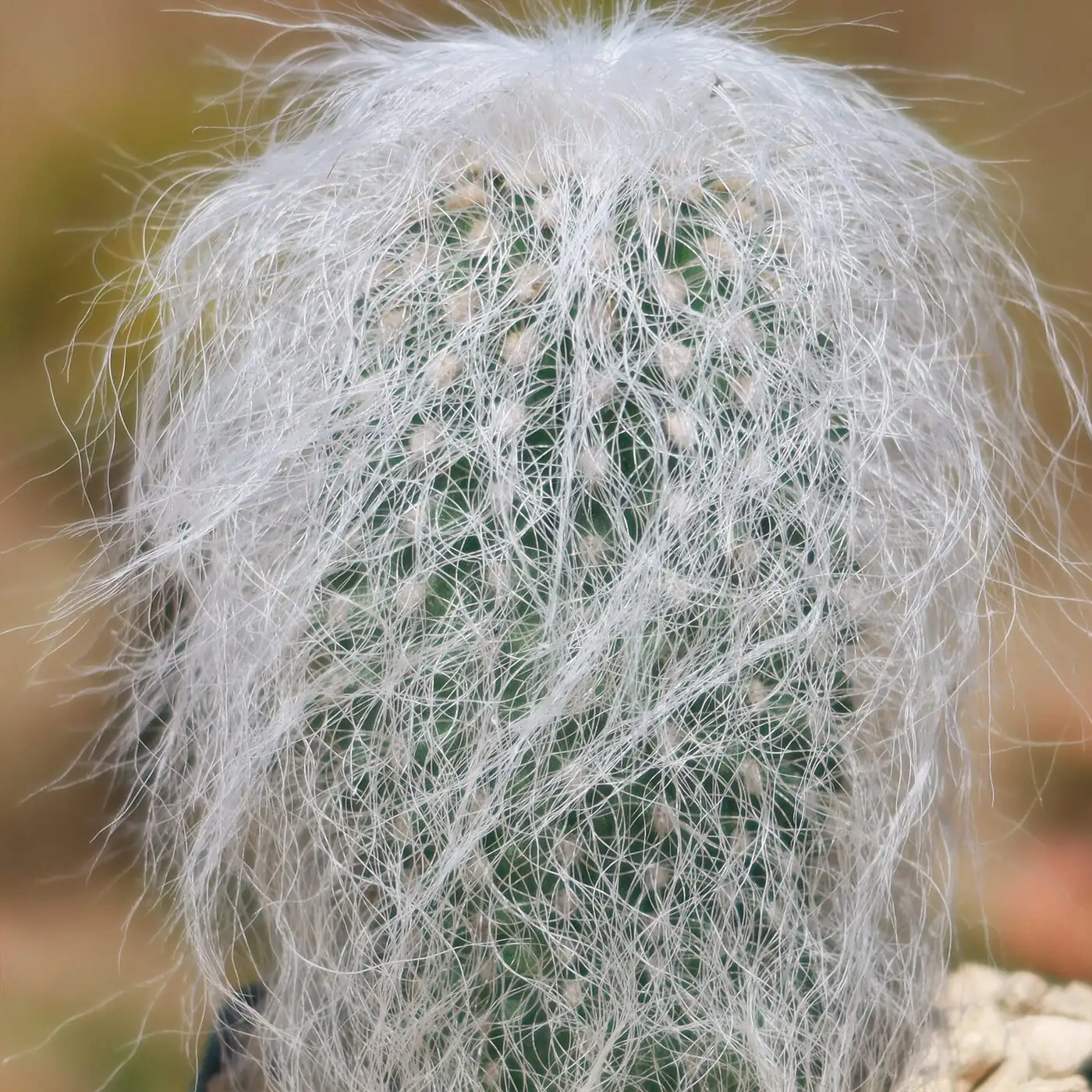
If you dream of a cactus with personality, Cephalocereus senilis delivers—its long, silky white “beard” is pure drama. This blueprint shows exactly how to keep that coat dense and immaculate with the right light, watering cadence, gritty soil, and a restful winter. Think of it as beard care for a cactus: strong sun, quick-draining shoes, sips not gulps, and a quiet cool-down season.
Meet the plant
- Botanical name: Cephalocereus senilis
- Also known as: Old Man Cactus, Old Man of Mexico
- Origin: Endemic to east‑central Mexico (notably Hidalgo and Veracruz), on arid limestone slopes
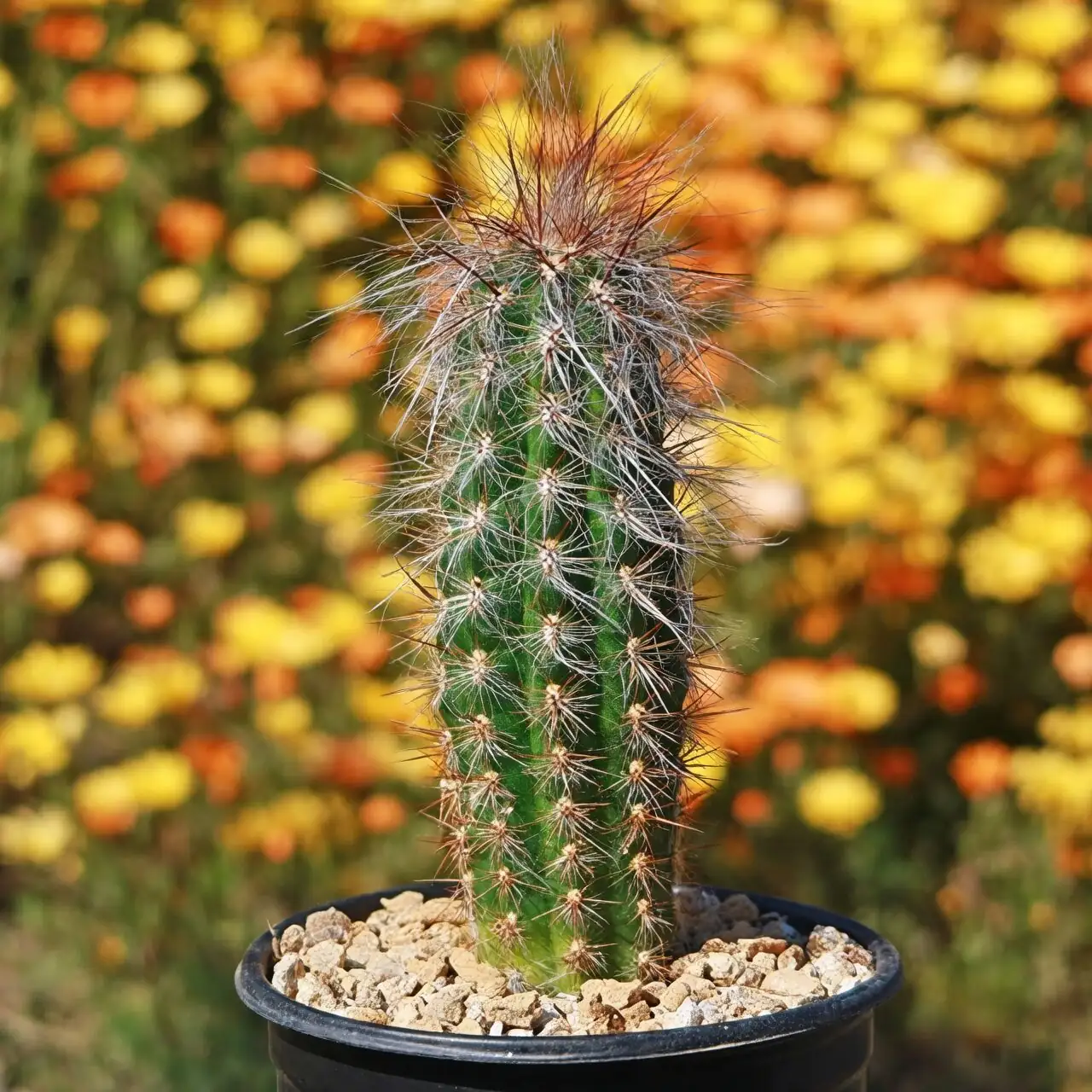
- Look: Upright, usually unbranched column cloaked in long, white hairs (hidden spines beneath)
- Growth: Slow in pots; can clump with age. Flowers are possible in nature but rare in containers.
Why the “beard”? Those hairs act like a built-in parasol—shading the stem in harsh sun and reducing moisture loss. Our job indoors is to recreate the bright, arid conditions that keep that wool thick and healthy.
Light: the beard‑builder
Dense hair needs abundant sun. Aim for full sun with thoughtful acclimation.
Indoors
- Target: 5–8+ hours of direct sun daily at a south or southwest window.
- Practical cue: The plant should cast a crisp shadow for several hours a day.
- Brightness benchmarks (optional): 20,000–50,000 lux (2,000–5,000 foot‑candles) for much of the day.
- Rotate the pot a quarter‑turn every 1–2 weeks for even hair and column growth.
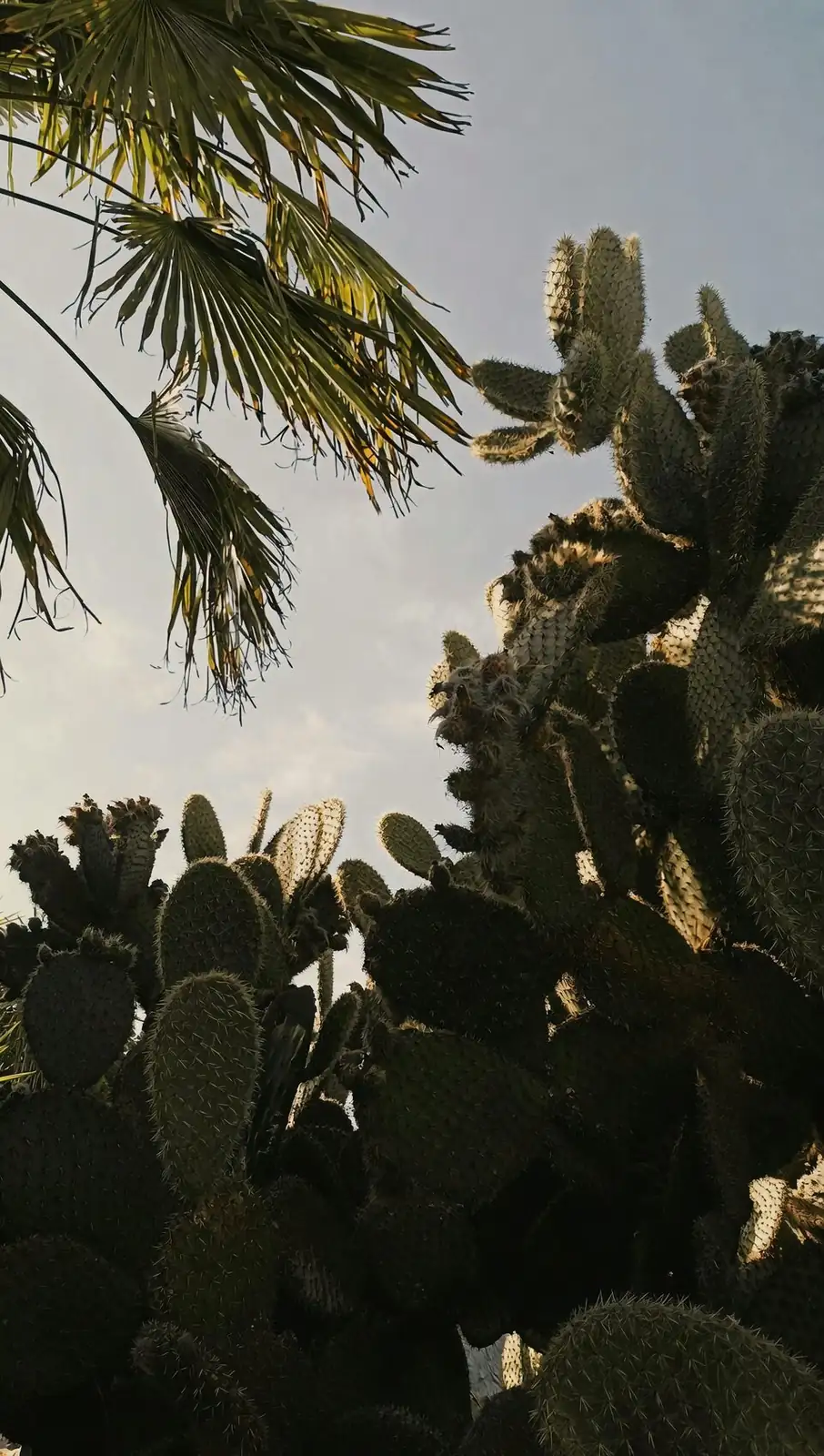
Outdoors (summering only)
- After last chill, acclimate over 10–14 days:
- Bright shade for 3–4 days
- Morning sun only for a week
- Full sun, but give light afternoon shade in very hot spells—especially right after moving outside
- Bring back in before nights trend cool. This species is not frost‑hardy.
Under grow lights
- Use full‑spectrum LEDs 6–10 inches above the plant.
- Target moderate–high intensity (approx. 300–600 PPFD) for 12–14 hours/day.
- Still give it a bright window if possible; mixed natural/artificial light often yields the densest hair.
Pro tip: Sparse or “gappy” hair usually means not enough light or stale, humid air. Increase sun and airflow first.
Watering: intervals that prevent rot and keep hairs fluffy
This cactus likes a deep drink followed by a full dry‑down—especially in fast, gritty soil.
Growing season (spring–summer)
- Method: Water thoroughly until a bit drains from the pot, then wait.
- When to water again: Only when the top 1–2 cm (0.4–0.8 in) of mix is completely dry.
- Typical rhythm: Every 10–21 days depending on pot size, heat, and light. Hotter/brighter = slightly more frequent; cooler/dimmer = less.
- Keep the hairs dry. Direct the stream at the soil line or bottom‑water, then let excess drain completely.
Fall taper
- Start lengthening the interval. Allow the plant to slow down as days shorten.
Winter rest (vital for a thick beard)
- Location: Cool, very bright spot.
- Watering: Drastically reduce—just 1–2 light waterings for the entire winter, or none if kept cool.
- Why: Cold + wet soil is the fastest route to rot. A drier rest also curbs lanky growth and preserves hair quality.
Signs to watch:
- Underwatering: Wrinkling or slight puckering of the stem; hair still fluffy. Give a thorough drink.
- Overwatering: Mushy or darkening base, sour smell, hair matting near the soil. Act fast: unpot, trim rot, and repot in dry, gritty mix.
Soil & pot: gritty mixes that drain fast
Roots hate lingering moisture; your soil should shed water as fast as a desert storm.
Reliable DIY cactus mix (simple and effective)
- 1 part potting soil
- 1 part coarse sand
- 1 part perlite or pumice
Even “sharper” blends (for heavy hands or humid homes)
- 1 part potting soil
- 1 part coarse sand
- 1 part pumice
- 1 part 3–6 mm grit (e.g., crushed granite or extra perlite)
Optional: A small pinch of limestone chips nods to its native slopes—don’t overdo it, and never at the expense of drainage.
Pot choice
- Unglazed terracotta with a large drainage hole promotes evaporation and root oxygen.
- Start small (around 10 cm / 4 in for young plants) and size up only slightly at repot—excess soil stays wet too long.
- A heavier pot helps anchor a taller column.
Temperature, humidity, airflow
- Ideal range: 10–32°C (50–90°F)
- Keep above about 5°C (41°F); protect from frost.
- Humidity: Keep on the dry side with good airflow; stagnant, humid air can mat hairs and invite pests.
- Improve circulation: Open a vent, use a gentle fan nearby, and avoid clustering too many plants around it.
Feeding and repotting rhythm
- Fertilizer: Feed once a month in spring and summer with a cactus fertilizer (full strength per label or slightly diluted). Stop in fall and winter.
- Repotting:
- Young plants: Every spring
- Mature plants: About every 2 years
- Always use a fast‑draining mix and only go one pot size up.
Winter rest: your beard‑saving routine
- Light: As bright as you can give—south window or bright sunroom.
- Water: Once or twice total for the season (or none if kept cool).
- No fertilizer.
- Airflow: Keep it dry and moving. Avoid misting or wetting the hair.
- Result: Compact growth, dense hair, and a happy restart in spring.
Grooming the “beard”
- Keep it dry: Avoid overhead watering.
- Dust gently: Use a soft paintbrush, a rubber bulb blower, or a cool, low‑power hairdryer from a distance.
- Don’t comb or tug—those hairs are modified spines.
- Inspect under the hairline monthly for pests or spots at the base.
Pests, problems, and quick fixes
- Usual suspects: Mealybugs (including root mealies), scale, spider mites—often hiding in the wool.
- First aid:
- Isolated pests: Dab with a cotton swab dipped in isopropyl alcohol (spot treat carefully).
- Broader outbreaks: Insecticidal soap or horticultural oil; apply sparingly and improve airflow. Keep hairs as dry as possible.
- Biggest threat: Root/stem rot from cold, wet soil or slow‑draining mix. Prevention is everything: sun + sharp drainage + long dry‑downs.
Safety
- Not known to be poisonous, but sharp spines lurk beneath the hair. Handle with gloves and keep away from curious kids and pets.
Buying smart
- Choose a firm, upright plant with clean, dry hair and no soft spots at the base.
- Start it in a small, well‑drained pot and give strong light from day one.
- Overwinter cool and bright for the best hair density next season.
Seasonal checklist
- Spring
- Repot young plants; resume monthly feeding
- Increase sun exposure and airflow
- Water after the top 1–2 cm of soil dries
- Summer
- Full sun; offer light afternoon shade in extreme heat, especially post‑move
- Continue soak‑and‑dry watering
- Fall
- Taper feeding; lengthen watering intervals
- Maximize light as days shorten
- Winter
- Cool, very bright, and nearly dry (1–2 waterings total or none if cool)
- No fertilizer
Symbolism and story
Old Man Cactus is often linked with longevity, resilience, and quiet wisdom—fitting for a plant that grows slowly, withstands harsh sun, and wears a venerable “beard.” In the spirit of flower language, that woolly coat can be read as a sign of patient endurance and protection. It isn’t a traditional floral emblem with ancient texts behind it; rather, it’s a modern, intuitive symbolism born from its look and lifestyle—sun‑hardened yet soft at a glance, humble in needs yet unforgettable in presence.
Follow this blueprint—full sun, fast drainage, mindful watering, and a cool, bright winter—and your Cephalocereus senilis will keep its signature white beard thick, clean, and gloriously photogenic for years to come.