

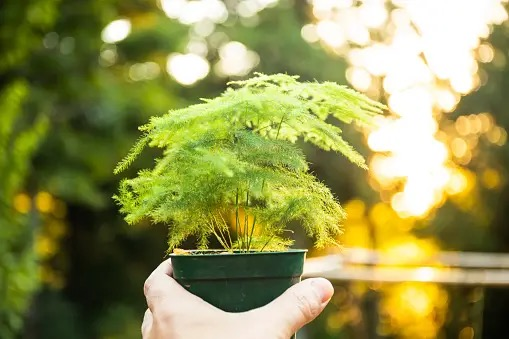
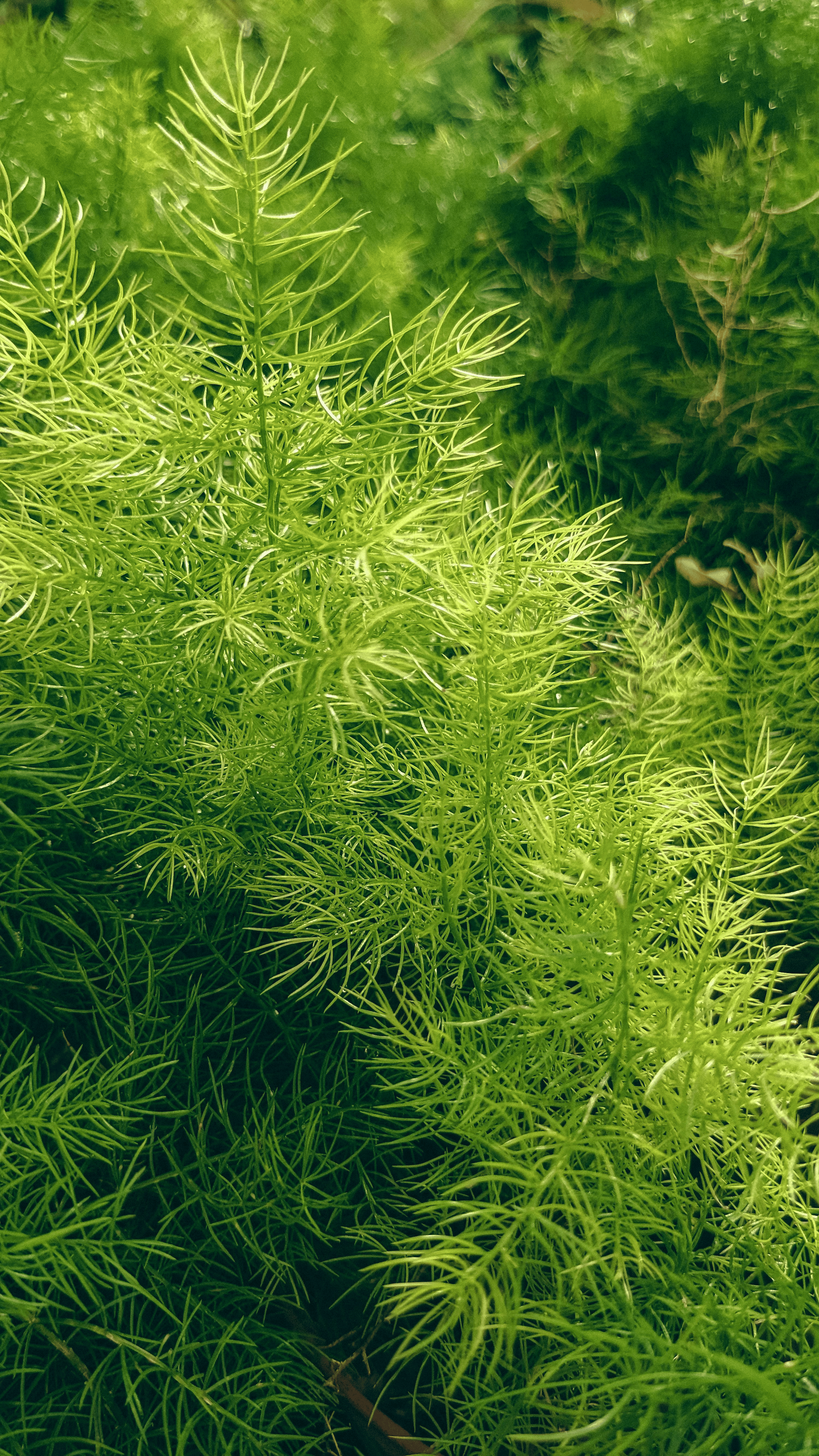
Imagine a cloud of green lace suspended in air—light as breath, soft as a whisper. That’s Asparagus setaceus (Kunth) Jessop, the so‑called “asparagus fern.” It isn’t a true fern at all, but an asparagus relative whose feathery sprays are made of tiny cladodes (leaf-like stems). Keep its seasons in mind and you’ll keep it eternally airy and emerald—no yellowing, no soggy roots, no drama.
Key identity at a glance
- Botanical: Asparagus setaceus (Kunth) Jessop, family Asparagaceae
- Also known as: Lace Fern, Plumosa/Plume Asparagus, Ferny Asparagus, Climbing Asparagus
- Native range: Southern to eastern/southern Africa
- Habit: Fast-growing, evergreen, arching or climbing; great for hanging baskets or a small trellis
- Indoors size: Commonly 30–90 cm tall; unpruned stems can reach 1–3 m with support
The golden trio: light, water, humidity
- Light: Bright, indirect light or light shade. East windows are perfect; place a few feet back from strong south/west light behind sheers. Avoid harsh midday sun, which scorches and yellows.
- Water: Keep evenly moist—not soggy, never bone-dry. Water thoroughly, then let the top 2–3 cm of mix dry slightly before watering again.
- Humidity: Loves moderate to high humidity; aim for 50%+. Dry air from heaters or vents leads to crisp tips and leaf drop.
Season-by-season care to keep it cloud-light and green
Spring: Reset and reawaken
- Placement and light
- Shift to the brightest indirect light you can offer as days lengthen. An east window or filtered south/west exposure gets growth humming.
- Consider a small trellis to lift stems for airflow; it prevents the center from matting and helps avoid fungal spots.
- Water rhythm
- As growth resumes, expect to water more often. Use the finger test (top 2–3 cm dry), then water until it runs through; empty the saucer.
- Pot feels light + top dry + cladodes start to look slightly less buoyant = time to water.
- Humidity tune-up
- Target 50–60%. Start a pebble tray or run a humidifier nearby; group plants with a little spacing for airflow.
- Feed and refresh
- Begin monthly feeding (every 4–6 weeks) at half strength with a balanced liquid houseplant fertilizer.
- Repot if root-bound: move up one size and refresh the mix (see “Soil & pot” below). Spring is also the moment to divide if you want more plants.
- Prune and shape
- Remove yellow, weak, or winter-tired stems at the base. Lightly pinch very young shoots to encourage branching and fullness.
Summer: Lush, fast, never scorched
- Placement and heat
- Keep out of direct midday sun. Indoors, sheer-filter south/west light; outdoors (USDA 9–11 only), park it in bright shade on an east/north balcony or patio.
- Avoid hot, drying air—no radiators, no blasting AC/heat vents.
- Water rhythm
- Growth is fastest now. Many homes see watering 1–2 times per week, but always follow the dryness cue: top 2–3 cm slightly dry before rewatering.
- Drench, drain, and never leave water pooled in the saucer. Soggy roots = yellowing and collapse.
- Humidity and airflow
- Boost to 55–65% during heat waves. Light morning misting is fine in airy rooms, but don’t keep foliage wet late in the day.
- Brown tips? Usually low humidity or irregular watering.
- Feeding
- Continue monthly at half strength. If aiming for blooms on a mature plant, a single light, phosphorus-leaning feed early in summer can help—don’t overdo it.
- Pest watch
- Spider mites adore hot, dry air. Inspect weekly; if you spot stippling or webbing, rinse, then use insecticidal soap or horticultural oil. Repeat every 7–10 days and raise humidity.
Autumn: Ease off without letting it crisp
- Light shift
- Scoot it closer to the window as days shorten, still behind sheers if sun is strong. Bright bathrooms or kitchens with filtered light can be ideal (nice humidity).
- Water rhythm
- Begin spacing waterings slightly. Indoors this often becomes every 7–10+ days—still guided by that top 2–3 cm dryness test.
- Feeding taper
- Reduce to every 2 months or pause if growth slows significantly.
- Bonus: flowers and berries
- Mature plants may produce tiny starry white to greenish-white flowers, then berries that ripen dark purple-black. They’re charming—but mildly toxic. Keep away from kids and pets.
Winter: Airy not soggy, bright not burnt
- Temperature and placement
- Best at 15–25°C. Keep it bright and draft-free; never below 4–5°C. A cool, dim corner plus a heavy watering is a recipe for rot.
- Water rhythm
- Growth often idles. Water sparingly but don’t let it go bone-dry: let the top 3–4 cm dry before you water thoroughly and drain.
- Use the pot-weight trick: lift before and after watering; learn its “thirst weight.”
- Humidity
- Indoor heat dries air fast—keep around 50%+. Pebble trays and humidifiers shine now. Maintain gentle airflow to deter Botrytis and leaf spots.
- Feeding
- Pause until spring unless it’s actively growing under strong lights.
Soil, pot, and drainage that prevent rot
- Mix recipe
- A loose, well-draining yet lightly moisture-retentive blend: quality potting mix + organic matter (leaf mold/compost, peat or coco coir) + perlite or coarse sand.
- Slightly acidic to neutral is fine.
- Pot choice
- Always use a pot with a drainage hole. Empty saucers promptly.
- Typical sizes: 12–15 cm for standard plants; 15–18 cm for hanging baskets; 20–25 cm for larger, mature specimens (which may be more likely to flower).
- Repot rhythm
- Every 1–2 years in spring (hanging baskets about every 2 years). Gently loosen circling roots. Move up only one size to avoid prolonged sogginess.
- A note on roots
- The plant forms tuberous roots that store water—helpful in short dry spells, but not an excuse to let the entire pot desiccate.
Troubleshooting the signals
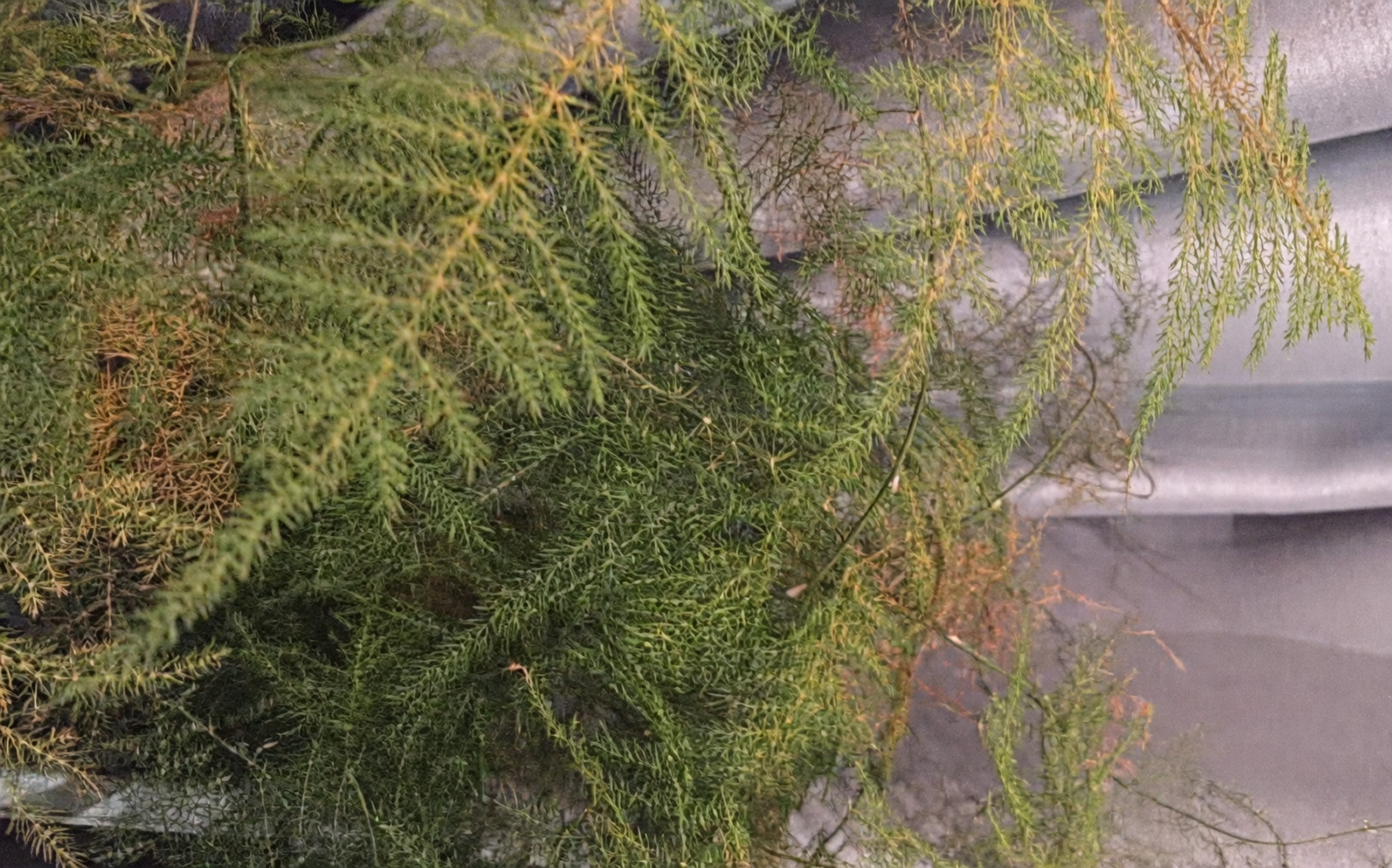
- Yellowing, then collapse
- Most often: overwatering or compacted mix with poor drainage; also harsh sun or nutrient imbalance.
- Fix: refresh the mix, check drainage holes, reduce frequency (still water thoroughly when you do), move to bright filtered light.
- Brown tips and a “dry” look
- Usually low humidity plus irregular watering.
- Fix: stabilize moisture (no feast-or-famine), raise humidity to 50–60%, trim crisp tips.
- Sudden leaf drop after a move
- Environmental shock.
- Fix: park it in bright, indirect light with stable watering; avoid drafts and temperature swings.
- Pests
- Spider mites, scale, mealybugs, occasional aphids. Rinse and treat early with insecticidal soap or horticultural oil; repeat every 7–10 days. Boost humidity to make life harder for mites.
Propagation and shaping
- Division (easiest)
- In spring, lift the root mass, split into clumps with 3–5 stems (or 2–4 shoots) each, minimizing root damage. Pot up and keep in bright shade to re-establish.
- From seed
- Sow shallowly in a well-draining seed mix at 20–22°C, keep evenly moist. Soak seeds ~24 hours to speed germination. Pot up when seedlings are sturdy (~5 cm tall).
- Pruning finesse
- Remove yellow or overly long stems at the base in spring. Pinch very young shoots (2–3 cm) to encourage branching. Train on a small support to keep the center airy.
A light placement cheat sheet
- Best
- East window; a bright bathroom with frosted light; a few feet back from south/west windows behind sheers.
- Tolerable
- Bright north window (growth slower, foliage finer). In lower light, keep watering lighter and be patient.
- Avoid
- Midday sun on the fronds; heater tops; windy, drying doorways; stagnant corners with wet foliage.
Where it thrives outdoors
- Hardiness
- USDA 9–11, frost-free only. Elsewhere, grow as a houseplant or bring inside for winter.
- Summer vacation outside?
- Yes—bright shade on an east/north patio with shelter from wind. Check water and humidity more often.
Safety, skin, and spread
- Toxicity
- Berries (and plant parts) are mildly toxic if ingested; keep out of reach of pets and children. Sap/fine foliage can irritate sensitive skin; gloves help during pruning.
- Invasiveness note
- In some warm regions it can spread by seed and underground growth; dispose of berries responsibly and avoid planting near natural areas.
Why florists love it—and the quiet symbolism
- Those feathery sprays are a timeless “filler” in bouquets, lending softness and movement. Culturally, it’s often gifted to symbolize steady, enduring affection—the kind of love or friendship that supports rather than shouts. That gentle, sustaining presence mirrors how the plant behaves at home: not demanding, just happiest in the “middle path” of care.
- It has been recognized for ornamental merit, a nod to its elegance and reliability when given the right conditions.
Your seasonal checklist (pin this beside the plant)
- Spring
- Bright filtered light; resume even moisture; start monthly feeding; repot/divide; prune for shape; add a trellis.
- Summer
- Shield from harsh sun; water when top 2–3 cm dry; keep humidity 55–65%; hunt mites; don’t overfeed.
- Autumn
- Nudge closer to light; stretch the watering interval slightly; reduce feeding; admire any tiny blooms/berries (but keep them out of reach).
- Winter
- Brightest spot available; water sparingly but thoroughly; keep humidity ~50%+; no drafts, no cold, no soggy soil.
Give Asparagus setaceus that sweet spot—bright, indirect light, steady-but-not-soggy moisture, and a little humidity—and it will return the favor with a living cloud of green lace all year.