

If your Black Rose Aeonium (Aeonium arboreum ‘Zwartkop’) suddenly looks lanky, blotchy, mushy, or a little too popular with tiny bugs—don’t panic. This plant is tough and beautifully predictable once you learn its rhythms. Think of this as your quick-diagnosis, step-by-step fix-and-prevent handbook for the four most common problems: etiolation (stretching), root/stem rot, leaf spot, and pests (mealybugs, aphids, whiteflies, scale).
Before we dive in, a two-sentence reset: ‘Zwartkop’ loves full sun to very bright light, fast-draining mix, and steady airflow. It typically grows most strongly from autumn through spring, then slows down or semi-rests in hot summer—so your watering and expectations should shift with the seasons.
Rapid triage: what are you seeing?
- Tall, pale, loose rosettes, longer internodes? Etiolation (stretching).
- Mushy base, sour smell, leaves turning translucent/yellow, pot stays wet? Root or stem rot.
- Speckles, tan/rusty spots, blotches after damp weather or misting? Leaf spot/rust.
- Cottony tufts, sticky leaves, tiny white fliers, or hard shell-like bumps? Mealybugs, aphids (often on flower stalks), whiteflies, or scale.
- Lots of lower leaves dropping? Often normal renewal or heat-related semi-dormancy—check moisture and season before acting.
—
1) Etiolation (stretching)
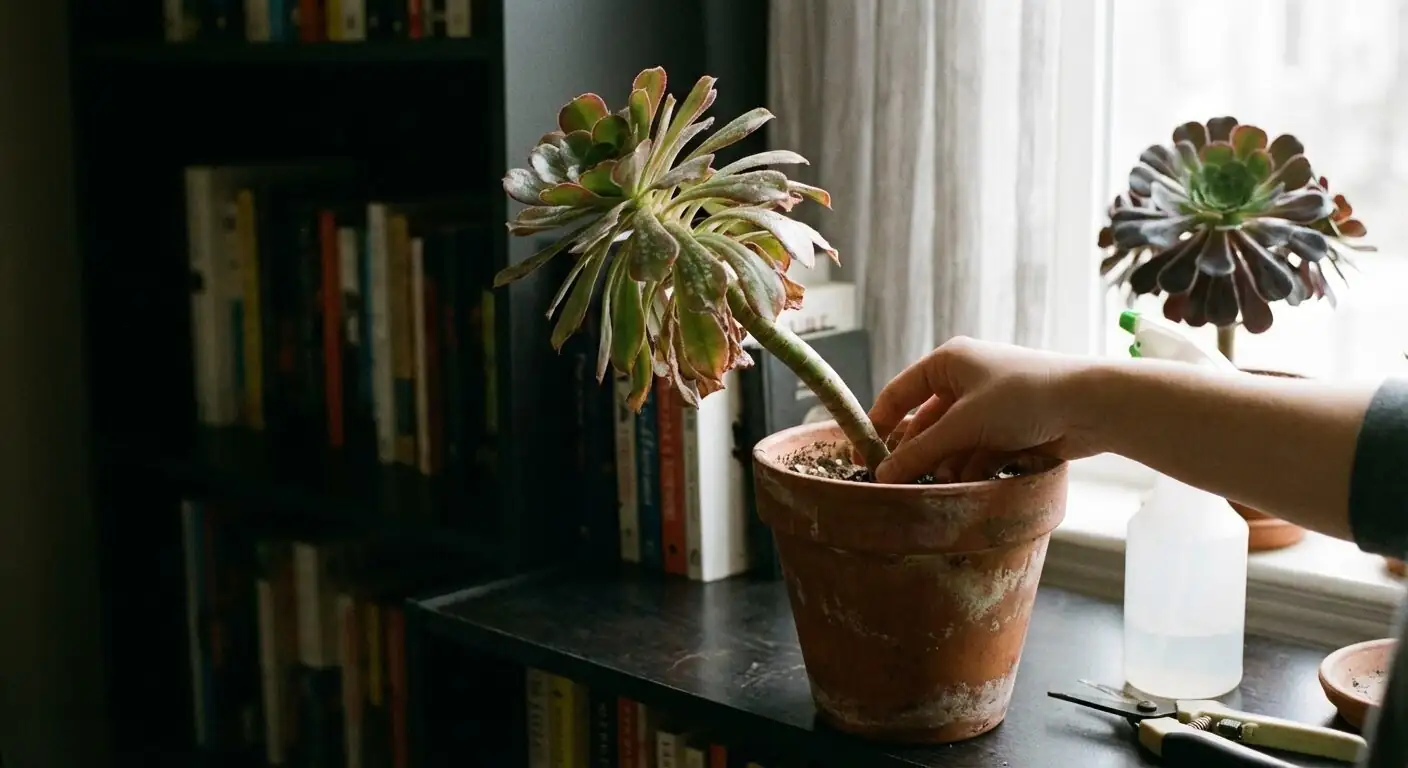
How to recognize it
- Rosettes loosen and “open,” losing that tight, glossy, near-black look.
- New stems elongate quickly; leaves get farther apart and may look greener/reddish instead of deep burgundy-black.
- Most common indoors in low light or when heat + shade combine.
Why it happens
- Not enough light for this architecture-loving succulent.
- Warm, low-light rooms + overfeeding during slow periods can accelerate weak growth.
Step-by-step fix
- Move to your brightest spot immediately: a very bright windowsill or sunroom. Indoors, south or east exposure is ideal. In very hot weather (especially behind glass), shield harsh midday sun with a sheer curtain.
- Acclimate to stronger sun over 7–10 days to avoid scorch.
- Improve airflow (small fan or open window) to keep tissues cool and firm.
- Prune and restart: in active growth (autumn–spring), cut back leggy stems and re-root the best rosettes as stem cuttings. Let cut ends callus for several days, then place in a dry, gritty mix; water lightly only after roots form.
- Fertilize modestly only in the main growth season (monthly at 1/2 strength). Skip summer dormancy.
Prevention
- Aim for full sun to bright light year-round; protect from midday scorch during heatwaves.
- Rotate the pot every 1–2 weeks for even light.
- Avoid high-nitrogen feeds and any feeding during summer semi-dormancy.
—
2) Root or stem rot
How to recognize it
- Potting mix stays wet; base of stem soft or brown/black; leaves yellow, wilt, or look water-soaked; sometimes a sour smell.
- Often follows cool, wet conditions, low light, or a pot without free drainage.
Why it happens
- Overwatering, slow-draining mix, or keeping the plant wet during its slow phases (hot summer or cool winter rooms).
Emergency rescue (do this now)

- Unpot and inspect roots. Trim away all mushy or blackened roots/stem with sterile scissors.
- Let the plant and any healthy cuttings air-dry and callus for 2–5 days.
- Repot into a fast-draining cactus/succulent mix cut generously with grit/coarse sand/pumice. Always use a pot with drainage holes.
- Reintroduce water cautiously: place the plant dry at first; begin light watering only once new roots form and the top layer dries between waterings.
- Increase light and airflow. Keep the plant above roughly 6°C/43°F and avoid cold, wet conditions.
Prevention
- Water deeply, then drain fully—never let it sit in water. During active growth (autumn–spring), water when the surface dries. In hot summer, keep the mix almost dry and give only small “sips” if rosettes wrinkle. In cool winter rooms, keep slightly drier.
- Use a gritty, open mix and right-size pots (avoid oversized containers that stay wet).
- Boost light and ventilation; avoid late-day overhead wetting.
—
3) Leaf spot and rust-like blemishes
How to recognize it
- Small tan/brown speckles, rings, or rusty patches; sometimes associated with damp, stagnant air or frequent misting/overhead watering.
Why it happens
- Wet foliage + poor airflow + low light = a perfect storm for spotting.
Step-by-step fix
- Remove worst-affected leaves to reduce inoculum.
- Improve airflow (space plants; provide ventilation) and increase light.
- Water at soil level in the morning; avoid wetting leaves late in the day.
- Keep the plant drier during cool spells and summer dormancy.
Prevention
- Bright light, moving air, and a watering style that keeps foliage dry.
- Clean up old, shriveled basal leaves promptly in spring.
—
4) Pests: mealybugs, aphids, whiteflies, and scale
Common, but beatable—especially if you catch them early.
What to look for
- Mealybugs: white, cottony tufts in leaf axils or roots; sticky honeydew.
- Aphids: clusters of soft green/black insects, often on flower stalks; curled new growth; honeydew.
- Whiteflies: tiny white fliers that take off when disturbed; sticky residue; leaf yellowing.
- Scale: tan/brown dome-like bumps stuck to stems/leaves; honeydew may be present.
Step-by-step fix (works for all four)
- Isolate the plant immediately.
- Physical removal: dab mealybugs or scale with cotton swabs dipped in 70% isopropyl alcohol; wipe away residues. Rinse gently after treatment.
- Spray option: use insecticidal soap or horticultural oil, coating leaf undersides and crevices. Repeat every 7–10 days for 2–3 cycles to break life cycles.
- Improve conditions: brighter light and better airflow help the plant resist reinfestation.
- For aphids on flower stalks, consider removing the stalk if heavily infested.
Prevention
- Inspect new plants and cuttings; quarantine for 2 weeks.
- Keep the canopy clean and airy; avoid sticky fertilizer residues and persistent damp.
- Check rosettes regularly—pests hide deep in the crown.
—
Leaf drop: normal, stress, or a red flag?
- Normal renewal: older, lower leaves naturally dry and drop as the rosette grows—especially visible on branching stems.
- Summer semi-dormancy: in hot weather, rosettes may close slightly, lower leaves shed, and stems look barer. This is normal; reduce water and wait for cooler-season growth to resume.
- Overwatering: yellowing, squishy leaves that fall at a touch, often with a damp mix—reset watering and check roots.
- Underwatering: leaves thin and wrinkle; give a measured drink and reassess in 3–5 days.
Quick moisture test: press a finger into the top 2–3 cm (about an inch). If the surface is dry during active growth, it’s time to water; in summer heat or cool winter rooms, err drier.
—
Build your prevention blueprint
Light and placement
- Full sun to bright light; indoors, the brightest window you have. In very hot weather behind glass, soften midday sun with a sheer curtain or pull the pot back slightly.
- Rotate regularly for even color and compact rosettes.
Soil and pots

- Fast-draining cactus/succulent mix. Start with a standard base and cut it generously with grit/coarse sand/pumice.
- Pots must have drainage holes; size up slowly to prevent waterlogging.
Watering rhythm (season-aware)
- Autumn–spring (main growth): water when the surface dries—thoroughly, then drain.
- Summer heat/semi-dormancy: keep almost dry; offer small sips only if rosettes wrinkle.
- Winter in cool rooms: keep on the drier side to avoid rot.
Feeding
- Feed monthly at 1/2 strength only during the main growth season. Skip summer dormancy. Overfeeding = soft, stretched growth.
Airflow and humidity
- Low to average household humidity with good airflow is ideal. Stagnant, humid corners invite spots and pests.
Temperature and hardiness
- Best around 20–25°C (68–77°F); generally happy about 10–24°C (50–75°F).
- Keep frost-free; protect carefully as temperatures approach 0°C (32°F). A practical indoor minimum is above ~6°C (43°F).
Pruning and refresh
- Remove shriveled lower leaves to tidy. After flowering, the blooming rosette usually declines; remove it once dry—side rosettes carry on.
- Rejuvenate by taking stem cuttings every 2–3 years for compact, dark “bouquets.”
—
Quick ID and expectations
- Form: branching, rosette-forming succulent with spoon-shaped, glossy leaves that color deepest burgundy-purple to near-black in strong light and cooler seasons.
- Size: kept compact in pots when young; with age and space, can reach about 60 × 60 cm (24 × 24 in).
- Flowers: mature rosettes may send up tight clusters of small, starry yellow blooms in spring; that rosette declines afterward, but the plant continues via side rosettes.
—
Safety note
- Generally not listed as highly toxic, but the sap can irritate sensitive skin. Wear gloves when pruning and keep away from curious pets and children.
—
Symbolism (and the real “flower language”)
People often link ‘Zwartkop’ to resilience and bold, modern elegance—a plant that keeps its sculptural poise even in bright, dry conditions. “Flower language” here is a contemporary, interpretive idea rather than an old tradition: the near-black rosettes read as strength, contrast, and confidence, while the plant’s drought tolerance adds the theme of endurance.
—
At-a-glance fixes
- Stretching: more light, gradual sun acclimation, prune and re-root in active season.
- Rot: unpot, cut to healthy tissue, callus, replant in gritty mix, water sparingly at first.
- Leaf spot: remove affected leaves, boost airflow/light, water at soil line in mornings.
- Pests: isolate, alcohol swabs for mealy/scale, insecticidal soap or horticultural oil, repeat weekly.
Dial in bright light, fast drainage, and season-smart watering, and your Black Rose Aeonium will stay compact, glossy, and gorgeously dark—no drama required.