

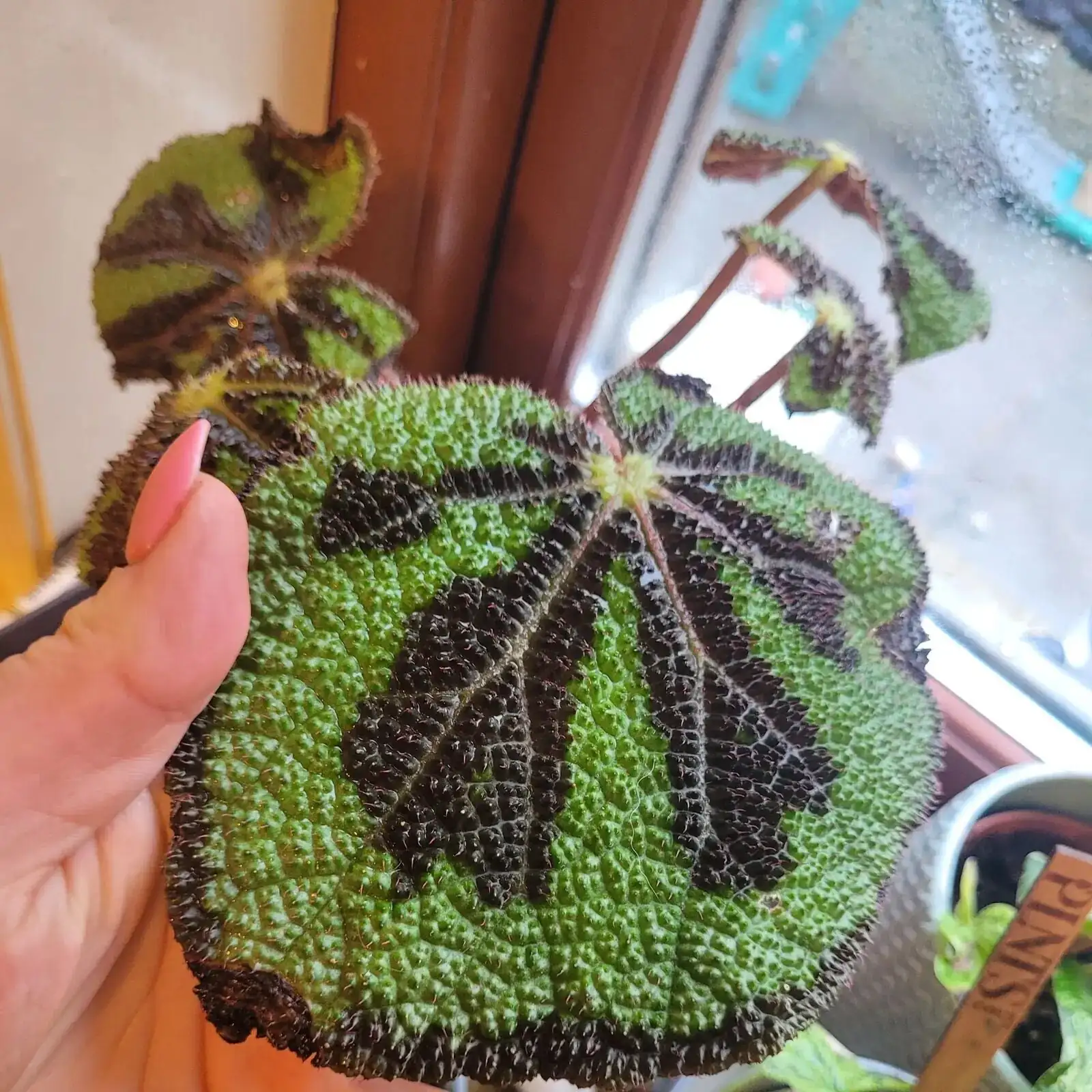
If your Iron Cross Begonia has been hinting for help with yellowing patches or crispy leaf edges, don’t rush the watering can—build smarter humidity instead. With Begonia masoniana, moisture in the air matters as much as moisture in the pot. Dial in humidity with intention—humidifiers, pebble trays, thoughtful plant grouping, and gentle airflow—so you can water less, dodge leaf scorch, and keep those dark “iron cross” markings sharp.
Meet Begonia masoniana, the Iron Cross Begonia
Compact, textural, and dramatic, this rhizomatous begonia is prized for its bold, dark cross stamped across each softly nubbled leaf. It stays petite—about 20–30 cm (8–12 in) tall—and spreads into a handsome clump (30–45 cm/12–18 in) with good care. Indoors it shines in bright, indirect light; in truly warm, humid climates (roughly USDA Zones 10–12), it can carpet shaded garden floors beneath trees.
- Family: Begoniaceae; genus: Begonia
- Origin: Southern China and northern Vietnam (often cited in cultivation)
- Growth: Rhizomatous, clump-forming; small, pale flowers appear in summer but foliage is the star
- Sensitivities: Cold, dry air, and harsh sun can yellow leaves; below ~10°C (50°F) edges turn brown and crispy
Light and temperature: soft light, steady warmth
- Light: Bright, indirect light to partial shade. Aim for about 50–70% shade (30–50% of full sun). East or north windows are ideal, or use a sheer curtain.
- Temperature: Best at 14–22°C (57–72°F). Keep above 10°C (50°F) in winter to prevent leaf damage; growth slows above ~32°C (90°F).
- Drafts: Keep away from hot/cold vents and door drafts.
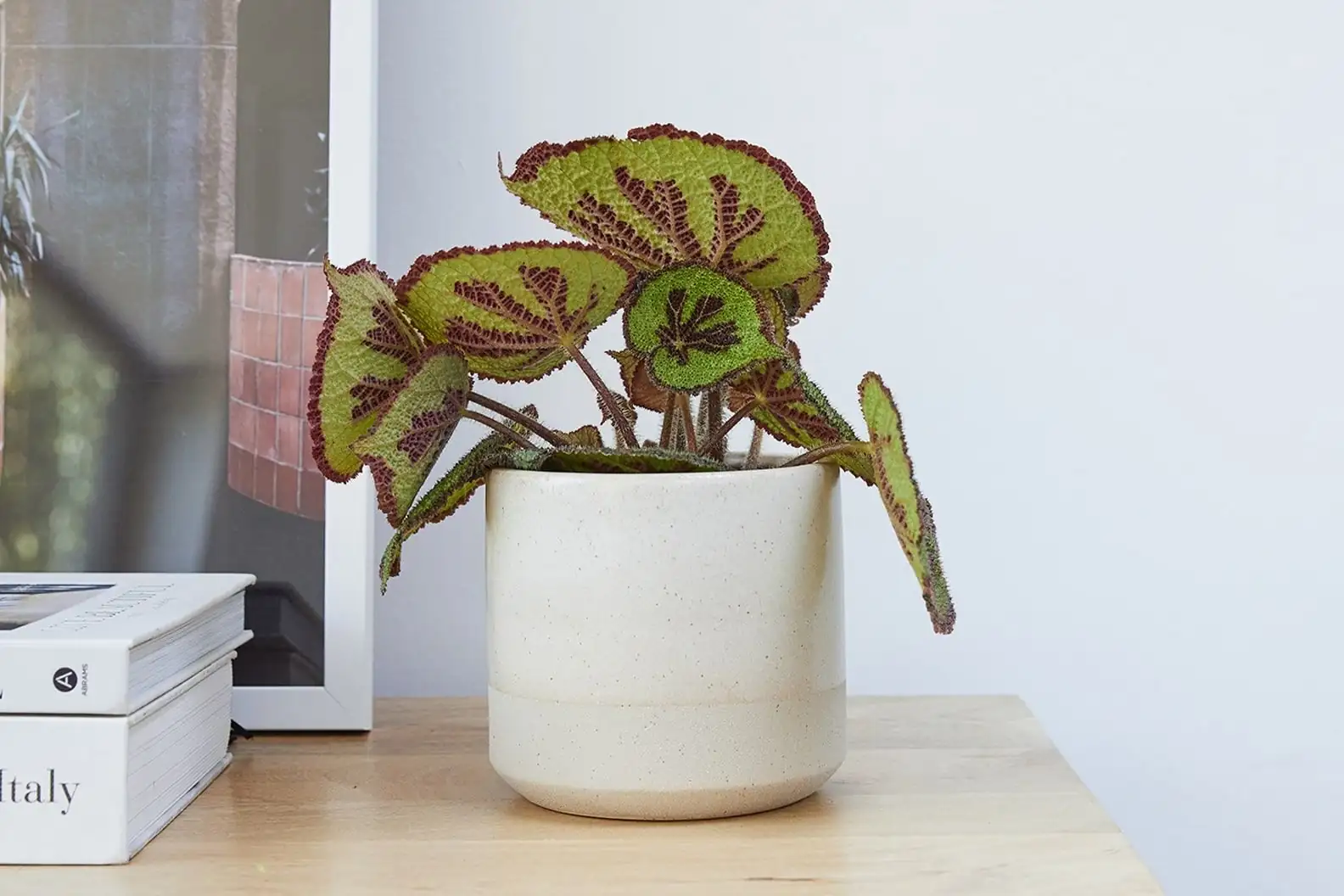
Why humidity (not extra watering) fixes crispy margins
When air is too dry—especially in brighter light—leaves lose water faster than roots can supply it. The result: yellowing between veins, brown rims, and that “scorched” look. Raising ambient humidity slows transpiration so:
- Leaves stay hydrated and supple.
- Soil stays evenly moist longer, so you water less.
- You avoid the cycle of overwatering-then-rot that comes from compensating with the watering can.
Target 60–70% relative humidity for consistently crisp patterning and plumper leaves.
The humidity-first toolkit
Think of humidity as a layered strategy. Combine two or more of these for the biggest impact, especially in winter heat or summer AC.
1) Humidifiers: the heavy lifter
- Place a cool-mist humidifier 30–60 cm (1–2 ft) from the plant, set to maintain ~60–70% RH.
- Run it on a timer during daylight hours; refresh water daily and clean weekly to prevent mineral dust and microbes.
- Pair with a small, gentle fan across the room to keep air moving without blasting the leaves.
Tip: In very dry homes, the humidifier is often the difference between “surviving” and “thriving.”
2) Pebble trays that actually work
A wide, open tray evaporates more than a tiny saucer. Set it up like this:
- Choose a tray wider than the plant’s leaf spread.
- Add 2–5 cm (1–2 in) of rinsed pebbles; top up with water to just below the pot’s base. The pot should never sit in water.
- Refresh and wipe the tray weekly to prevent stale odors or algae.
- Bonus: Place the tray beneath a group of humidity-loving plants (see grouping below) to amplify the effect.
Anecdotally, pebble trays can keep the microzone around begonias more comfortable, but in winter many growers still need a humidifier for truly stable humidity.

3) Strategic grouping: create a mini “cloud forest”
Cluster humidity lovers—begonias, ferns, fittonias, calatheas—within 15–30 cm (6–12 in) of each other. Plants transpire, and together they elevate local humidity. Combine with a pebble tray under the cluster for a measurable bump.
- Keep some space between leaves (2–3 fingers) to prevent stagnant pockets.
- Rotate plants every few weeks so each gets even light.
4) Airflow: humidity plus movement = healthy leaves
High humidity without airflow invites Botrytis, powdery mildew, and leaf spots. Maintain gentle, consistent movement:
- Use a silent USB fan on low, angled past (not at) the plants.
- Prune an occasional older leaf at the base in summer to open the canopy and improve circulation.
- Water early in the day so surfaces dry before evening.
Note on misting: If you mist, mist the surrounding air lightly rather than soaking leaves. Begonia foliage is tender; persistent wetness plus low airflow encourages disease.
5) Smart placement
- Best rooms: Bright bathrooms or kitchens often sit naturally at higher humidity.
- Indoors: Set back from a bright window behind a sheer curtain. Keep clear of drying vents and AC.
How better humidity lets you water less
At 60–70% RH in bright, indirect light and a breathable mix, many Iron Cross begonias need water about every 3–4 days in summer. If you raise humidity and reduce air blasts, you may notice the interval stretch slightly because the potting mix doesn’t race to dry out. In winter (semi-dormant), water very sparingly or pause to avoid rhizome rot—focus on keeping the air humid instead.
Watering, soil, and pots: moisture without waterlogging
- Watering rhythm: Keep the mix evenly moist in the growing season but never soggy. Let the top 1–2 cm (½–¾ in) of mix dry between waterings.
- Winter rest: Reduce drastically—sometimes to near-zero—while keeping temps above 10°C (50°F) and humidity near 60–70%.
- Mix: Loose and fast-draining—potting compost blended with peat or coco coir plus coarse sand/perlite.
- Pot: Always choose drainage holes; a 12–15 cm (4.7–5.9 in) pot suits most mature plants.
Feeding and growth
- Fertilizer: From April to August, feed every 2 weeks with a balanced fertilizer (e.g., 20-20-20) at label dilution. Pause or reduce in cooler, low-light months.
- Flowers: Small, pale blooms in summer are charming but secondary to foliage.
Pruning, repotting, and long-term shape
- Prune: In summer, remove a few older leaves at the base to improve airflow and trigger fresh growth.
- Repot: Annually in spring. Thin crowded rhizomes and replant offsets with 2–3 strong roots in a fresh, airy mix.
- Renewal: After 4–5 years, vigor may wane. Restart by taking cuttings for a fresh, compact plant.
Easy propagation (why this begonia is so shareable)
- Division (spring): Lift the rhizome, slice into ~10 cm (4 in) sections with a growing tip. Let cuts dry briefly; plant 2–3 pieces per pot with 4–5 leaves across the pot. Water lightly and keep in partial shade until established.
- Leaf cuttings (early summer): Cut a mature, healthy leaf about 1 cm (0.4 in) from the petiole. Insert 6–7 cm (2.4–2.8 in) sections into sterile, moist sand or propagation mix with part of the leaf above the surface. Roots form in ~3–4 weeks; transplant after ~2 months once plantlets have a couple of new leaves.
Troubleshooting yellowing and crispy edges
- Yellowing or scorchy patches: Usually dry air plus bright light, or too much direct sun. Move to bright, indirect light; raise humidity to 60–70%.
- Brown margins in cool rooms: Likely chilling; keep above 10°C (50°F) and away from cold drafts.
- Puckered or limp leaves with wet mix: Overwatering; improve drainage and let the top layer dry before watering again.
Pests and diseases: prevention is airflow
- Fungal issues: Gray mold (Botrytis), powdery mildew, and leaf spot happen when foliage stays wet and air is stagnant. Improve airflow, avoid splashing leaves, and remove affected tissue promptly. Copper-based products are sometimes used preventively; use labeled fungicides if needed.
- Pests: Scale insects may appear; treat with horticultural oil or insecticidal soap and repeat as directed.
Safety
- Toxic if ingested (especially rhizomes/underground parts); may irritate sensitive skin. Keep away from pets and small children; wash hands after handling if you’re prone to irritation.
Seasonal rhythm at a glance
- Spring: Repot; divide rhizomes if crowded; resume feeding. Rebuild humidity after dry winters.
- Growing season: 50–70% shade; keep soil lightly moist; fertilize every 2 weeks; maintain 60–70% RH.
- Early summer: Take leaf cuttings; root in ~3–4 weeks; transplant in ~2 months.
- Autumn: Days shorten—lean harder on humidity to support new leaves as watering tapers.
- Winter: Semi-dormant; keep above 10°C (50°F); water very sparingly; maintain humidity and airflow.
Placement ideas
- Indoors: A bright room with filtered light—east or north windows are perfect. Set back from south/west windows behind sheers.
- Outdoors (warm climates only): Sheltered, shaded understory planting where it can knit into a soft, ground-hugging carpet.
Symbolism and story
Iron Cross Begonia doesn’t have a codified “flower language,” but its striking, dark cross often reads as quiet boldness—an emblem of resilience in shade. Long cherished by houseplant enthusiasts, it’s also a plant of generosity: one well-placed leaf cutting can become a handful of new plants to pass along.
Fun to know
- The name “Iron Cross” celebrates the dramatic, cross-like blotch on each leaf.
- Filtered light keeps the pattern crisp; harsh sun can blur and scorch it.
- Grouped in warm shade outdoors, it can form a lush, living carpet under trees.
Your humidity-first game plan (quick checklist)
- Target: 60–70% RH with a simple hygrometer.
- Combine: Humidifier + pebble tray + plant grouping.
- Ensure: Gentle airflow and no direct blasts from vents.
- Result: Fewer waterings, fewer crispy edges, and a compact, vividly patterned Iron Cross that looks like it lives in a little cloud—because, in a way, it does.