

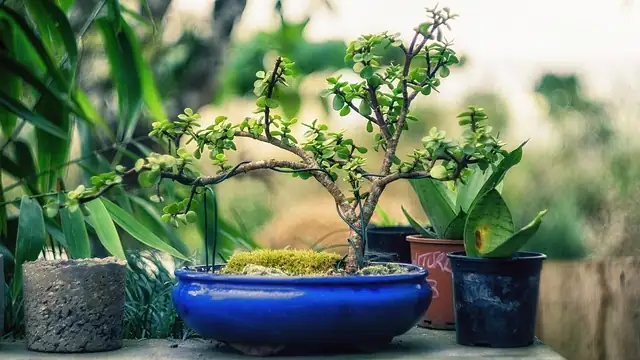
Picture a plant that saves water like a camel, photosynthesizes on moonlight, and rewards your patience with clouds of starry, sweet-scented blooms in winter. Meet Crassula ovata—the Jade Plant—an everyday marvel of desert engineering and a surprisingly sophisticated housemate.
Meet the Jade Plant, a Mini Tree with a Big Personality
- Scientific name: Crassula ovata (family Crassulaceae)
- Common names: Jade Plant, Money Plant, Lucky Plant, Dollar Plant, Friendship Tree, Money Tree
- Origins: Native to South Africa’s KwaZulu-Natal and Eastern Cape provinces, and Mozambique
- Look and feel: Thick, glossy, obovate leaves like polished jade stones; opposite leaf pairs rotate 90° at each node (a classic Crassula hallmark). As it matures, it develops a chunky, branching trunk with bark that can peel in horizontal strips—perfect for a bonsai-style silhouette.
- Size: Typically 60–90 cm (2–3 ft) indoors; up to about 2.5 m (8 ft) outdoors in suitable climates
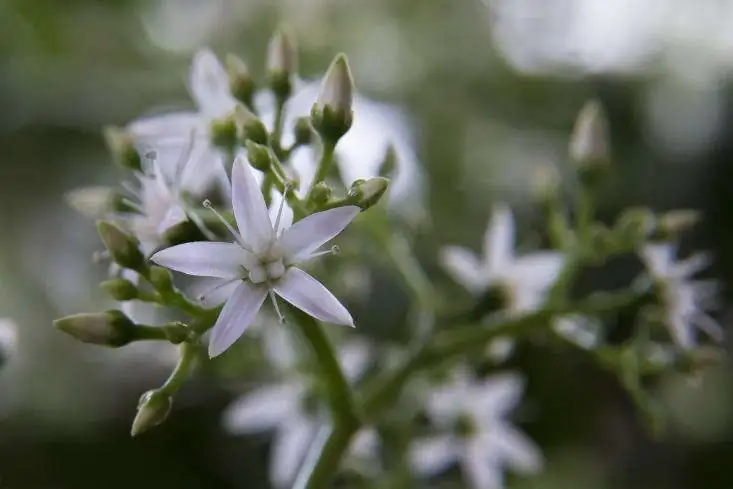
- Flowers: Winter-blooming clusters of small, five-pointed stars—white to soft pink—about 15 mm (0.6 in) across, arranged in rounded heads ~5 cm (2 in) wide. Often lightly sweet-scented.
Bright sun can blush those leaf edges red—natural sunscreen made of protective pigments.
Built for Drought: Water-Storing Leaves and Stems
Jade plants are succulents, meaning their tissues double as canteens:
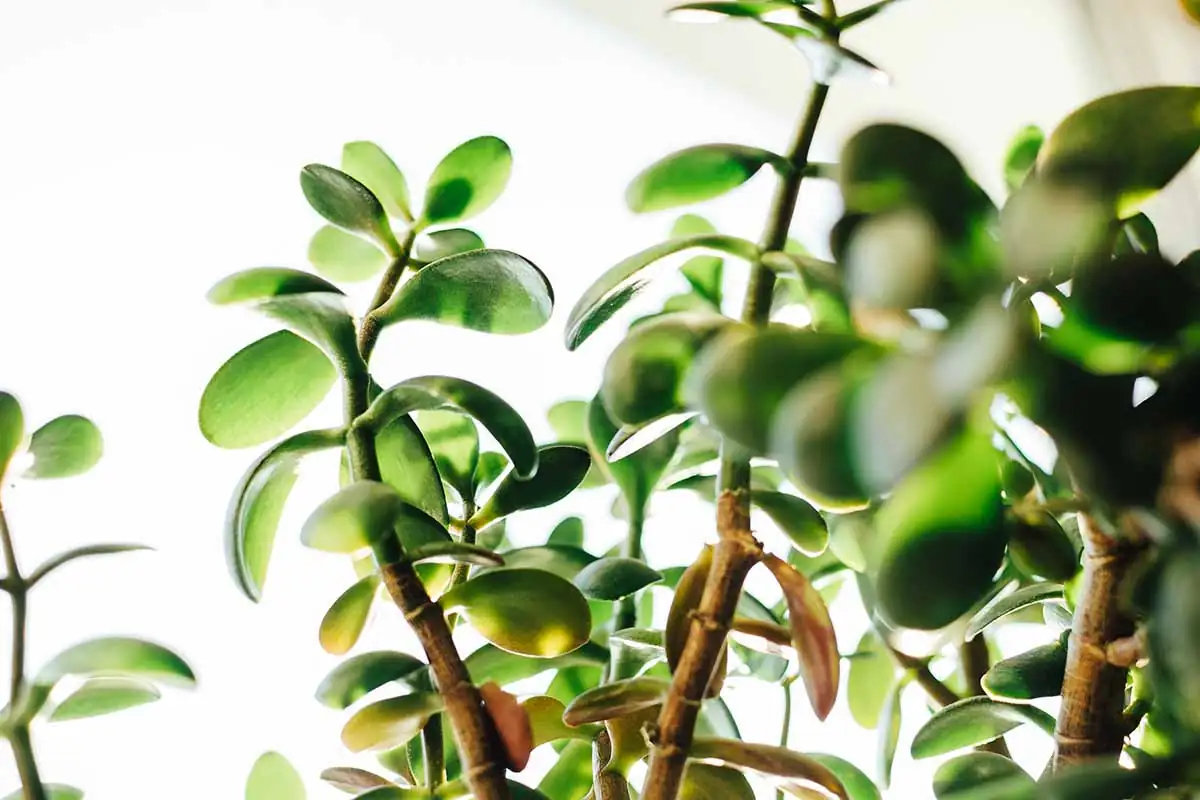
- Leaves are thick, fleshy, and glossy, typically 3–9 cm long and 1.8–4 cm wide. Their cells pack oversized vacuoles that store water like reservoirs.
- Stems start green and succulent, then thicken and turn woody with age, adding a sturdy “mini-tree” architecture that also holds moisture.
- The cuticle (the leaf’s waxy skin) helps lock water in; tightly controlled pores (stomata) minimize daytime loss.
Result: once established, a jade plant can coast through stretches without water—so long as you resist the urge to “love it to death” with frequent sips.
How a Houseplant Runs on Moonlight: CAM Photosynthesis

Most plants open their stomata by day, taking in CO₂ while losing water to heat. Jade plants flip the script with CAM (Crassulacean Acid Metabolism), a desert-smart strategy that slashes water loss.
- Night shift: In the cool, dark hours, stomata open. CO₂ flows in and is overnight-stored as malic acid inside vacuoles. Think of it as bottling up carbon while the air is gentle and evaporation is low.
- Day shift: Stomata stay mostly closed to conserve water. The stored malic acid is “uncorked,” releasing CO₂ right where the photosynthetic machinery needs it. Sunlight powers sugar production without the steep water cost of daytime gas exchange.
Why this matters at home:
- Cooler nights help CAM run efficiently, encouraging good “acid loading” in the leaves.
- Bright days ensure the plant can cash in that stored CO₂ and keep energy books in the black—all with minimal transpiration.
The Bloom Equation: Bright Days, Cool Nights, and a Leaner Watering Hand
Indoor flowering is a badge of honor—and surprisingly achievable with the right seasonal cues:
- Shorter days: Natural winter photoperiod helps set the stage for buds.
- Cool nights: Around 13°C (55°F) is ideal—cool enough to favor CAM’s night work and gently “nudge” the plant toward bloom.
- Reduced watering: A drier spell in fall/winter mimics its native climate and reinforces the signal that it’s time to flower.
- Very bright light: Sun-fueled days are essential for building the energy reserves that support bud development.
Put together, these cues whisper “winter” in a language jade plants understand: conserve, set buds, then celebrate with a froth of starry flowers.
Light, Temperature, and Placement
- Sunlight: Aim for 4–6 hours of strong light daily. Young plants appreciate bright indirect light; established plants often prefer some direct sun. Low light = stretched, leggy growth.
- Best spot: A sunny south- or west-facing window. In summer, an outdoor stint in bright shade/filtered sun is fine—acclimate slowly to avoid sunburn.
- Temperature: 18–24°C (65–75°F) indoors is ideal. Cooler winter nights down to ~13°C (55°F) are tolerated—and helpful for blooms. Not frost-hardy; protect when near 10°C (50°F).
Watering and Soil: Set Up for Success
- Watering rhythm: Soak thoroughly, then let the mix dry out completely.
- Spring/summer: about weekly or less, depending on light, pot size, and heat
- Fall/winter: sparingly—only when fully dry (sometimes monthly or less)
- Soil: Fast drainage is non-negotiable. Use a cactus/succulent mix or blend ~2:1 potting soil:perlite. Empty saucers promptly; avoid wet leaves.
- Fertilizer: Light feeder. During spring/summer growth, use diluted cactus/succulent or balanced feed every 2–4 weeks. Stop in fall/winter.
Overwatering is the quickest route to root rot. When in doubt, wait.
A Seasonal Blueprint for Bloom
- Spring
- Increase watering as growth resumes
- Begin light feeding
- Prune to shape; repot if needed
- Summer
- Peak growth with a consistent soak-and-dry routine
- Optional outdoor “vacation” in bright filtered light
- Fall
- Taper watering; stop fertilizing
- Ensure bright days and naturally shortening daylight (avoid bright artificial light at night)
- Winter
- Keep bright and cool (nights ~13°C / 55°F)
- Water very sparingly
- Watch for buds and starry flowers
Pruning, Shaping, and Propagation
- Pruning: Early spring is prime time. Tip-prune or cut stems back to a side branch to encourage a bushy, bonsai-ready canopy and strengthen the trunk over time.
- Propagation: Almost comically easy.
- Stem cuttings: 7.5–10 cm (3–4 in) pieces; callus for a few days; insert into lightly moist, well-draining mix.
- Leaf cuttings: Take a healthy leaf with its attachment point; let it callus; place on the soil surface and keep barely moist.
- Roots form in 1–2 weeks in warm, bright conditions. Water sparingly until established.
Buying, Repotting, and Everyday Care
- Buying guide: Choose plants with firm, plump leaves and sturdy stems. Avoid mushy tissues, yellowing/shrivel, or visible pests.
- Repotting: Every 2–3 years when young; 4–5 years for mature plants. Slightly root-bound is fine. Repot in early spring; wait ~1 week to water and ~1 month to fertilize.
- Humidity: Prefers dry air—right at home in typical indoor conditions.
Pests, Problems, and Quick Fixes
- Usual suspects: Mealybugs, scale, aphids, spider mites. Spot-treat with cotton swabs dipped in rubbing alcohol; repeat as needed.
- Root rot: Almost always from overwatering or poor drainage. Act fast: improve aeration, let the mix dry, and trim rot if necessary.
- Powdery mildew: Uncommon indoors; improve airflow if it appears.
Safety Note
Mildly toxic to cats, dogs, and horses if eaten (may cause vomiting, lethargy, poor coordination). Sap can irritate sensitive skin. Keep out of reach of pets and small children.
Symbolism and “Flower Language”
Jade plants are classic emblems of prosperity, friendship, and longevity—hence all those “money” nicknames and their popularity in feng shui. While there’s no botanical basis for luck, the symbolism likely grew from:
- Their coin-like leaves and enduring, tree-like form
- Their long lifespans—often passed down as living heirlooms
- The rarity of indoor blooms, seen as an especially auspicious event
In feng shui practice, they’re often placed in the southeast “wealth corner” of a home or office and gifted for housewarmings and business openings. Think of this “flower language” as cultural poetry layered onto solid horticulture: care well, and your jade plant’s vigor becomes a tangible metaphor for steady growth.
Fast Facts to Impress Your Plant Friends
- Bright sun can paint leaf margins red, a protective pigment acting like plant sunscreen.
- A single fallen leaf can root and start a new plant.
- Flowering is most likely in winter after a stretch of bright days, cool nights, and lean watering.
- Well cared for, a jade plant can live for decades—some become bona fide family treasures.
In short: give Crassula ovata bright days, cool nights, a free-draining home, and a careful, sparse watering hand. It will repay you with sculptural beauty year-round—and, with the right seasonal hints, a winter constellation of tiny stars that smells faintly sweet and feels a little bit like magic.


