

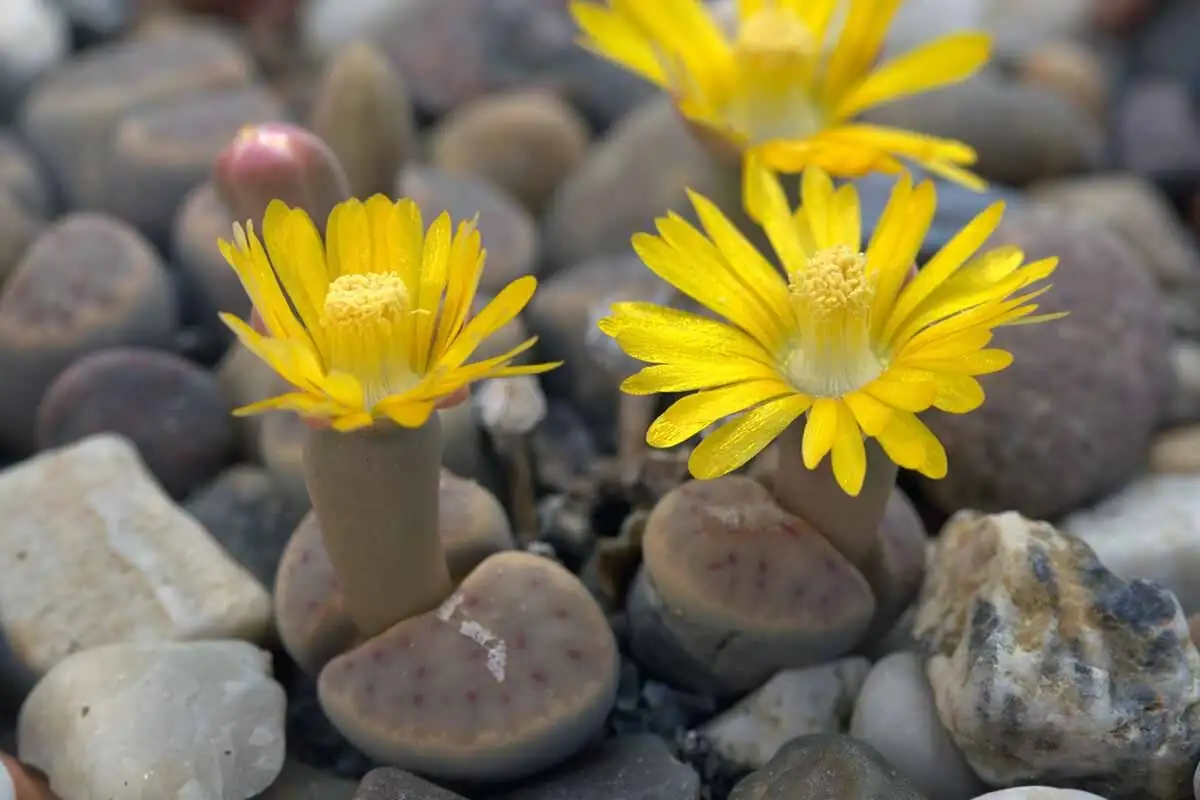
If a rock could whisper, it would probably tell the story of Lithops—the “living stones” that hide in plain sight all year, then split open to release a daisy-like bloom just when you’ve almost forgotten they’re there. That quiet drama is why Lithops have come to symbolize resilience, patience, and beauty in disguise. They are proof that the smallest, stillest things can outlast the desert and stage an autumn surprise.
Meet the “Living Stones”
Living Stones (Lithops spp.), members of the Aizoaceae family, come from the deserts of southern Africa, especially South Africa and Namibia. Each plant is a single, ultra-compact body formed by two thick, fused leaves with a neat central slit. Their tops are streaked and speckled in stone tones—grey-green, tan, brown—with tiny translucent “windows” that let light in, all of it perfect camouflage among gravel.
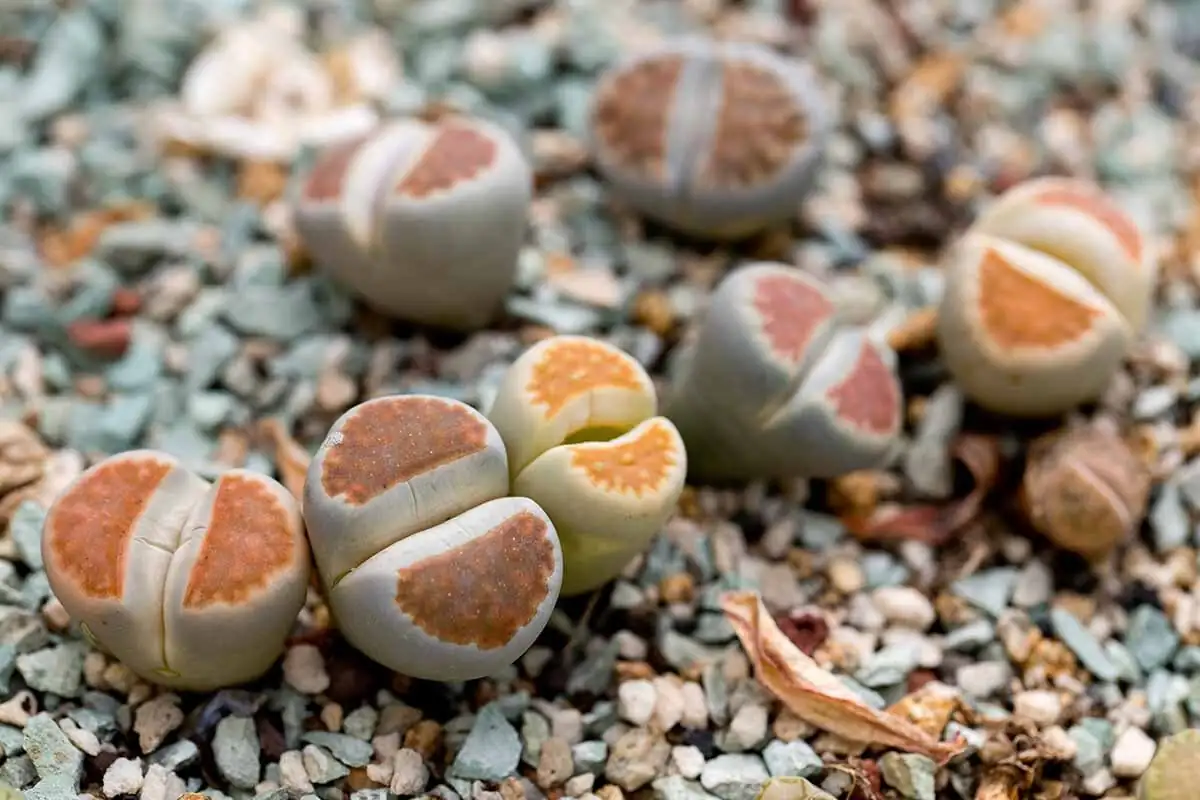
- Size and habit: individual heads are usually 1–4 cm across and sit nearly flush with the soil; over the years, they may clump into small clusters.
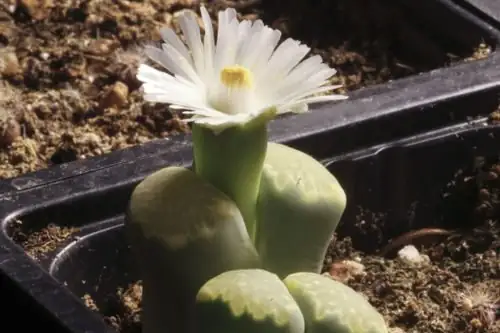
- Flowers: in late summer through autumn, a surprisingly large, daisy-like bloom (commonly white; some species and cultivars bloom yellow) emerges from the central fissure. Seed-grown plants typically need about 2–3 years to reach flowering size.
- Golden rule of care: bright light to full sun and very careful watering in a gritty, fast-draining mix.
How a survival strategy became a “flower language”
Lithops’ modern “flower language” isn’t something lifted from a Victorian dictionary—it’s a meaning we read from the plant’s own life story. Their symbolism flows directly from how they endure the desert and choose their moment to bloom.
Beauty in disguise
Camouflage is Lithops’ superpower. Their stone-like colors and mottled “windows” make them nearly invisible to grazing animals and harsh sun. The message: worth doesn’t always announce itself. Beauty can be quiet, cunning, and perfectly adapted to its place.
Resilience that looks like stillness
In drought and heat, Lithops sit tight, conserving water in those thick leaf-pairs. Each year a brand-new pair forms inside, slowly consuming the old pair until it dries to a papery shell. That annual self-renewal is a subtle masterclass in survival. Translation: resilience isn’t bravado—it’s steady resourcefulness.
Patience as a way of life
Lithops grow slowly. Many need 2–3 years from seed to first bloom, and they reward restraint: water only when the mix is fully dry, and hold back during their leaf-replacement phase. Their rhythm says what every wise gardener knows—real growth takes time, and rushing breaks what patience builds.
The autumn reveal
Just when days soften and we lean toward introspection, the plant opens along its seam and produces a crisp white or cheerful yellow flower. That timed surprise is a reminder: the quiet work you’ve done out of sight can become your brightest moment.
Flower language, then and now
Floriography—the language of flowers—blossomed in Ottoman courts and later in Victorian salons, where bouquets carried coded messages. Lithops, a southern African desert specialist, didn’t feature in those classic lists. Today, plant lovers extend the tradition, reading symbolism from ecology and form. For Lithops, the modern message is clear:
- Resilience: you can thrive in hard places.
- Patience: progress is slow, steady, and cyclical.
- Beauty in disguise: what blends in today may bloom brilliantly tomorrow.
Think of a Lithops as a tiny, living note that says, “Keep going. Your season will come.”
Gifting guide: Say more with “living stones”
When to gift
- Milestones that took grit: graduations, career changes, long projects finished at last
- Recovery and encouragement: illness, setbacks, or new beginnings
- Mindfulness and minimalism: a desk companion that rewards calm attention
- Long-distance bonds: a durable, compact emblem of steady care
How to present it
- Choose plants that are firm and plump, with clean patterns and no mushy spots.
- Use a shallow pot with a gritty, fast-draining mix; top-dress with pebbles for a “lost among stones” reveal.
- Include a simple care card:
- Light: 6+ hours of direct sun if possible; acclimate gradually to stronger light.
- Water: sparingly, only when fully dry; keep mostly dry in winter and during leaf replacement.
- Temperature: happiest around 15–26°C (59–79°F); protect from frost.
- Soil: very mineral, excellent drainage; never leave water in the saucer.
- Add a message:
- “Patience nourishes quiet miracles.”
- “Beauty hides in plain sight—until it blooms.”
- “Slow and steady, then suddenly: you.”
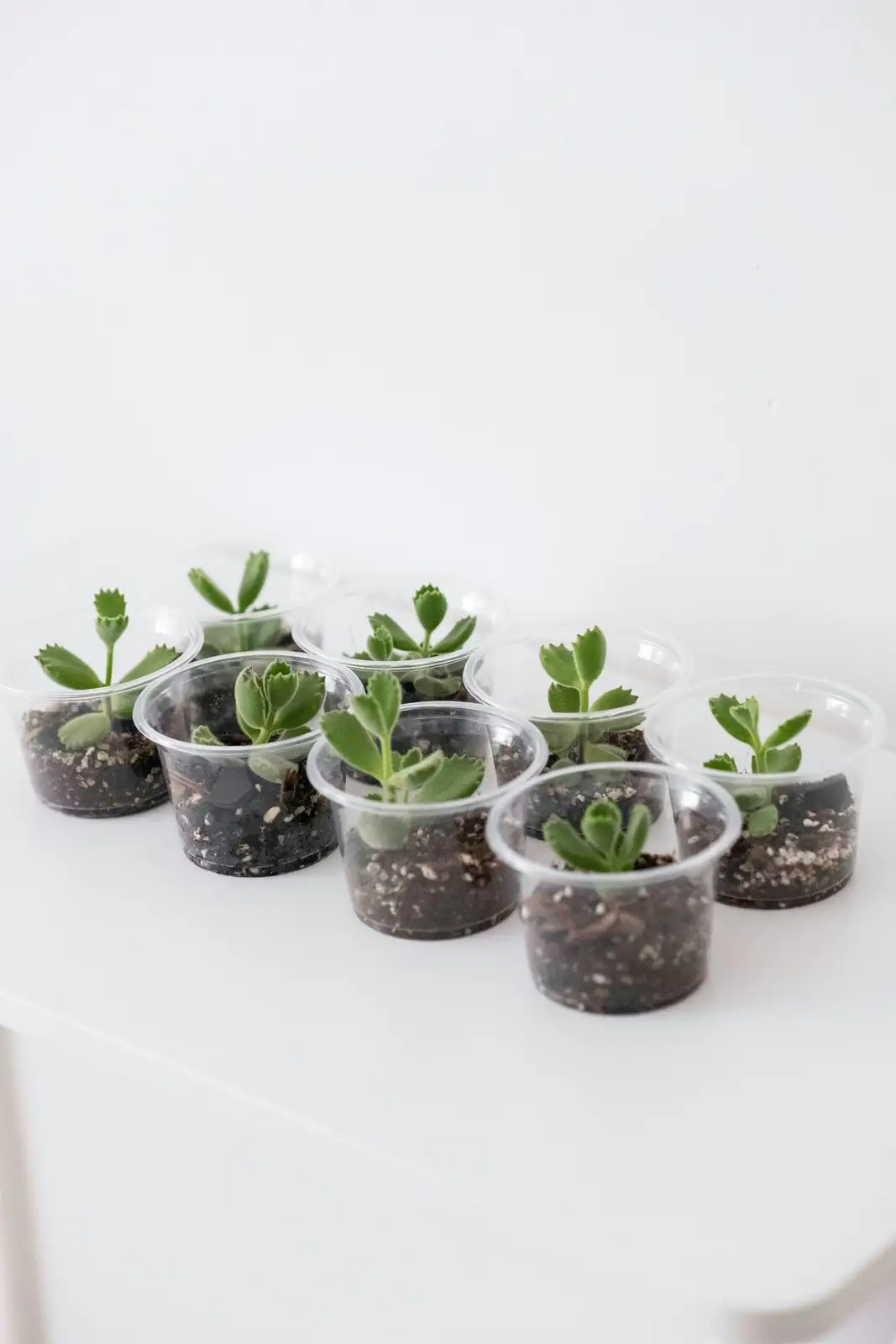
Note: Generally regarded as non-toxic to people and pets, but keep out of reach—those little stone-like bodies can be a choking hazard.
Styling Lithops at home: décor with meaning
- Windowsill gallery: line up a few shallow terracotta bowls, each holding 3–5 heads in a matching pebble top-dress. It’s a museum of mimicry that rewards close looking.
- “Find the flower” tray: arrange mixed pebbles and several Lithops so the plants nearly vanish—until autumn, when blooms pop like confetti.
- Minimalist desk companion: one plant in a small clay pot beside a notebook—a daily nudge toward focus and patience.
- Autumn tablescape: cluster small pots among dried grasses and seedpods; when the white or yellow blooms open, the table tells a story of quiet abundance.
- Bright balcony vignette: under cover from heavy rain, where air moves and the sun is generous.
Avoid persistently humid rooms and dim corners; airflow and light are part of the look—and the health.
Caring in the spirit of the symbolism
Let the message guide the method: less haste, more light, and a clean, gritty mix.
- Sunlight
- Bright light to full sun; aim for 6+ hours daily.
- In intense summer heat behind glass, give light midday shade and good airflow.
- Newly acquired plants appreciate gradual acclimation.
- Water
- Wait until the soil is completely dry; a hint of wrinkling is your cue.
- Reduce watering sharply in hot summer rest.
- Late summer–autumn: water a bit more cautiously to support growth and flowers—never keep them wet.
- Winter and during leaf replacement: keep mostly dry until the old leaves are largely papery.
- Soil and pot
- Use a very fast-draining, mineral-rich mix (coarse sand, grit, pumice).
- Shallow pots suit their modest roots; add a pebble top-dress for stability without trapping moisture.
- Temperature and humidity
- Best around 15–26°C (59–79°F); prolonged cold below about 5°C (41°F) is risky.
- Prefer low humidity and excellent ventilation.
- Feeding
- Keep it light and infrequent. Options: a single autumn feed at 1/4 strength, or a very dilute, low-nitrogen cactus fertilizer during active growth only—then stop during summer rest and in winter.
- Health watch
- Biggest risk: rot from overwatering or slow-draining soil.
- Pests to watch: mealybugs (including root mealybugs), aphids, fungus gnats in damp mixes.
- Quarantine new arrivals; repot into clean, gritty media if pests are suspected.
Quick symbolism FAQ
- What do Lithops flowers “say”?
- Resilience, patience, and beauty in disguise—the bloom is a victory lap after months of stillness.
- When will mine bloom?
- Typically in late summer to autumn. Seed-grown plants usually reach flowering size in about 2–3 years.
- Do flower colors change the message?
- Many bloom white (a whisper of clarity and sincerity); some bloom yellow (a spark of cheer). Color can tint the tone, but the core meaning—resilient beauty revealed in its time—remains.
A final note from the stones
Lithops teach a gentle kind of courage: blend in when you must, store your strength, and choose your moment. Gift one when words feel too loud—or keep one where you’ll see it every morning. In a world that rushes, a small stone that blooms in autumn is a perfect reminder that patience is not delay; it’s preparation for a dazzling reveal.