

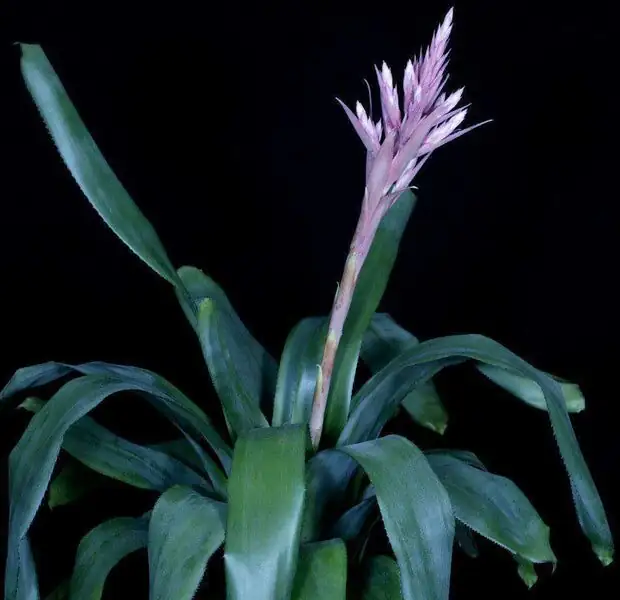
If you own a Dragonfly Bromeliad (Aechmea fendleri), you already know its signature move: a vase-shaped rosette that collects water like a tiny rainforest pool. Beautiful, yes—but that “cup” is also where most myths about bromeliad care begin. Let’s bust the big ones and show you exactly why rain or distilled water matters, how often to flush the tank, how to spot salt stress early, and how to keep algae under control without drama.
Meet your plant: Aechmea fendleri in brief
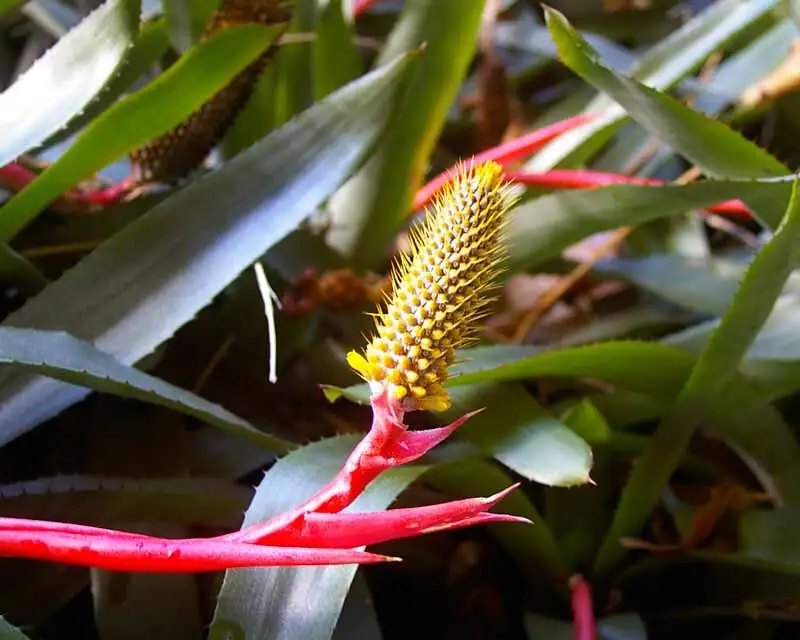
- Look: An elegant, vase-shaped rosette of arching, silver‑green leaves; in summer, a tall spike with pink bracts and small purple flowers (the bracts usually outlast the blooms).
- Size: About 60 × 60 cm (24 × 24 in), clumping slowly as it produces pups.
- Origin and habit: An epiphyte from northern South America (notably Venezuela and nearby regions), built to catch clean rainwater and leaf litter from the canopy.
- Light: Bright, filtered light; partial sun/partial shade. Avoid harsh midday sun that can scorch.
- Temperature and humidity: 15–27°C (59–81°F), best above 10°C (50°F). Moderate humidity; dry air can invite spider mites.
Myth-busting water quality for tank bromeliads
Myth 1: “Tap water is fine.”
- The truth: Many municipal tap waters are mineral-heavy (hard). Those minerals accumulate in the cup and leaf bases, stressing tissues adapted to soft, clean rain.
- What happens over time: Browning leaf tips and edges, a chalky white ring inside the cup, dull foliage, and sluggish growth. That’s salt stress—not “just old leaves.”
- The fix: Use rainwater or distilled water for the cup. If you must improvise, reverse osmosis (RO) water is a good backup. Simply “dechlorinated” tap water still contains hardness minerals—it won’t solve the problem.
Myth 2: “Never dump the tank; it’s supposed to be full forever.”
- The truth: In nature, rain flushes bromeliad cups frequently. Indoors, water sits. Stagnant water concentrates salts, fertilizers, and biofilms that can irritate tissues and invite algae.
- The fix: Keep water in the cup, but give it a thorough refresh at sane intervals. A full flush every 4–8 weeks works beautifully for Aechmea fendleri. Flush extra after fertilizing heavily or during heat waves.
Myth 3: “Algae in the cup means my plant is sick.”
- The truth: A thin green film is mostly cosmetic. The cup is a micro-pond; algae simply means light + nutrients + time.
- The fix: Control, don’t panic. Flushing, light adjustment, and gentle cleaning are all it takes.
Exactly how to water and flush the “cup”
Your best water
- Best: Rainwater or distilled water.
- Also acceptable: RO water.
- Avoid: Hard tap water long-term. If it’s all you have, use it sparingly and flush more often.
Step-by-step cup care (the clean-water routine)
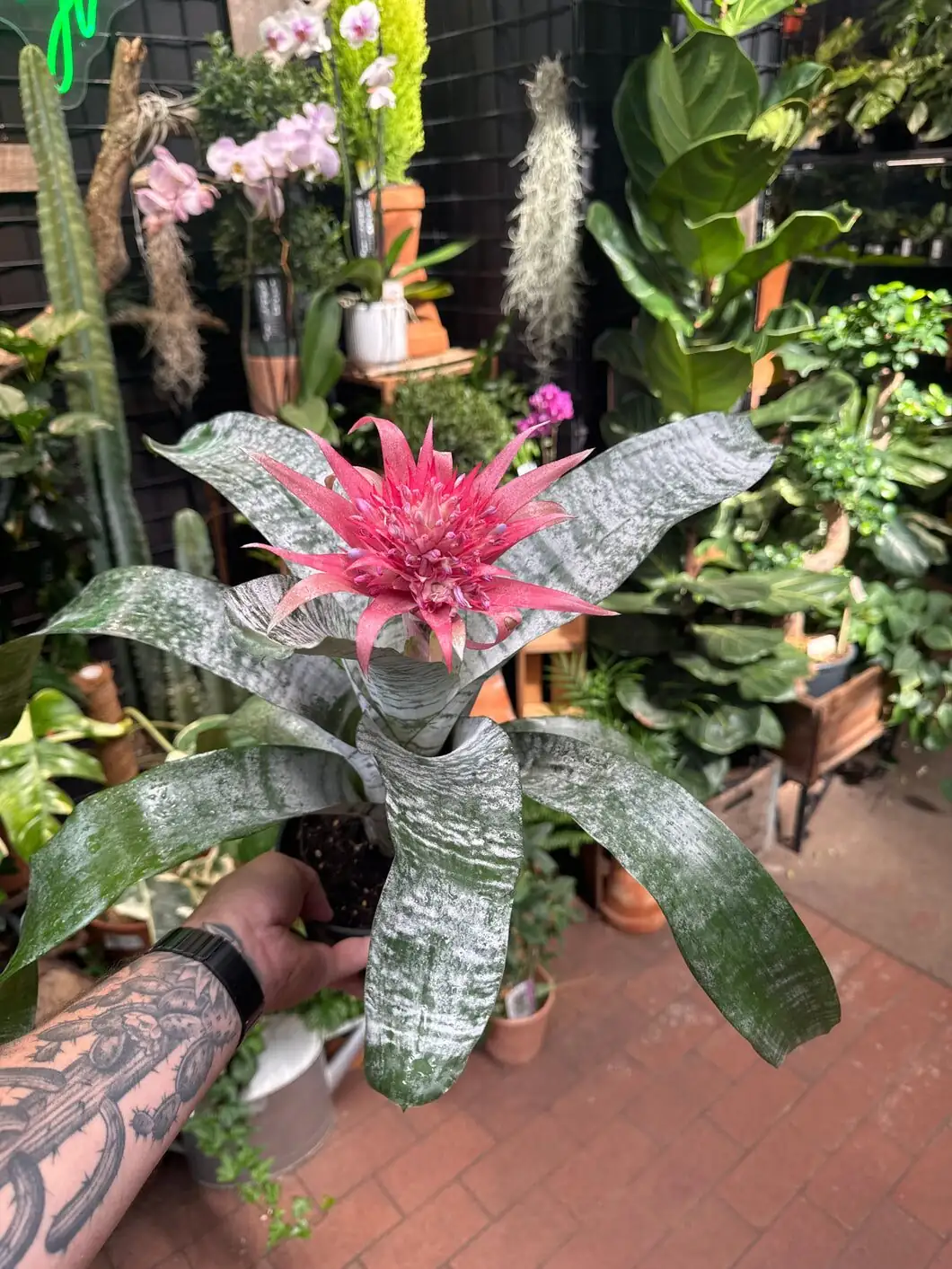
- Fill: Pour rain/distilled water into the central rosette (“cup”).
- Maintain: In warm months, keep water present in the cup; top up as needed. In cooler months, less evaporates—just don’t let it sit forever.
- Flush every 4–8 weeks:
- Tip the plant gently to pour out the old water (a turkey baster works too).
- Refill the cup fully with clean water; swish; pour out. Do this 2–3 times to rinse salts and biofilms.
- Refill with fresh water and you’re done.
- Potting mix: Keep the mix lightly moist in spring–late summer (never waterlogged); in winter, let it dry out before watering again.
Fertilizer, without the fallout
- When: Spring through late summer.
- What: A balanced liquid fertilizer at 1/2 strength every 2 weeks.
- How: As a gentle foliar feed or a small amount in the cup.
- Key: Flush the cup with plain water occasionally to reduce salt buildup—especially if you’ve been feeding into the tank.
Salt stress: what it looks like and how to reverse it
- Early signs:
- Browning or crispy leaf tips/edges despite otherwise decent watering
- A whitish crust or ring inside the cup or at leaf bases
- Dull, lackluster leaves; slower growth
- What to do:
- Switch immediately to rain/distilled (or RO) water.
- Perform a triple flush of the cup (fill, swish, drain—repeat).
- Reduce fertilizer strength or frequency; keep it at 1/2 strength maximum.
- Trim only fully brown tips; avoid cutting into healthy green tissue.
Easy algae control (no harsh chemicals required)
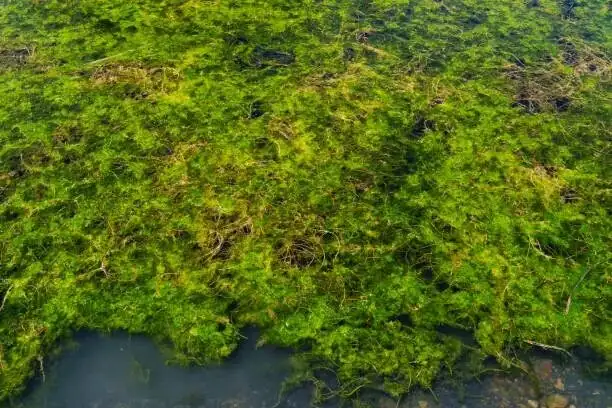
- Flush on schedule: A good rinse every 4–8 weeks disrupts algae before it builds.
- Adjust light quality: Bright, indirect light is ideal. Harsh direct sun can turbocharge algae in the cup while stressing leaves.
- Clean gently:
- Swish and dump a few times during your flush.
- If needed, wipe the inside of the cup with a soft, damp cloth or use a soft brush.
- Optional spot treatment: Add a small splash of 3% hydrogen peroxide diluted roughly 1:10 with water to the flush water, swish, and drain. Don’t overuse—once is usually enough.
- Go easy on fertilizer: Extra nutrients = extra algae. Keep it dilute and flush between feeds.
- Airflow helps: Gentle air movement discourages stagnant, algae-prone water.
Avoid: Bleach, dish soap, or copper-based products in the cup—they’re harsher than the plant needs.
Pot, mix, and airflow: the unsung heroes
Even perfect cup care can be undermined by soggy roots.
- Mix: Use an airy, fast-draining epiphyte blend—try equal parts orchid bark mix + perlite + coconut coir, or a 1:1 blend of orchid bark mix and general potting mix.
- Pot size: Snug is better (about 12.5–15 cm / 5–6 in for many plants). Oversized pots stay wet too long.
- Never let the pot sit in water. The cup can hold water; the pot shouldn’t.
- Bonus: Moderate humidity with good airflow keeps spider mites at bay.
Quick seasonal cheat sheet
- Spring–late summer:
- Bright, filtered light; keep mix lightly moist.
- Keep water in the cup; flush every 4–8 weeks.
- Feed at 1/2 strength every 2 weeks; flush occasionally to prevent salt buildup.
- Winter:
- Water the mix only after it dries.
- Refresh/top up the cup about every 4–8 weeks (less evaporation now).
- Skip heavy feeding until days lengthen.
Why this works for Aechmea fendleri
As a rainforest epiphyte, the Dragonfly Bromeliad evolved to sip pure, soft rainwater from its own reservoir while its roots cling to bark and breathe. Indoors, we’re simply mimicking that: clean water in the cup, fast drainage at the roots, bright filtered light, and periodic flushing to stand in for a tropical downpour.
A graceful finale—and fresh beginnings
After flowering, remove the spent spike and enjoy the clumping show as pups appear around the base. Pot them up once they’re about one‑third to half the size of the mother, using the same airy mix and clean-water routine.
Symbolism (and a quick note on “flower language”)
Bromeliads are often linked with hospitality and resilience—fitting for a plant that holds a welcoming “cup” of water and stays ornamental for ages. Western “flower language” traditions tend to be cultural, not botanical; here, the symbolism resonates because Aechmea fendleri literally hosts life in its tank and keeps going by producing pups after the showy bracts fade.
With rain or distilled water in the cup, a simple flush every few weeks, and an eye for early salt signs, your Dragonfly Bromeliad will look crisp, clean, and vividly architectural—no swampy tank or crispy tips required.