
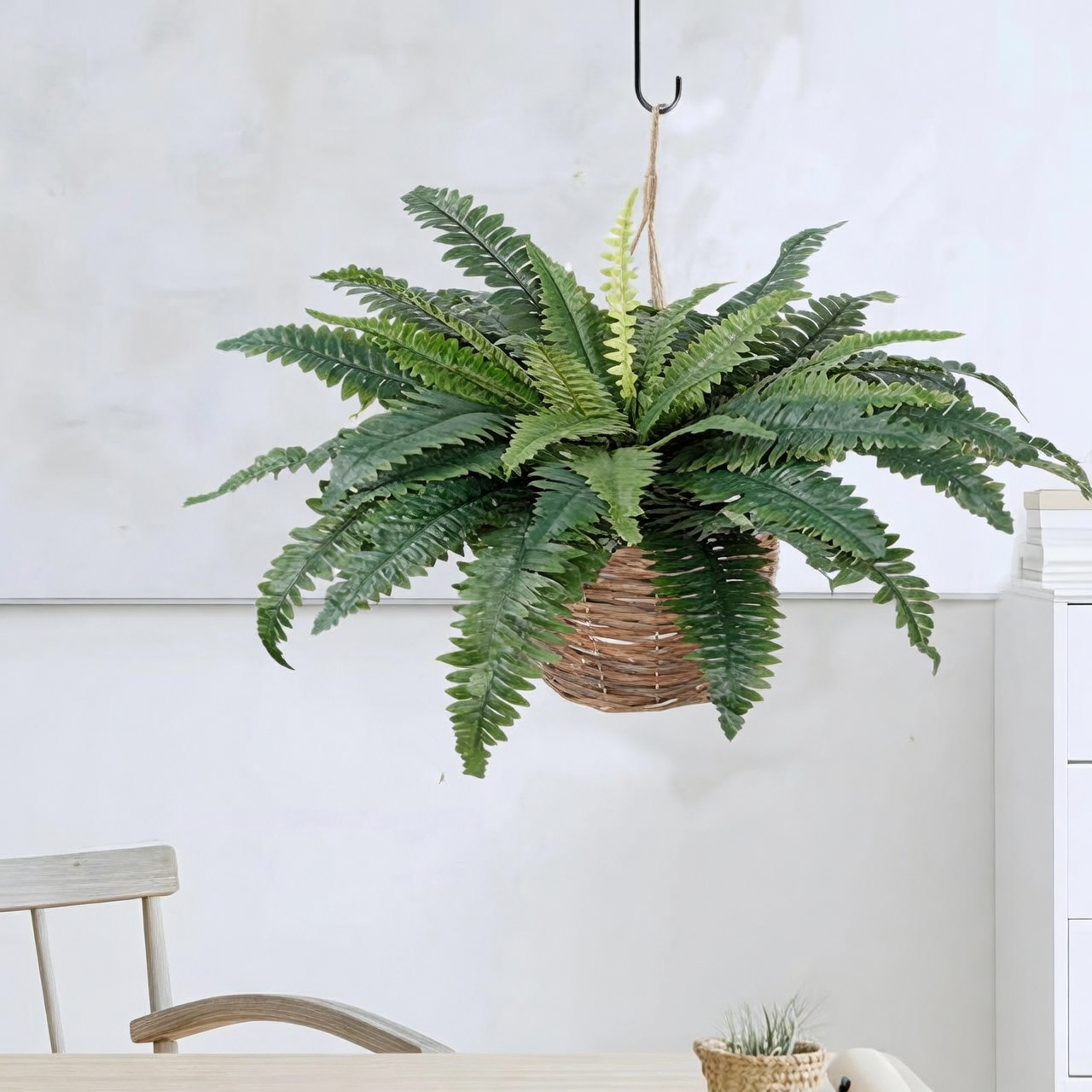
Soft, feathery, and endlessly forgiving of a little theatricality, Nephrolepis exaltata (the Boston fern) is the classic “green fountain” that makes any space feel lusher. Give it bright, indirect light, consistently moist soil, and humid air, and those arching fronds will spill like silk ribbons from baskets, pedestals, and even shower-side perches.
Meet the Boston fern: a living green fountain
- Form: A dense, arching clump of finely divided, evergreen fronds that rise upright, then cascade as they mature.
- Size: Typically 30–90 cm (12–35 in) tall and 60–90 cm (24–35 in) wide indoors; individual fronds can reach up to ~120 cm (48 in) in prime conditions.
- Vibe: Soften hard lines, add motion to quiet corners, and bring woodland calm to tile and glass-heavy rooms.
- Bonus: Generally regarded as non-toxic to pets; a popular “air freshening” houseplant that traps dust and adds a fresher feel to a room.
Design-forward placements: baskets, stands, and shower-safe spots
Hanging baskets that actually look couture
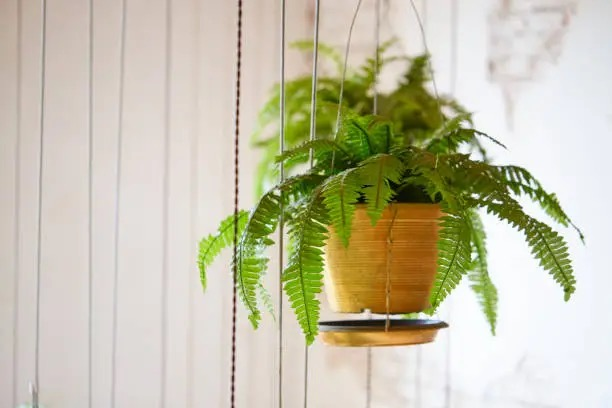
- Choose the right diameter: For that overflowing “green chandelier,” aim for 25–30 cm (10–12 in) baskets. Several clumps in one basket create instant fullness.
- Go for depth, not just width: A deeper pot keeps moisture more even than a shallow one—key for preventing crispy tips.
- Macramé or matte chain? Let hardware match your fixtures (black, brass, or chrome). Add a swivel hook so you can rotate the plant for symmetrical growth.
- Elevation math: Hang so the fronds float at or just above eye level; leave 30–45 cm (12–18 in) clearance around to show off the fountain form.
- Outdoor summer porches: Morning sun with afternoon shade is perfect; bring inside before cold snaps (frost-tender, mainly USDA 10–11).
Pro move: Tuck runner plantlets (those slender stolons) back into the basket rim—they’ll root and plump up the silhouette quickly.
Plant stands and pedestals
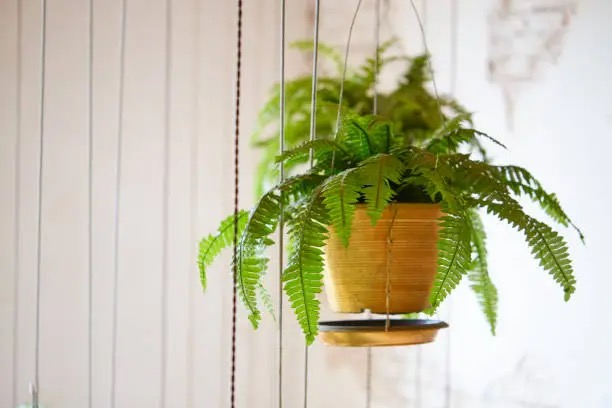
- Pedestal pairings: A round-topped stand echoes the fronds; powder-coated metal or sealed wood resists bathroom humidity.
- Layered look: Place a Boston fern high on a stand and flank it with low, broad-leaf plants to frame the cascade.
- Distance from vents: Keep at least 1 m (3 ft) from heaters/AC; drafts and hot blasts brown the tips fast.
- Saucers and cachepots: Use a decorative outer pot with a raised inner pot on LECA or pebbles—runoff drains freely while humidity lingers around the crown.
Shower-safe spots (the bathroom playbook)
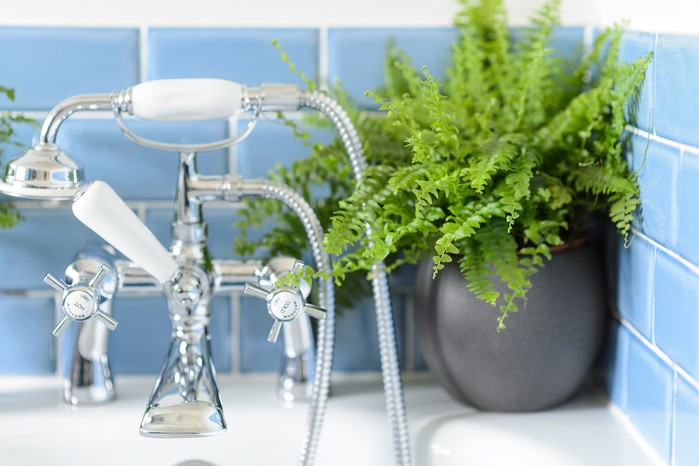
- The “steam zone,” not the splash zone: Place near the shower where steam drifts but water doesn’t pound the foliage. Think shelf across from the showerhead or a high corner hanger.
- Light check: Bathrooms often have great reflective light. East- or north-facing windows are ideal; in bright south/west rooms, keep it a bit back or behind a sheer.
- Vent balance: Run the exhaust fan after bathing to avoid stagnant, constantly-wet air (ferns love humidity, not soggy crowns).
- Materials matter: Choose rust-resistant hardware and sealed planters. A pebble tray on the vanity can protect surfaces and elevate ambient humidity.
Light, mirrors, and tiles: styling with reflection
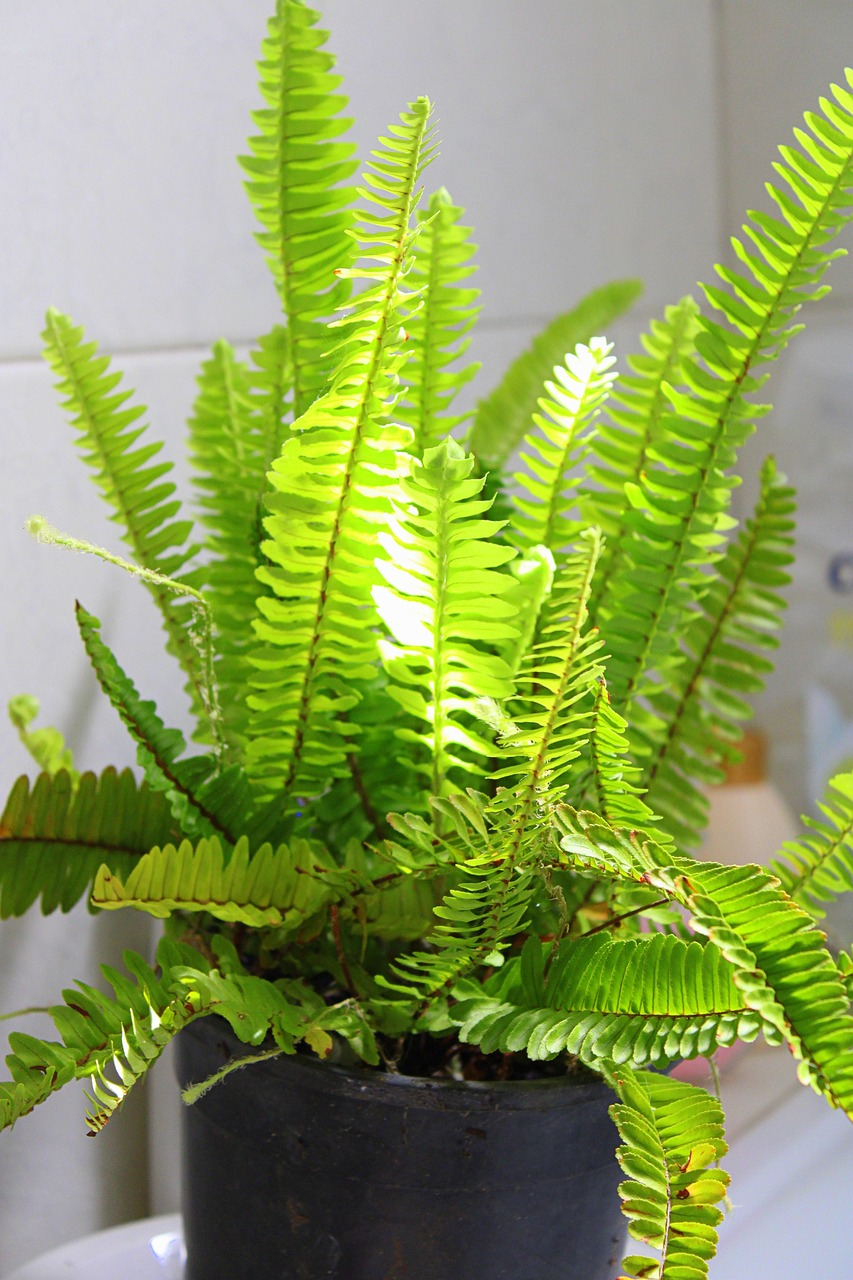
- Mirror magic: Use mirrors to bounce gentle, indirect light deeper into a room. Position the plant beside or slightly in front of a mirror—never where a mirror concentrates harsh afternoon sun directly on fronds.
- Tile palettes:
- Glossy white subway or zellige: Amplifies brightness—perfect for corners a few feet from the window.
- Soft neutrals and terrazzo: The fern’s bright green becomes the statement color; a matte finish keeps glare down.
- Dark tile or charcoal grout: Creates dramatic contrast; use a lighter pot or stand to prevent the plant from visually “disappearing.”
- Sightlines: Let the fern frame a mirror edge or soften a shower entry; its arching fronds read beautifully against clean geometry.
Microclimate tricks for full, glossy fronds
Humidity: your secret styling product
- Target 50–70% relative humidity (higher yields lusher fronds). Bathrooms and kitchens often hit the sweet spot naturally.
- Easy boosts:
- Humidifier on a low, steady setting (don’t blast the crown).
- Pebble trays with the pot base above the waterline.
- Grouping plants to create a shared humidity zone.
- Occasional misting is fine, but prioritize room humidity and airflow to prevent fungal issues.
Light: bright, indirect is the brief
- Gentle morning sun is fine; avoid strong midday/afternoon sun that scorches.
- Too little light = sparse, thin growth. Solution: move it closer to a bright window or increase reflected light with pale surfaces.
Watering rhythm that prevents crispy tips
- Growing season: Keep evenly moist. Water thoroughly when the top 2–3 cm (about 1 in) of mix feels slightly dry, then drain completely.
- Winter: Let the surface dry slightly more between waterings, but never to “bone-dry.”
- Rehydration hack: Every couple of weeks, soak the pot for ~10 minutes, then drain well—this rescues dry pockets in the root ball.
- Brown tips despite good humidity? Flush with plain water monthly to wash away fertilizer salts. If tap water is very hard, try filtered or rainwater.
Potting mix and containers
- Texture spec: Moisture-retentive yet free-draining, slightly acidic. A good blend: peat or leaf-mold–based mix with perlite/coarse sand. You can also mix all-purpose potting soil 1:1 with a loam-based mix and add extra perlite if needed.
- Coco liners in baskets look chic but dry faster—line them with a thin plastic moisture barrier (punched for drainage) to slow evaporation.
- Repot every 2–3 years in spring, moving up one size; trim any rotten roots and refresh mix.
Feeding for sheen and vigor
- During active growth, feed monthly with a balanced liquid at 1/2 strength, or every two weeks at a more dilute rate. Pause in late autumn/winter.
Temperature and airflow
- Comfort zone: 16–24°C (61–75°F). Brief dips to ~10–12°C (50–54°F) are tolerated, but keep it above ~7°C (45°F).
- Airflow: Gentle movement prevents fungal issues; avoid direct drafts.
Grooming and growth management
- Prune yellow/brown fronds at the base; light thinning improves airflow and shape.
- Trim crispy tips for looks, then fix the cause (humidity/watering/light).
- Division or runner plantlets make for easy propagation and thicker baskets.
- Expect spores on the undersides of mature fronds—tiny brown dots in neat rows are normal, not pests.
Styling palettes that always flatter Boston fern
- Classic spa: Glossy white tile + chrome + round mirror + macramé hanger in natural cotton.
- Modern organic: Terrazzo floor + light oak stand + matte cream planter + linen shower curtain.
- Dramatic contrast: Charcoal grout + fluted black pedestal + warm brass hardware + fern as the bright, textural focal point.
- Porch swing vibe: Painted brick + woven basket liner in black + morning light + breezy ceiling fan on low.
Quick troubleshooting
- Browning tips: Usually low humidity or the root ball dried out. Restore humidity, reestablish even moisture, and flush salts.
- Fronds bleaching or crisping: Too much direct sun—pull it back or filter the light.
- Sparse, leggy look: Not enough light or feeding; move to brighter indirect light and resume gentle fertilizing.
- Webbing or stippling: Spider mites love dry air. Rinse fronds, raise humidity, and treat with insecticidal soap if needed.
- Soggy crown, collapsing fronds: Overwatering or poor drainage—refresh the mix, ensure thorough drainage, and increase airflow.
Pet and people friendly
Generally regarded as non-toxic to humans, cats, and dogs. As with any plant, nibbling can cause mild stomach upset in sensitive pets, so place thoughtfully.
Symbolism and “flower language”
Ferns have long been associated with freshness, renewal, and hidden-forest calm—fitting for a plant that thrives on soft light and mist. In Victorian indoor-garden lore (where the Boston fern first became a star), ferns signaled sincerity and quiet elegance. While “flower language” traditionally centers on blooms, the fern’s meaning arises from culture and setting rather than flowers: a nod to resilience, restorative spaces, and the soothing rhythm of nature indoors.
—
Design it like a statement piece; treat the air like a styling tool. Do that, and your Boston fern will reward you with a year-round cascade of bright, glossy fronds—equally at home in a basket, on a pedestal, or basking in the soft steam of your morning shower.