

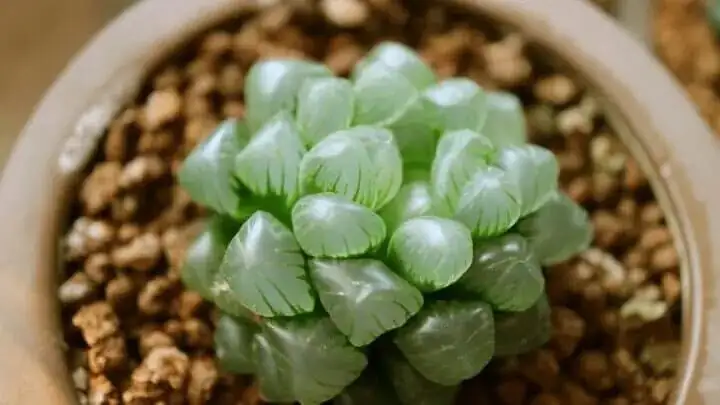
Think of Haworthia cooperi as a tiny glasshouse engineer. Those plump, translucent “windows” aren’t just pretty—they’re a survival design. If you match that ingenuity below the surface with smart soil, a shallow pot, crisp drainage, and active airflow, you’ll have a crystal-rosetted companion that practically tends itself.
Meet Haworthia cooperi (aka Cooper’s Haworthia, Crystal/Window Haworthia)
- Origin: Southern Africa (especially South Africa’s Eastern Cape).
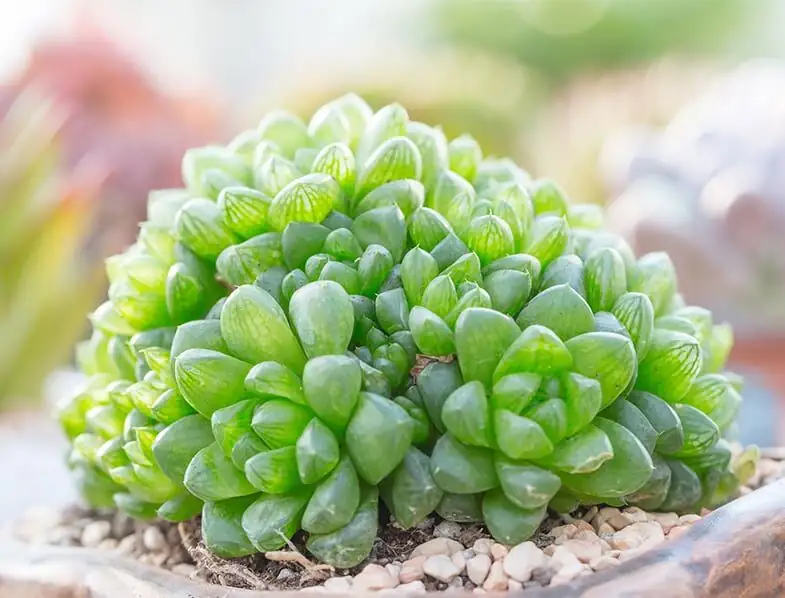
- Look: Compact rosette with thick, light-to-medium green leaves; leaf tips are translucent “windows” that glow in bright, filtered light.
- Size: Typically about 10 cm (4 in) across indoors; slowly clumps via offsets.
- Flowers: Slender stem with small, pale tubular blooms in spring—subtle, with foliage as the main show.
- Personality: Beginner-friendly if you keep it on the dry side and out of harsh, direct midday sun.
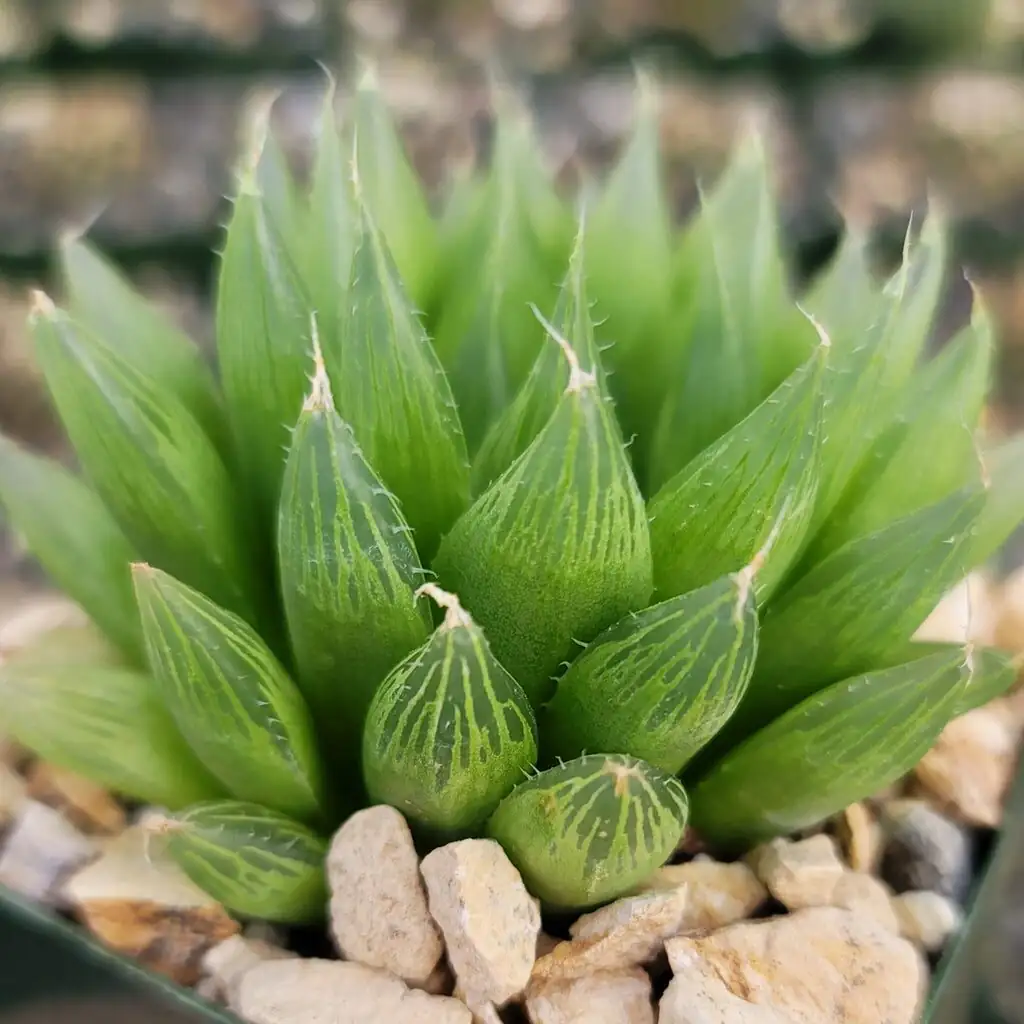
Soil Engineering, Simplified
This plant’s roots prefer air, not mud. The goal is a gritty, fast-draining mix that dries quickly, especially at the crown and the base of leaves.
The Mineral-Forward Blueprint
Aim for a mix that’s mostly mineral with just enough binder to keep particles from separating. Build from these proven options:
- Super-gritty (for humid homes or heavy-handed waterers)
- 100% pumice (2–5 mm), or a 50:50 blend of pumice and lava rock in the same size range.
- Lean and easy (indoor standard)
- 2–3 parts pumice/perlite/grit to 1 part well-draining cactus mix.
- Arid-climate tweak (very dry air + strong airflow)
- Keep it mineral dominant; if needed, include a small fraction (≤10–15%) of a coarse, stable organic like bark fines. Avoid peat-heavy blends or anything water-retentive.
Pro tip: Rinse and sieve components to remove dust and fines—they clog air spaces and hold moisture where you don’t want it.
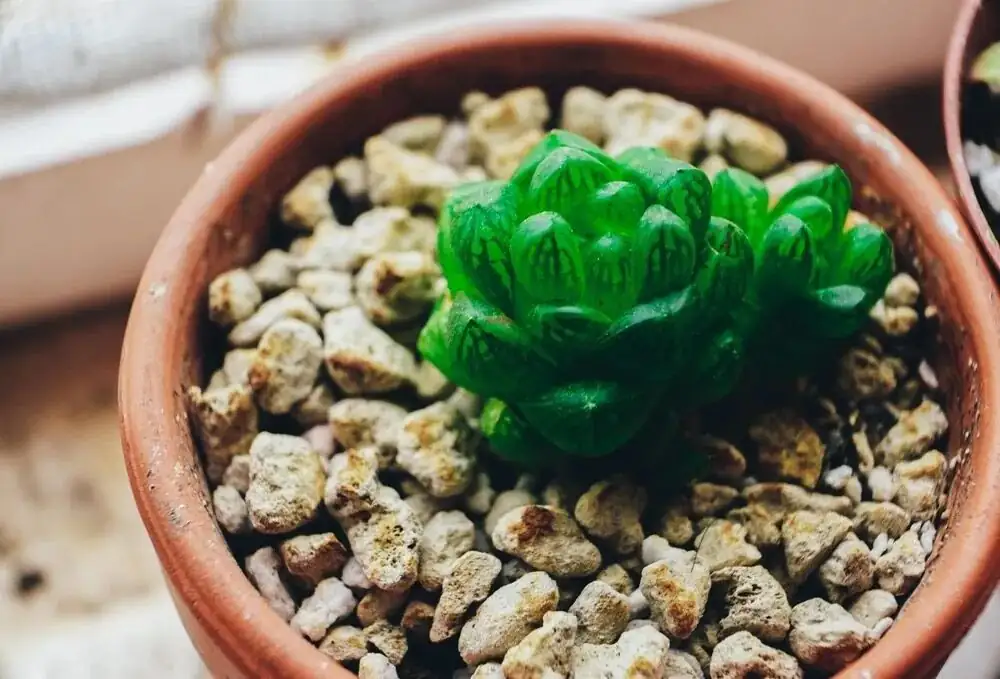
Particle Size: The Quiet Hero
- Sweet spot: ~3–5 mm particles for the bulk of the mix.
- Why it matters: Very fine particles form a perched water layer at the bottom of containers, suffocating roots. Larger, evenly sized grit keeps water moving and air in the root zone.
Pot Choice: Shallow, Vented, and Always With a Drain Hole
- Depth: Avoid deep pots; H. cooperi has a relatively shallow root system. Shallow containers dry more evenly and protect the crown from lingering damp.
- Material: Terracotta breathes and speeds drying; plastic works if you’re mindful of watering and provide great airflow.
- Size: For a mature clump, a 12–15 cm (4.7–5.9 in) wide, shallow pot is typical.
- No “drainage layer” myth: Don’t add rocks at the bottom—use a uniformly gritty mix from top to bottom.
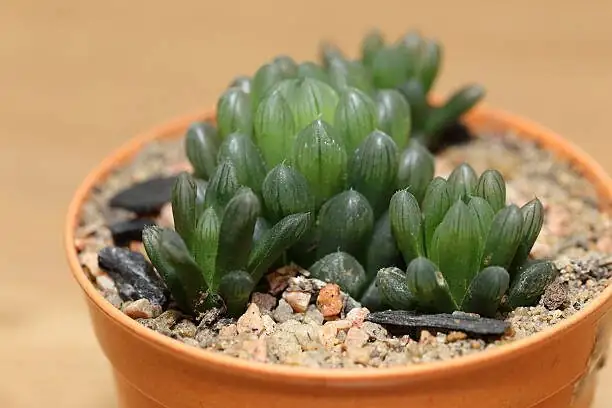
Airflow Tactics That Plants Actually Notice
- Elevate pots on a mesh or slatted shelf to let air move under and around.
- Use a small fan on low or open a window for gentle circulation.
- Outdoors on a balcony? Provide bright, filtered light with shade cloth, and protect from wind-driven rain.
- Avoid enclosed, humid “bottle” or terrarium conditions—especially in warm weather.
Top-Dressing: Keep the Crown Dry and the Roots Cheerful
- What to use: 0.5–1 cm of clean 3–5 mm pumice, granite grit, or light-colored gravel.
- Benefits: Wicks moisture away from leaf bases, discourages algae/fungus gnats, reduces splash-back, and reflects soft light into those windows.
- Tip: Keep a tiny moat around the rosette center—don’t bury the crown. Water around the pot’s perimeter so moisture travels through the mix, not into the leaf bases.
Light, Temperature, and Humidity
- Light: Bright, filtered light to partial shade. An east-facing window or lightly shaded south window is ideal. Shield from harsh midday sun which can scorch.
- Temperature: Best at 18–22°C (64–72°F). Keep above 5°C (41°F) in winter; not frost-hardy.
- Humidity: Prefers dry to average household humidity; dislikes lingering damp. If air is extremely dry, you can very lightly mist the air nearby—never into the rosette—and always ensure good airflow.
Watering: Match the Season and the Mix
- Rule of thumb: Water thoroughly only after the mix is dry.
- Spring and autumn (active growth): Often about weekly indoors, but adjust for your pot, mix, and light.
- Hot midsummer: Growth can slow or pause—reduce watering significantly and lean toward dryness to prevent crown/basal rot.
- Winter: Keep bright and cool (above 5°C/41°F), and water very sparingly.
- Reading the plant:
- Pot feels feather-light, top-dressing looks dusty, and the mix is dry deep down = time to water.
- Leaves beginning to lose turgor or faintly wrinkle = slightly overdue (okay occasionally, but don’t make it a habit).
- Persistently soft leaves or moisture at the crown = hold off, increase airflow, and check roots.
Feeding, Repotting, and Grooming
- Fertilizer: During active growth, feed monthly with a diluted balanced or low-nitrogen succulent fertilizer. Don’t let solution pool in leaf bases; never feed stressed plants.
- Repotting: Usually in spring, especially if clumps fill the pot. Choose a shallow container with a gritty mix; remove shriveled lower leaves and trim hollow or overly long roots.
- If rot appears: Cut back to firm, healthy tissue, let wounds callus fully, then repot into dry, mineral mix. Resume watering lightly after a few days.
Propagation: New Crystals, Same Sparkle
- Offsets/division (easiest): Separate pups in spring, let cut surfaces dry, then pot in gritty mix. Water lightly at first.
- Leaf cuttings: Possible in late spring to early summer—allow a proper callus before setting into free-draining medium.
- Seeds: Sow indoors in spring at 21–24°C (70–75°F). Provide bright light and steady warmth; germination can be around two weeks with good conditions.
Year-Round Care Rhythm
- Spring: Growth on—water when dry (often weekly), feed monthly, repot, tidy dead leaves, divide offsets.
- Summer: Potential rest in high heat—shade, boost ventilation, water much less; avoid humid enclosures.
- Autumn: Growth often resumes—return to “water when dry,” keep light bright.
- Winter: Keep above 5°C (41°F), maximize light, and water sparingly.
Troubleshooting: Diagnose Like a Pro
- Mushy base or leaves, sour smell: Overwatering/poor airflow. Unpot, remove rot, let callus, repot gritty and dry.
- Brown, papery patches on leaves: Sun scorch. Shift to filtered light.
- Leaves elongating and losing window clarity: Insufficient light. Move to brighter, indirect light.
- Pests (mealybugs, whitefly): Isolate, remove manually, and treat with insecticidal soap or a labeled systemic; improve airflow and reduce excess moisture.
Where to Place It
- Indoors: Desk, bedside table, or bright windowsill with filtered light.
- Outdoors (mild climates, USDA 10–11): Sheltered balcony with shade cloth, great drainage, and protection from cold and rain.
FAQ
- How can I make the leaves look clearer and more “crystal-like”?
- Provide bright, indirect light and water only after the mix dries so leaves stay plump without being wet for long. Some growers briefly use a clear cover to nudge humidity, but only with excellent ventilation—and avoid this in hot weather to prevent overheating and rot.
Safety, Symbolism, and Story
- Toxicity: Generally considered non-toxic to people and pets, though any plant material can cause mild stomach upset if chewed. Keep out of reach of curious nibblers.
- Symbolism: Resilience and quiet determination—the plant thrives with little fuss, storing light through its leaf “windows” and water in its tissues.
- Origin note: Celebrated as a South African “window plant,” it channels light deeper into the rosette—form meeting function in a jewel-sized package.
Fun to Know
- Those see-through tips aren’t just pretty; they’re functional “leaf windows” that ferry light to inner tissues.
- H. cooperi often looks its best slightly pot-bound—as long as the soil is gritty and drainage is excellent.
In short: engineer the below-ground world to echo the plant’s natural habitat—mineral-heavy mix, shallow pot with a real drain hole, active airflow, and a tidy top-dress that guards the crown. Get those fundamentals right, and your Haworthia cooperi will reward you with a crystal rosette that seems to glow from within.