

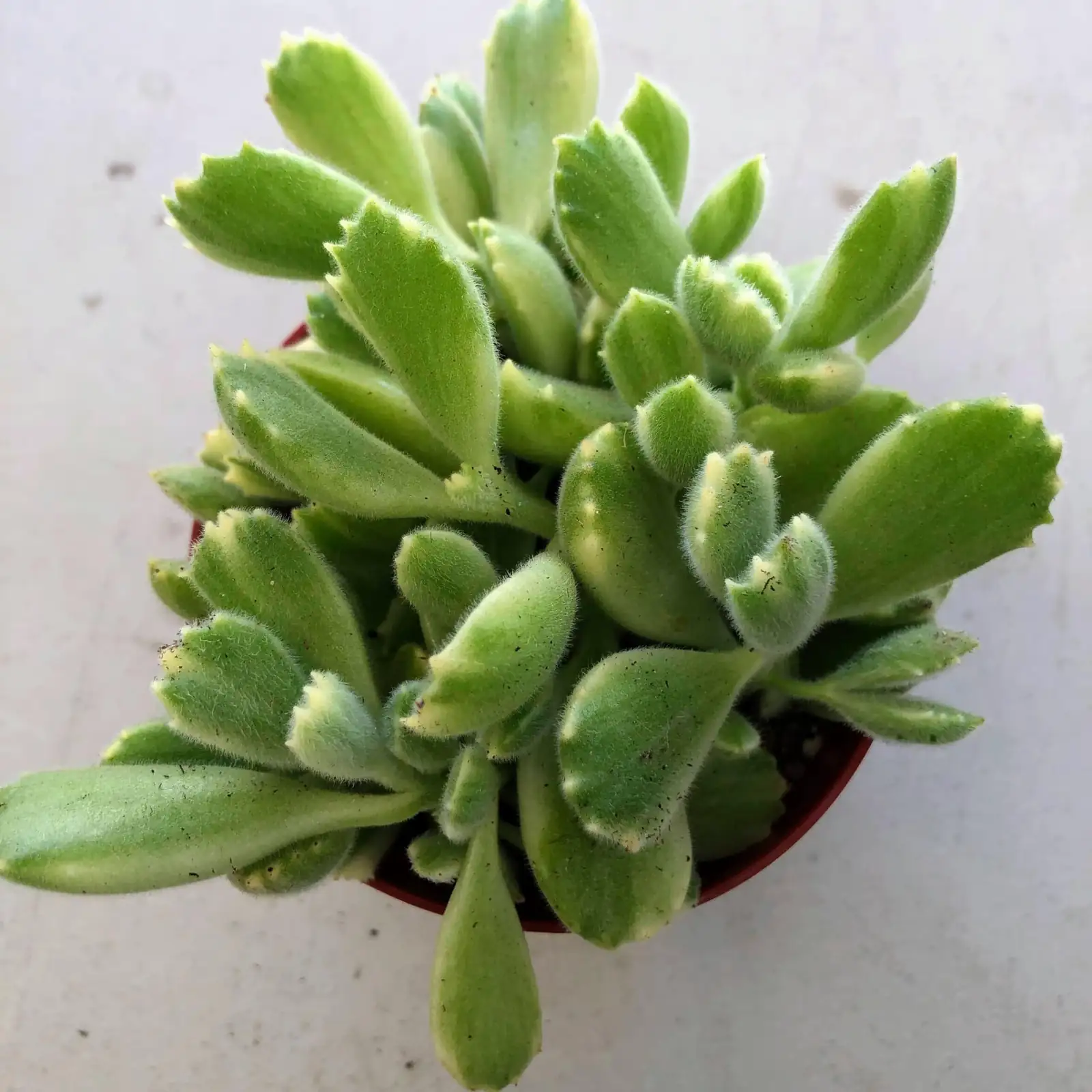
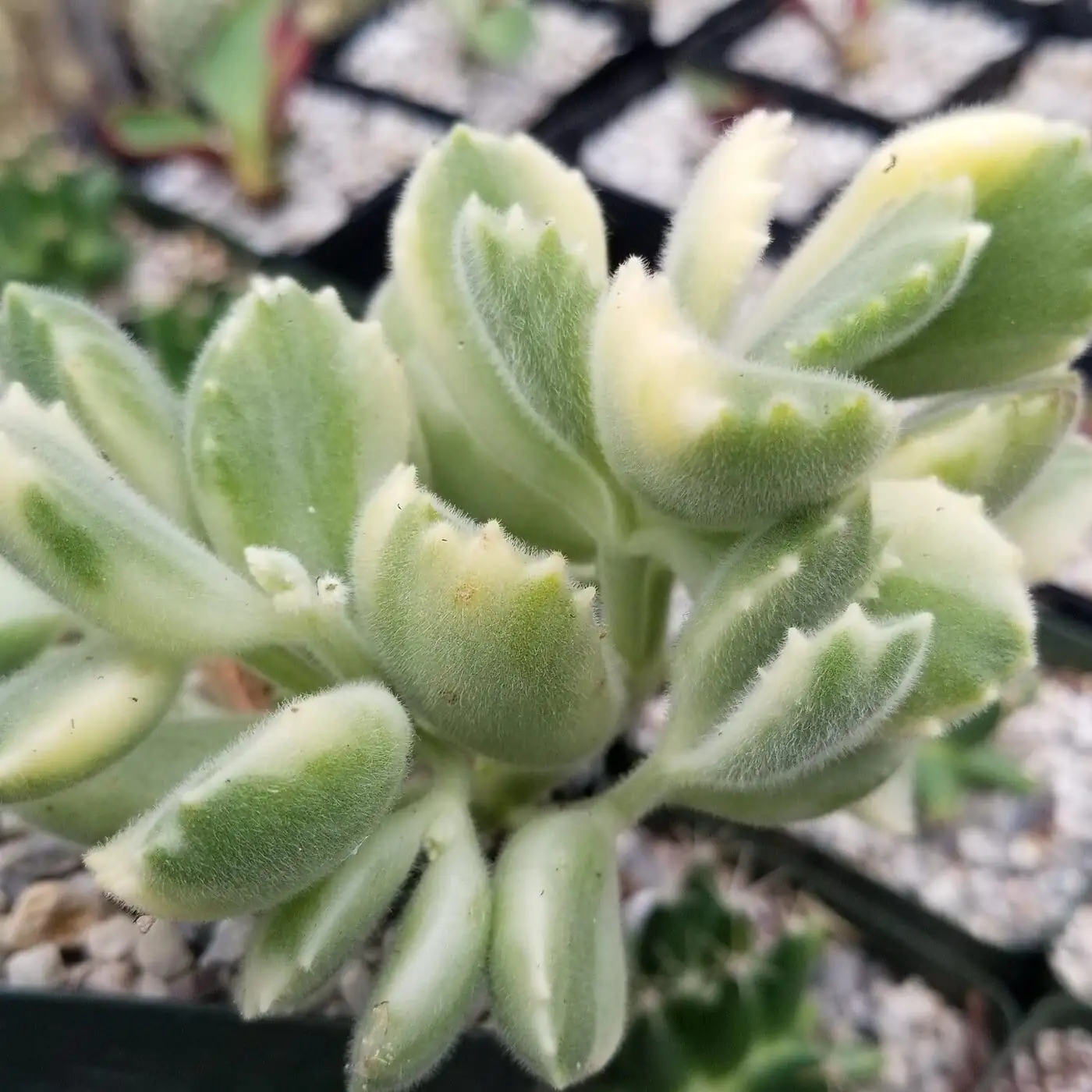
If you’ve ever wanted a plant that waves tiny teddy-bear paws from the windowsill, Cotyledon tomentosa delivers—twice. The standard green form is adorably chunky and forgiving, while the variegated form adds creamy margins and splashes that collectors crave. They share the same DNA and basic needs, but variegation changes the rules just enough to matter: slower growth, greater sun sensitivity, and a watering schedule with more restraint. Here’s a side‑by‑side guide to keep both forms compact, fuzzy, and claw-tipped—without bleaching those beautiful creamy edges.
Meet your Bear’s Paw: what both forms have in common
- Botanical: Cotyledon tomentosa (Crassulaceae), native to Southern Africa (especially South Africa)
- Nicknames: Bear’s Paw, Bear’s Paw Succulent, Woolly Cotyledon (variegated selections are often sold as ‘Variegata’)
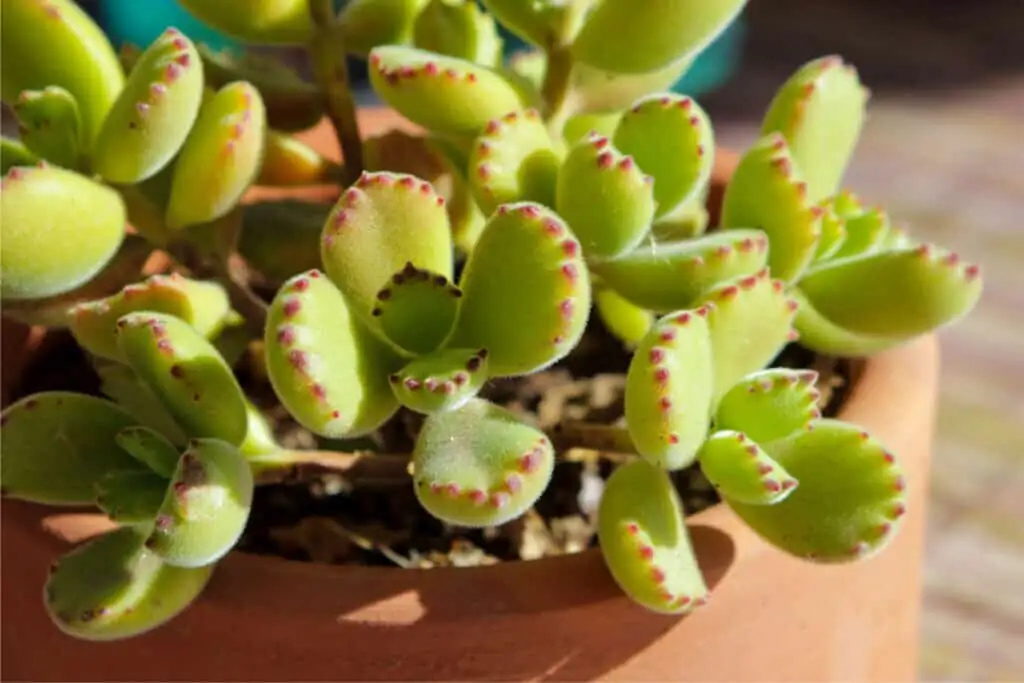
- Look: Plump, velvet-furred, paw-shaped leaves with tiny “toes”; tips often blush red in strong light
- Habit and size: Compact branching subshrub; commonly 10–20 cm (4–8 in) tall and 10–30 cm (4–12 in) wide in pots; older plants can reach 20–50 cm (8–20 in)
- Flowers: Small, warm-toned tubular bells (orange to coral/orange-red) on upright stems; most likely with strong light and a cooler, drier rest
- Core dislikes: Soggy soil, stale/humid air, and long stretches of harsh midday sun
Standard vs. variegated at a glance
- Growth speed
- Standard (green): Moderately slow
- Variegated: Slower—fewer chlorophyll-rich cells = slower energy production
- Sun tolerance
- Standard: Enjoys several hours of sun; handles brighter conditions if acclimated
- Variegated: More sun-sensitive; edges scorch sooner and can yellow/bleach if rushed
- Water use
- Standard: Classic soak-and-dry
- Variegated: Same method but slightly longer dry intervals due to slower growth
- Color goals
- Standard: Red “claws” and compact shape from bright light and lean watering
- Variegated: Preserve creamy margins while still getting gentle blush on tips—prioritize morning sun and filtered intensity over brute-force midday beams
Light: get the glow, skip the scorch
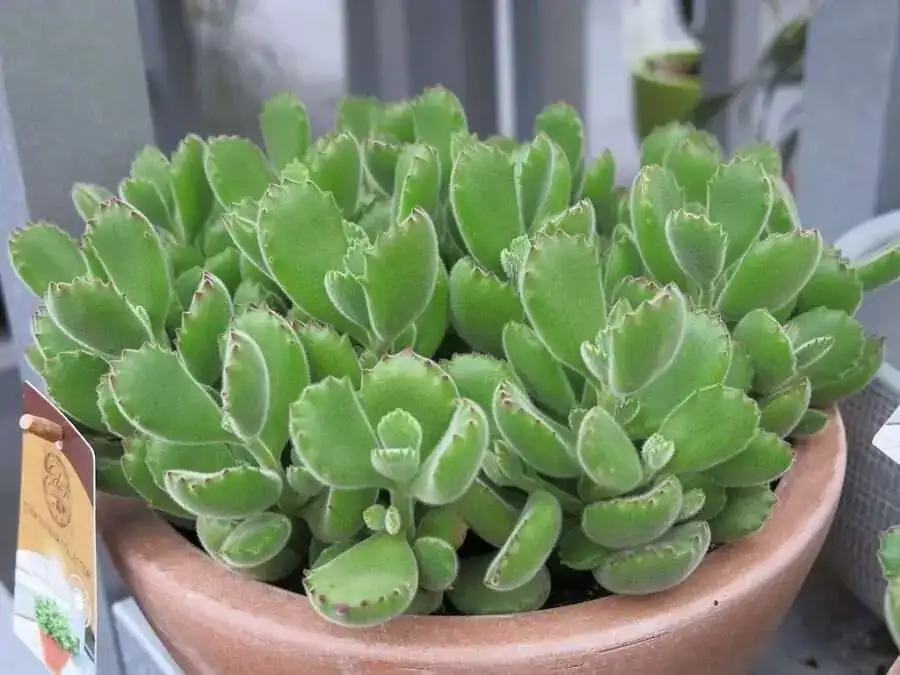
- Ideal exposure for both
- Bright light with several hours of gentle sun
- Morning sun + bright indirect the rest of the day is perfect
- In hot climates, protect from intense midday/afternoon sun and keep good airflow
- Indoors
- East or bright south windowsill with airflow; use a sheer curtain at midday
- Outdoors (warm seasons)
- A sunny, sheltered balcony/patio with midday shade; protect from heavy rain
Sun-acclimation routine (4 weeks, adjust to climate)
- Week 1: Bright shade only (no direct sun). Airflow on.
- Week 2: 45–60 minutes of early morning sun, then bright indirect.
- Week 3: 2–3 hours of morning sun. Watch for paling, crispy edges, or sudden softness.
- Week 4:
- Standard: Up to 3–4 hours morning sun (longer if your climate is mild).
- Variegated: Hold at 2–3 hours. If you want more pop, add bright, filtered light later (sheer or 30–40% shade cloth), not raw midday sun.
How to keep variegated margins creamy (without scorch)
- Prioritize quality over quantity of sun: crisp morning rays + high ambient brightness
- Filter intensity: sheer curtains indoors, 30–40% shade cloth or dappled canopy outdoors
- Airflow is nonnegotiable: moving air sheds heat from fuzzy leaves and prevents spotting
- Water the soil only: never mist—water on hairs can spot and encourage rot
- Early warning signs to act on: suddenly pale/yellow patches, crispy cream margins, or hot pots—back off intensity, increase airflow
Watering: soak-and-dry with restraint
- Method (both forms)
- Water thoroughly, then wait until the mix dries well before watering again
- Always water the soil directly; keep leaves dry
- Seasonal rhythm
- Spring/Autumn: Sparing but steady—avoid prolonged wetness
- Summer heat: Reduce frequency; protect from heavy rain
- Winter: Keep almost dry; water lightly only if leaves begin to wrinkle; keep above 10°C (50°F)
- Variegated tweak
- Add a little patience: after the mix dries, wait an extra day before watering, especially in cool or low-light periods
- Handy checks
- Weight test: a dry pot feels markedly lighter
- Skewer test: a wooden skewer inserted deep should come out nearly clean/dry before you water again
Soil and potting that prevent regret
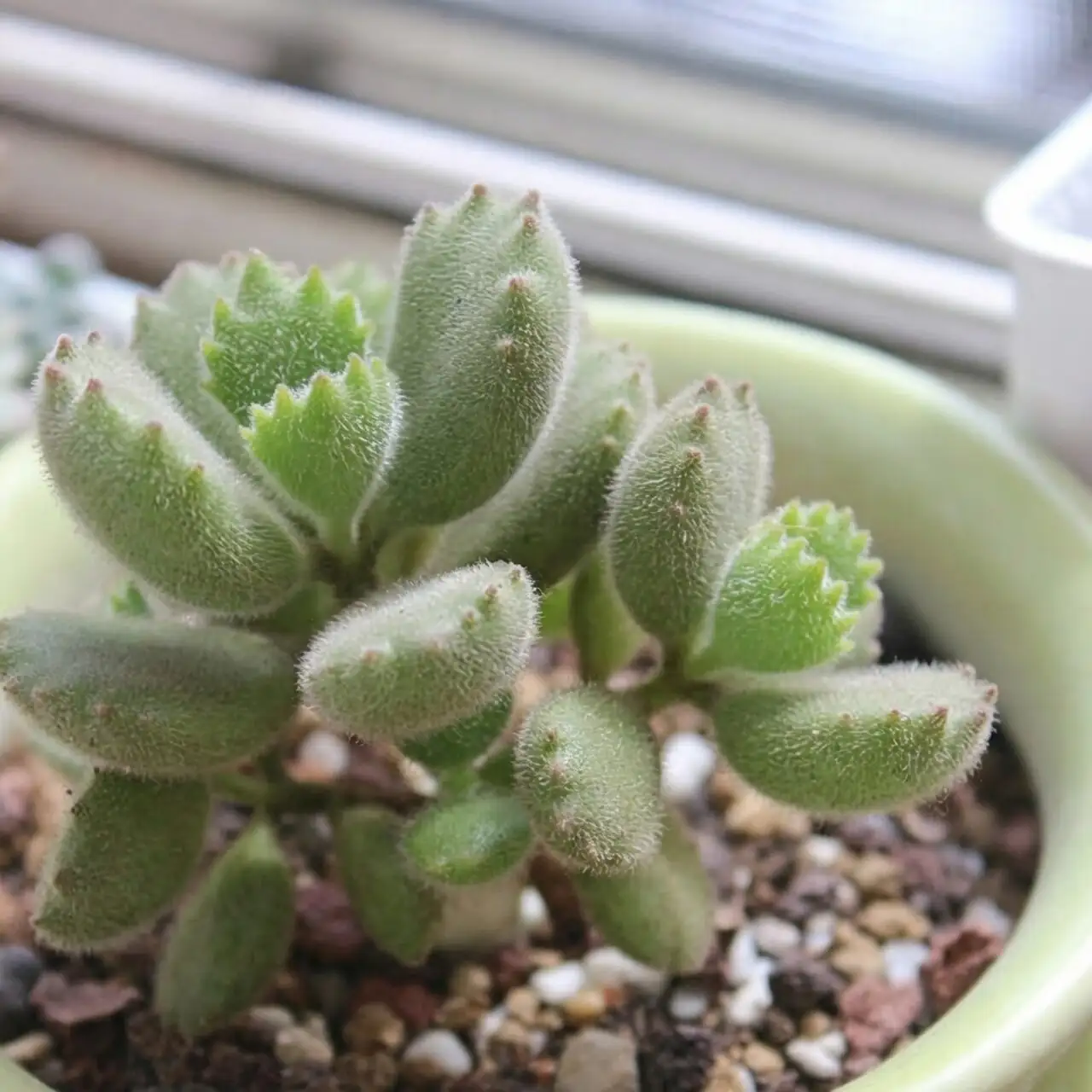
- Mix: Very free-draining cactus/succulent blend
- Practical recipe: about 1:1 potting soil to mineral grit (coarse sand, pumice, perlite, or small gravel)
- Pot: Drainage holes are mandatory; a snug 12–15 cm (5–6 in) pot suits many mature plants
- Top-dress with gravel to keep fuzzy leaves off damp media
- Repotting: Spring, typically yearly or when the mix compacts/outgrows the pot; variegates often need less frequent upsizing due to slower growth
Temperature, air, and seasonal rest
- Best growth: 18–24°C (64–75°F)
- Winter minimum: Keep above 10°C (50°F); absolutely no frost
- A brighter, cooler, drier winter rest can trigger those warm-toned bell flowers
- Airflow: Vital year-round to prevent spotting and rot, especially in humid weather
Feeding lightly (and only when growing)
- Frequency: About monthly in spring through early autumn
- Formula: Diluted, low-nitrogen succulent fertilizer; bloom-leaning ratios (e.g., similar to 15‑15‑30) work at reduced strength
- Pause: No feeding in winter or during heat/other stress
Pruning, shaping, and propagation
- Shape: Pinch tips once plants reach ~15 cm (6 in) to encourage branching and a dense silhouette
- Refresh: If leggy, cut back to a firm node; older plants can be restarted from healthy cuttings every 4–5 years
- Propagation
- Best: Stem cuttings in spring/autumn; 5–7 cm (2–3 in) tips, let callus, then root in gritty media
- Rooting window: Generally 2–3 weeks in warm, bright conditions (18–22°C / 64–72°F)
- Leaf propagation: Possible but slow and less predictable
- Variegate note: If a shoot turns fully green, consider pruning it out to preserve the variegated look
Troubleshooting side-by-side
- Leggy, stretched growth
- Both: Increase brightness; add gentle sun after gradual acclimation; keep on the dry side
- Mushy leaves, black spots, sour soil smell
- Both: Overwatering/poor drainage; unpot to check roots, trim rot, repot into drier, grittier mix; improve airflow
- Red “claws” not showing
- Both: Provide brighter light and lean watering; use morning sun plus airflow, not harsh midday blasts
- Scorched or bleached margins (variegate)
- Back down intensity, add shade/airflow, and lengthen intervals between waterings slightly
- Pests
- Whiteflies and mealybugs are the usual suspects; isolate and treat with insecticidal soap or horticultural oil, repeating as needed
- Leaf spotting
- Water on fuzzy leaves + poor airflow; avoid misting and water the soil only
A quick seasonal playbook
- Spring
- Repot, resume light feeding, restart careful soak-and-dry after proper dry-downs
- Begin sun-acclimation; take tip cuttings
- Summer
- Maintain strong light with midday shade in extreme heat; boost airflow
- Reduce watering frequency; shield from heavy rain
- Autumn
- Prime time for cuttings; keep bright light; taper watering as temperatures fall
- Winter
- Brightest possible spot; keep above 10°C (50°F); keep very dry; no fertilizer
Safety and symbolism
- Safety: Toxicity isn’t consistently documented; to be safe, treat as potentially irritating/toxic if ingested. Keep away from pets and small children; wash hands after handling if you’re sap-sensitive.
- Symbolism: With its plush “paws,” this succulent is often seen as a symbol of comfort, warmth, and playful companionship. Its popularity in giftable, windowsill-sized pots made it a kind of plant “good-luck charm”—a soft, tactile reminder to slow down, soak up the morning sun, and keep life light.
In short: for the standard green Bear’s Paw, think bright and breezy with measured watering; for the variegated, think everything the green form wants—but gentler, slower, and slightly drier. Give morning sun, superb drainage, and patient acclimation, and both will repay you with compact growth, tidy branching, and those irresistible little claws—creamy margins intact.