If winter gardens had confetti cannons and spotlights, Cornus officinalis—Japanese cornel, a.k.a. Japanese Cornelian cherry dogwood—would be the stage manager. This deciduous large shrub or small tree puts on a four-act show: bare-branch fireworks of yellow in late winter, a spring-summer canopy of neat green leaves, glossy red fruit set against fiery fall foliage, and in the quiet months, flaking bark like festive paper squares. Let’s take a playful tour of its best oddities—and peek under the hood at the science that makes each wow moment happen.
Meet Japanese Cornel (Cornus officinalis Siebold & Zucc.)
- Family: Cornaceae (the dogwood family)
- Habit: Multi-stemmed, low-branching large shrub/small tree with an open oval-to-rounded crown
- Size: Typically 4.5–8 m (15–26 ft) tall, 3–4.5 m (10–15 ft) wide
- Native origin: North-central and southeastern China; introduced in Japan and Korea; found in forests, margins, and mountain slopes
- Nicknames: Asiatic Dogwood, Chinese Cornelian Dogwood, Japanese Cornel Dogwood, Japanese Cornelian Cherry
Oddity No. 1: Flowering on bare wood—fireworks before the orchestra tunes
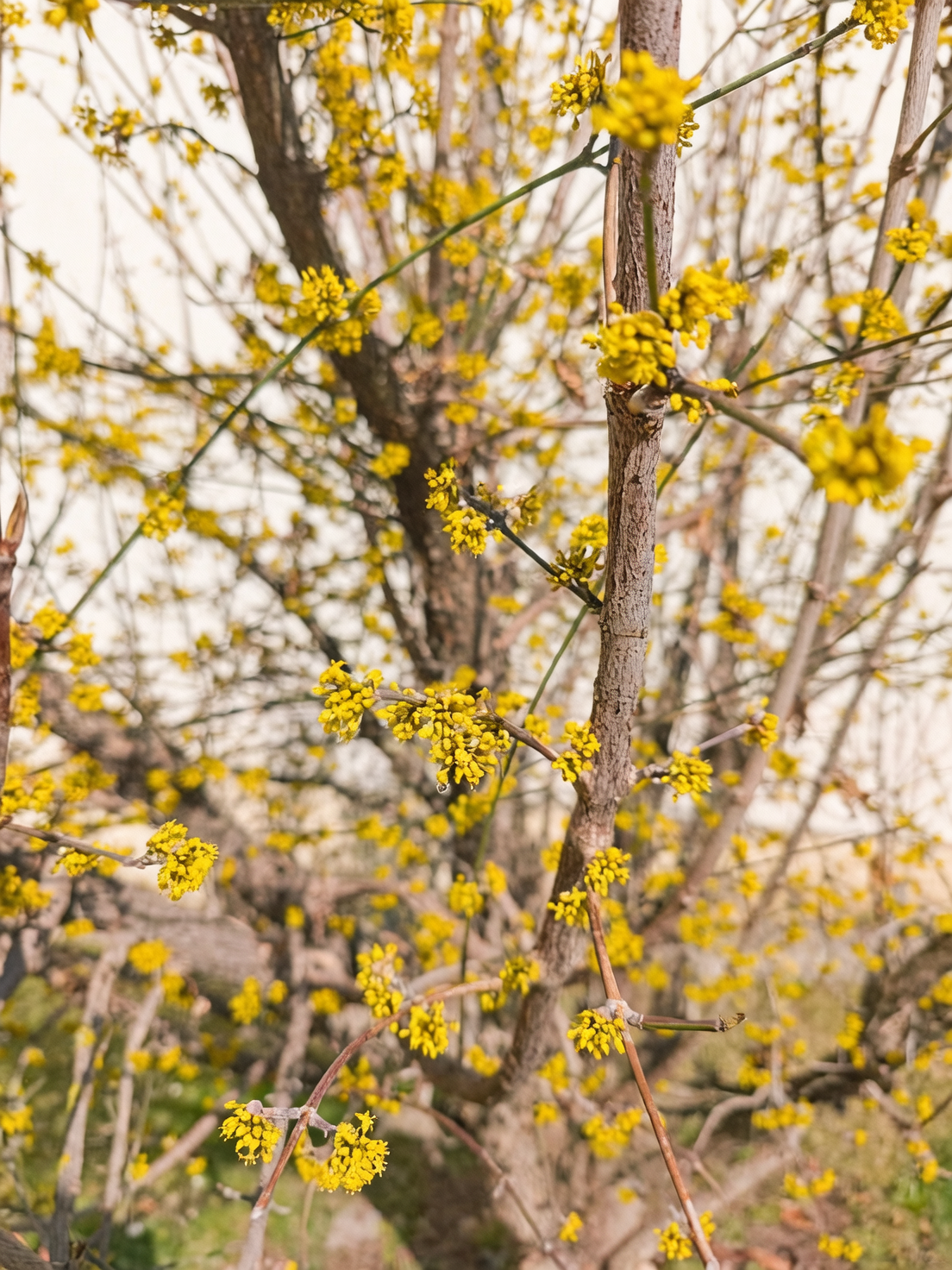
In late winter to early spring (February to April), while most plants are still buttoned up, Japanese cornel erupts with clusters of tiny, bright yellow blossoms along leafless twigs.
What you see
- Clouds of yellow on completely bare branches
- Bloom typically lasts up to about 30 days and comes before leaf-out
The science behind the spectacle
- Built-in alarm clock: Like many temperate dogwoods, flower buds are formed the previous season and need a “chill” to wake up properly—roughly 60–75 days around 3–7°C (37–45°F). Once met, warming days flip the switch.
- Leaves take a back seat: Blooming on leafless wood puts flowers front and center for pollinators and ensures pollen and nectar aren’t shaded by foliage.
- Tough timing: Mature plants are cold-hardy (brief dips to about -18°C / 0°F). Those fat, scaly buds are designed to shrug off typical late-winter mood swings.
Grower’s tip
- Full sun to partial shade yields best bloom; in hotter climates, light afternoon shade keeps stress down and color fresh.
Oddity No. 2: The “gold mist” clusters—how tiny flowers paint the air
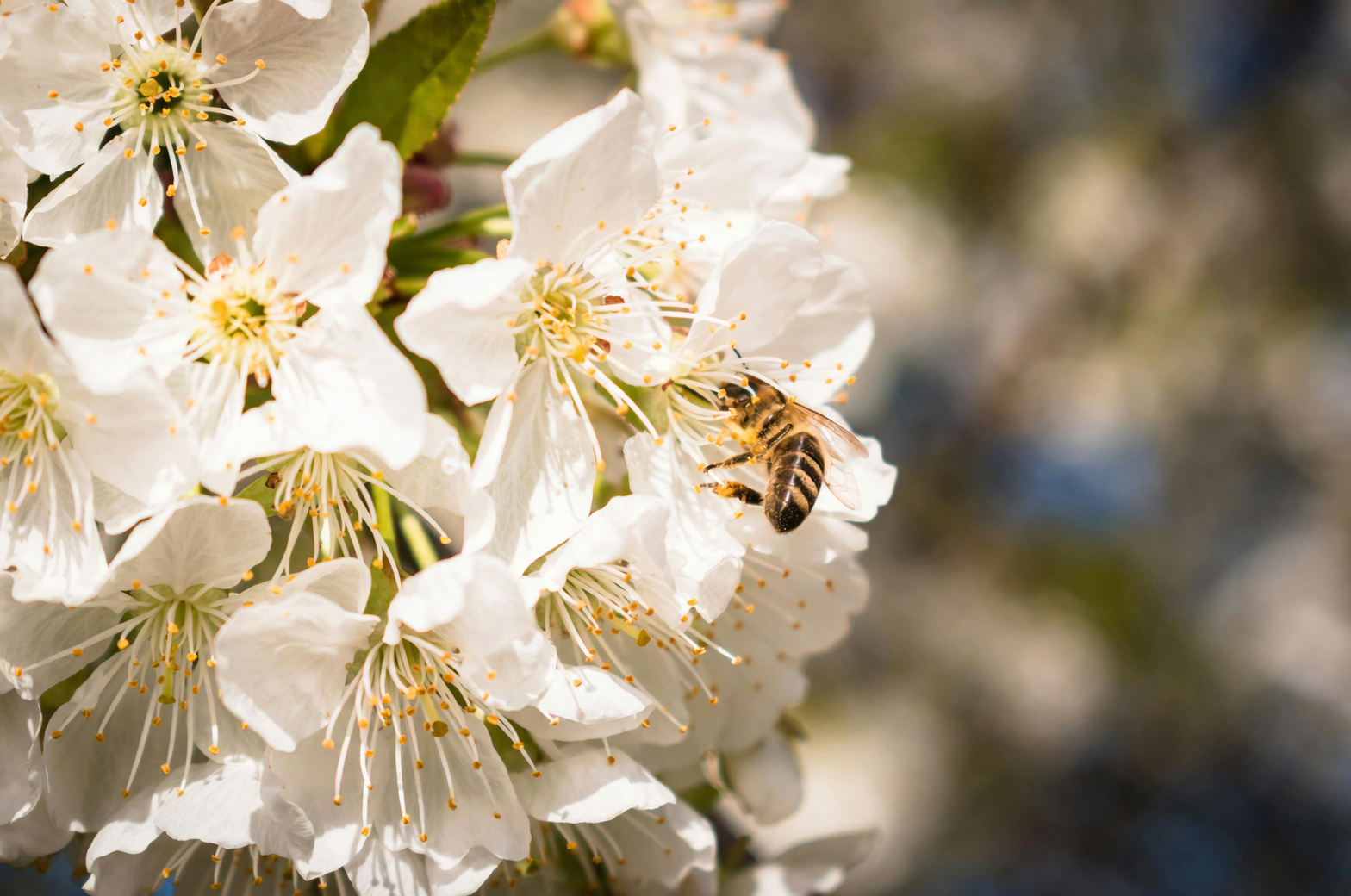
Each individual flower is small—about 3 mm (1/8 in) across with 4 narrow, tongue-like petals—but they gather in tight clusters about 2.5 cm (1 in) wide. Multiply that by hundreds of clusters, and the plant seems dusted in gold.
What you see
- Dense, pom-pom clusters on every twig
- Bees and early pollinators sipping from a winter buffet
The science behind the shimmer
- Strength in numbers: Small flowers packed into clusters boost visibility and pollinator efficiency—think of it as one-stop shopping for early-season bees and flies.
- Yellow chemistry: The vivid color comes largely from carotenoid pigments, which hold up well in cool light and stand out against a grey sky.
- Energy economics: Early bloom keeps pace with scarce competition, increasing the odds of successful pollination long before the spring rush.
Grower’s tip
- Good winter bud set = good shows. Avoid severe late-summer pruning that could remove developing flower buds; prune right after bloom instead.
Oddity No. 3: Exfoliating bark confetti—winter’s quiet glitter
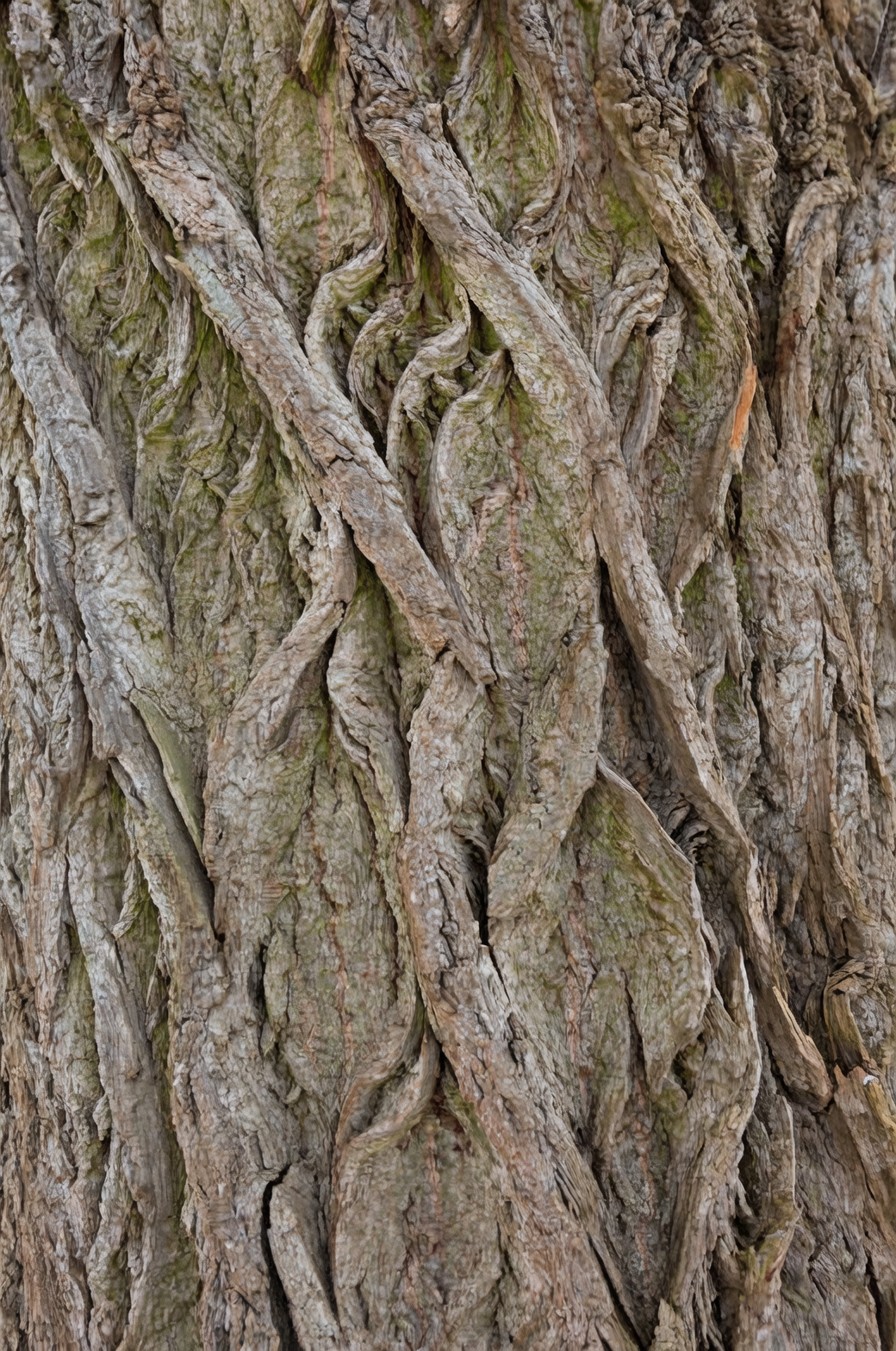
When the leaves drop, the stems and trunk flash a second act: gray-brown bark peeling in handsome, irregular patches, like subtle confetti glued to the wood.
What you see
- Patchwork, peeling bark on mature plants—especially striking in low winter light
The science behind the peel
- Growing pains, artfully managed: As stems thicken, the outer bark can’t stretch forever. The plant lays down new protective layers (periderms) in patches. Older layers loosen and flake—botanically, this multi-layered outer bark is rhytidome. The result is texture and pattern.
- Practical perks: Exfoliating bark can help shed lichens, limit colonization by some pests on the surface, and moderate microclimate at the stem.
Grower’s tip
- Place it near a path or window where low winter sun can rake the bark—instant texture therapy. Resist picking at peeling sections; let nature do the design.
Oddity No. 4: Fruit with a sense of timing—late ripeners for a fall finale
After those early flowers, the plant patiently carries developing fruit through summer, saving the crimson reveal for autumn.
What you see
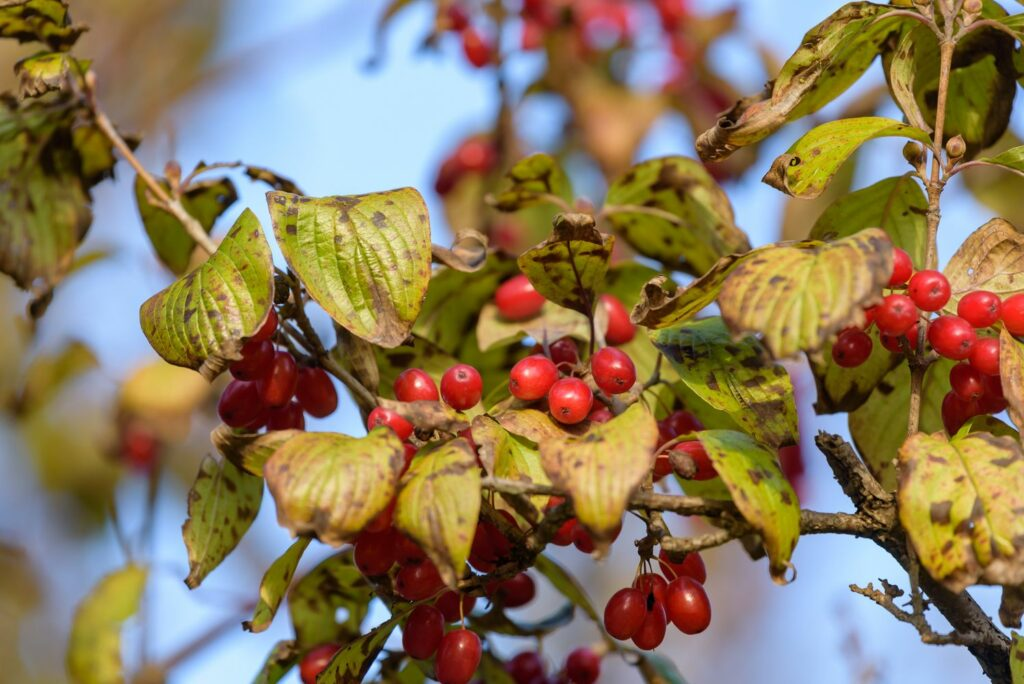
- Glossy, olive-shaped red drupes in fall (each with a “stone” inside)
- Fruit often ripens later than its close cousin, Cornus mas (Cornelian cherry)
- Brilliant fall foliage in reds, purples, oranges adding drama to the red fruit
The science behind the patience
- Long game for seeds: An early spring fertilization start means a long, steady maturation window, so embryos fully develop by fall.
- Red on purpose: Anthocyanin pigments blaze red when sugars and cool nights cue ripening—an irresistible “eat me” sign for birds that spread the seeds.
Grower’s tip
- The fruits are edible but tart. They’re far more charming in jams, preserves, syrups, or drinks than straight off the tree. Birds agree they’re delicious.
Leaf and canopy notes (the intermission glow)
- Leaves are opposite, simple, oval to elliptical, about 5.5–12 cm (2.5–5 in) long.
- Dark green above, paler beneath; look closely for small tufts of reddish-brown hairs along the veins on the underside.
- Summer canopy stays tidy; fall brings a firework of yellows, reds, purples, and oranges.
How to grow your own four-season show
Site and soil
- Light: Full sun to partial shade (best flowering/fruiting in full sun; in hot regions, provide afternoon shade).
- Soil: Fertile, well-drained loam or sandy loam; evenly moist but never waterlogged. Slightly acidic to neutral is ideal—roughly pH 6.5–7.5.
Climate comfort
- Best growing temperatures: about 15–24°C (60–75°F)
- Hardiness: USDA Zone 5–8; cold-hardy once established
- Chilling: Benefits from winter chilling to set strong flower buds
Water and feeding
- Watering: Keep evenly moist while establishing. Then water deeply but less often; let the top ~2.5 cm (1 in) of soil dry between waterings. In many gardens, about every two weeks during the growing season, adjusted for heat, rainfall, and soil.
- Fertilization: Light feed in the growing season with a balanced fertilizer; avoid pushing soft growth with heavy doses.
Pruning and shaping
- Timing: Right after flowering in spring (so you don’t cut off next year’s buds).
- Method: Remove dead, diseased, rubbing, or crossing branches; make clean cuts just above outward-facing buds. Go easy on hard pruning unless renovating.
- Suckers: Promptly remove at the base if they start to make mischief.
Pests and peace of mind
- Usually trouble-free. Keep an eye out for borers, scale, and occasional leaf spots.
- Good airflow, proper drainage, and steady moisture help prevent most headaches.
Placement ideas
- Woodland-style gardens, mixed borders, hedges, naturalized edges
- As a specimen near paths and windows—prime seats for winter bark and late-winter bloom
Propagation for the curious (and patient)
- Seeds: Often need stratification because of dormancy—typically a warm + cold sequence. Soak about 24 hours before sowing to help. Expect a marathon, not a sprint.
- Cuttings: Softwood or semi-ripe cuttings 10–15 cm (4–6 in) in spring; rooting hormone and consistent humidity help.
- Layering: Slow but beginner-friendly.
- Grafting: Used in some nursery production.
Look-alike check: Cornus mas vs. Cornus officinalis
- Bloom: C. officinalis often flowers a bit earlier.
- Fruit: C. officinalis tends to ripen later.
- Bark: C. officinalis usually shows more noticeably exfoliating bark on mature plants.
- Leaf clues: On C. officinalis, the leaf undersides may show little tufts of reddish-brown hairs along the veins.
Uses, culture, and a note on “flower language”
- Ornamental: A classic four-season plant—early flowers, summer poise, fall color with red fruit, winter bark.
- Edible: Tart red fruits shine in jams, preserves, and drinks.
- Traditional value: In China, 山茱萸 has been cherished for over two millennia; the fruit is a notable ingredient in traditional Chinese herbal practice.
- Wildlife: Birds relish the fruit; the branching offers shelter.
Flower language and symbolism
In East Asian cultural contexts, Japanese cornel is linked with longevity, health, vitality, and prosperity—apt for a plant that braves late winter to bloom and then carries color through every season. As with many “flower language” traditions (花语), these meanings grew from long cultural associations and medicinal use, rather than a single historical event. The botanical epithet “officinalis” literally nods to apothecaries—plants “of the shops”—further anchoring its reputation for wellbeing.
Design sparks
- Pair with hellebores, snowdrops, or early crocus to echo the late-winter yellow with ground-level jewels.
- Underplant with shade-tolerant perennials (ferns, epimedium) to enjoy the dappled summer canopy.
- Use a dark backdrop (evergreen hedging) to make the “gold mist” pop in February light.
- Light the trunk for nighttime winter bark drama—confetti by lamplight.
Quick reference
- Common type: Flowering plant; deciduous large shrub/small tree
- Sun: Full sun to partial shade
- Soil: Well-drained, fertile; pH ~6.5–7.5
- Water: Even moisture; don’t let roots stew in waterlogged soil
- Hardiness: USDA Zone 5–8
- Size: 4.5–8 m tall; 3–4.5 m wide
- Bloom: Late winter to early spring (before leaf-out), about 30 days
- Fruit: Glossy red drupes in fall; edible but tart; not known to be toxic to people or pets
Conservation and sourcing
This species has been reported as Near Threatened on the IUCN Red List. It can be less common in mainstream nursery trade—seek reputable specialty nurseries, and choose vigorous, clean-stemmed young plants with healthy buds.
Ready to invite winter fireworks, spring sparkle, autumn jewels, and winter confetti into your garden? Japanese cornel performs all four—on time, every time—and now you know the backstage science that keeps the show running.