
Brush past a pot of Pelargonium graveolens on a sunny stoop and it answers with perfume—rosy, lemon-zesty, a little mint-cool, like rose petals rolled across green citrus peel. This Cape-born charmer from Southern Africa has ridden spice routes and steamships to become one of perfumery’s most beloved workhorses—yet it still confuses shoppers with its borrowed common name, “geranium.” Here’s the lively origin story of the scented pelargonium that left the fynbos for the world’s stills and fragrance labs.
A Cape original with a passport full of stamps
Pelargonium graveolens is native to Southern Africa’s Cape region, where bright light, airy soils, and clean winds keep its soft, lobed leaves brimming with aromatic oils. Gardeners everywhere soon learned what sailors and plant-hungry botanists discovered: rub the foliage and you get instant scent, with flowers arriving in charming pink clusters from spring into autumn.
As it traveled, the plant adapted beautifully to container life:
- Loves sun: a bright balcony, terrace, or the sunniest indoor window.
- Thrives in fast-draining soil: think light potting mix with coarse sand or perlite.
- Appreciates a careful hand with water: thorough drinks, then let the top of the mix dry; in peak heat it often pauses growth, and paradoxically wants less water then—not more.
Kept compact with pinching and pruning, it’s often 20–60 cm tall in pots, though roomy containers and gentle hands can see it stretch close to a meter.
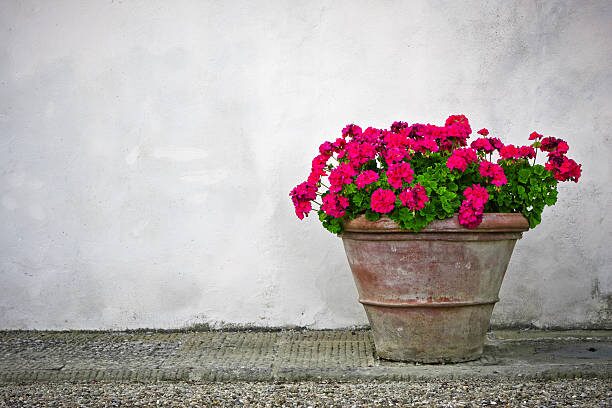
Pelargonium, not a true Geranium—why the mix-up?
In nurseries and catalogs, scented pelargoniums are almost universally sold as “geraniums.” Botanically, though, they’re in the genus Pelargonium, separate from true Geranium (the hardy meadow cranesbills). A few quick differences:
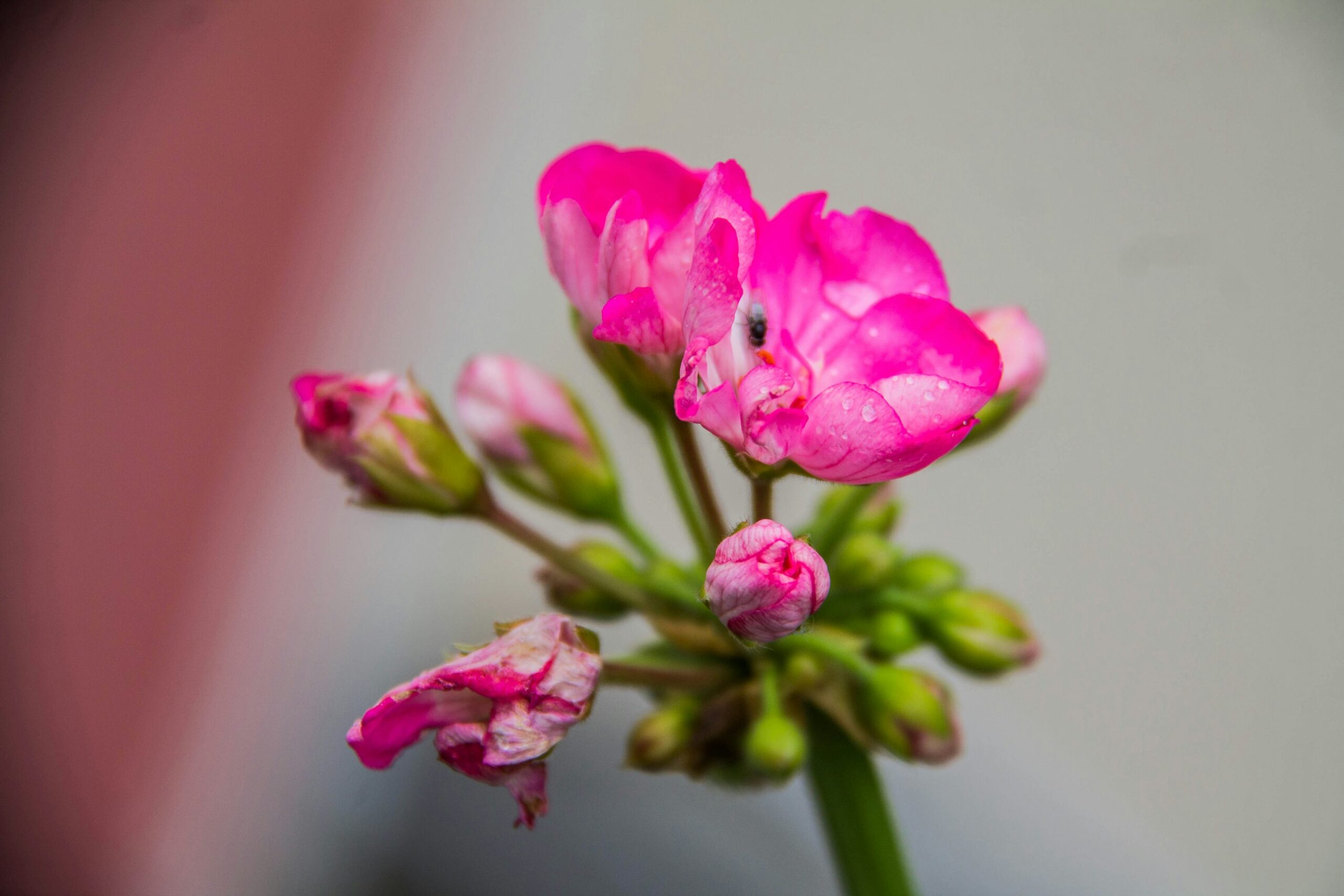
- Cold tolerance: Pelargonium graveolens is frost tender (suited to mild climates or indoor overwintering), while many true Geraniums are hardy perennials.
- Flowers: Pelargoniums typically have asymmetrical, “butterfly-like” blooms; Geraniums are more symmetrical.
- Oil source: The fragrance industry’s “geranium oil” is distilled from Pelargonium leaves—most famously P. graveolens—not from true Geranium.
That naming tangle also fuels its aliases: Scented Geranium, Rose Geranium, Rose‑Scented Geranium, Citronella Geranium, and the ever-marketable “Mosquito Plant” (repellency, in practice, varies widely by cultivar and conditions).
From fynbos to fragrance capitals: how it conquered perfumery
By the 19th century, Grasse—the French cradle of perfumery—was cultivating Pelargonium graveolens to “stretch” precious rose and add a leafy, modern sheen to floral accords. Steam distillation of the leafy stems yields what perfumers simply call geranium oil: a rosy heart with green, lemony, and minty facets that make roses feel fresher, woods cleaner, and citruses longer-lasting.
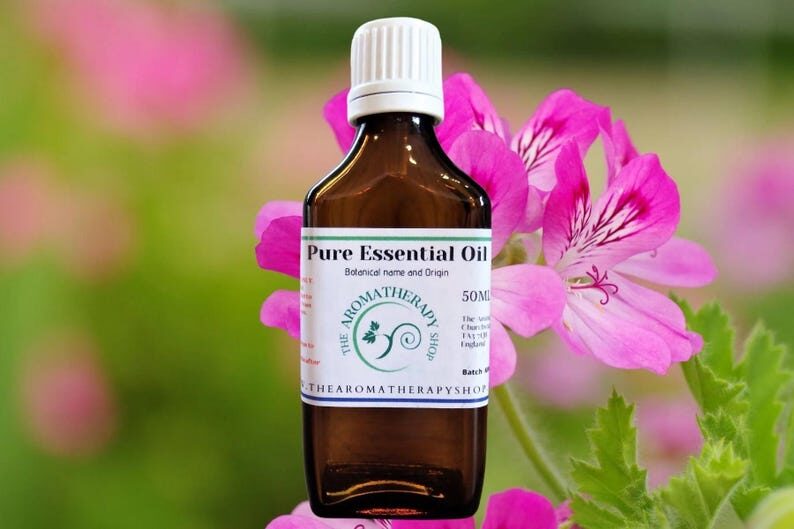
As demand grew, the plant followed mild, sunny latitudes suited to its temperament. Over time, major growing and distilling hubs emerged:
- La Réunion (Bourbon): From the late 1800s, the island’s high plateaus produced celebrated “Bourbon” geranium oil—still a quality benchmark and an enduring name in the trade.
- Egypt and Morocco: Vast, reliable producers with distinct regional profiles—often leafy-rosy with a crisp green edge.
- Madagascar: A newer powerhouse with sustainable smallholder projects and beautiful, nuanced oils reminiscent of Bourbon styles.
- China, and historically parts of Italy and Spain: Important cultivation and distillation bases that helped globalize supply.
Today, “Bourbon” may refer to origin or a style profile inspired by Réunion heritage; what unites them is that unmistakable rosy-green signature that perfumers reach for again and again.
What does geranium oil smell like?
Imagine rose with a tailored, green lapel:
- A full rosy body
- Bright citrus-peel sparkle
- Leafy/herbal greenery
- A cool, minty-mentholic lift
That combination makes it a pillar of fougère (“barbershop”) perfumery and a natural partner for rose, vetiver, lavender, citrus, and modern musks.
Where you’ll find it on the shelf
Look for it in:
- Classic fougères and crisp masculines (think that clean, elegant snap)
- Modern green florals where it freshens rose
- Transparent woods where it adds lift
Examples enthusiasts often cite include Chanel Égoïste Platinum, Frédéric Malle Geranium Pour Monsieur, and Diptyque Geranium Odorata.
Growing your own rose-scented roommate
You can raise a perfumery staple on your windowsill—no copper still required.
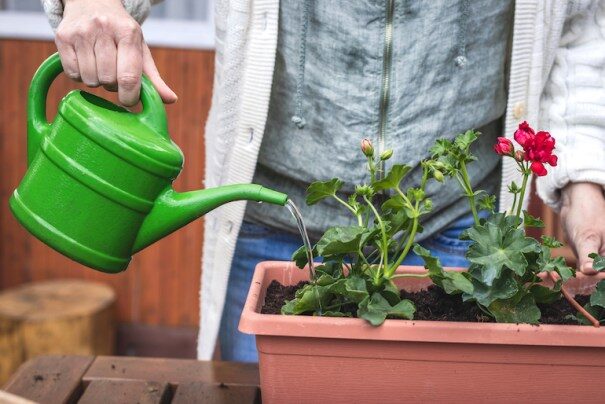
- Light: Full sun to very bright light; indoors, choose the brightest window. Provide brief bright shade during extreme summer heat.
- Temperature: Best around 10–20°C (50–68°F). Keep above about 7°C (45°F) in winter; it’s frost tender.
- Water: Water thoroughly, then let the top of the mix dry. In spring, that often means 2–3 times weekly; in autumn, 1–2; and in winter, weekly or less indoors. In hot midsummer semi-dormancy, reduce watering and irrigate early morning.
- Soil: Free-draining is non-negotiable. Light potting mix with coarse sand/perlite, or a loam-based blend (2 parts loam : 1 compost/leaf mold : 2 coarse sand).
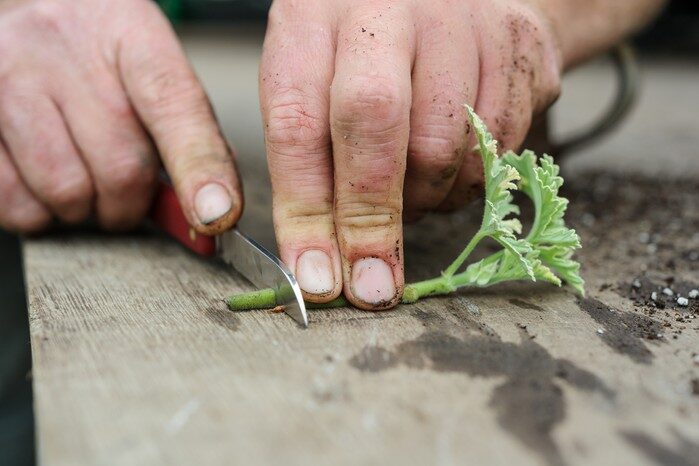
- Pruning: Pinch tips at 12–15 cm to encourage branching. Deadhead flower stems. Hard-prune by 1/3–1/2 in late winter if it gets leggy; keep in bright shade to recover.
- Repotting: About yearly into fresh, fast-draining mix; many growers time it to late summer or after the late-winter prune.
- Pests and pitfalls: Watch for aphids, mites, whiteflies, and mealybugs—catch early with a rinse or insecticidal soap. Avoid stagnant, humid air and wet foliage to sidestep Botrytis and leaf spot. Most yellowing leaves trace back to low light, overwatering, heat stress, or tired, compacted potting mix.
Pro tip: In peak heat, Pelargonium graveolens often pauses—a normal semi-dormancy. It’s asking for less water and better airflow, not extra drinks.
In the kitchen, in the linen drawer
- Fragrance at home: Dry leaves for sachets and potpourri; a quick brush releases scent whenever you open a drawer.
- Culinary infusions: Rinse and lightly bruise clean leaves to infuse syrups, teas, butter, cream, ice cream bases, and jams. Remove leaves after steeping for a smooth finish.
Symbols and stories: what the “flower language” really says
In Victorian floriography and later popular lists, scented pelargoniums picked up meanings such as admiration, love, comfort, happiness, and the hope of reunion. Red-flowered forms have been linked with happiness and consolation in some traditions. These associations are cultural, not botanical—think of them as a social perfume layer we’ve added over time.
If any plant deserves “hope of reunion,” it’s this one: a traveler that left the Cape, found a second home on La Réunion (the name is an irresistible pun for romantics), and now connects fields from North Africa to the Indian Ocean with vials on a perfumer’s bench.
Quick ID card
- Botanical name: Pelargonium graveolens (family Geraniaceae)
- Common names: Scented Geranium, Rose Geranium, Rose‑Scented Geranium, Citronella Geranium, “Mosquito Plant”
- Origin: Southern Africa (Cape region)
- Habit: Bushy, branching, semi-woody perennial; 20–60 cm tall in typical pots (can approach ~1 m in larger containers)
- Foliage: Soft, lobed, intensely aromatic; releases scent when brushed
- Flowers: Small 5‑petaled clusters, pale to deeper pink with darker markings
- Bloom season: Spring through autumn (often in flushes)
- Hardiness: Frost tender; generally outdoor‑safe year‑round only in mild climates (about USDA 10–11)
A final sniff
From sunlight on Cape hillsides to copper stills in Réunion and the Nile Delta, Pelargonium graveolens stitched itself into perfumery’s fabric with a rosy-green thread that never goes out of style. Whether you grow it for a daily dab of fresh-air fragrance or seek it in your next favorite perfume, this “scented geranium” proves that clarity and character can absolutely share the same leaf.