

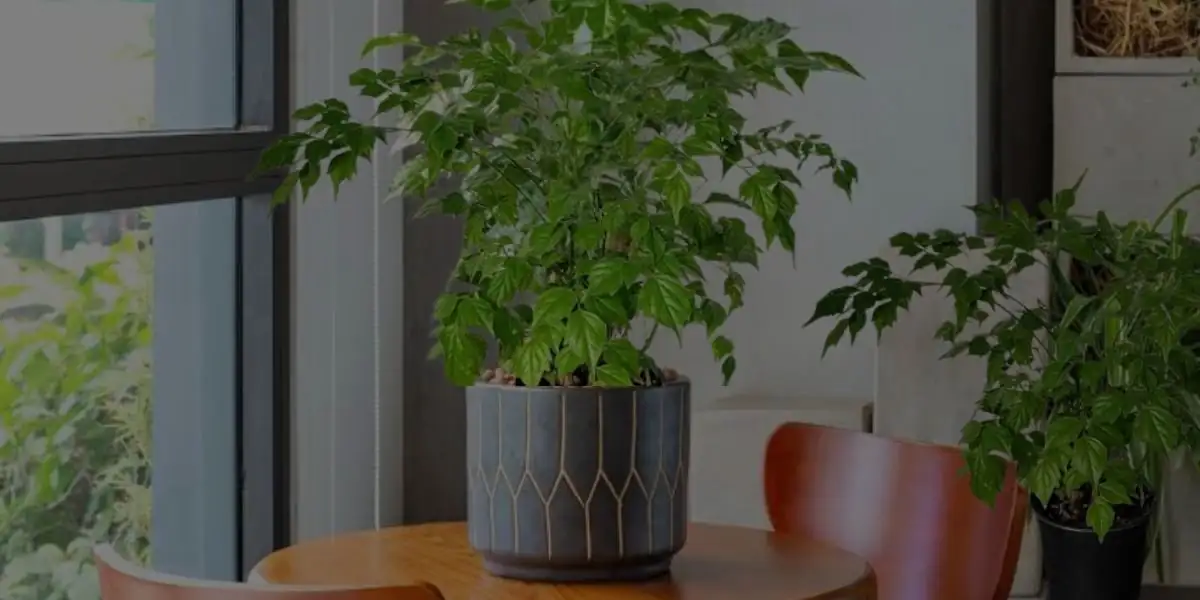
It began with a shimmer—tiers of glossy leaflets stacking themselves like a well-ordered city skyline in the filtered light of a study window. Long before Radermachera sinica became the “China doll” on bright apartment sills worldwide, it was an understory evergreen of warm Asian forests, catching soft sun along mountain roads and village edges. Its journey from monsoon mist to modern living room is part botany, part trade route, and part the sheer magnetism of a plant that looks perfectly dressed, every day.
Where the “China Doll” Began
Trace your finger across a map of southern China—Guangdong, Guangxi, Yunnan—and then let it dip across parts of Southeast Asia. That’s the native backdrop for Radermachera sinica: warm, frost-free zones where bright, filtered light is a daily guarantee and humidity hangs in the air like a promise. In horticultural circles, its range is sometimes reported as stretching to nearby regions such as India or the Philippines; the point is less about borders than about the conditions it adores—steady warmth, ample moisture, and no frost.
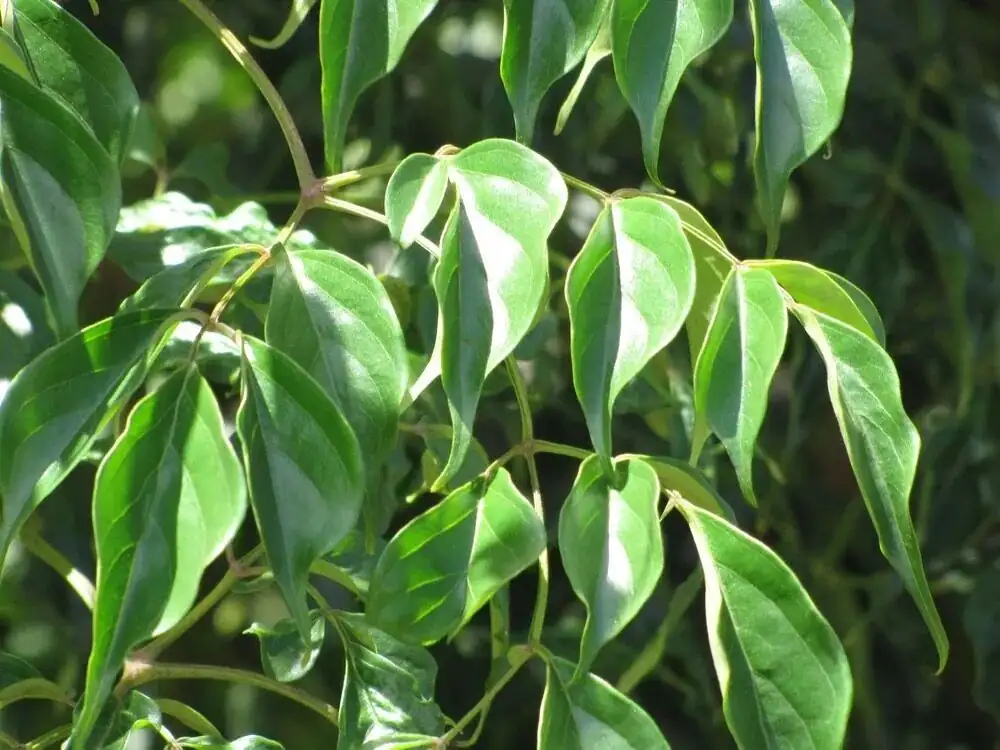
There, in forest margins and garden plots, the plant builds its signature architecture. Compound leaves divide into many small, oval leaflets, each one lacquered with shine. New growth arrives in neat tiers, like pages in a green book. In ideal outdoor settings—or in large conservatories—it can even throw a surprise: pale, trumpet-shaped flowers in spring or summer, often creamy-white and sometimes lightly fragrant in the evening. The long, slender, occasionally serpentine seed pods seen outdoors explain another of its nicknames: “serpent tree.”
A Dutch Name in an Asian Canopy
Open an 18th‑century ledger from the Dutch East Indies and you might find the name that shaped this genus: Jacob Cornelis Matthieu Radermacher. A Dutch naturalist who recorded the flora of Java and Sumatra, Radermacher lent his name to Radermachera, a genus now recognized to include about 17 species across Southeast Asia. The species epithet “sinica” simply nods to its Chinese roots.
It’s a cross‑continental footnote worth savoring: a Dutch surname attached to a plant that is, in every meaningful way, an emblem of the Asian subtropics.
Botanical Portrait: The Tiered Elegance We Can’t Resist
- Growth habit: Upright, bushy, and evergreen, it naturally forms layered branches. Indoors, it typically reaches 60–200 cm (2–6.5 ft), easily pruned into a refined “mini tree.”
- Foliage: Glossy, deep‑green, compound leaves with many small leaflets arranged in those irresistible tiers. Strong, bright filtered light keeps the crown dense and polished.
- Flowers: Indoors, flowering is rare. In warm conservatories or outdoor plantings in frost‑free climates, expect showy, creamy-white to pale flowers in spring to summer, sometimes softly fragrant.
- Fruit: In suitable outdoor conditions, long, narrow pods may form—those “serpentine” capsules that inspired yet another common name.
Common names trail its travels: China Doll, China Doll Plant, Chinese Trumpet Tree, Emerald Tree, Serpent Tree, and—across much of Asia—幸福树, the “Happiness Tree.”
From Forest to Flat: How It Won the Late‑20th‑Century Houseplant Boom
By the late 20th century—when ferns fringed stereo cabinets and variegated pothos trailed over bookcases—nurseries across Asia began exporting a different kind of “upright elegance.” Radermachera sinica arrived pre‑styled: naturally compact, neatly layered, and effortlessly glossy. It looked like a perfect office or foyer tree, scaled for small spaces and politely responsive to pruning.
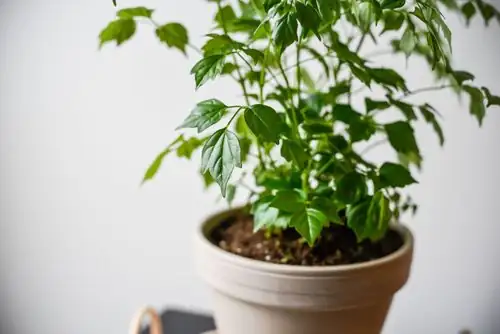
Marketers leaned into its auspicious Chinese moniker, the Happiness Tree, a tidy symbol of prosperity and calm. The plant caught on quickly in Asia, then in Europe and North America, starring in bright rooms where its even, architectural growth read as “refined” rather than “wild.” And because it responds to changes in light, temperature, or humidity with theatrical leaf drop, it also became famous for being—well—a little dramatic. The message was clear: give me steady brightness, warmth, and a reliable watering rhythm, and I’ll repay you with poise.
Light, Warmth, and Rhythm: Care That Honors Its Origins
Light
- Best: Bright, indirect light to gentle morning sun. An east‑facing window or filtered south light is ideal.
- Avoid: Harsh midday summer sun, which can scorch; deep shade, which encourages thin growth and leaf drop.
- Pro tip: Think 50–60% shade in summer if you’re growing on a bright balcony or sunroom.
Temperature and Humidity
- Temperature sweet spot: 20–30°C (68–86°F).
- Minimums: Keep above about 12°C (54°F) indoors for best performance; avoid dropping below 5°C (41°F), which can trigger serious leaf loss.
- Humidity: Prefers moderate to high humidity around 60%+.
- Boost with a pebble tray, humidifier, or light misting—paired with gentle airflow to prevent leaf spot.
- Keep away from heating/AC vents and cold winter glass.
Water and Feeding
- Watering rhythm:
- Spring to autumn: Water thoroughly, then keep the mix evenly moist—never soggy. Don’t let the pot bone‑dry.
- Summer note: In warm rooms, many growers give an occasional deeper soak about every two weeks, but always adjust to how quickly your mix dries.
- Winter: Reduce; in many homes, watering about once every two weeks works. Aim for “just moist.”
- Fertilizer: Feed monthly in the growing season with a balanced liquid fertilizer (e.g., 20‑20‑20) at diluted strength or an organic liquid feed. Pause during heat waves and stop in winter.
Pruning and Shaping
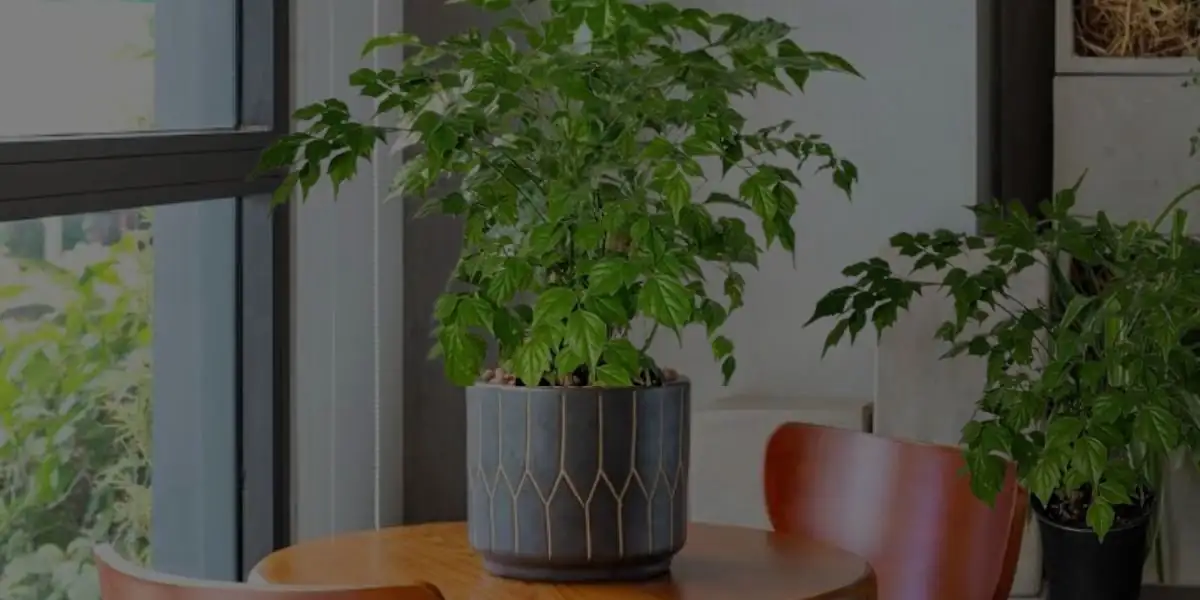
- Pinch new tips regularly to encourage branching and a fuller canopy.
- Prune leggy shoots during active growth. This plant loves a haircut and repays with density.
Soil and Repotting
- Potting mix: Loose, fertile, and free‑draining—quality potting soil with leaf mold/compost plus coarse sand or perlite. Always use a pot with drainage.
- Repotting: Spring is best. Young, fast‑growing plants often appreciate a yearly step‑up to a slightly larger pot.
Propagation (Three Good Paths)
- Tip cuttings (most common): In summer, take 12–20 cm (4.7–8 in) semi‑mature cuttings. Strip lower leaves, keep 2–4 at the top (halve larger ones), and root in a peat‑based medium or sand at 22–26°C (72–79°F) with high humidity. Rooting often takes 5–6 weeks.
- Seeds: Sow shallowly in spring at 18–21°C (64–70°F). Germination is commonly 2–3 weeks.
- Water/semi‑hydro culture: After gently rinsing the roots, set the plant into clean decorative stones or a semi‑hydro setup. Top up water weekly and add hydroponic nutrients monthly. Keep in bright, filtered light.
Placement That Works
- Indoors: A bright living room, entryway, or study corner with filtered light and fresh air.
- Keep away from: Drafts, heating/cooling vents, cold glass in winter, cigarette smoke, and stagnant corners.
Troubleshooting the “Dramatics”
- Leaf drop and yellowing: Most often from low light, dry air, cold drafts, or temperature swings. Correct the conditions; the plant will rebound.
- Leaf spot: Usually from wet leaves without airflow; prune affected leaves and improve ventilation.
- “Not doing much”: Give it more brightness and warmth. These are the two levers that most improve vigor indoors.
Pests and Health
- Common offenders: Scale insects and whiteflies, especially in warm, poorly ventilated rooms.
- Response: Early treatment with insecticidal soap or horticultural oil; repeat as needed and isolate while treating.
Hardiness and Outdoor Use
- Frost-tender and best as a houseplant in cool climates.
- Suitable outdoors mainly in USDA Zones 10–12; in the ground in frost‑free climates it matures into a small tree.
Safety
- Generally regarded as non‑toxic to people and pets. Still, keep out of reach; chewing any plant can cause mild stomach upset.
Symbolism: The “Happiness Tree” and Modern 花语
Unlike peonies or orchids with centuries of encoded meanings, Radermachera sinica’s 花语 is a modern, market‑shaped story. As it spread through Asia as a stylish indoor “mini tree,” the name 幸福树—Happiness Tree—stuck. Interiorscapes embraced its composed, diligent look for offices and study rooms, and the plant came to symbolize:
- Prosperity earned through steady effort
- A calm, refined atmosphere
- Everyday good fortune when a household stays warm, bright, and well‑kept
In other words, its flower language grows from how it lives indoors: thriving when conditions are consistently right.
Why It Endures
- Architectural foliage that looks curated, not chaotic
- Compact size with big‑plant presence
- Responsive to pruning, so you can sculpt your own “mini tree”
- A naturally glossy finish that cheers up bright corners
- A little dramatic—yes—but that’s also how it communicates its needs
Quick Facts Cheat Sheet
- Botanical name: Radermachera sinica (family Bignoniaceae; genus Radermachera)
- Common names: China Doll, China Doll Plant, Chinese Trumpet Tree, Emerald Tree, Serpent Tree; 幸福树 (Happiness Tree)
- Native range: Southern China and parts of Southeast Asia; sometimes cited in cultivation literature as extending to nearby regions
- Indoor size: Commonly 60–200 cm (2–6.5 ft)
- Light: Bright, indirect; protect from harsh midday sun
- Temperature: Best at 20–30°C (68–86°F); keep above 12°C (54°F) indoors; avoid below 5°C (41°F)
- Humidity: Prefers 60%+ with airflow
- Water: Evenly moist in growth; lighter in winter
- Feeding: Monthly in growing season; pause in extremes
- Pruning: Pinch tips; prune leggy shoots
- Propagation: Summer cuttings (5–6 weeks to root), spring seeds (2–3 weeks), or water/semi‑hydro culture
- Hardiness: Frost‑tender; outdoors mainly USDA 10–12
- Safety: Generally non‑toxic; ingestion may cause mild upset
Step back and you can see why Radermachera sinica felt made for the modern home. It brings a piece of warm, filtered forest light inside, translating monsoon steadiness into domestic grace. Keep its light bright, its climate warm, its humidity reasonably high—and in return, it will hold its tiers like a poised chorus line, green and gleaming, season after season.