

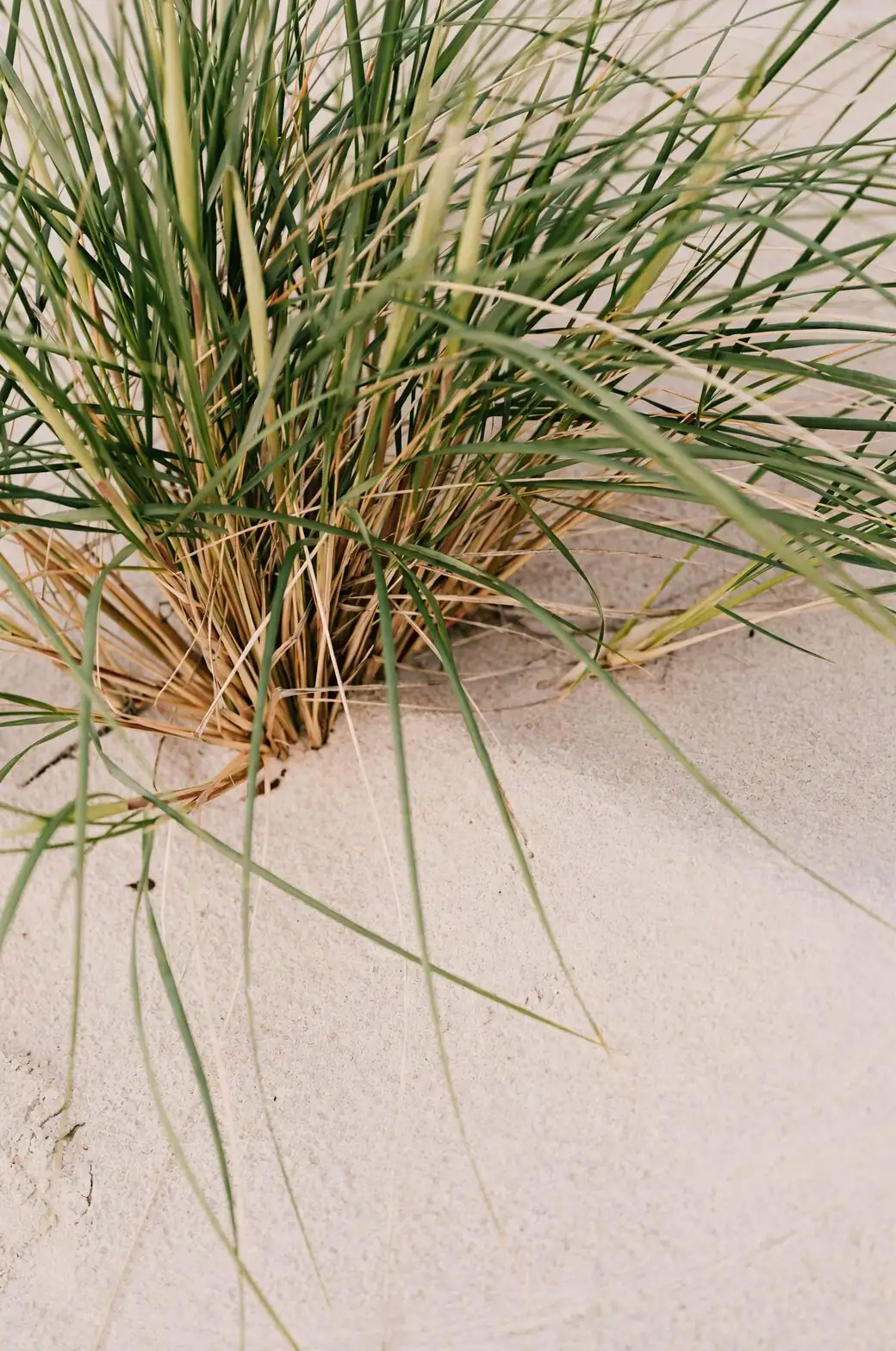
At dawn on a coastal dune in KwaZulu-Natal, the air smells faintly of salt and resin. A braided mat of green spills over rock and sand—soft as a feather boa until you brush the stems and feel the tiniest prick of a spine. This is Asparagus densiflorus, the so‑called “asparagus fern,” a plant that slips between worlds with ease: from African thickets to European conservatories, from groundcover to chandeliered hanging basket, from “fern” in catalog copy to true Asparagus in botanical truth. Its story is one of resilience disguised as refinement—and a name game that kept nurserymen and botanists busy for a century.
Where it begins: southern Africa’s airy green understory
Follow the coastline north from South Africa into southern Mozambique and you’ll pass the native range of Asparagus densiflorus. It thrives where edges meet: at the skirts of coastal forests, in open, rocky places, even on shifting dunes where light is dappled and breezes never stop.
- Habitat notes
- Native to southern Africa, especially South Africa and Mozambique
- Found from coastal dunes to open rocky places and woodland margins
- Evergreen, variable, and tenacious—yet visually soft
Look closer and the “leaves” aren’t leaves at all. They’re slender, bright‑green cladodes—modified stems—that form plume‑like sprays. In late spring to summer, mature clumps quietly produce tiny starry white flowers tucked among the greenery, sometimes sweetly scented. Weeks later, small red berries glow like beads; birds oblige as couriers, carrying seeds from thicket to thicket.
From dune to drawing room: the “fern” that isn’t
By the late 19th century, exporters in the Cape were shipping tough, water‑storing roots of Asparagus densiflorus to Europe and beyond. Where many true ferns sulked on steamships, this plant shrugged off the journey—those tuberous roots are canteens against drought and delay. In cool conservatories and sunny bow windows, its fountain of feathery stems became instant décor.
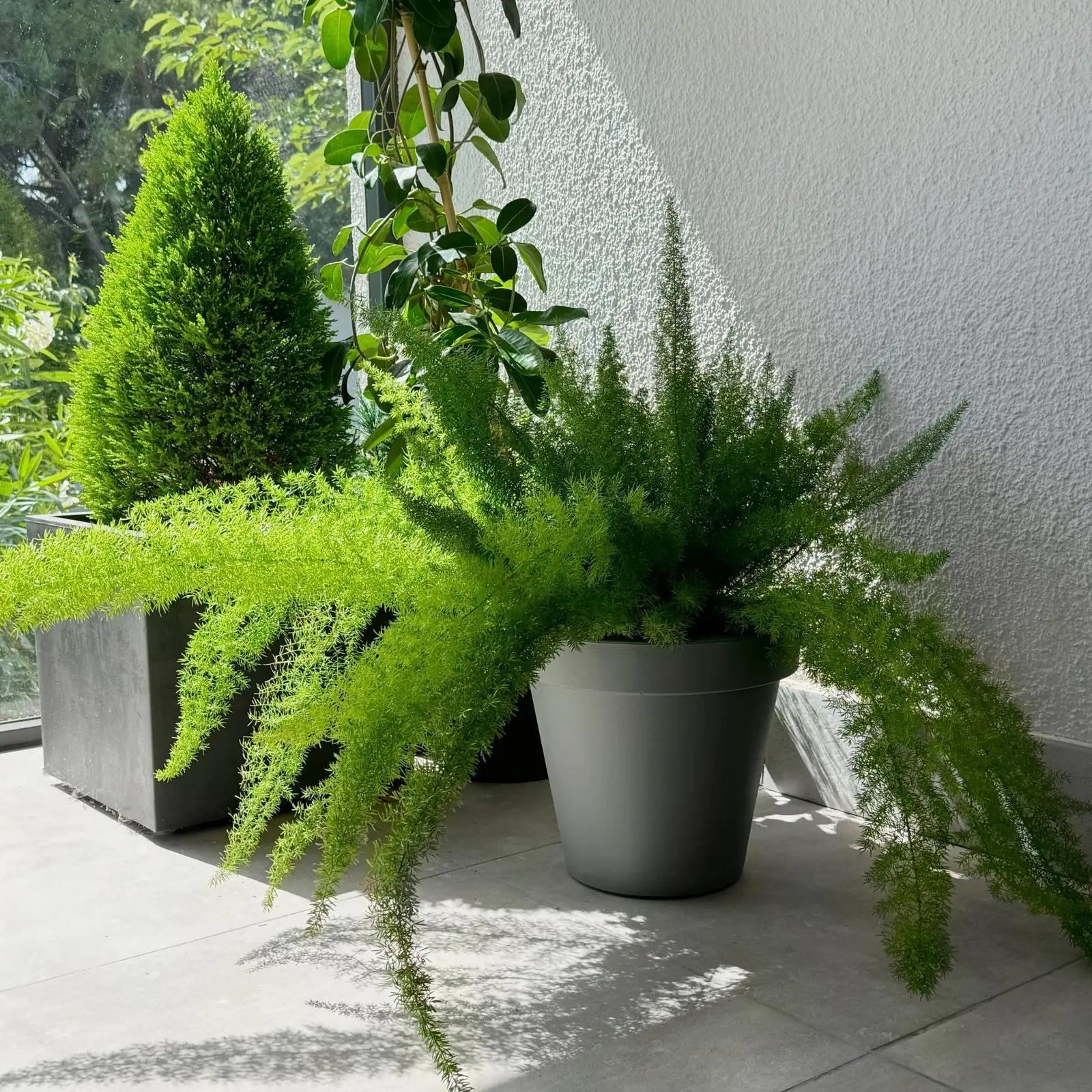
Nursery catalogs soon leaned on a simple, irresistible pitch: a fern that doesn’t fuss. The name asparagus fern stuck, and with it a cascade of trade names—Emerald Fern, Plume Asparagus, Sprenger’s Asparagus, Foxtail Fern—each conjuring a texture or trend:
- Hanging baskets brimming with long, arching “sprays” that looked like sculpted fog
- Tall planters where the stems waterfall elegantly, green against white tile and dark wood
- Florists snipping those dense, cat‑tail plumes for long‑lasting verdant accents
The secret to its success never changed: it looks delicate but lives tough, so long as you avoid cold drafts and soggy soil.
The taxonomy tangle: Sprenger’s and Foxtail, one plant or two?
Here’s where the plot thickens—helpfully, charmingly, and sometimes confusingly.
- In horticulture, two forms became classics:
- Sprenger’s: the arching, cascading, basket‑filling type long marketed as Asparagus “Sprengeri.”
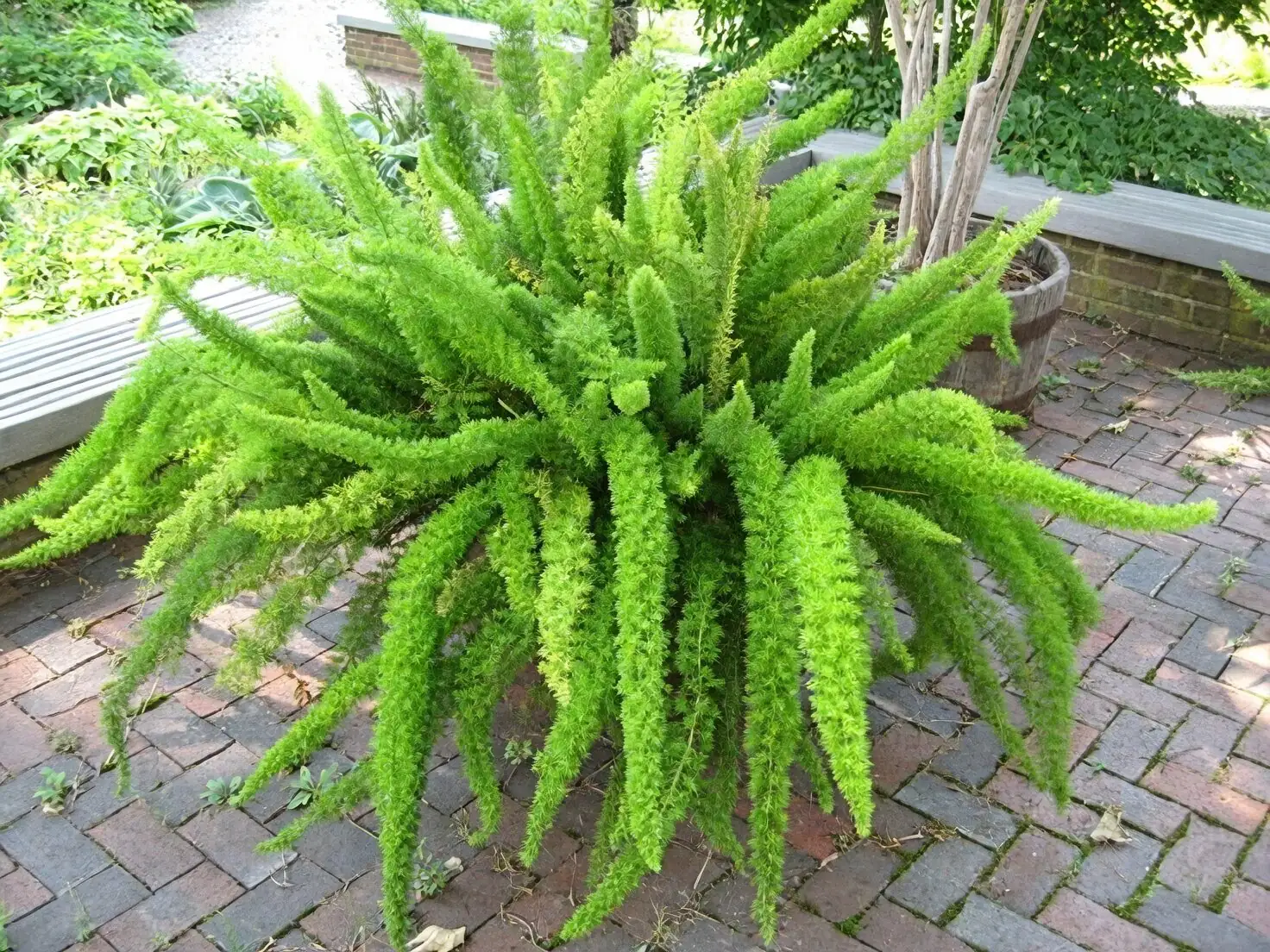
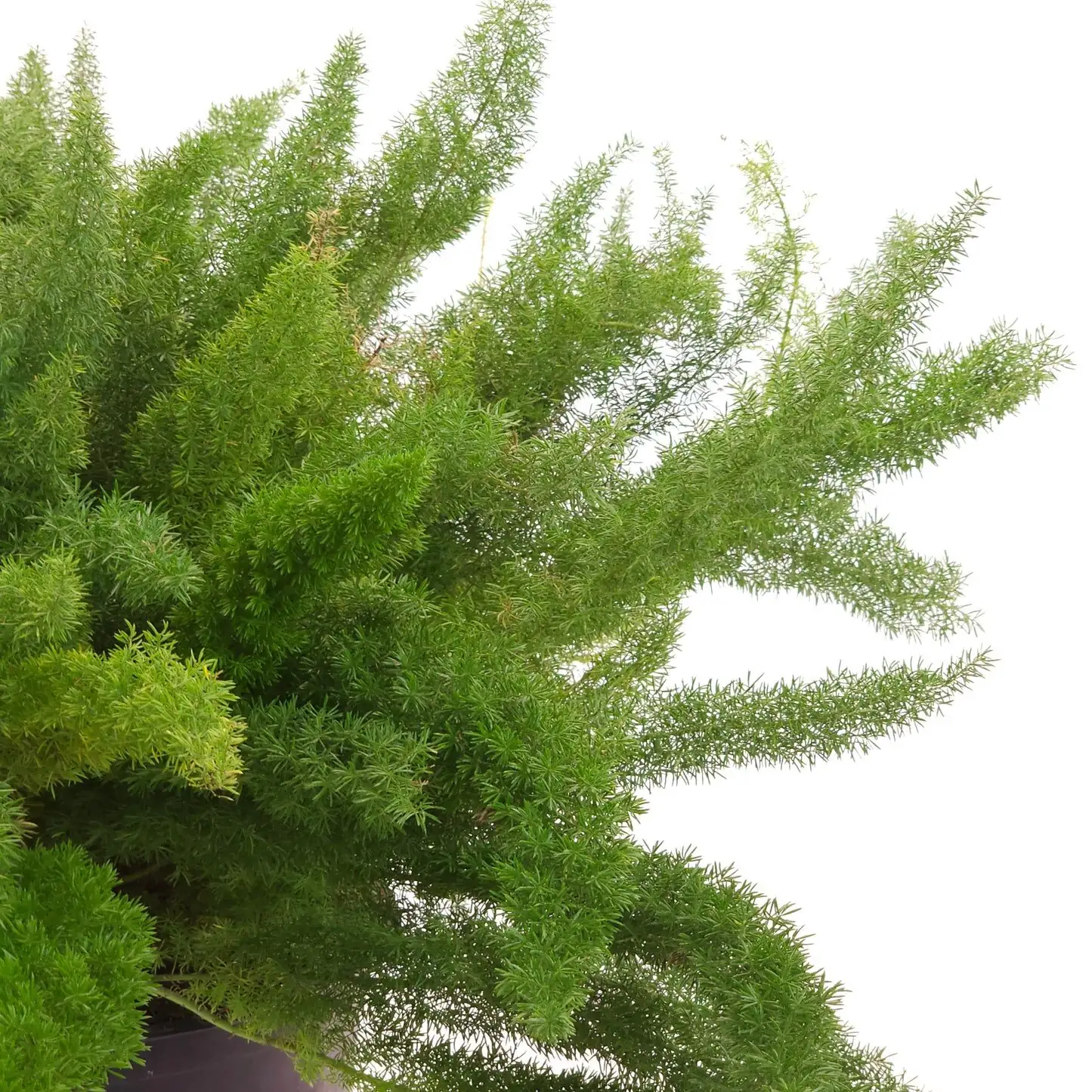
- Foxtail (often sold as ‘Meyersii’): compact, upright plumes as dense as a cat’s tail.
- Over decades, labels wobbled. Closely related African Asparagus species look and grow similarly, and nursery names were swapped freely. That led to a persistent muddle in which plants sold as “Sprenger’s asparagus” or “foxtail fern” might be placed under different species in different places.
- Today, in mainstream horticulture, those beloved Sprenger’s and Foxtail selections are widely treated as forms of Asparagus densiflorus. You’ll see them offered under that name, and their shared traits fit: plume‑like cladodes, tuberous water‑storing roots, arching to upright sprays, occasional white flowers and red berries.
Practical takeaway for the plant lover:
- If your plant makes soft, ferny plumes and thrives in bright, indirect light with evenly moist but well‑drained soil, you’re living happily in the Asparagus densiflorus world—Sprenger’s basket or Foxtail plume included.
A quick field guide to its look and life
- Habit and size
- Arching to cascading stems; ideal for hanging baskets and elevated pots
- Typically about 60 × 60 cm (24 × 24 in) in containers
- Foliage
- Bright green, feathery, needle‑fine cladodes arranged in plume‑like sprays
- Tiny, inconspicuous spines on stems—more “don’t grab me” than “ouch”
- Flowers and fruit
- Small, starry white blossoms on mature plants, late spring to summer
- Followed, at times, by small red berries indoors
Living with Asparagus densiflorus: care that feels effortless
Think of care as a rhythm rather than a rulebook—light, warmth, and steady moisture, never swampy.
- Light
- Bright, indirect light to partial shade; gentle morning or late‑afternoon sun is fine
- Avoid harsh midday sun that can scorch
- Temperature
- Best at 13–24°C (55–75°F); protect from cold drafts and avoid below ~10°C (50°F)
- Outdoors year‑round only in mild climates (approximately USDA 9–11)
- Water
- Spring–autumn: keep evenly moist; water when the top 1–2 cm (0.4–0.8 in) begins to dry
- Winter: let the surface dry between waterings; the tuberous roots store water, so it forgives a missed drink better than a waterlogged pot
- Humidity
- Copes with average indoor air better than true ferns; occasional misting is welcome
- Soil
- Loose, well‑draining mix in a pot with drainage holes; avoid heavy, soggy blends
- Feeding
- Monthly at half strength in spring–autumn; pause in winter
- Pruning
- In spring, cut brown or leggy stems at the base to refresh the plant
- Repotting and propagation
- Repot when root‑bound (every 1–2 years), moving up just one size
- Divide in spring: split the dense, tuberous root ball into sections, each with roots and several stems
- Placement ideas
- Hang near an east‑ or north‑facing window, or set back from a bright south/west exposure with filtered light
- Tall planters let plumes arc and cascade beautifully
- Pests and safety
- Watch for spider mites, mealybugs, and scale—especially in dry rooms; rinse foliage and use insecticidal soap or horticultural oil if needed
- Mildly toxic if ingested; berries and foliage can upset pets and people. Sap may irritate sensitive skin
How it conquered parlors and patios
Part of its star power was logistical genius: those tuberous roots meant plants survived long sea voyages and bumpy rail trips better than finicky ferns. Another part was pure style. As tastes swung from the fern‑fever of the Victorian era to the clean lines of mid‑century and the lush maximalism of today, Asparagus densiflorus adapted—in baskets, in tall cylinders, in sunrooms—always draping or standing just so.
Florists loved it, too. The dense, lime‑green plumes of the foxtail form outlast delicate fern fronds in arrangements, offering a modern, sculptural green that keeps perking up a vase long after the first bloom fades.
Symbolism: soft strength, enduring affection
If plants have a “flower language,” this one speaks in paradox. Its texture promises gentleness, but the plant is made of resolve—modified stems that masquerade as leaves, swollen roots that bank against drought, an evergreen habit that outlasts the seasons.
- Symbolic notes often attached to Asparagus densiflorus:
- Enduring affection: it keeps its color and grace for years, even in less‑than‑perfect homes
- Resilience: it wears softness like armor, thriving where true ferns often fail
These meanings likely grew not from folklore but from living room observation: anyone who’s watched it rebound after a missed watering recognizes the quiet durability beneath the fluff.
FAQ: fast answers for flourishing fronds
- Why is my plant turning yellow or dropping those fine “needles”?
- Most often: inconsistent watering, low light, or spider mites. Aim for bright, indirect light and water when the top 1–2 cm dries. Inspect closely in dry rooms.
- Can it take direct sun?
- A little gentle morning or late‑afternoon sun is fine. Strong midday sun can scorch; acclimate gradually if moving brighter.
- Is it truly a fern?
- No. It belongs to the Asparagaceae. The “leaves” are cladodes—modified stems—which is why it tolerates lower humidity than many real ferns.
Epilogue: a plume in motion
Back on that coastal slope, wind lifts the plumes and lays them down again, combing light through green. Follow the plant’s journey forward and the motion continues—now as a graceful arc from a high shelf, now as upright foxtails in a sunny foyer. Names may tangle, trends may shift, but Asparagus densiflorus keeps writing the same line in any setting: softness as a form of strength, elegance that’s built to last.