

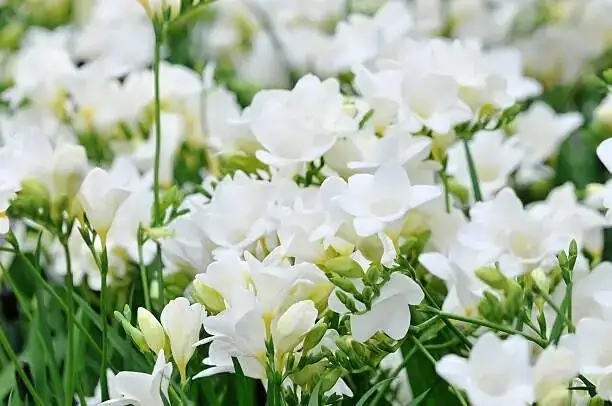
Breathe in that bright, fruity perfume, and you’ll understand why Freesia × hybrida is the darling of late winter. But the real magic is how effortless it feels when you follow a simple, month-by-month rhythm: plant in cool autumn, pamper in bright-cool winter, revel in spring bloom, then tuck the corms away for a dry summer rest. Here’s your no-guessing playbook from first sprout to next year’s encore.
Freesia at a glance (so you know its rhythm)
- Nature: corm-forming perennial (not a true bulb) with an active cool-season and a dry summer dormancy.
- Light: full sun to very bright light; indoors a sunny east or south window.
- Temperature sweet spot: cool—around 15–20°C (59–68°F). Warmer rooms (>20°C / 68°F) mean floppier stems and a shorter show.
- Water: even moisture in growth and bloom; never soggy. Dry rest after leaves yellow.
- Soil: rich but fast-draining—loam + leaf mold/compost + coarse sand or perlite.
- Planting depth: pots 2–3 cm (0.8–1.2 in); in-ground 3–4 cm (1.2–1.6 in).
- Flowering: late winter to spring (timing shifts with planting date and temperature).
The month-by-month plan (Northern Hemisphere; shift 6 months in the Southern Hemisphere)
Note: This timeline assumes classic indoor/porch pot culture for winter–spring bloom. In mild climates (roughly USDA 9–11), you can also plant outdoors in autumn with frost protection. In cold-winter regions, grow in containers or lift and store for summer.
September — Replant and wake the corms
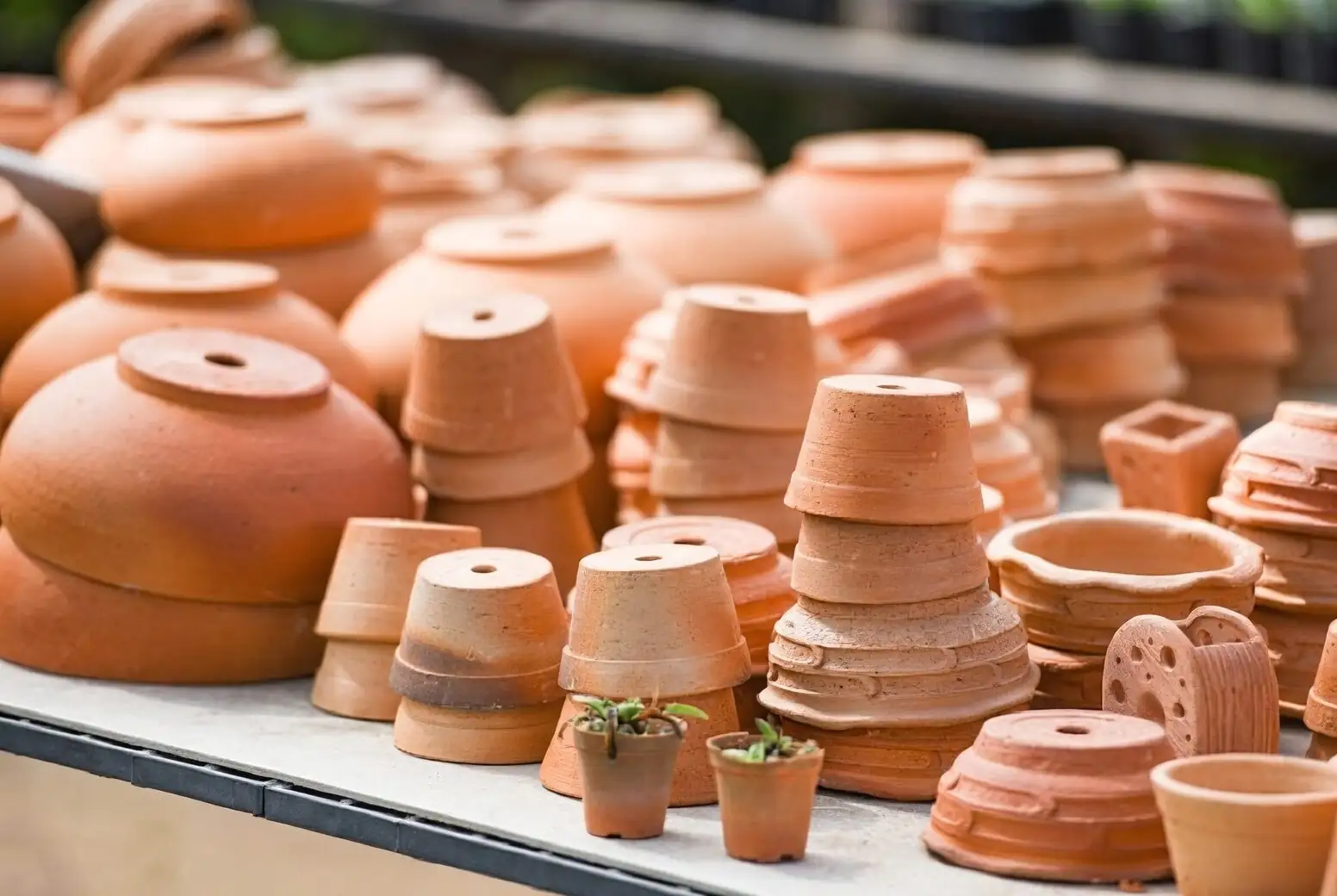
- Potting recipe: Use a 12–15 cm (4.7–5.9 in) pot for 5–7 corms. Fill with fertile, fast-draining mix (loam + compost or leaf mold + perlite/coarse sand).
- Planting depth: 2–3 cm (0.8–1.2 in) deep, pointed end up. Space closely for a fuller display.
- Placement: The brightest, coolest spot you have with good airflow. Avoid heaters and stuffy corners.
- Water: After potting, water once to settle soil, then hold off until the top centimeter dries; you want moist, never wet.
- Pro tip: Insert discreet supports (small hoops or canes) now; freesias are famously elegant—and prone to flopping in low light or warmth.
October — Rooting and leafing
- Light and temp: Maximum sun; aim for days near 18–20°C (64–68°F), nights 14–16°C (57–61°F).
- Water: Steady but light. Check twice weekly; water when the top feels dry.
- Feeding (choose a light-touch plan):
- Option A: Balanced fertilizer at low dilution every 10 days during leafy growth; stop once flower stems are up.
- Option B: Bloom-leaning feed every 2 weeks in growth, plus a very dilute P/K boost as spikes begin.
- Airflow: Keep air moving to discourage gray mold (Botrytis), but no cold drafts.
November — Spikes initiating
- Sun: Keep them in prime light; rotate the pot weekly for straight stems.
- Water: Even moisture. Don’t let the root zone swing from parched to soaked.
- Feeding: Continue your chosen plan; this is the last window before you ease off.
- Avoid: Ethylene sources (ripening fruit, gas leaks). Ethylene shortens bloom life.
December — Buds building in cool brightness
- Temperature discipline: This is where you win or lose. Keep near 15°C (59°F) if possible.
- Water: Often 1–2 times per week depending on your room’s dryness; never waterlog.
- Support: Tie stems loosely to stakes/hoops as they elongate.
- Hygiene: Remove any spent or mushy leaf tips; keep foliage dry to deter Botrytis.
January — First flowers
- Display: Bright, cool, and airy. Warm rooms lead to weaker stems and faster fade.
- Water: Commonly 2–3 times per week in active bloom; judge by the pot’s weight and topsoil dryness.
- Fertilizer: Ease off or stop regular feeding once flower stems are well up.
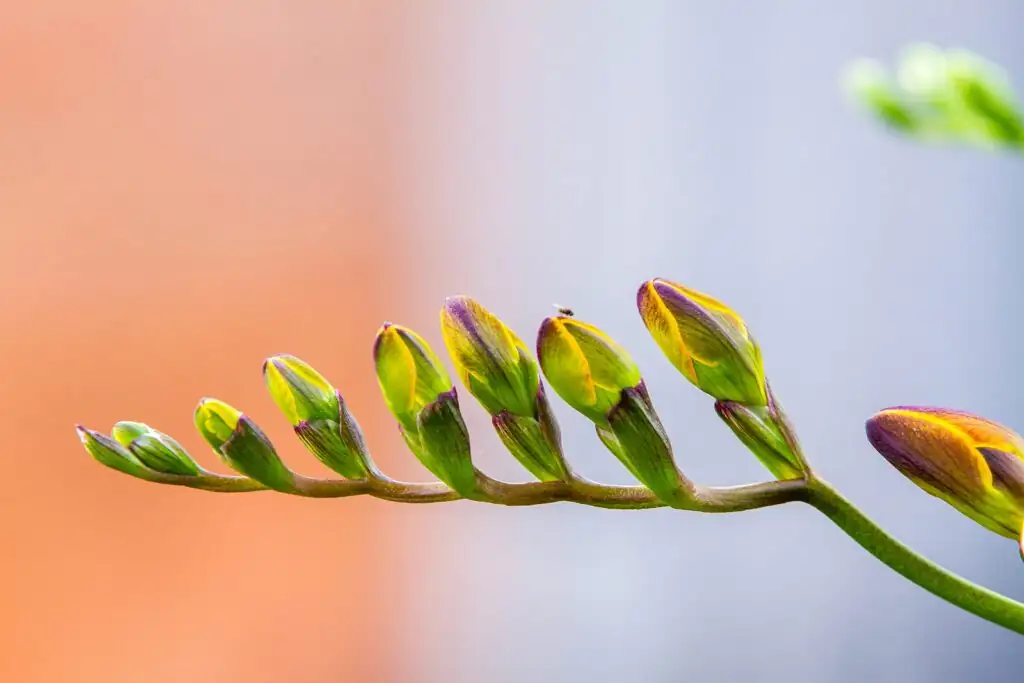
- Cut-flower moment: Harvest when the first bloom opens and at least two more buds show color for the longest vase life.
February — Peak perfume
- Maintenance: Deadhead as flowers fade, leaving all green leaves intact.
- Water: Keep steady moisture; don’t splash open blooms.
- Air: Ventilate without chilling. A small fan across the room beats a steamy window nook.
March — The gentle wind-down
- Water: Reduce to about once weekly as flowering tapers.
- Feeding: Skip heavy feed now; let leaves recharge the new corm naturally.
- Light and temp: Still bright and cool to prolong the tail end of the show.
April — Post-bloom recharge
- Taper: Over roughly 4 weeks, gradually lengthen the interval between waterings.
- Foliage: Never rush the scissors. Keep leaves until they naturally yellow—this fuels next year’s corm.
- Stakes: Remove only after stems stiffen or foliage begins to fade.
May — Enter dormancy
- Stop watering: When leaves turn mostly yellow and dry, cease watering completely.
- If in pots: Move to a dry, airy, shaded place to finish drying.
- If in mild-climate beds: Ensure excellent drainage and rain protection during the dry rest.
June — Lift, sort, and store
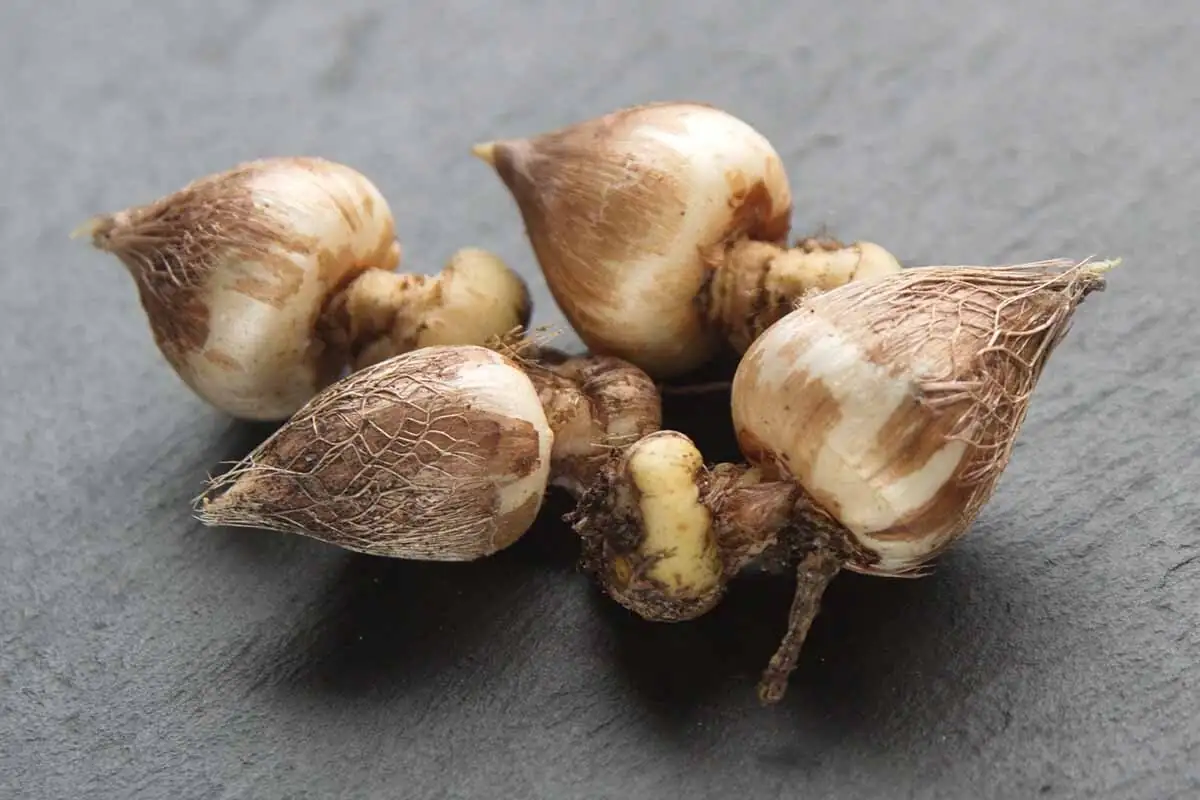
- Lift and clean: When foliage is papery, gently unpot. You’ll find a new replacement corm plus several baby cormlets (often 3–5).
- Sort: Keep firm, plump corms with intact tunics. Discard any soft or moldy ones.
- Storage: Dry, ventilated, and warm—around 25°C (77°F). Label colors/varieties.
July — Quiet rest, quick checks
- Inspect monthly: Remove any that soften or mold.
- Keep conditions: Warm, dry, and airy. No light or water needed.
August — Prep for the encore
- Gear up: Wash and sanitize pots; mix a fresh, free-draining medium.
- Plan the display: 5–7 corms per 12–15 cm pot gives that florists’ fullness.
- Don’t rush: Wait for early autumn to replant—cooler nights cue strong, compact growth.
Alternative calendars at a glance
- Mild-winter gardens (approx. USDA 9–11): Plant outdoors in autumn in full sun and well-drained soil (3–4 cm deep). Protect from frost, water evenly through winter growth, bloom late winter–spring, then allow a dry summer rest in-ground or lift to store.
- Cold-winter regions (approx. USDA 3–8): Grow in pots for bright-cool indoor bloom on the calendar above. If planting outdoors, wait until after last frost and treat as a seasonal display; bloom may shift later into summer. Lift before frost and store dry.
Watering, feeding, and staking—your easy guardrails
- Watering rhythm:
- Growth and bud set: evenly moist.
- Peak bloom: often 2–3 times weekly indoors.
- After flowering: taper to weekly, then stop once foliage yellows.
- Dormancy: completely dry.
- Feeding, simplified:
- Light feeding in leafy growth; avoid heavy fertilizer during peak flowering.
- Optional one-time dilute P/K boost as spikes emerge.
- Stems that stand tall:
- Brightest light + cool temps = sturdy stems.
- Add discreet stakes early and increase airflow to prevent flop.
Troubleshooting fast-lane
- Flowers fading fast or stems floppy? It’s too warm. Move to brighter, cooler air (target ~15°C / 59°F).
- Buds aborting or mold on petals? Air is stale and humid. Increase ventilation, water soil not blooms, space plants.
- Leaves healthy but no blooms? Too warm in early growth, too little light, overcrowding without feed, or very small corms.
- Rot at the base? Soil stayed wet. Repot into sharper-draining mix; water only when the surface begins to dry.
Buying guide (so you start strong)
- Potted plants: Choose fresh green leaves and sturdy, upright spikes with 6–10 buds each; about half just opening gives the longest run.
- Corms: Select firm, plump, clean corms with intact brown tunics; 2 cm (0.8 in) or wider tends to flower more reliably.
Cut-flower care
- Harvest when the first bloom opens and a few buds are colored.
- Keep vases cool, away from sunlight and fruit bowls (ethylene shortens life).
- Refresh water and recut stems every couple of days for that long, sequenced opening.
Safety, pets, and people
- Not widely listed as highly toxic, but treat corms/foliage as potentially irritating if chewed. Keep away from children and pets. In small rooms, strong fragrance can bother sensitive noses—ventilate.
The deeper meaning: Freesia’s “flower language”
Freesia carries a long association with trust, thoughtfulness, and pure affection. The name honors Dr. Friedrich Freese, a friend of botanist Christian Ecklon, so the plant’s symbolism grew from a story of friendship as much as from Victorian floriography. Color lore often riffs on that theme:
- White: innocence and romantic love
- Yellow: warm fondness, joy, and friendship
- Red: admiration or passionate love
These meanings aren’t botanical facts, of course, but cultural layers—delightful, flexible, and perfect for gifting during the late-winter doldrums.
Essential specs for next time
- Light: full sun/very bright indoors; protect from harsh heat.
- Temperature: best around 15–20°C (59–68°F); keep above ~5°C (41°F); very brief near-0°C (32°F) only if protected.
- Humidity: moderate with airflow; avoid muggy rooms.
- Soil: fertile, fast-draining; drainage is non-negotiable.
- Placement: bright window, cool balcony, or airy room—far from heaters, AC blasts, and ripening fruit.
Follow this simple calendar once, and Freesia × hybrida will teach you the rest: bright-cool seasons, even moisture in motion, and the sweetest dry-nap of summer. Next autumn, you’ll know exactly what to do—and your winter windowsill will thank you with fragrance and light.