


If you love the crisp, layered “cloud-pad” silhouette, Podocarpus macrophyllus—Buddhist Pine—may be your most obedient collaborator. It takes wiring and pruning with poise, backbuds reliably when vigorous, and rewards early planning with graceful age. Below is a pro-level, nuts-and-bolts walkthrough: how to choose between seeds and semi-ripe cuttings, how to root them on schedule, when and how to wire young wood, and how to start building future cloud pads from day one.
Meet the plant you’re training
- Evergreen, with dense, leathery, narrow lance-shaped leaves in deep green.
- Thrives in bright light to partial shade; protect from harsh, scorching midday summer sun.
- Grows best around 15–25°C (59–77°F). Brief dips to about -5°C (23°F) are tolerated, but protect from hard freezes.
- Loves airy, free-draining soil; strongly resents waterlogging.
- A natural for bonsai and container culture: trims cleanly, wires well, and maintains layered pads beautifully.
—
Seeds vs. Semi-ripe Cuttings: pick your starting line
Both paths produce outstanding bonsai, but they behave differently. Choose based on the end result you want and your timeline.
Start from seed when you want:
- A strong, elegant trunk from the beginning (seedlings often develop nicer taper when managed early).
- Genetic diversity (you may find especially fine foliage density or branching tendencies).
- The satisfaction of shaping from the first true leaves.
Timeline snapshot:
- Sowing: Fresh in summer, or stored in moist sand and sown in spring.
- Germination: Often begins in ~2 weeks under good conditions.
- Years to a styled pre-bonsai: 2–4 years with focused training and sacrificial growth.
Start from semi-ripe cuttings when you want:
- Predictable clones (you know exactly how the parent plant grows).
- Faster ramp to pad-building (you begin with thicker, pre-formed shoots).
- A head start toward even branching and lower internodes.
Timeline snapshot:
- Cut: Semi-ripe tips in summer (or dormant wood in spring).
- Rooting: Commonly 8–12 weeks.
- Years to a styled pre-bonsai: 1–3 years with assertive wiring and pruning.
Pro tip: If you’re building a collection, do both. Raise seed lines for future show trees and run cuttings for near-term styling practice and “instant” training stock.
—
From Seed: an efficient, step-by-step protocol
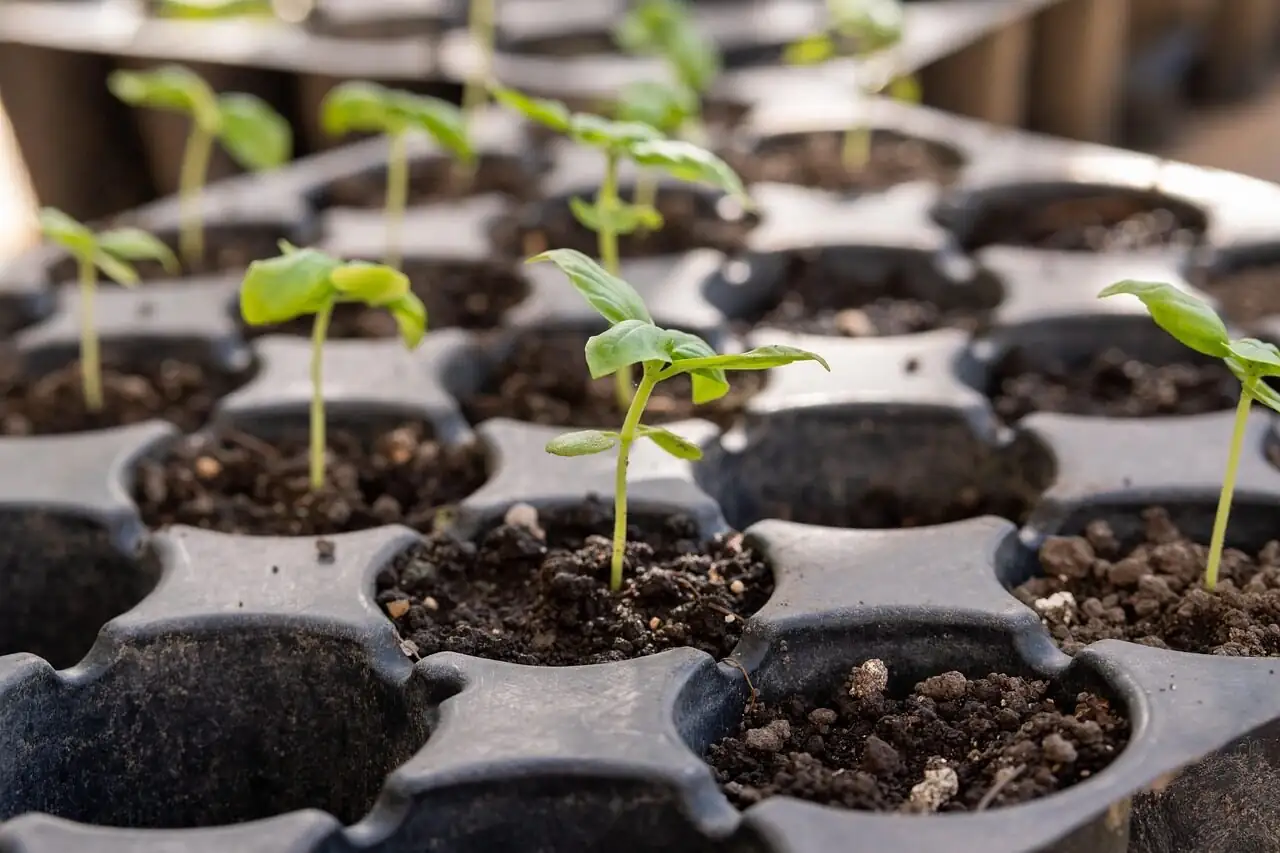
- Collect and prep
- Use fresh, ripe seed from a female plant. Remove any fleshy covering; clean and rinse.
- If not sowing right away, store in moist sand and sow in spring.
- Medium and sowing
- A free-draining mix is essential: think fertile loam + leaf mold/compost + coarse sand/grit.
- Sow shallowly; keep the surface evenly moist but never soggy.
- Conditions
- Warmth and bright light without scorch; steady airflow.
- Expect germination to begin in about 2 weeks under good conditions.
- Early development for future nebari and taper
- At first pot-up (when seedlings are sturdy), gently radialize roots: spread them like spokes before covering. This decision alone influences the decades ahead.
- Keep watering thorough but spaced—wait until the top begins to dry before watering again.
- Year 1–2 trunk strategy
- Allow a leader to run as “sacrificial growth” to thicken the trunk quickly.
- Begin subtle wiring of the trunk when wood is still young and flexible to introduce natural movement.
—
From Semi-ripe Cuttings: consistent, quick, and scalable
- Timing and material
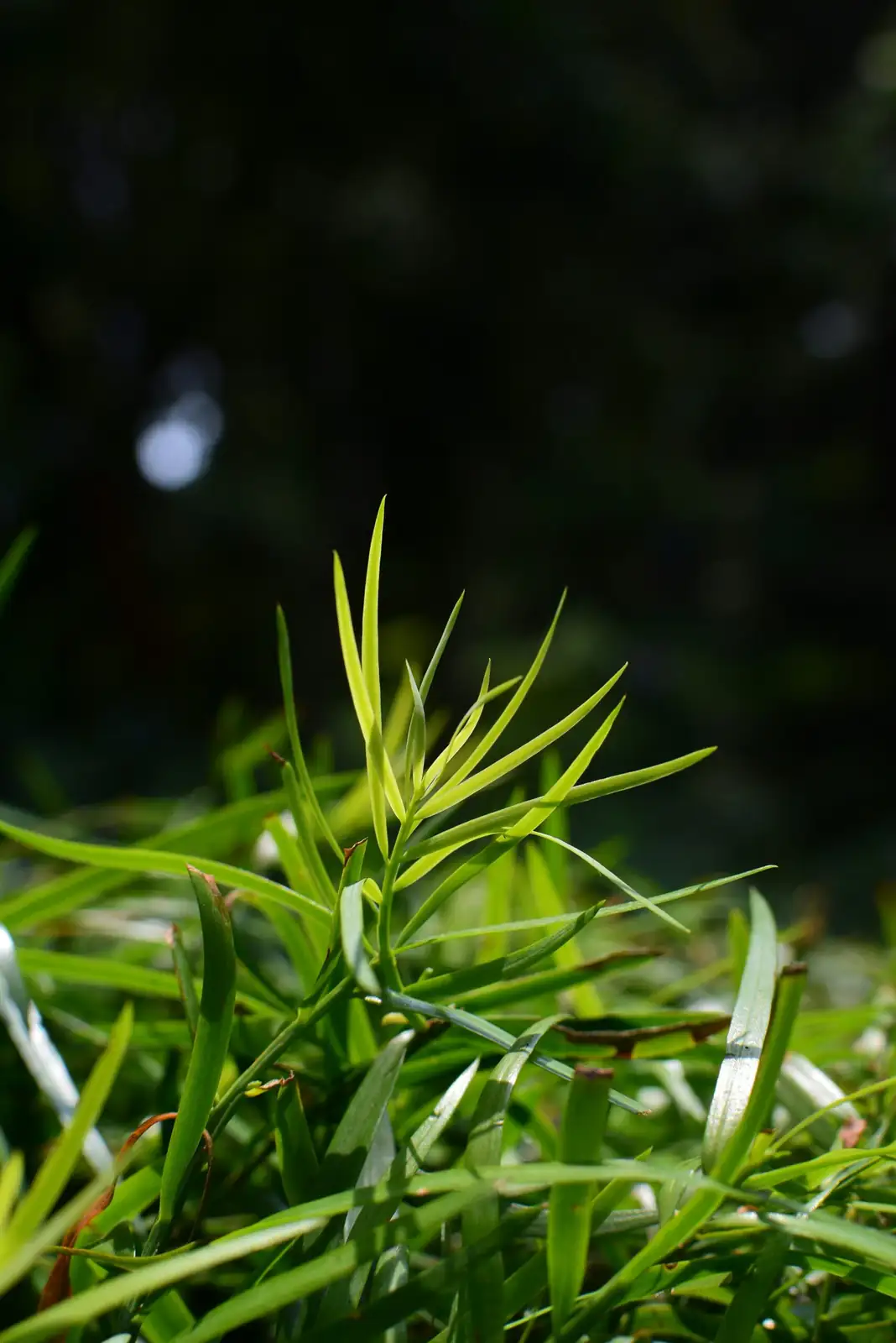
- Take semi-ripe tip cuttings in summer; 6–10 cm (2.5–4 in) tips with firm, still-flexible bases.
- Strip lower leaves, leaving a neat, leafy terminal.
- Wounding and hormone
- Lightly score one side of the base; dip in rooting hormone (IBA works well). Keep it tidy—too much damage invites rot.
- Medium and environment
- Use a very airy rooting substrate (e.g., coarse sand/grit with a pinch of loam or a perlite-grit blend) that stays moist but drains instantly.
- Bright shade, warm (around 22–25°C / 72–77°F), high humidity with good airflow. Avoid waterlogging.
- Rooting arc
- Rooting often takes about 8–12 weeks.
- Pot-on gently into a free-draining bonsai mix and resume a moderate feeding schedule during active growth.
- Shaping advantage
- You’ll often get denser, lower branching sooner than seedlings—perfect for fast-tracking initial pads.
—
Rooting timelines, at a glance
- Seeds: first signs in ~2 weeks; prick out after a few true leaves form.
- Semi-ripe cuttings: callus formation early; roots present by 8–12 weeks in good warmth and humidity.
- Dormant wood cuttings (spring): slower than semi-ripe, but viable with consistent moisture and warmth.
If rooting lags:
- Check for compaction—open the mix with more grit.
- Ease humidity slightly to reduce fungal pressure.
- Keep warmth consistent and avoid midday scorch.
—
Wiring young wood: precise, gentle, and timely
Podocarpus accepts wiring beautifully, but soft bark and fast-setting juvenile wood mean you should move deftly and check often.
- When to wire
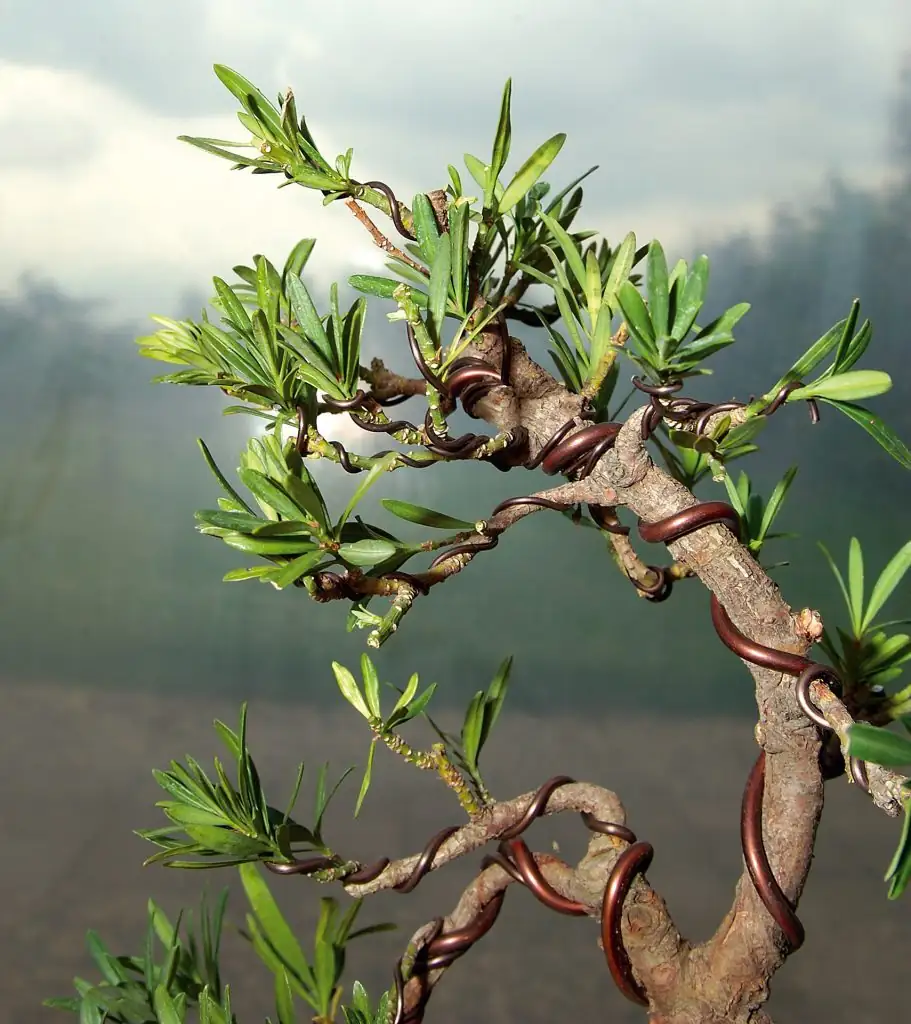
- Wire once a flush has partially hardened—still flexible, not mushy.
- Trunks: introduce movement early while growth is fast to set curves naturally.
- How to wire
- Use anodized aluminum for primary training; anchor well and support delicate bends with raffia or tape if you’re moving thicker sections.
- Favor incremental bends over single, heroic moves.
- How long to leave wire
- Young, lignifying wood often sets quickly—plan to remove wire in roughly 2–3 months. Inspect weekly for wire bite.
- Rewire as needed rather than risking scars that delay refinement.
- Guy-wires and tie-downs
- Excellent for setting primary branch angles downward without crowding branches with wire.
- Aftercare
- Maintain bright light with midday protection; avoid constant wet foliage. A breezy, well-ventilated spot reduces fungal risk as wired branches heal.
—
Building future cloud pads from day one
Think like an architect: set the structure first, then finesse the foliage.
Step 1: Establish the trunk and primary scaffold (Year 0–2)
- Choose a trunk line: formal or informal upright are classics for Buddhist Pine.
- Sacrificial growth: let a leader extend to thicken the trunk rapidly; remove later to lock in taper.
- Select primary branches
- Alternate along the trunk; avoid bar branches.
- Space vertically to create “floors” with clear negative space.
- Wire primaries slightly downward (10–20°) so pads naturally “shelf” as they fill.
Step 2: Secondary branches set the pad outlines (Year 1–3)
- On each primary, select 2–4 secondaries fanning in slightly different planes. This prevents flat, lifeless shelves.
- Wire secondaries and lightly tip-prune to encourage backbudding and shorter internodes.
Step 3: Tertiaries and twigging build the cloud (Year 2+)
- Pinch new tips in spring to keep outline tight and to cluster growth into small fans.
- Don’t shear indiscriminately; targeted pinching preserves the layered look.
- Maintain light and airflow
- Thin from beneath the pad; remove crossing and inward growth.
- Good ventilation minimizes leaf spot and anthracnose and keeps pad edges crisp.
Leaf-length control for cleaner pads
- During spring growth flushes, slightly reduce water to encourage shorter leaves (do not let the rootball fully dry). Resume normal watering once the flush hardens.
Clip-and-grow vs. wiring
- Early stages: wiring is faster for setting bones (trunk/primaries/secondaries).
- Refinement: clip-and-grow plus selective pinching keeps pads neat with minimal re-wiring.
—
Watering, soil, and feeding: pro notes that keep momentum
- Watering
- Water thoroughly, then allow the top of the mix to begin to dry before watering again. Avoid a rigid schedule—adjust for heat, pot size, and soil.
- Occasional summer misting helps foliage stay fresh and richly green.
- Soil
- Use a free-draining mix—leaf mold/compost + fertile loam + coarse sand/grit.
- Never allow roots to sit in soggy soil.
- Feeding
- Containers/bonsai: feed about monthly in the growing season; stop in winter.
- In-ground plants: spring and autumn feeding (about twice per year) with well-rotted organic fertilizer tea works well.
- Advanced tweak: if foliage pales despite good culture, a small dose of chelated iron or magnesium can help; always correct watering/light first.
—
Repotting and containers
- Pot choice
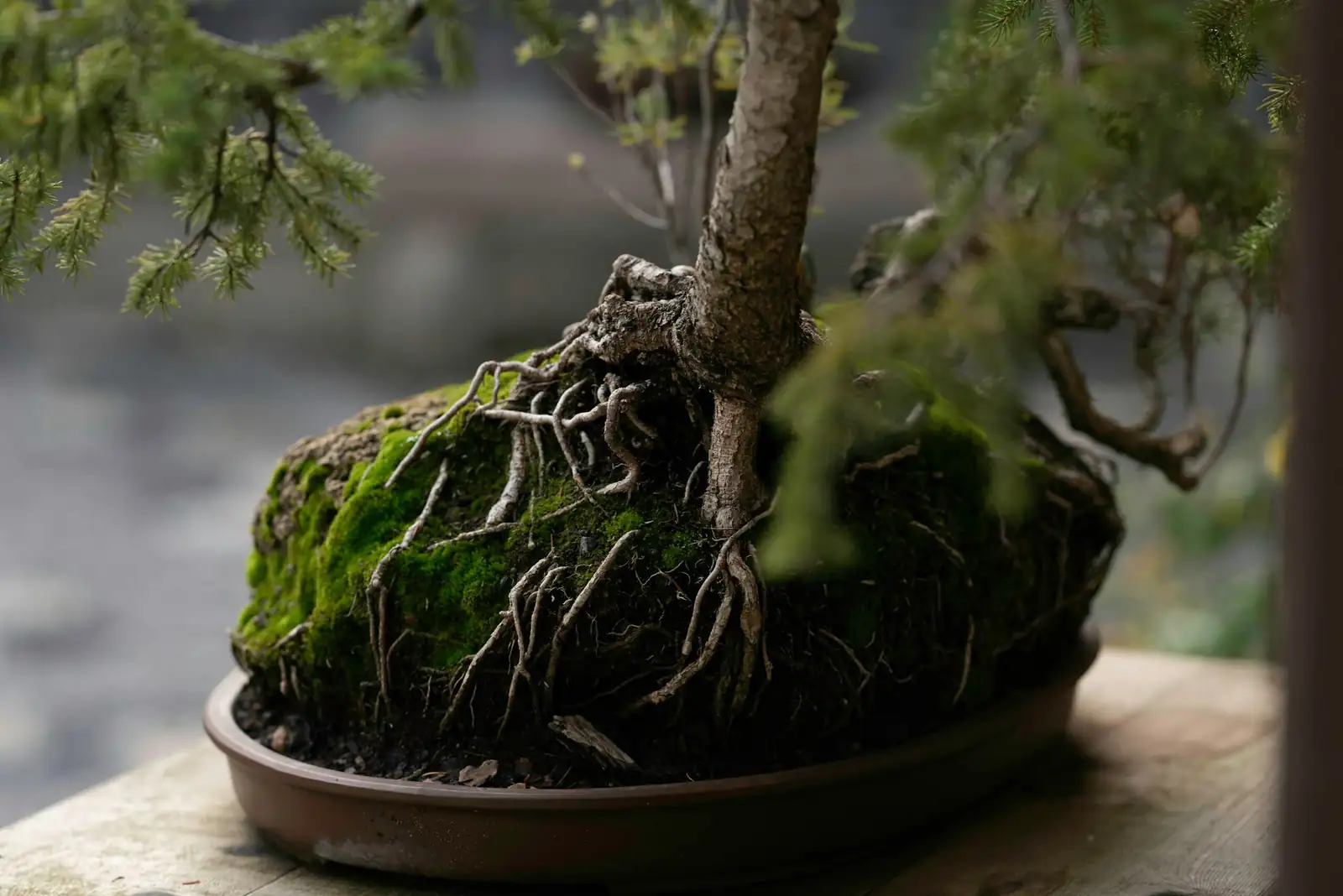
- Buddhist Pine appreciates slightly deeper bonsai pots—commonly 20–40 cm (8–16 in)—for stability and even moisture.
- Frequency
- Repot every 2–3 years to refresh the mix. Keep a network of fine roots; avoid severe root reductions on recently wired trees.
- Aftercare
- Shade from harsh sun for 1–2 weeks, maintain even moisture, and resume feeding once vigorous growth restarts.
—
Seasonal training cadence (quick planner)
- Spring
- Pinch/prune tips to tighten silhouette.
- Sow stored seed; resume monthly feeding in containers.
- Wire as spring flush firms up; begin leaf-length management with slightly reduced water.
- Summer
- Protect from scorching midday sun; mist during hot spells.
- Take semi-ripe tip cuttings (rooting ~8–12 weeks).
- Collect fresh seed; sow now or store in moist sand.
- Autumn
- Feed in-ground plants once; reduce watering as nights cool.
- Keep drainage sharp to prevent root issues.
- Winter
- Pause fertilizing.
- Protect from hard freezes (brief dips to about -5°C / 23°F tolerated).
- Plan repots on a 2–3 year cycle.
—
Placement and environment (indoors or outdoors)
- Ideal: a bright, airy spot with some protection from the harshest summer sun—an east-facing balcony/patio or a very bright indoor window with airflow.
- Humidity: moderate to high is preferred. Indoors, occasional misting helps, but avoid persistently wet foliage.
—
Health, pests, and tidy habits
- Watch for: scale insects, spider mites, thrips—treat early with horticultural soap/oil.
- Diseases: leaf spot and anthracnose are more likely in wet, stagnant conditions. Improve airflow, prune for light, and avoid waterlogged soil.
- Hygiene: remove dead foliage from pad interiors; cleanliness is your first fungicide.
—
Safety note
Toxicity is not firmly established. As a precaution, keep all parts away from pets and children; seek professional help if ingestion is suspected.
—
The bottom line
Start right and start early. Whether you sow for artistry and taper or strike semi-ripe cuttings for speed and predictability, Podocarpus macrophyllus rewards clarity of purpose. Wire young wood with care, let sacrificial growth do the heavy lifting, and stack your pads like measured brushstrokes. Year after year, you’ll watch those cloud shelves take on weight, rhythm, and quiet authority—exactly what Buddhist Pine was born to express.