

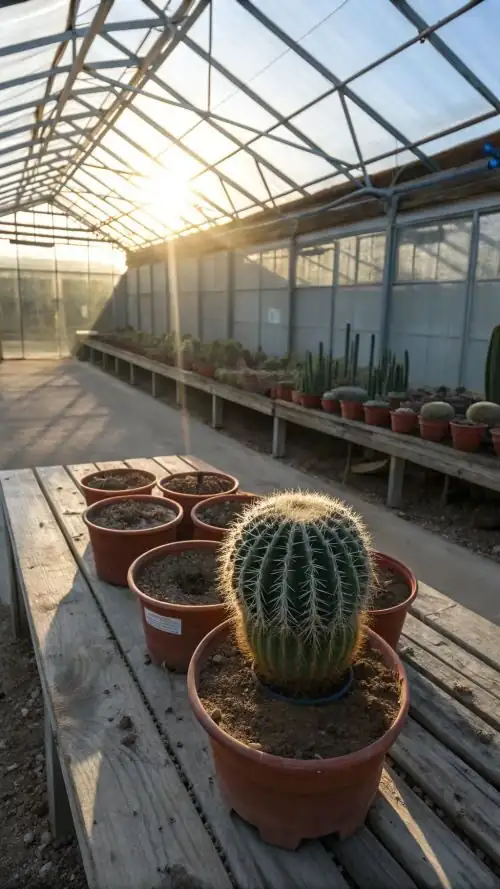
Golden spines, perfect ribs, and that sculptural, sun-catching orb—Echinocactus grusonii (the Golden Barrel Cactus) is iconic. It’s also wonderfully propagable once you understand its rhythm: warm seed beds for swift germination, patient callusing and dry-rooting of offsets, and a precise late-spring-to-midsummer grafting window with calm, consistent aftercare. Here’s a hands-on deep dive to multiply your golden globes with confidence.
The propagation mindset: warmth, light, and dry precision
- Temperature sweet spot: 20–24°C (68–75°F) for seeds and rooting. Keep nights no cooler than about 10–13°C (50–55°F) in active growth.
- Light: bright to full sun for older plants; bright, indirect light for seeds/pups while they’re establishing. Acclimate to stronger sun slowly to avoid scorch—especially behind glass.
- Watering style: “thorough, then dry.” Moisture is a tool you use sparingly and deliberately, never a default.
Gear and materials you’ll actually use
- Thick gloves or folded newspaper/tongs (those spines mean business)
- New single-edge razor or sterilized knife
- Shallow seed trays or lidded containers; 5–7 cm (2–3 in) nursery pots for pups
- Very free-draining mix (loam-based soil plus lots of coarse sand/grit)
- Top-dressing: fine grit or vermiculite
- Sulfur or a clean, dry rooting powder (optional but helpful)
- Elastic bands or grafting tape (for grafts)
- Labels and a pencil (you think you’ll remember… you won’t)
—
From seed: quick starts at steady warmth
When to sow and what temps to hold
- Sow when you can maintain 20–24°C (68–75°F)—often spring through early summer.
- Indoors, a bright windowsill paired with a heat mat or a consistently warm room is perfect.
Medium and setup
- Mix: a loam-based cactus mix heavily amended with coarse sand/grit for fast drainage.
- Containers: shallow trays or small pots. Pre-moisten the mix lightly—it should be just barely damp, never wet.
- Sowing: scatter seeds on the surface and barely cover with a dusting of fine grit or vermiculite. They appreciate light and air around the seed coat, so think “veil,” not “blanket.”
- Cover: use a clear lid or bag to maintain gentle humidity, but always allow small vents for air exchange.
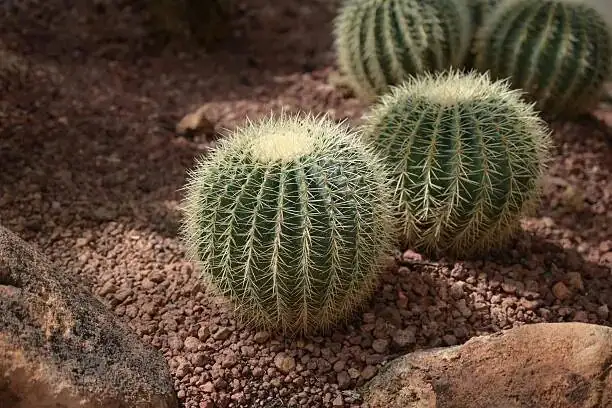
Step-by-step: day 0 to sturdy seedlings
- Day 0: Surface-sow, top-dress lightly, and cover. Place in bright, indirect light at 20–24°C (68–75°F).
- Days 7–25: Expect germination around 20–25 days under good conditions. Vent lids daily to refresh air and prevent fungal issues.
- First watering: Bottom-water only when the mix approaches dry. Avoid overhead watering onto tiny crowns.
- After most have sprouted: Crack the lid open further each day for a week, then remove. Keep bright, indirect light.
- Weeks 4–8: Water sparingly—allow the surface to fully dry between light bottom-waterings.
- Months 2–3: Begin ultra-dilute feeding (¼-strength, low-nitrogen cactus fertilizer) once monthly during active growth. No fertilizing in winter.
- Potting up: Shift to a very gritty cactus mix once seedlings are easy to handle. Do this on a warm, bright day and keep them on the dry side for a few days afterward.
Pro tip: Seedlings love stability—steady warmth, bright light, and restraint with water. If algae or green film appears, you’re too wet or too dark; uncap sooner and add light and airflow.
—
Offsets (pups): callus first, root second, water last
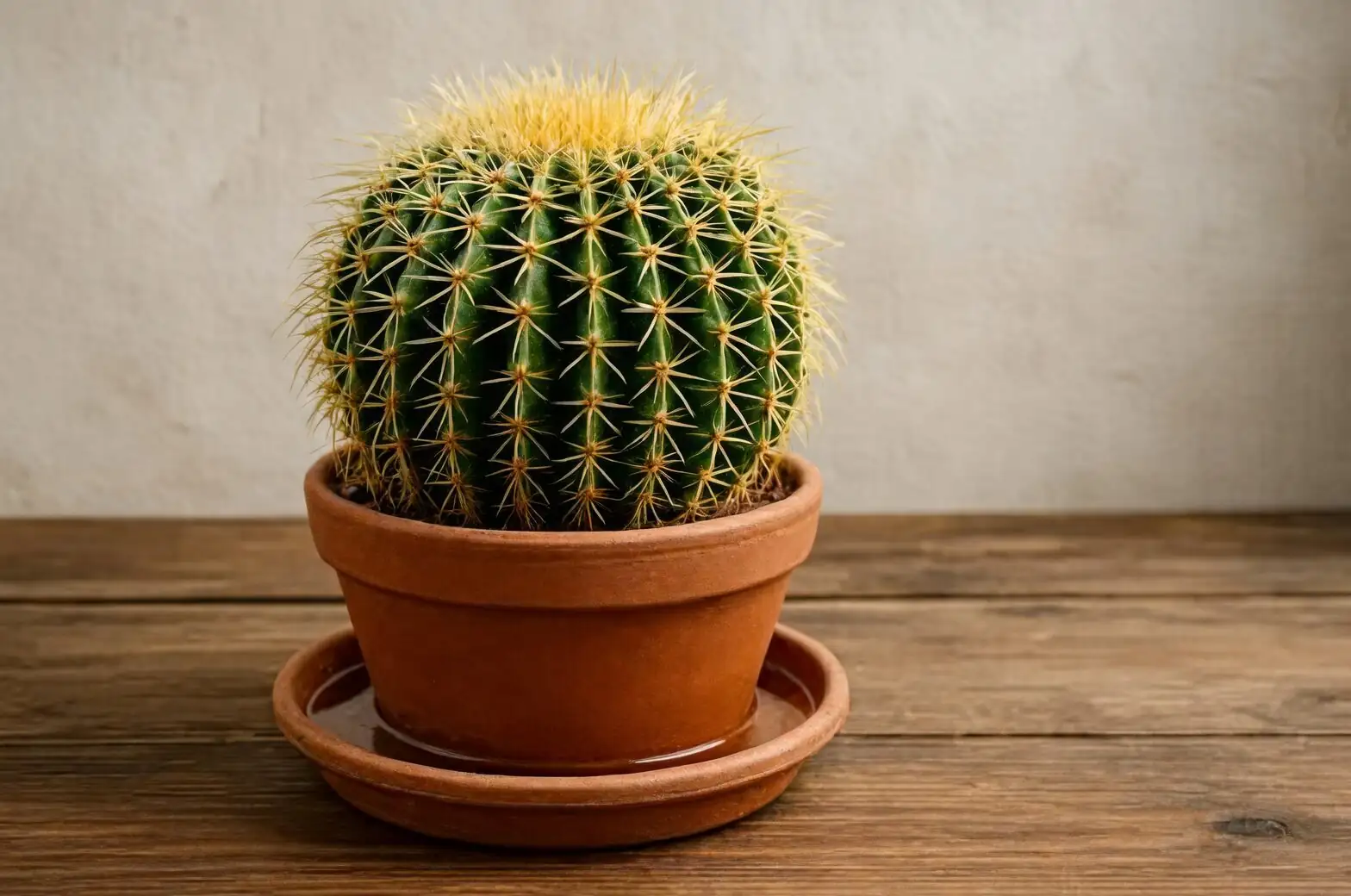
Most Golden Barrels stay solitary for years, but mature or stressed plants may pup. You can also encourage offsetting by removing the central growing point during active growth.
When to take pups—and how big?
- Season: late spring through summer, when warmth and light are strong.
- Size: detach when offsets are about 1–2 cm (0.4–0.8 in) across. Smaller pups can work but are fussier.
Clean detachment and callusing
- Prep: Wear gloves. Sterilize your blade. Support the mother plant to avoid wobble.
- Cut: Slice cleanly at the narrowest attachment. Try to keep a small, flat base on the pup.
- Treat: Dust the cut surfaces with dry sulfur (optional).
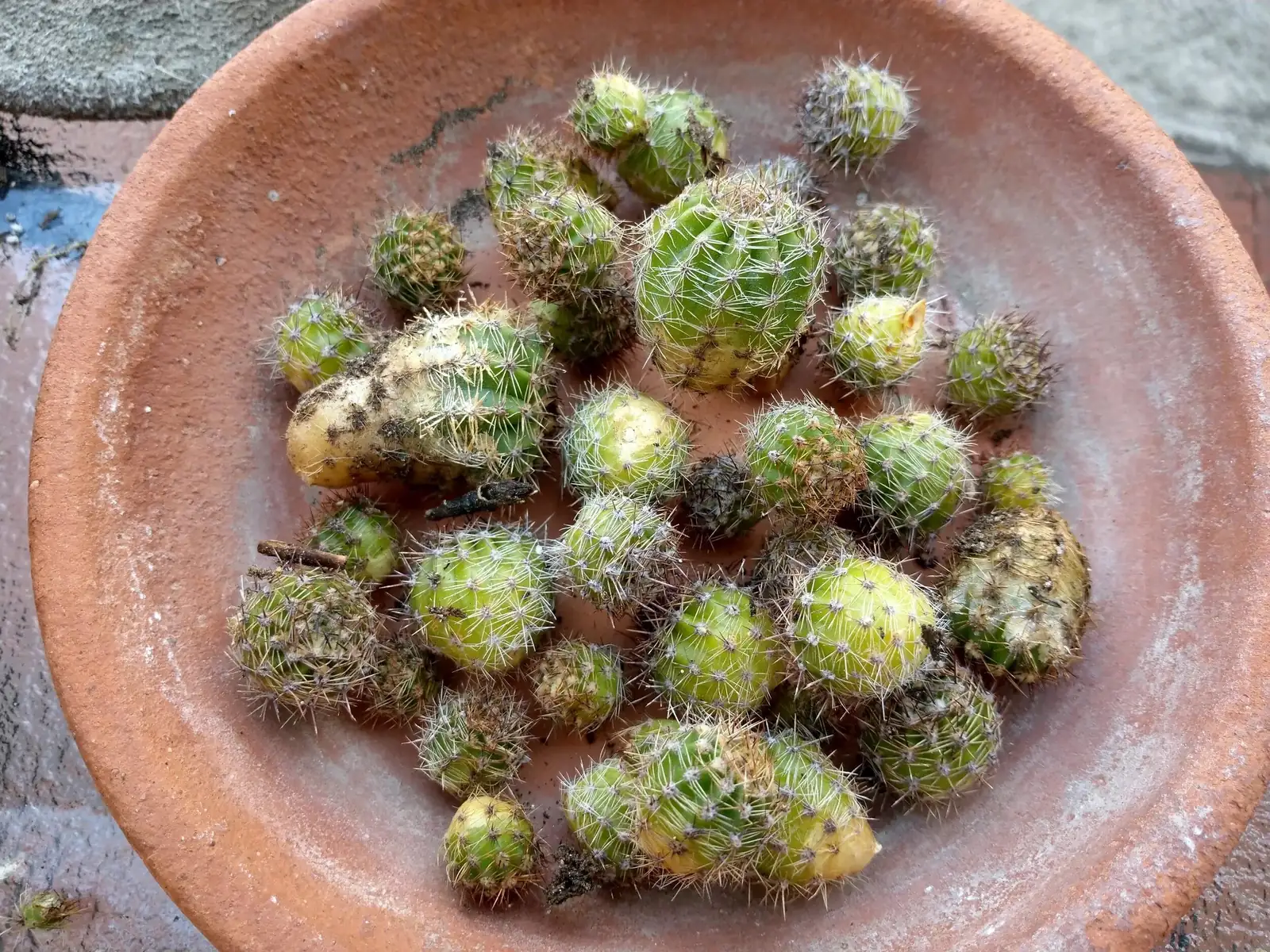
- Callus: Place pups on dry paper or a tray of clean grit in bright, airy shade. Do not water.
- Typical callus time: 7–14 days, until the cut is dry, firm, and matte—not sticky or shiny.
Rooting medium and conditions
- Pot into a snug container with a gritty/sandy mix—think 60–80% mineral (coarse sand, pumice, or grit).
- Nestle the callused base on the surface; you can lightly anchor with top-dressing so it stands upright.
- Temperature: warm room or heat mat around 20–24°C (68–75°F).
- Light: bright but indirect; delay intense sun until roots form.
Watering for root formation
- The dry start: keep the medium dry for 7–10 days after potting the callused pup.
- First sip: lightly moisten the outer edge of the pot, not the base of the pup. Then wait for the mix to dry again.
- Rooting timeline: many pups root in about 20–30 days in warm conditions. Tug very gently after 3–4 weeks—if there’s resistance, roots are in.
- Aftercare weeks 4–8:
- Increase watering slightly but always allow full dry-down between waterings.
- Begin very light feeding (¼-strength) once per month only after evident new growth.
Common mistake: watering before the cut has fully callused. That’s the fast lane to rot. Be patient; dryness is your friend.
—
Grafting: May–July magic and a 4-week heal
Grafting speeds growth and can rescue weak material. The trick is to work during the plant’s most cooperative season and keep conditions calm afterward.
Best window, rootstocks, and prep
- Seasonal sweet spot: May through July.
- Choose a vigorous, compatible rootstock with an active vascular ring and healthy turgor (commonly used: Myrtillocactus or Trichocereus types). Diameter match helps stability.
- Withhold water from the rootstock for 2–3 days pre-graft so tissues are firm, not sappy.
Step-by-step graft
- Slice the rootstock top flat with a single clean cut.
- Slice the scion (your Echinocactus piece) flat to expose a fresh, even surface.
- Align the vascular rings: they’re not perfect circles—offset the scion slightly so at least part of the ring overlaps the rootstock’s ring.
- Secure with gentle, even pressure using elastic bands or grafting tape over a clean cap (coin, label, or pad) so you don’t bruise the scion.
- Place in bright shade, warm room temps (around 20–24°C / 68–75°F), and excellent airflow.
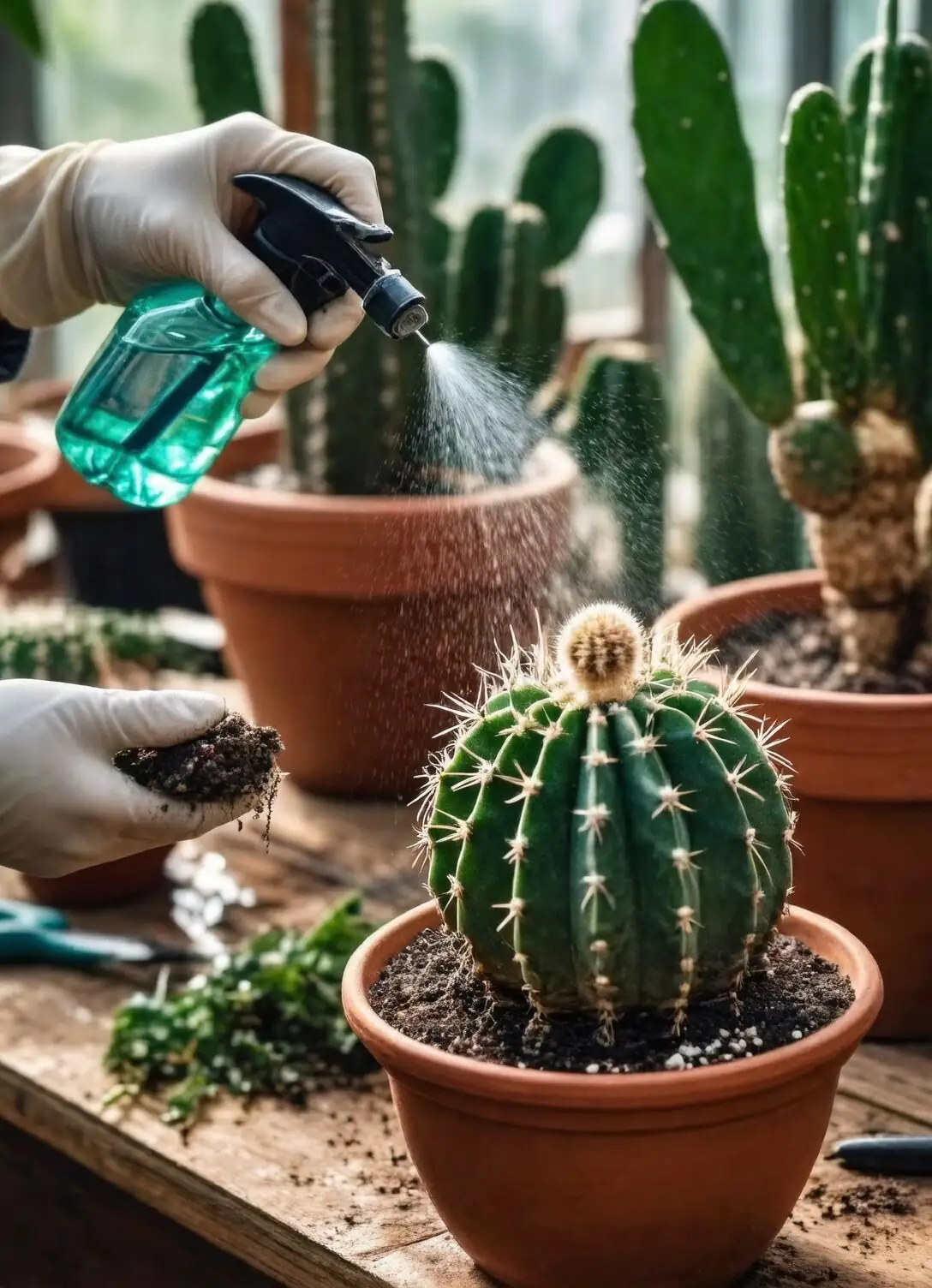
Aftercare timeline
- Days 0–7: Do not water. Keep shaded, warm, and still. Inspect for slippage or sweatiness; resecure if needed.
- Days 7–14: Lightly water the rootstock’s soil if dry. Keep bright shade. You may loosen bands if the union looks stable.
- Days 14–21: Gradually increase light (no harsh midday sun yet). Most unions knit in about 3–4 weeks.
- After week 4: Move toward brighter light, resume a conservative watering rhythm (thorough, then dry), and begin monthly, low-nitrogen feeding in the active season. Avoid fertilizing in winter.
Watch-outs:
- Any mushy smell or visible moisture at the cut = too much humidity or poor pressure. Ventilate, remake the cut if needed, and keep it drier.
—
Seasonal playbook for propagation success
- Spring
- Seed sowing begins when you can hold 20–24°C (68–75°F).
- Start taking offsets as nights warm above ~10–13°C (50–55°F).
- Repot if needed; give maximum light and airflow.
- Summer
- Prime rooting and grafting window (May–July).
- Water only after thorough dry-down; avoid crown-wetting and scorching noon sun behind glass.
- Autumn
- Taper watering; stop feeding as growth slows.
- Allow pups and seedlings to firm up before winter.
- Winter
- Keep bright and cool but above ~8°C (46°F).
- Keep almost completely dry; if it’s cool, don’t water at all. No fertilizer.
—
Troubleshooting and hygiene
- Rot/fungal issues: usually from moisture + cool temperatures. Keep cuts clean, let them callus fully, and prioritize airflow. Use a suitable fungicide only if needed and follow label directions.
- Pests: watch for spider mites, mealybugs, and scale. Treat early with insecticidal soap or horticultural oil. Isolate affected plants.
- Light problems: dull or sparse spines often mean insufficient light. Brighten the position and acclimate to stronger sun gradually.
—
Quick care cues once your new plants are established
- Sunlight: bright light to full sun; introduce stronger light slowly to preserve that vibrant gold spine color.
- Watering: thorough soaks only after the mix has dried well; never let pots sit in water.
- Feeding: once monthly in the growing season with a low-nitrogen cactus formula at half strength; none in winter.
- Temperature: best growth around 13–24°C (55–75°F); keep frost-free.
—
Safety note
Not poisonous—but those spines are serious. Keep away from curious hands and paws, and handle with thick gloves or folded newspaper/tongs.
—
Symbolism: resilience in a radiant armor
The Golden Barrel is often gifted as a “stay strong” emblem—resilience wrapped in gold. Unlike dreamy flower-language myths tied to fragrant petals, this cactus speaks through form and function: a near-perfect sphere armored with sunlit spines. Its message is practical and enduring—conserve, endure, and thrive when the conditions are right.
—
Plant one seed tray, set a neat row of pups to callus, and schedule a midsummer grafting session. With steady warmth, bright light, and a calmly dry hand on the watering can, you’ll turn a single golden globe into a small constellation.