

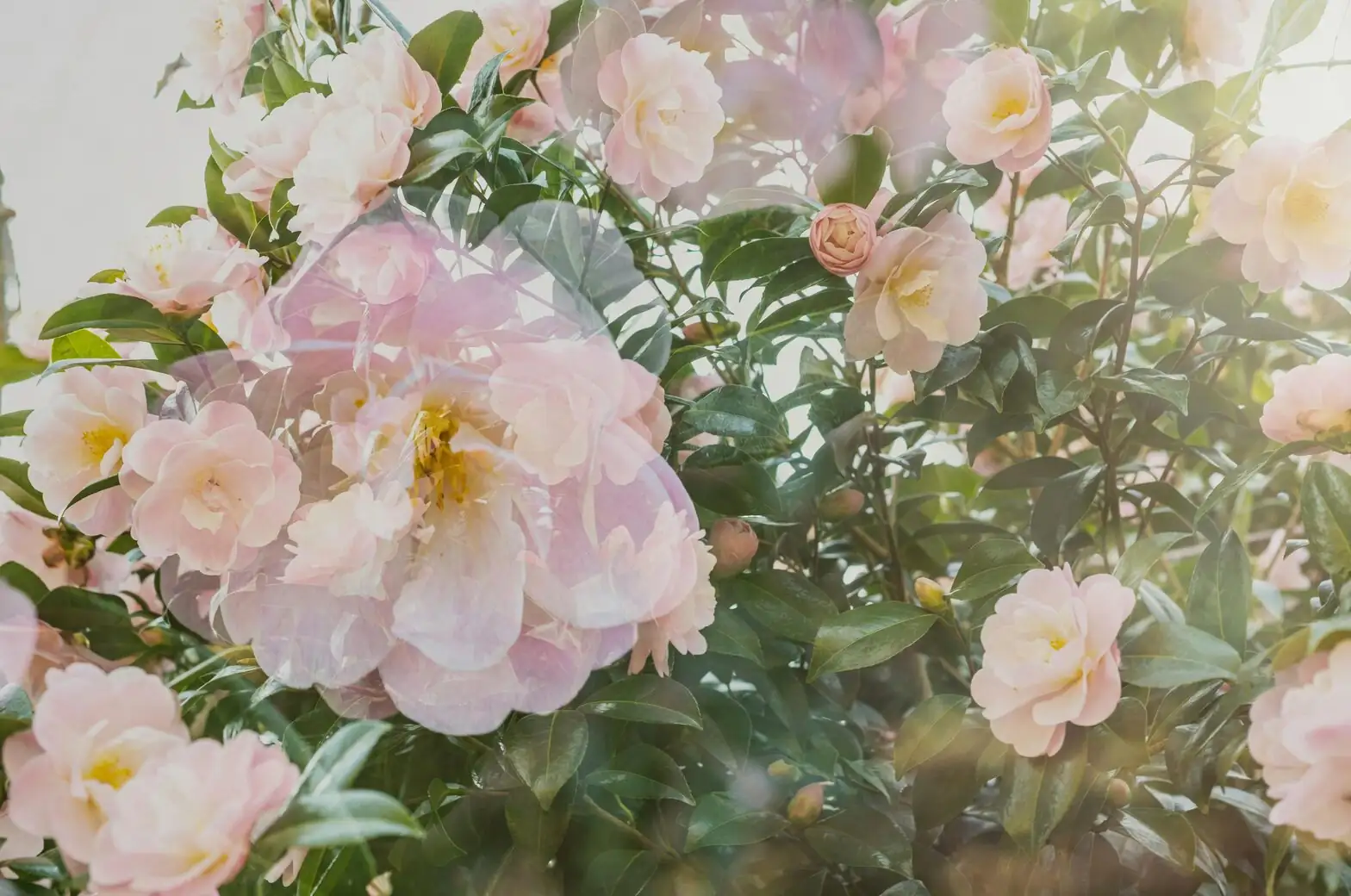
When most gardens exhale in late autumn, a glossy evergreen from Japan steps forward as if it’s been saving the best for last. Sasanqua camellia (Camellia sasanqua) lights up the cool season with cheerful, often lightly fragrant blooms just when we need them most, turning quiet patios and hedges into winter theater.
From mountain edges to garden hedges: a quick origin story
On the misty, wooded slopes and mountain edges of Japan, sasanqua camellias found their rhythm—bright, lean light; cool, breathable air; and soils laced with leaf litter that drains well yet stays evenly moist. There, at elevations up to around 900 m, they learned a marvelous trick: bloom from autumn into winter, long before their spring-brash cousins.

By the early Edo period, people in Japan had already noticed and nurtured this seasonal show. Records of cultivated forms appeared in the early 1700s, and for centuries sasanqua was grown as much for practicality as beauty: leaves could be used much like tea, and the plant’s seeds yield a fine “tea seed oil” valued for cooking, lighting, and cosmetics.
Its passport to the West came in the 19th century, riding trade winds into Europe and, soon after, into mild-climate gardens of Australia, New Zealand, and the United States. Gardeners everywhere realized what Japan already knew: a shrub that flowers in the off-season is worth its weight in petals.
Why autumn–winter bloom changed the game
Sasanqua’s cool-season habit shaped how we use and care for it:
- It fills the garden’s “quiet months.” From roughly October through January, it carries hedges, screens, and patio pots with glossy leaves and a steady stream of white, pink, or red flowers.
- It plays well with winter light. Bright, cool conditions help buds set and blooms last, making it a natural for bright, sheltered patios or courtyards in USDA Zones 7–9.
- It fuels design continuity. Evergreen structure plus out-of-season color makes it a backbone plant in mild climates—reliable for hedging, excellent as a specimen, and surprisingly elegant in containers and bonsai-style training.
The look that launched a thousand hedges
- Habit and size: An evergreen, densely branched shrub, naturally rounded to upright. Typically 1.5–5 m (5–16 ft) tall and 1.5–4 m (5–13 ft) wide depending on cultivar and pruning.
- Foliage: Small to medium deep green leaves—glossy, refined, and tidy year-round.
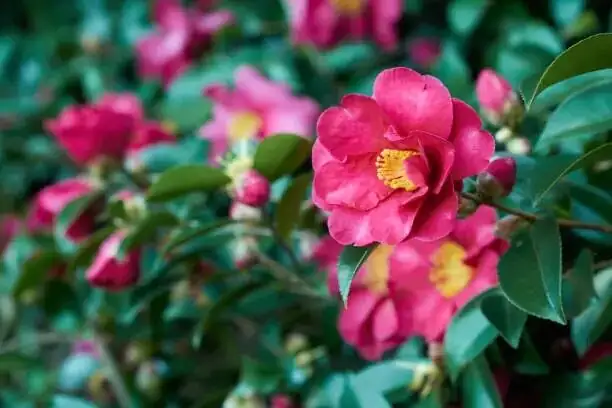
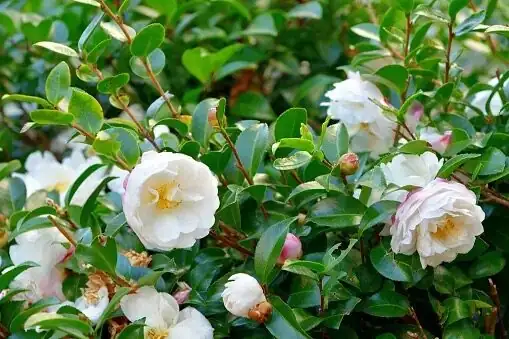
- Flowers: Showy, often lightly fragrant, in white, pink, or red; single to semi-double depending on cultivar. The petals tumble charmingly after a cold night, making a confetti of color on the ground.
- Season: A cool-season headliner—autumn into winter.
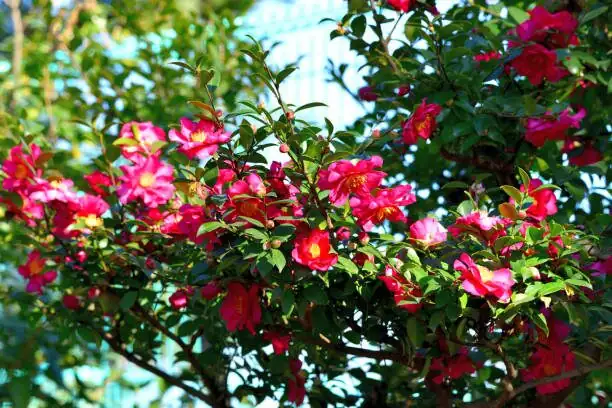
Tip: Compared with Camellia japonica, sasanqua tends to flower earlier, carry smaller leaves, and offer a slightly airier silhouette—great for clipped hedges that don’t read as bulky.
From Edo gardens to modern patios: its global journey
- Early cultivation in Japan emphasized both utility (tea seed oil) and beauty.
- By the 1800s, it reached European collections, then spread to Australia, New Zealand, and the U.S., where it swiftly became a favorite in the South and along temperate coasts.
- Today, cultivars like ‘Crimson King,’ ‘Hugh Evans,’ and ‘Jean May’ are beloved for dependable bloom and polished foliage, anchoring foundation plantings, screens, and seasonal patio displays.
How to make sasanqua feel at home
Light
- Outdoors: Bright light to full sun; in hot-summer regions, shield from harsh midday rays. Light dappled shade works well.
- In warm climates, ~50% shade cloth can help prevent leaf scorch.
- Indoors (short-term display): Park it in an extremely bright south- or east-facing window, and keep it cool.
Temperature and hardiness
- Best growth: 18–25°C (64–77°F).
- In-ground cold tolerance: short dips to about -10°C (14°F), depending on cultivar and exposure.
- Heat caution: prolonged heat above 38°C (100°F) can scorch buds and foliage.
- Containers: Overwinter best at 3–6°C (37–43°F). For indoor bloom displays, a cool 8–10°C (46–50°F) helps flowers last.
Soil and water
- Soil: Moist but well-drained, slightly acidic media (leaf mold/composted bark + peat or substitute + coarse sand/grit).
- Water: Aim for even moisture—thorough waterings with free drainage. Never bone-dry or waterlogged.
- Rhythm: In summer, water often (daily in hot spells). In winter, about every 3–5 days, ideally midday on a mild bright day.
Humidity and airflow
- Prefers moderately high humidity (around 70–80%) with good ventilation. Avoid very dry indoor air and late-day leaf wetting.
Feeding
- March–September: Feed every 2 weeks with a balanced fertilizer or organic liquid feed.
- May: One application of 0.2% monopotassium phosphate can encourage bud initiation.
- October: Add a phosphorus-forward feed to support strong flowering.
Pruning and bud care
- After flowering: Remove spent blooms, dead/diseased wood, and leggy shoots to keep it dense and graceful.
- Early summer: Light shaping prune.
- Late summer: Thin crowded buds (often leaving about one per shoot) for larger, higher-quality blooms.
Designing with sasanqua: landscape moves that work
- Lively hedges: Plant a single cultivar for a seamless ribbon of autumn color; clip lightly after flowering to maintain a crisp face.
- Patio stars: In large containers, pair with evergreen ferns, autumn grasses, or heucheras; keep pots in bright light and out of blasting afternoon sun.
- Entry accents: Flank doorways with container-grown sasanquas for a holiday-season welcome—cool air makes the display last.
- Bonsai-style training: The fine branching and small leaves take well to gentle wiring and cloud pruning.
Choosing a winner (and what to do in week one)
- Pick a plant with a dense, well-shaped crown; glossy leaves; and roughly a 50/50 mix of buds and open flowers.
- Skip any with yellowing leaves or leaf spots.
- First week at home: Give very bright light, keep it cool at about 8–10°C (46–50°F), protect from heater/AC drafts, and keep the soil evenly moist.
Propagation: multiply the winter magic
- Semi-ripe cuttings (early summer): 5–10 cm cuttings, warm and humid but shaded; rooting in ~4–6 weeks. A small heel of older wood can help.
- Grafting (late spring to early summer): Commonly onto Camellia oleifera rootstock for vigor.
- Air-layering: Start in spring; reliable for larger pieces.
Troubleshooting and plant health
- Bud or leaf drop after moving indoors? Usually uneven watering, low light, dry air, poor ventilation, pests (scale/aphids), or temperature swings. Remedy with cool, bright, evenly moist, well-ventilated conditions.
- Diseases: Anthracnose can cause gray-white leaf spots (often near margins). Remove infected leaves, improve airflow, avoid late-day foliar wetting, and use an appropriate fungicide if severe.
- Pests: Scale insects and aphids may cause curling/yellowing and sticky honeydew (sooty mold follows). Treat with horticultural oil or insecticidal soap and boost light/airflow.
- Safety: Generally considered non-toxic to people and pets; chewing foliage may cause mild stomach upset in sensitive animals.
Flower language: grace that blooms in quiet seasons
Sasanqua often symbolizes admiration, grace, and refined beauty. Why? Partly because it shines when gardens are otherwise subdued—its elegance isn’t loud; it’s timely. These meanings grew through horticultural culture and seasonal aesthetics rather than strict historical doctrine. In Japanese appreciation of seasonal nuance, a flower that opens in the hush of late autumn earns a reputation for poise and quiet strength. Planting it by a doorway or window becomes a small ritual: a reminder that beauty can be both restrained and resilient.
A simple, seasonal calendar
- Spring to early summer: Grow at 18–25°C (64–77°F). Feed every 2 weeks. Light shaping prune. Take semi-ripe cuttings in early summer (root in 4–6 weeks).
- May: Optional 0.2% monopotassium phosphate to encourage bud initiation.
- Late summer: Thin crowded buds for larger, better blooms.
- Autumn: Phosphorus-forward feed in October. Flowering begins—protect from scorching sun and keep moisture even.
- Winter: Flowering continues. Water every 3–5 days; avoid waterlogging. For indoor displays, keep cool (8–10°C / 46–50°F). Container plants overwinter best at 3–6°C (37–43°F).
Five quick facts to impress your gardening friends
- Native to Japan and treasured precisely because it blooms in the garden’s quiet season.
- A go-to “holiday plant” for cool, bright entryways and patios thanks to autumn-to-winter flowers.
- Brief cold snaps to about -10°C (14°F) are manageable in the ground; potted plants prefer a cool, sheltered winter.
- Extended heat above 38°C (100°F) can scorch developing buds and leaves—provide afternoon shade.
- Easy to propagate via semi-ripe cuttings, grafting, or spring air-layering.
From mountain edges to modern hedges, Camellia sasanqua earned its place not by being loud, but by showing up when the world goes quiet. Give it bright light, cool air, slightly acidic, well-drained soil, and steady moisture—and it will repay you with a polished green presence and a long, heartening, cool-season show.