

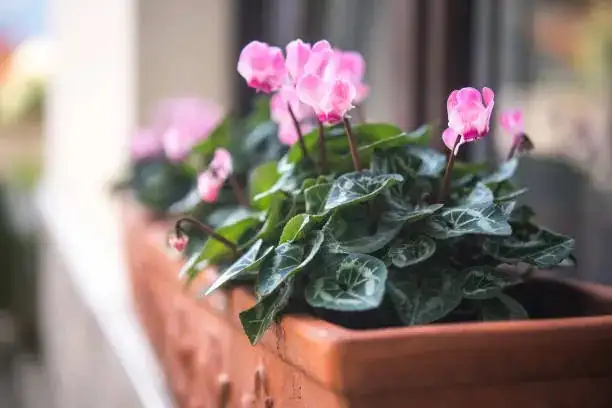
On a cool December morning, when the rest of the houseplants seem to huddle and doze, a small pot sends up slender wands capped with butterflies. They hover above a perfect mound of marbled hearts, each bloom swept backward as if caught in a winter breeze. This is Cyclamen persicum—the florist’s cyclamen—ready for its annual performance just when we need it most.
From limestone ledges to living rooms: a plant’s migration
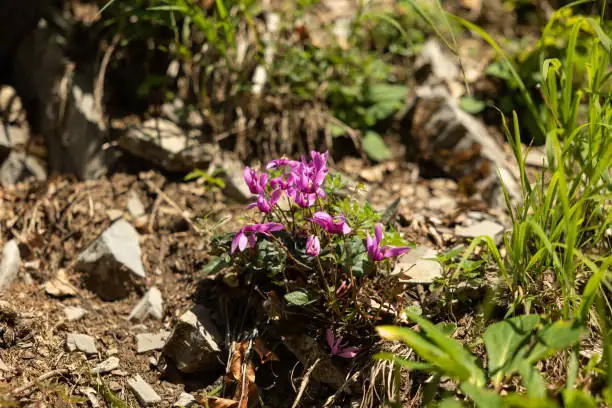
- Birthplace: Think bright winter light slanting through pine and oak, rocky hillsides and scrubby thickets across Greece and the Levant—Syria, Lebanon, and neighboring Mediterranean coasts. Summers there are parched; winters are cool and damp. Cyclamen evolved a strategy to match: rest during the heat, come alive with the rain.
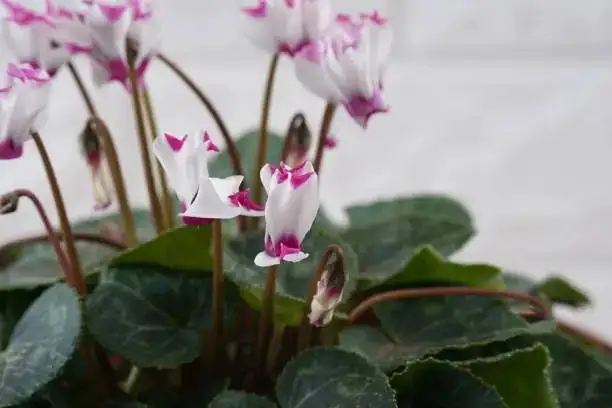
- Survival kit: It grows from a flattened, corky tuber, a little reservoir that sleeps through summer and wakes with fall’s first chill. Leaves emerge as heart-shaped shields, veined and often silvered. Then come the flowers—delicately perfumed in wild forms—whose petals flip back like rabbit ears. When pollination succeeds, the flower stem often twists gently, ferrying the seed pod down toward the soil.
The long road to “holiday plant”
- Early encounters: Admired since antiquity around the Mediterranean, cyclamen reached Western European horticulture centuries ago and won the hearts of greenhouse growers. As the 19th and 20th centuries unfolded, breeders selected for winter bloom, bold colors, and reliable habit. By the time central heating became common, a new tradition had formed: cyclamen on winter windowsills and holiday tables.
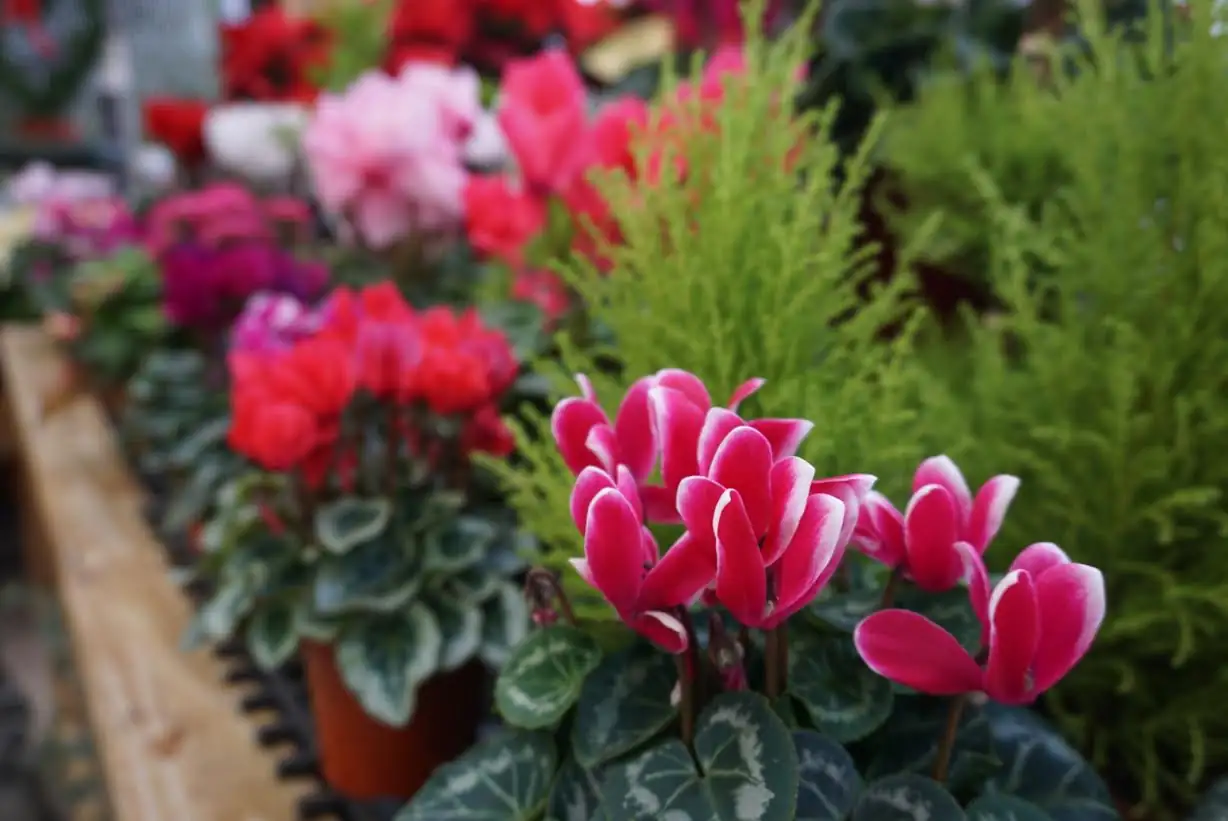
- Breeding turns up the volume: Today’s Cyclamen persicum cultivars span crisp whites, shell pinks, ruby reds, and regal purples, often with darker throats. Some wear ruffles or picotee edges; others are miniatures built for office desks. Wild plants are sweetly scented; many modern hybrids lean faintly scented to unscented, trading perfume for petal pizzazz and long-lasting displays.
Meet the plant up close
- Size and stance: A compact 15–23 cm (6–9 in) tall and wide, perfect for tabletops and sills.
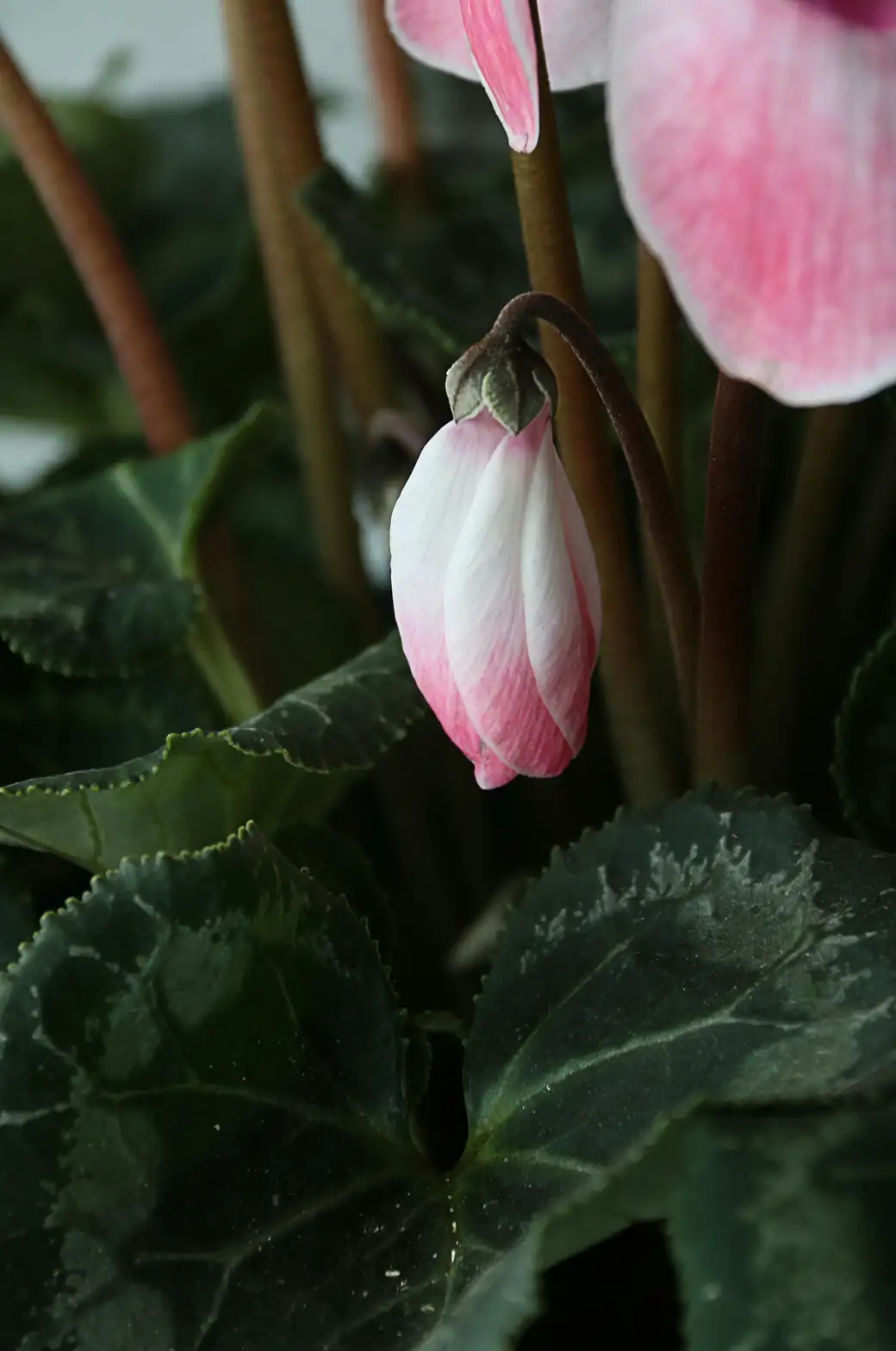
- Leaves: Heart-shaped, dark to mid-green with silver marbling; slightly thick with finely toothed edges, each on a long petiole rising from the tuber’s crown.
- Flowers: On upright stems above the foliage; petals reflexed dramatically in white, pink, red, or purple, often with a dusky “throat.” The overall effect is light as a butterfly cloud.
- Season: In rhythm with its homeland’s climate, it blooms fall through spring—typically November to March—peaking midwinter, then drifts toward a summer rest.
Why it thrives in your cool season
Cyclamen is wired for crisp air and gentle light:
- Light: Bright, indirect light makes buds pop. Avoid hot, direct sun.
- Temperature: Day 15–21°C (60–70°F); night 4–10°C (40–50°F). It flags in warm rooms—especially above about 20°C (68°F)—so keep it away from radiators and heat vents.
- Humidity: Moderate to high is best; aim for 50%+. Use a pebble tray or humidifier, but keep air moving.
A buyer’s quick checklist
- Look for: Firm tuber, crisp leaves, and many unopened buds tucked among the stems (that’s your extended bloom queue).
- Avoid: Yellowing foliage, wilt, or any soft, mushy tissue near the crown—signs of rot you can’t reverse.
Watering like a pro (the bottom-watering secret)
- During bloom: Check soil; water when the top 2–3 cm (about 1 in) is dry.
- How: Bottom-water—stand the pot in a shallow saucer of water for a few minutes, then drain thoroughly. Keeping the crown and the tuber top dry is your best insurance against rot.
- During rest: In summer dormancy, water sparingly—just enough to prevent the tuber from shriveling.
Feeding and grooming
- Fertilize: Every 2–3 weeks during active leafy growth with a diluted, low-nitrogen liquid feed. Pause through peak bloom and dormancy; resume in fall with new leaves.
- Deadheading: Twist and gently pull spent flowers and yellowing leaves at the base. This neat trick removes the whole stalk, discouraging rot and encouraging more buds.
Repotting and the crucial “exposed crown”
- Timing: About every two years, during summer dormancy.
- Method: Shift up just one pot size; use a rich, free-draining, slightly acidic mix. Replant so the top third of the tuber sits above the soil line—this simple detail dramatically reduces rot risk.
A year in the life: your simple calendar
- Spring (Mar–May): Bloom slows; gradually reduce watering as leaves begin to yellow.
- Summer (Jun–Aug): Rest. Keep cool, airy, and mostly dry; bright but not hot conditions.
- Fall (Sep–Nov): New leaves appear; resume watering and feeding. Buds begin to form.
- Winter (Dec–Feb): Curtain up—peak flowering. Keep cool, bright (indirect light), and evenly moist.
Outdoors or indoors?
- Best as a houseplant nearly everywhere, though in mild climates (roughly USDA Zones 9–11) it can thrive outdoors in cool seasons. If your winters bite hard, consider hardy garden species like Cyclamen hederifolium instead. Florist’s cyclamen tolerates only light frost and dislikes prolonged freezing.
Propagation notes
- Seed: The go-to method. Sow fresh seed, often in late summer. Darkness aids germination. Patience required—germination can be erratic.
- Division: Possible but risky. Only divide a dormant tuber if each piece has a viable growth eye, and be ready to manage rot risk.
- Commercial scale: Tissue culture and carefully selected seed lines keep modern colors and forms consistent.
Health and safety
- Pests: Watch for cyclamen mites, aphids, vine weevils, and spider mites. Keep nights cool and air moving to discourage trouble.
- Diseases: Botrytis (gray mold), root rot, and bacterial soft rot are the usual suspects—most often tied to warmth, poor airflow, or wet crowns. Bottom-watering and tidiness are your shields.
- Toxicity: Keep away from kids and pets. The tuber is richest in irritating terpenoid saponins; ingestion can cause drooling, vomiting, and diarrhea.
The language of cyclamen: affection with a winter hush
Over centuries, people have read meaning into cyclamen’s winter courage and heart-shaped leaves. In European floriography, it came to represent sincere affection, enduring love, and quiet devotion—feelings that persist even when the world is cold. Christian symbolism sometimes links the leaves to the Virgin Mary’s heart and the flowers to compassion and sorrow, acknowledging beauty alongside life’s bittersweet winters. Color lore follows familiar trails: red for love, white for purity, pink for steadfast affection. These meanings aren’t universal truths but cultural stories—ways we translate the plant’s winter grace into human feeling.
Why your holiday cyclamen steals the show
- It blooms when others rest, often for up to eight weeks.
- It loves the same cool windowsills that make poinsettias pout.
- A single happy plant can carry dozens of flowers, each one a tiny, airborne dancer.
Troubleshooting in two steps
- Yellowing leaves? Most often it’s watering gone wrong or a room that’s too warm. Check moisture, move to a cooler spot, remove the yellowed leaf at its base.
- Want a repeat performance next winter? Let it rest after bloom, keep it mostly dry and cool in summer, repot lightly if needed, and start watering when fresh leaves return in fall.
A few delightful morsels
- “Cyclamen” traces back to Greek “kyklos,” meaning circle—a nod to its rounded tuber.
- As flowers fade, the stems often twist and lower their developing seed pods toward the soil.
- Its old nickname “sowbread” comes from tales of wild pigs digging for the tubers.
- More than 20 wild Cyclamen species exist, but Cyclamen persicum is the undisputed star of indoor winter color.
From the breezy shade of Greek hills and Levantine woodlands to the soft light of a winter kitchen, Cyclamen persicum carries its homeland’s seasons in miniature. Give it cool air, a bright window, and a dry crown, and it will repay you with a flutter of color just when the world outside goes quiet.


