

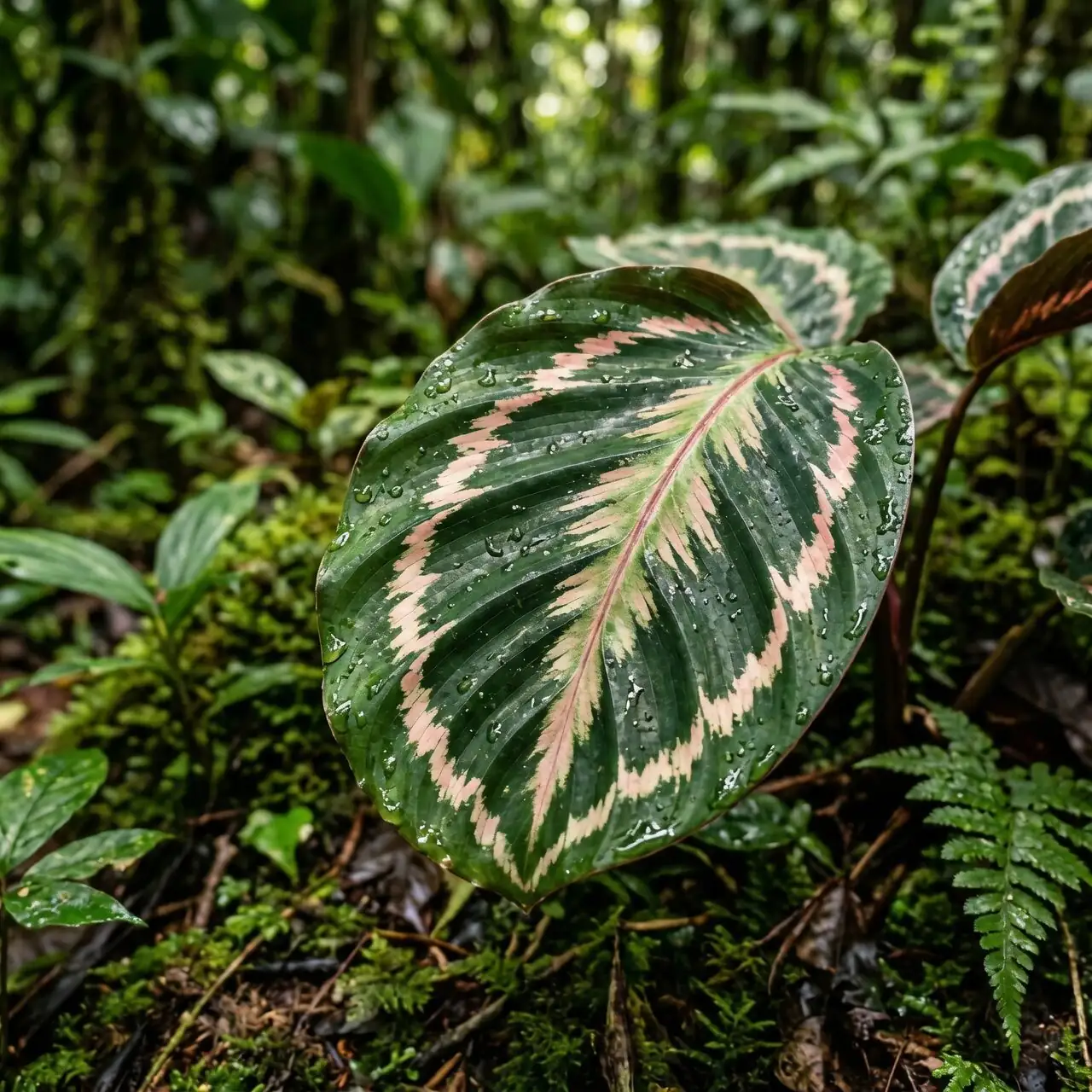
Slip into the dim green light of a northwestern Brazilian rainforest and you’ll meet a plant that seems to glow from within. Goeppertia roseopicta—the rose‑painted calathea—spends its days beneath taller neighbors, dappled sun flickering across broad, oval leaves like light on a quiet river. Flip a leaf and you’ll find its secret: a deep purplish underside that looks like dusk caught on silk. That color isn’t just drama—it’s an understory adaptation, bouncing scarce light back through the leaf to make every photon count. Indoors, that same strategy reads as pure theater.
This is a story of an understory specialist, a modern name change, and why your plant tag still won’t let go of the past.
From the forest floor of northwestern Brazil
In the upper Amazon of northwestern Brazil, Goeppertia roseopicta grows as a low, clumping perennial, where the air is warm and soft, the ground stays evenly moist, and sun is filtered through layers of canopy. It pushes up new leaves when the humidity is high and the soil never quite dries—a rhythm it will happily keep on your windowsill if you recreate its forest comforts.
- Family: Marantaceae (the “prayer‑plant” family)
- Habit: Clumping, upright-from-the-base
- Size indoors: Typically 30–60 cm (12–24 in) tall and wide
Why it looks painted
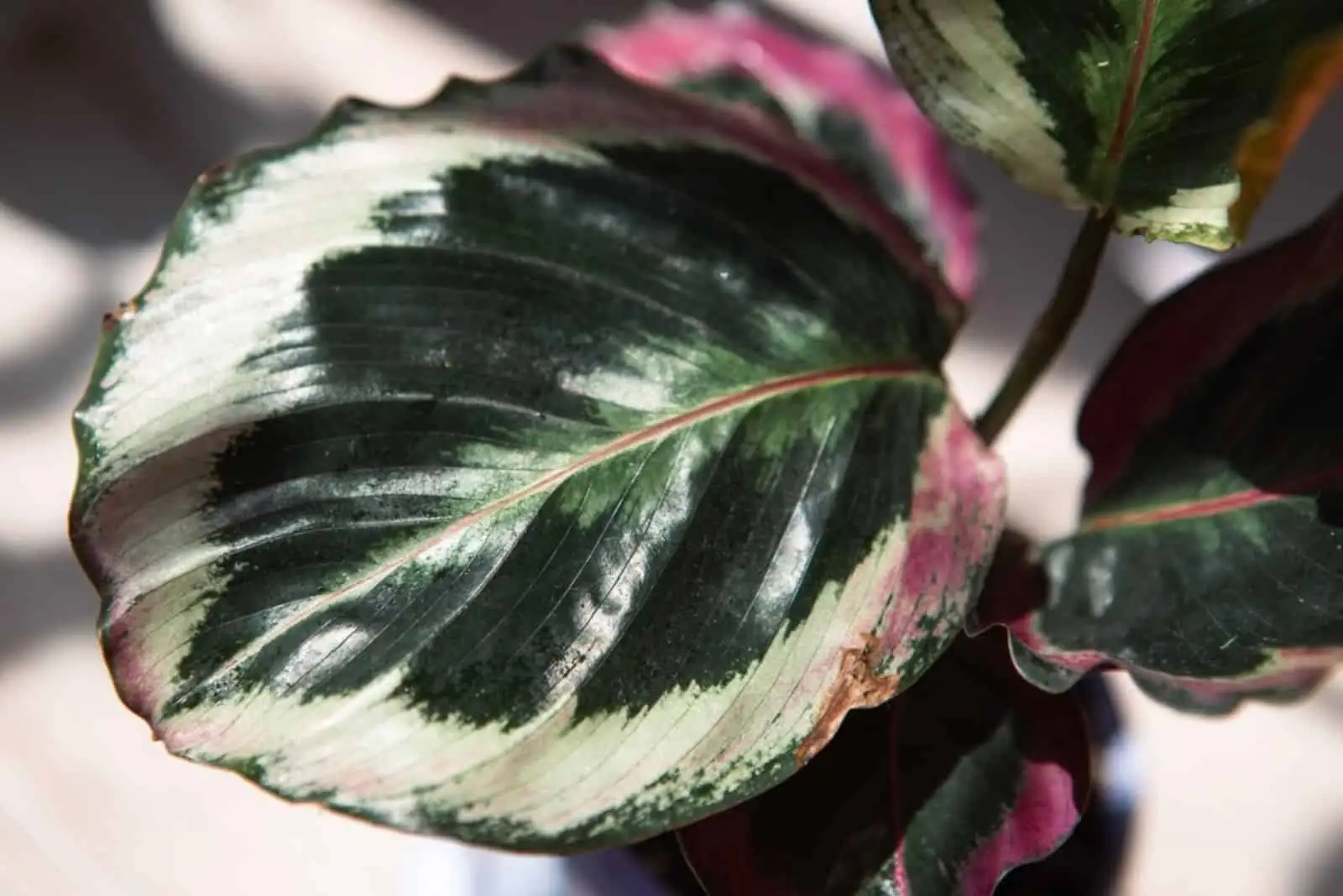
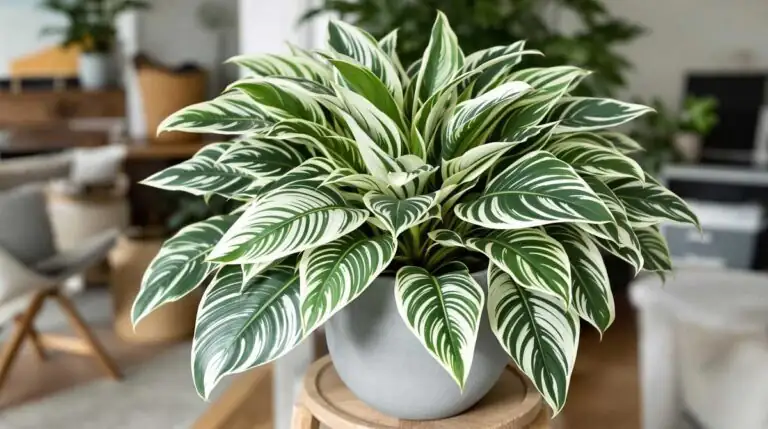
The “rose‑painted” name nods to the dramatic striping and the purplish to reddish-purple leaf backs. Those painted strokes often outline the midrib and feather outward, and when the light drops in the evening, the leaves can subtly lift or shift—classic prayer‑plant behavior tied to daily (nyctinastic) rhythms. It’s living art with a timetable.
Life in the understory: your care blueprint
Think of caring for G. roseopicta as staging a rainforest matinee—bright, but never harsh; warm, never hot; moist, never swampy.
Light
- Low to medium light or bright, indirect light is ideal.
- Avoid direct midday sun; aim for about 50%–70% shade if near a sunny window.
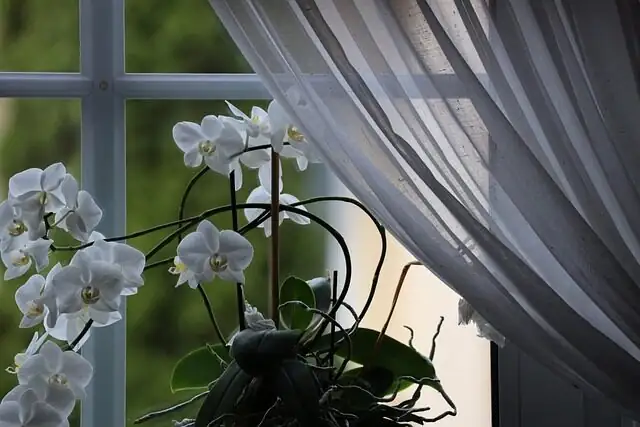
- East-facing light is often perfect. A south window works if you soften it with a sheer curtain.
Signs to watch:
- Faded pattern = too dim for too long.
- Crispy edges or scorched patches = too much direct sun and/or dry air.
Temperature and humidity
- Sweet spot: 18–24°C (64–75°F)
- Keep above 8°C (46°F) in winter; avoid dips below 5°C (41°F).
- In heat waves, keep it below ~32°C (90°F) with airflow and added humidity.
- Humidity goal: 60%–70%. Use a humidifier, pebble tray, or plant grouping.
Water and soil
- Keep the potting mix evenly moist during active growth, never waterlogged.
- Water thoroughly when the top 2–3 cm (0.8–1.2 in) is dry; let excess drain away.
- In winter, water less as growth slows to prevent rhizome/root rot.
- Soil: a loose, moisture‑retentive but free‑draining mix—peat or coco with perlite/coarse sand works well.
Tip: Humidity matters as much as watering. Brief misting is fine, but don’t leave leaves wet overnight.
Feeding
- Growing season (about May–September): feed every 2 weeks with a gently diluted, balanced houseplant fertilizer.
- Avoid splashing fertilizer on leaves.
- Pause or sharply reduce feeding in winter if growth slows.
The name game: from Calathea to Goeppertia
For decades, this plant wore the name Calathea roseopicta. Then, a wave of modern botanical sleuthing—DNA work that tested family ties—revealed that the old Calathea group bundled together plants that weren’t all closely related. In 2012, systematists redrew the map. Many species moved into Goeppertia, including our rose‑painted star, now correctly Goeppertia roseopicta.
Botanically speaking, it’s tidy. In garden centers? Not so much.
Why your tag still says “Calathea”
- Horticultural inertia: Nurseries and growers have used “Calathea” for decades.
- Supply-chain momentum: Old databases and label templates take time to update.
- Shelf recognition: Shoppers search for “calathea,” so retailers keep the familiar name for clarity.
- Mixed messaging: Care guides, blogs, and older books still use Calathea.
- Cultivar carryover: Named selections like ‘Dottie’ or ‘Rosy’ were launched under Calathea and still ride that branding.
- International labels: Import/export paperwork and multilingual tags lag behind reclassification.
- Retail real estate: Signage that says “Calatheas” corrals a whole bench of patterned foliage, even if they’re technically Goeppertia.
The good news: whether the tag reads Calathea or Goeppertia, the plant’s needs haven’t changed.
Portrait of a houseplant classic
- Leaves: Broad, oval, boldly striped; undersides glow purplish-red for striking contrast.
- Flowers: Small and usually not showy indoors; you grow it for the foliage.
- Growth: Tidy clumps that can produce new leaves quickly in warm, humid, evenly moist conditions.
Seasonal rhythm (a simple calendar)
- Spring: Repot and/or divide. Keep evenly moist. Restart feeding as days lengthen.
- Summer: Peak growth—water more often, provide 50%–70% shade from strong sun, keep humidity high.
- Autumn: As indoor air dries, boost humidity support; watch for yellowing/crisping edges.
- Winter: Keep above 8°C (46°F); water more sparingly; pause feeding if growth slows.
Repotting and propagation
- Repot yearly (for fast growers) or when rootbound, ideally in spring. Size up gradually.
- Division is most reliable: split the rhizome into sections with several leaves and a healthy root cluster. Pot divisions promptly; tiny sections can start in lightly moist sand/perlite until they root, then move to regular mix.
Pests, health, and pet safety
- Usual suspects: Scale and mealybugs, often on leaf undersides.
- Rinse and wipe leaves; follow with a mild soapy spray (spot‑test first).
- Repeat every 5–7 days for several rounds until pests are gone.
- Fungal leaf spots can appear in stale, wet conditions: improve airflow, avoid wet foliage overnight, remove affected leaves.
- Pet safety: Generally considered non‑toxic to cats and dogs. Still, any nibbling may cause mild stomach upset.
Placement ideas
- Indoors near an east window, or a south window with filtered light.
- Keep away from heaters and AC vents.
- Excellent for living rooms, bedrooms, and home offices—especially at eye level where those purple undersides shine.
Buying guide
- Choose plants with firm, upright leaves and strong color; avoid widespread yellowing or crispy margins.
- Check leaf undersides for mealybugs and scale.
- Many nursery plants arrive in 12–15 cm (4.7–5.9 in) pots—perfect for establishing a lush clump.
Troubleshooting quick hits
- Yellowing leaves? Often a mix of chills, low humidity, or too much direct sun. Move to bright, indirect light, keep warm (18–24°C / 64–75°F), raise humidity to 60%–70%, and aim for evenly moist—not soggy—soil.
- Crispy edges? Usually dry air or a light level that’s too intense. Increase humidity and soften the light.
Flower language and symbolism
Among patterned foliage plants, Goeppertia roseopicta is often linked with quiet beauty and “living art.” As a prayer‑plant relative, its gentle day‑night leaf shifts echo daily rhythms—wake, rest, repeat. If we speak in the language of flowers, its message isn’t flamboyant. It’s about poise: a reminder to thrive in the soft light, to make the most of what filters through, and to keep a steady, graceful routine.
The understory promise
Bring this plant home and you bring home a slice of northwestern Brazil’s forest hush—filtered light, warm air, and the soft percussion of new leaves unfurling. Call it Calathea or Goeppertia; either way, give it bright shade, steady warmth, and generous humidity, and it will paint your space with the same quiet glow it perfected on the forest floor.