

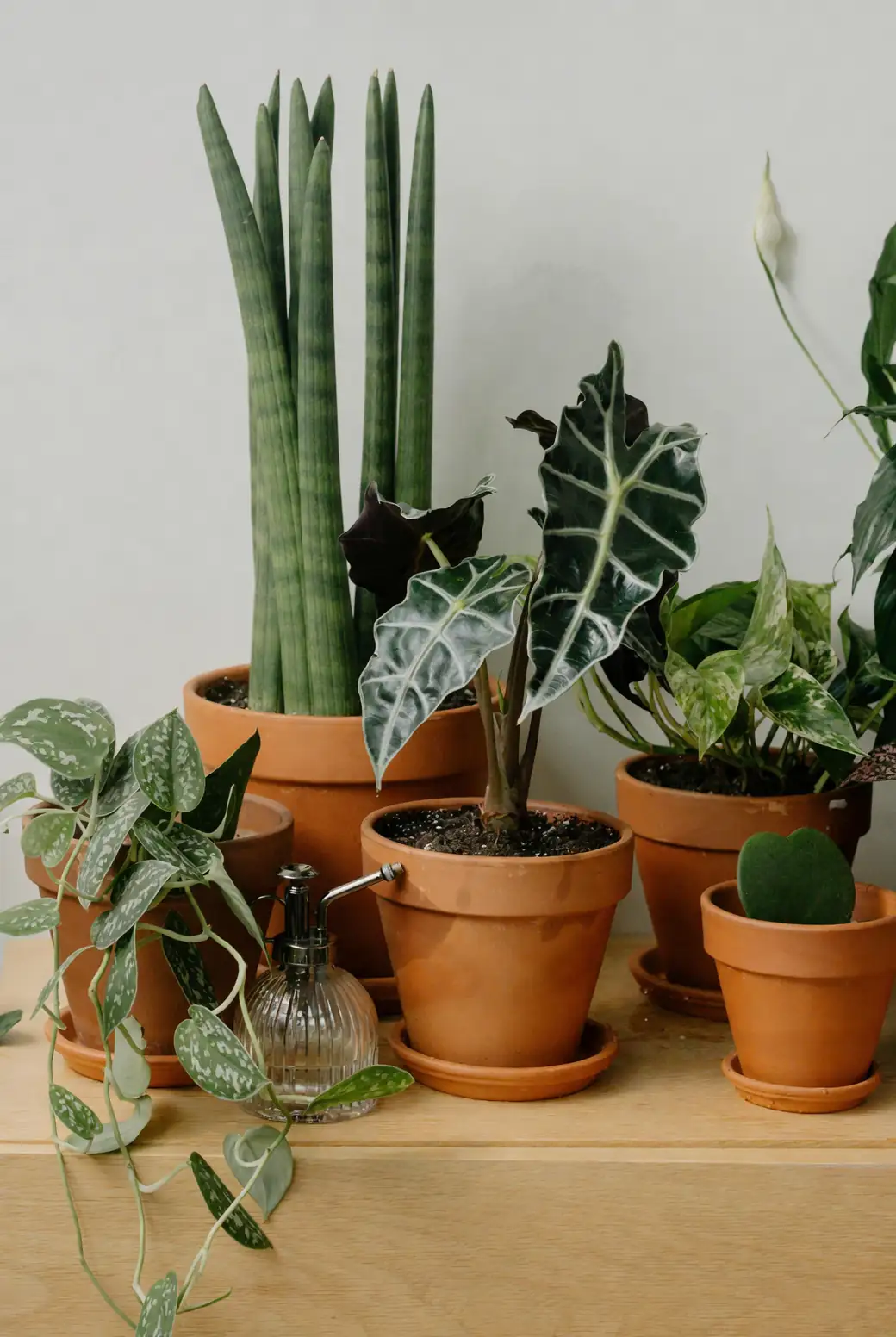
Meet the jungle’s most charismatic scene-stealers: Alocasia, a.k.a. Elephant’s Ear. Think sculptural leaves, bold veins, and a little bit of diva energy. In this punchy guide, we’re ranking fan-favorite varieties by size, difficulty, light needs, and sheer visual drama—then pairing each with its ideal room and pot so your space sings.
Before the showdown: what all Alocasias want (the baseline)
- Light: Bright, indirect light (rainforest-understory vibes). Aim for 3–5 hours of filtered brightness daily. Harsh midday sun can scorch.
- Warmth: 60–85°F (15–29°C), steady and draft-free.
- Humidity: They love it high—ideally 65%+ (50%+ minimum). Humidifiers win.
- Water: Keep evenly moist, never soggy. Water when the top 2–3 inches (5–8 cm) are dry; then drench and drain. Cut back in winter as growth slows or dormancy sets in.
- Soil: Airy aroid mix (peat/coco + chunky bark + perlite). Slightly acidic (pH ~5.5–6.5).
- Safety: Toxic to people and pets. Keep out of reach; wear gloves when pruning.
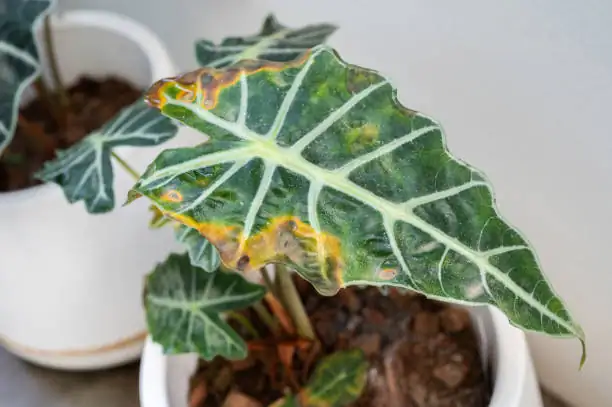
The lineup: size, difficulty, drama, and where to flaunt them
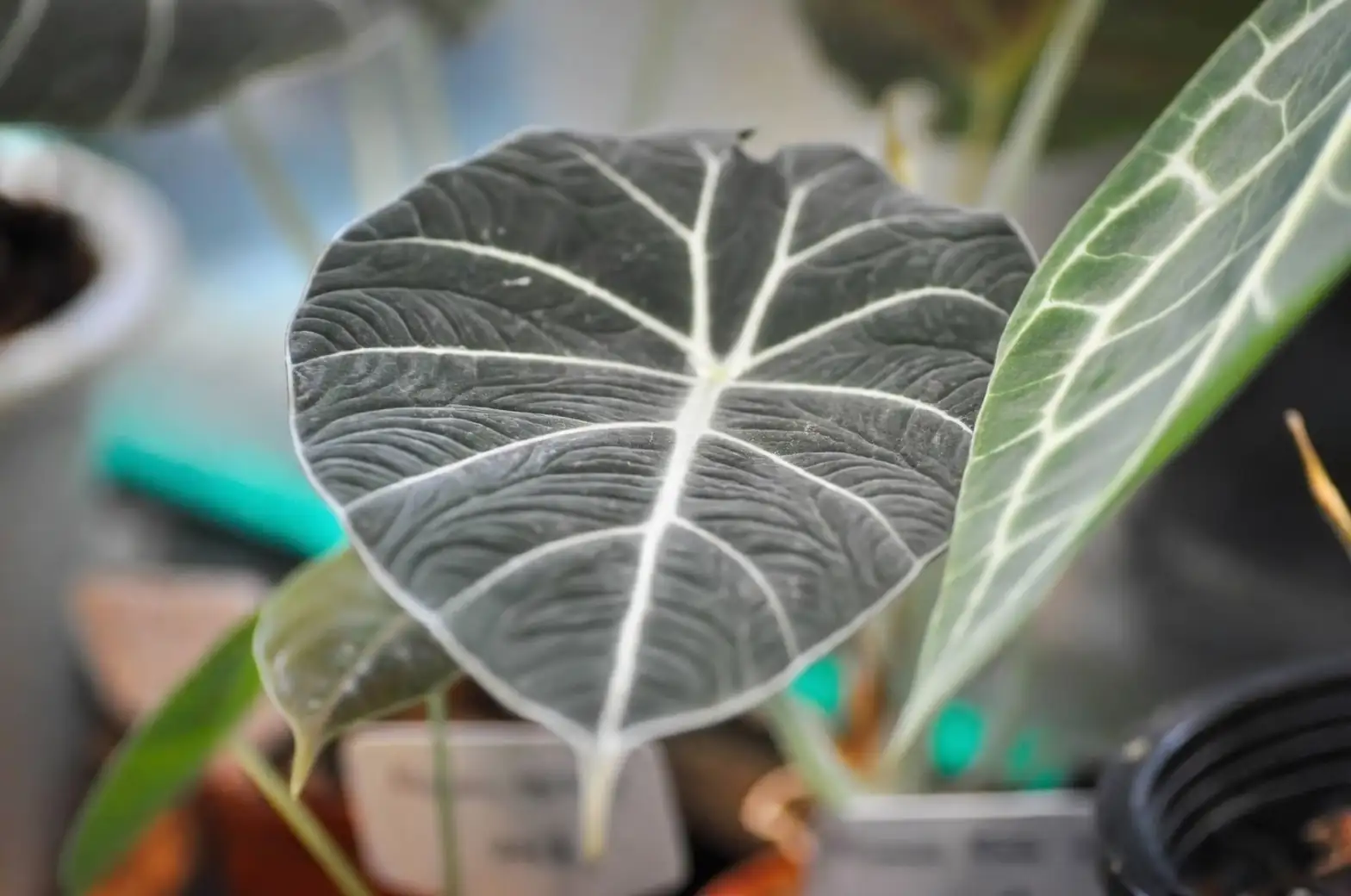
Alocasia ‘Black Velvet’ (A. reginula)
- Size: Compact jewel (about 8–12 in / 20–30 cm tall).
- Difficulty: Moderate; sensitive to overwatering—use an airy mix and let the top layer dry.
- Light sweet spot: Bright, indirect, on the gentler end; avoid dim corners.
- Drama factor: Off-the-charts contrast—inky velvet leaves with bright white veins.
- Room + pot pairing: Moody bedroom or bookshelf near an east window; matte stone or pale ceramic pot to pop the darkness.
- Pro tip: Spider mites love velvet leaves—dust and inspect regularly.
Alocasia ‘Frydek’ (A. micholitziana ‘Frydek’)
- Size: Medium (2–3 ft / 60–90 cm).
- Difficulty: Moderate; thrives with stable warmth and humidity 50–65%+.
- Light sweet spot: Bright, indirect; near an east/west window or a sheered south exposure.
- Drama factor: Lush, velvety forest-green blades with fine white venation.
- Room + pot pairing: Living room on a plant stand; charcoal or deep green glazed pot. Consider a plastic nursery pot nested in a cachepot to hold moisture a touch longer.
Alocasia ‘Dragon Scale’ (A. baginda)
- Size: About 1–2 ft (30–60 cm).
- Difficulty: Fussy; dislikes swings in humidity, light, or moisture. Keep conditions steady.
- Light sweet spot: Bright, filtered light with no midday scorch.
- Drama factor: 3D armored texture with an almost metallic sheen—pure fantasy-forest energy.
- Room + pot pairing: Bright bathroom or kitchen where humidity stays up; breathable clay pot with a chunky aroid mix.
- Pro tip: Consistency is everything—no drafty sills or feast/famine watering.
Alocasia ‘Silver Dragon’ (A. baginda)
- Size: Compact-to-small (10–18 in / 25–45 cm).
- Difficulty: Moderate-to-fussy; similar needs to Dragon Scale but slightly more forgiving indoors.
- Light sweet spot: Bright, indirect; too little light dulls the silver.
- Drama factor: Icy, quilted plates with dark veining.
- Room + pot pairing: Minimalist office desk near bright filtered light; brushed metal cachepot for a cool, cohesive look.
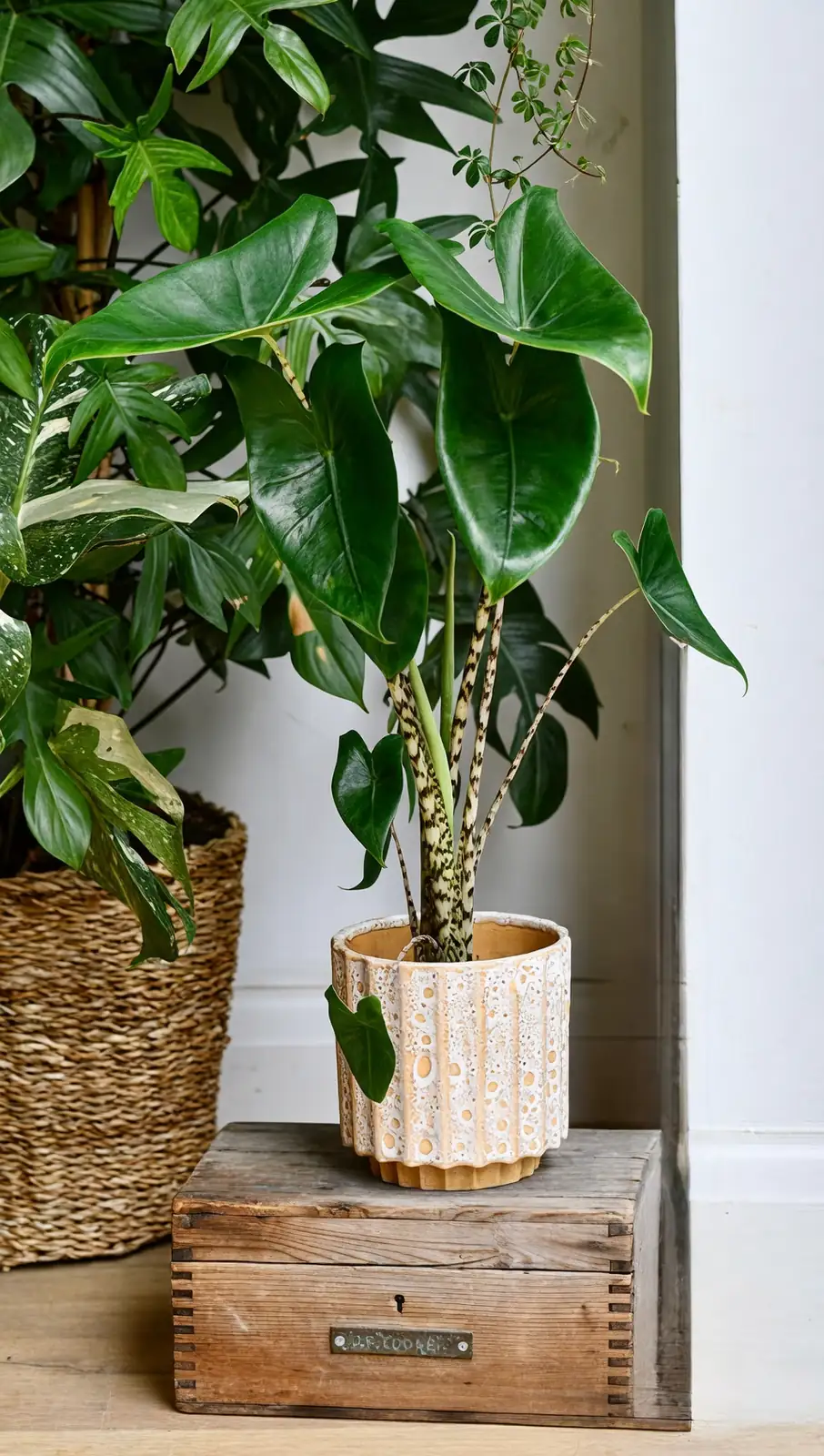
Alocasia ‘Zebrina’
- Size: Tall and airy (often 2–3 ft / 60–90 cm).
- Difficulty: Moderate; appreciates stronger brightness to avoid leggy growth.
- Light sweet spot: Bright, indirect on the higher end; sheer-curtained south or bright west.
- Drama factor: Sleek green leaves on striking zebra-striped stalks—graphic from across the room.
- Room + pot pairing: Dining room or loft corner within a few feet of a bright window; slim white cylinder pot. Stake lightly if stems reach.
Alocasia ‘Regal Shield(s)’
- Size: Floor-worthy statement (often around 3 ft indoors with room to stretch).
- Difficulty: Moderate; easygoing if you nail watering and space.
- Light sweet spot: Bright, filtered light; protect from harsh midday sun.
- Drama factor: Huge, shield-shaped leaves with bold veining and a moody underside glow—instant grandeur.
- Room + pot pairing: Entryway or living-room focal point; large textured clay or bronze-toned planter on a rolling caddy for easy rotation.
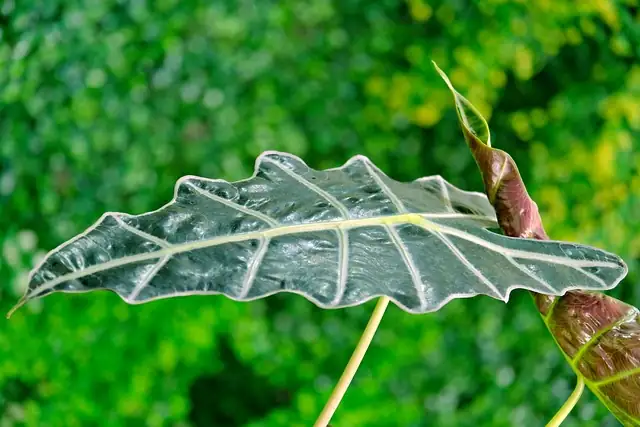
Alocasia ‘Polly’ (A. x amazonica ‘Polly’)
- Size: Small-to-medium (1–2 ft / 30–60 cm).
- Difficulty: Moderate; a classic starter Alocasia once you’ve got bright light + humidity sorted.
- Light sweet spot: Bright, indirect; east/west windows shine here.
- Drama factor: Razor-sharp silhouette with high-contrast white veins.
- Room + pot pairing: Console or sideboard near a bright window; glossy black pot for that sculptural finish.
Alocasia ‘Maharani’ (often called “Gray Dragon”)
- Size: Compact (10–14 in / 25–35 cm).
- Difficulty: Moderate; holds steady with consistent care.
- Light sweet spot: Bright, indirect; keeps its matte, pebbled texture best in stable light.
- Drama factor: Thick, leathery, gray-green leaves—subtle, modern, textural.
- Room + pot pairing: Minimalist shelf or bedside; cement-look planter to echo the leaf texture.
Alocasia ‘Melo’
- Size: Small-to-compact (10–18 in / 25–45 cm).
- Difficulty: Moderate; loves warmth and higher humidity.
- Light sweet spot: Bright, indirect; diffuse light accentuates its quilted surface.
- Drama factor: Deeply rugose, bluish-green leaves—like sculpted stone.
- Room + pot pairing: Work-from-home desk with a nearby humidifier; low, wide clay pot to keep roots airy.
Alocasia ‘Odora’ (bonus big-leaf pick)
- Size: Substantial floor plant indoors (often 2–3 ft+ with good care).
- Difficulty: Moderate; steady moisture, warmth, and space to unfurl.
- Light sweet spot: Bright, indirect to very bright filtered (no scorch).
- Drama factor: Broad, classic “elephant ear” for resort-lobby vibes at home.
- Room + pot pairing: Bright sunroom or spacious living room; lightweight, well-draining pot so you can move it seasonally.
Room-by-room quick picks
- Small, stylish bedroom: Black Velvet or Maharani in a pale or cement-look planter.
- Bright living room, big statement: Regal Shield(s) or Zebrina in a tall cylinder pot.
- Steamy bathroom or bright kitchen: Dragon Scale or Melo in breathable clay.
- Home office with good light: Frydek or Silver Dragon in a charcoal or brushed-metal cachepot.
- Entryway drama: Polly or Regal Shield(s) under bright, filtered light.
Care cheat sheet (dial this in and most varieties behave)
- Watering rhythm: When the top 2–3 inches are dry, water thoroughly and drain; never let the pot sit in water (empty saucers in ~30 minutes).
- Humidity boost: Aim for 65%+; use a humidifier or pebble tray. Morning misting is optional but don’t keep leaves constantly wet.
- Feeding: Spring–summer, feed 1–2× monthly with a balanced liquid fertilizer at half strength, or use a slow-release every 6–8 weeks. Pause in winter.
- Repotting: Spring/summer. Step up one size when roots fill the pot (roughly every 12–24 months depending on variety). Clay increases airflow; plastic/glazed holds moisture longer.
- Pruning: Snip aging or damaged leaves at the base with clean tools. Wear gloves; sap can irritate skin.
- Propagation: Divide rhizomes/tubers in spring—each division needs roots and a growth point.
- Seasonal flow:
- Spring: Growth restarts—repot/divide, resume feeding.
- Summer: Peak leaf production—keep bright, humid, evenly moist.
- Fall: Ease off fertilizer; water a bit less.
- Winter: Some go semi-dormant—keep warm, hold fertilizer, water sparingly.
Pests and problems to watch
- Most common villain: spider mites. Also mealybugs, scale, aphids.
- Tactics: Wipe leaves, improve airflow, and treat with insecticidal soap or neem; repeat as needed.
- Overwatering red flags: Yellowing, limp leaves, sour smell, fungus gnats, soggy spots. Improve drainage fast.
Why leaves yellow or droop (quick fixes)
- Yellowing: Usually watering issues—too wet or too dry. Also check light, warmth, humidity, and nutrients. One old leaf yellowing as a new one unfurls can be normal.
- Drooping: Check soil moisture first. Dim light, temperature swings, or root rot can also be culprits. Healthy roots are firm and light-colored, not mushy and dark.
A note on blooms and symbolism
- Indoors, flowers (a spathe-and-spadix aroid bloom) are rare and usually modest—most of the drama stays in the leaves.
- Symbolism: Many plant lovers link Alocasia with resilience and fresh momentum—those upright, shielded leaves feel like a reminder to stand tall. In some Feng Shui traditions, they’re associated with prosperity and career luck. “Flower language” interpretations are modern cultural readings rather than historical botany—but the sentiment fits the plant’s bold, forward energy.
One last safety sidebar
- All Alocasias contain irritants (including calcium oxalate crystals). Keep them away from pets and children, and wash up after handling.
Your winning combo
- Want a low-footprint stunner? Black Velvet in a pale pot on a bedroom shelf.
- Crave a living-room head-turner? Regal Shield(s) in a textured floor planter under bright, filtered light.
- Love patterns and texture? Pair Zebrina (patterned stems) with Dragon Scale (armored leaves) in matching clay and ceramic for a curated, high-contrast duo.
Set the stage—bright, warm, humid, and evenly moist—and your Alocasias will reward you with sculptural foliage that looks like it stepped off a runway and into your room.


