

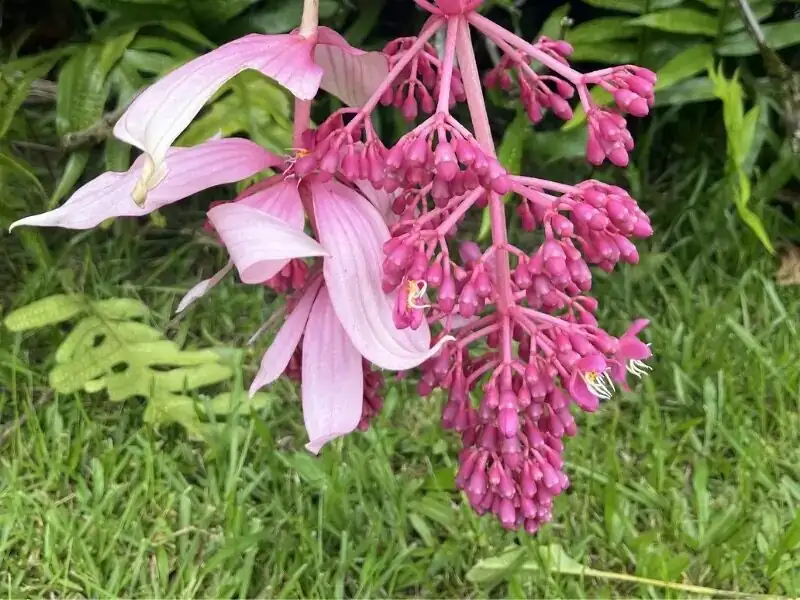
In the shade-dappled forks of Philippine rainforest trees, a chandelier is born. Locals call it kapa-kapa; collectors came to know it as the rose grape, a name that nods to those cascading clusters of rosy bracts with tiny flowers tucked inside. When Medinilla magnifica decides to bloom, it does not whisper—it descends, a pink waterfall of bracts and bells that once sent 19th‑century plant hunters into raptures and still stops traffic in modern conservatories and living rooms.
Born in the canopy: the wild life of Medinilla magnifica
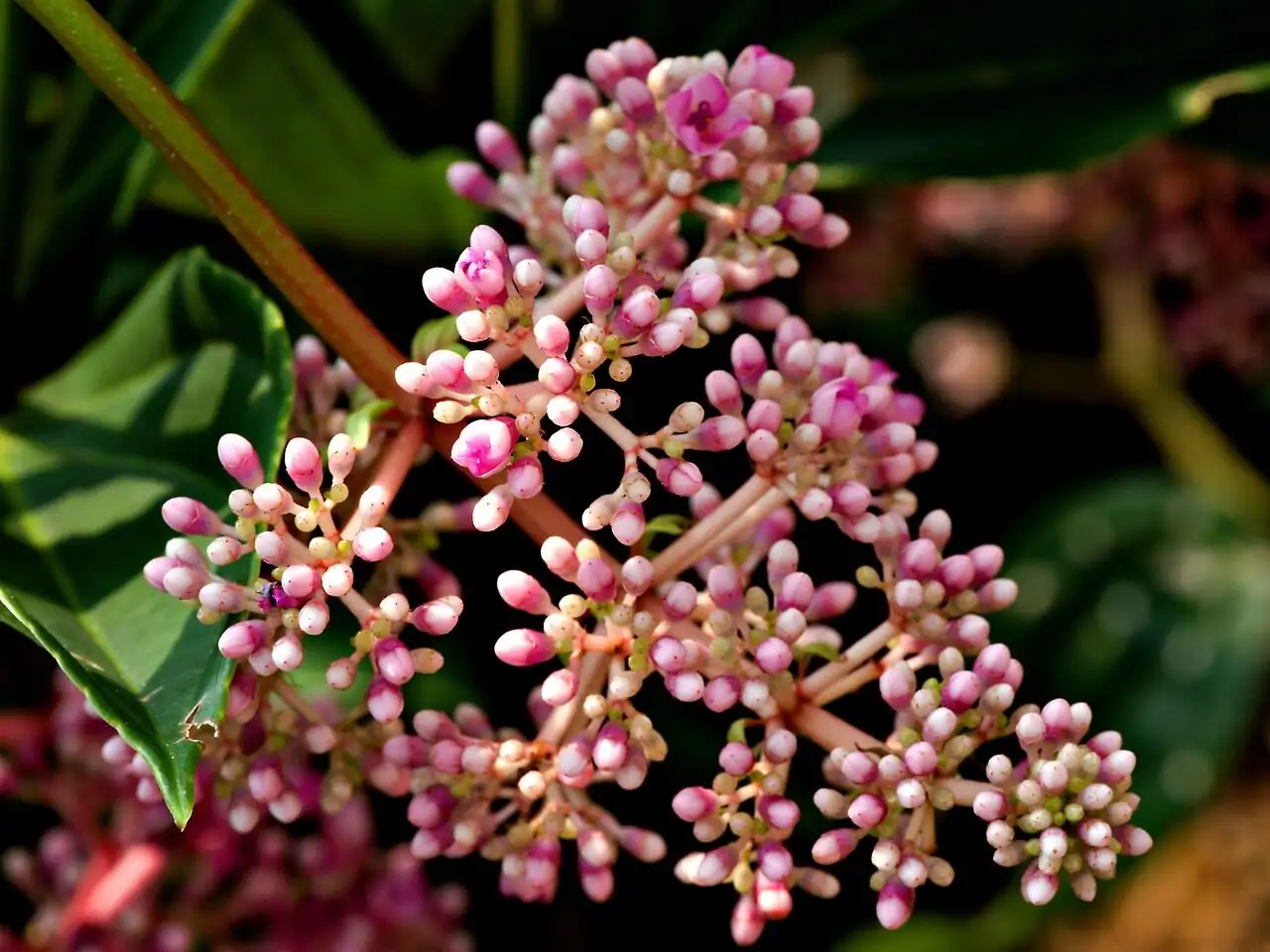
- Native range: Tropical forests of the Philippines, where it often lives as an epiphyte—perched in tree forks amid leaf litter and moss rather than rooted in soil.
- Growth habit: An evergreen shrub with stout, somewhat corky stems and broad, leathery, deep‑green leaves etched with dramatic raised veins. In the wild, the plant anchors itself into airy detritus, thriving in bright shade and humidity.
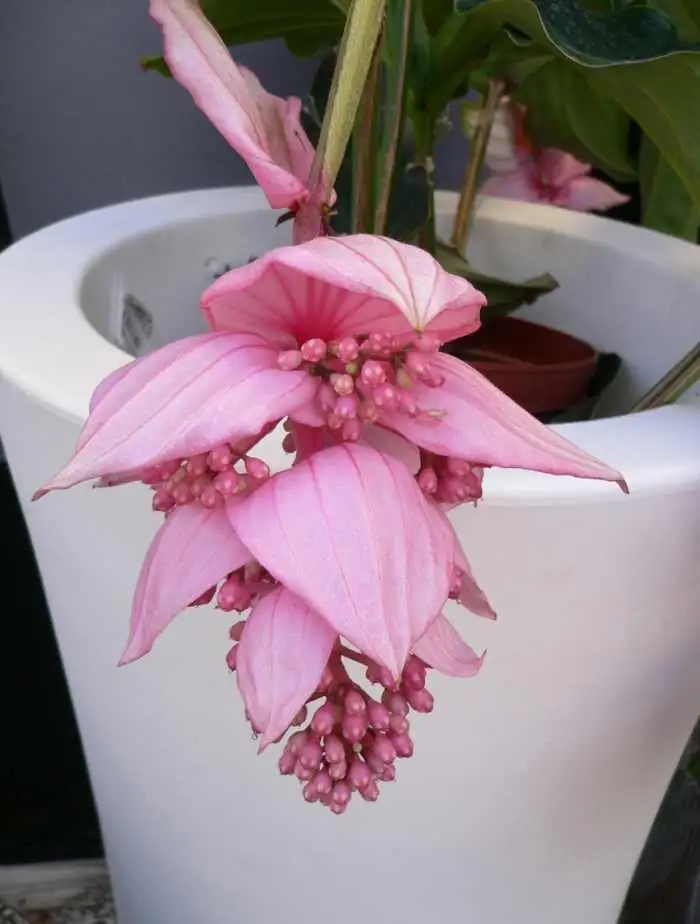
- The spectacle: Long, arching stems carry pendant clusters. What look like sumptuous pink petals are actually bracts—modified leaves that shelter the true flowers inside (typically pink to purple). The effect is pure theater: floral chandeliers swaying below glossy foliage.
The bloom that launched a thousand glasshouses
In the mid‑1800s, Medinilla magnifica dazzled Europe. The English collector J. H. Veitch introduced it to cultivation, and by 1854 it was winning top prizes and fueling glasshouse fever. Legend has it that Veitch tried to throw rivals off the scent by hinting at Java as its origin—an elegant bit of misdirection. The truth endured: this showstopper is uniquely Filipino.
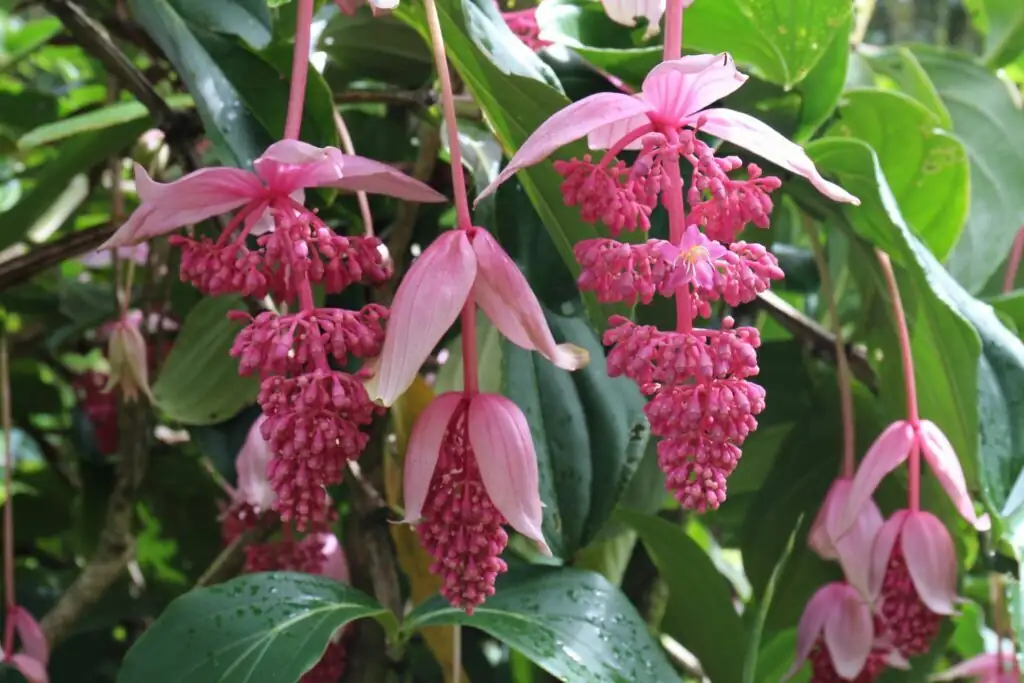
As interest swelled, so did the plant’s mythos. Nurseries christened it with gilded aliases—Magnificent Medinilla, Showy Medinilla, Philippine Medinilla, and even “Philippine Orchid,” a trade nickname that flatters its exotic drape but misses its true family, Melastomataceae. The mania never really ended; it simply moved indoors, from Victorian conservatories to sunlit lofts, where its cascading inflorescences still set the standard for luxury houseplants.
From royal conservatories to living rooms
- A conservatory icon: It became a status plant in elite collections, famed for bracts that can rival cut bouquets for longevity.
- A modern centerpiece: Indoors, it typically matures to around 1–2 m (3–6.5 ft) tall and 0.8–1.5 m (2.5–5 ft) wide in containers. Many home specimens settle beautifully at roughly 1.2 × 1.0 m (4 × 3.3 ft).
- Display tip: Set the pot high—on a stand or in a tall planter—so the heavy clusters can drape naturally. Gentle support ties can keep flower-laden stems from flopping.
Why it mesmerizes: design details that sing
- Architectural foliage: Large, deep‑green leaves with bold venation read like living sculpture.
- Movement and mass: Arching, pendulous bloom clusters create dynamic lines and romantic abundance.
- Color story: Bracts in luxurious pinks frame smaller inner flowers that read pink to purple—an irresistible depth of tone.
Growing the legend: care essentials for Medinilla magnifica
Think “airy canopy conditions.” Warmth, bright filtered light, generous humidity, and even moisture are the levers that make those chandeliers appear.
- Light
- Bright, filtered/indirect light; partial shade is fine.
- Avoid harsh, prolonged direct sun (especially midday), which can scorch leaves and damage buds.
- Temperature
- Aim for warm and steady: about 22–28°C (72–82°F) is ideal; 17–25°C (63–77°F) is workable.
- Keep above about 16°C (61°F) and protect from drafts and heat spikes with stagnant air (both can trigger bud or flower drop).
- Outdoors year‑round only in approximately USDA Zone 11–12; otherwise, grow indoors or in a conservatory.
- Humidity
- Prefers medium‑high to high humidity. About 50–70%+ works; 70–80% is ideal for reliable bud set.
- Use a humidifier or pebble tray; mist around the plant if needed but try not to wet the blooms.
- Watering
- During active growth and bloom, keep the mix evenly moist but never soggy.
- Bottom‑watering excels: set the pot in a tray of lukewarm rain or distilled water for ~20 minutes, then drain thoroughly.
- In hot weather, watering can be frequent; avoid swings from bone‑dry to saturated—extremes cause bud/flower drop.
- In winter, let the top of the mix dry slightly between waterings.
- Soil and potting
- Emulate the airy canopy: use a rich, free‑draining mix with great aeration.
- Two proven routes:
- Orchid‑style chunky blend (fine bark + perlite/charcoal).
- Humus‑rich potting mix lightened with coarse sand, perlite, or vermiculite.
- Never allow the roots to sit in waterlogged media.
- Feeding
- During the growing season:
- Option 1: Feed monthly with a balanced fertilizer (e.g., 20‑20‑20), plus 1–2 bloom‑supporting feeds (higher P/K) as buds form.
- Option 2: Every 2 weeks, half‑strength high‑potassium liquid from spring to late summer.
- Do not overfeed; prioritize potassium as buds swell and during bloom.
- Pruning and support
- After flowering, remove spent clusters promptly.
- Cut back the shoots that flowered by about half to stimulate fresh, bloom‑ready growth.
- Shorten leggy stems to keep a rounded shape; lightly support heavy flower stems while in bloom.
- Repotting and presentation
- Repot every ~2 years in spring, minimizing root disturbance.
- A deep container (about 20–25 cm/8–10 in wide and 30–40 cm/12–16 in deep) suits its roots.
- Some growers plant 1–3 young plants together for a fuller, showpiece canopy.
Blooming cadence: coaxing chandeliers on cue
- Season: Spring to summer is prime time (often late spring through summer indoors).
- Keys to repeat flowering:
- Very bright filtered light, warm stability, and elevated humidity (push toward 70–80%).
- Even moisture—no jolts from drought to deluge.
- Post‑bloom pruning to half on flowered shoots to prime new flowering wood.
Pests, health, and troubleshooting
- Common pests: Spider mites (dry air invites them), scale, mealybugs, whiteflies. Treat early with insecticidal soap or horticultural oil; repeat as needed and improve airflow/humidity.
- Diseases: Leaf spot and stem/root rot often trace to wet flowers, poor ventilation, or soggy media. Keep the mix free‑draining and avoid wetting blooms.
- Classic stress signals:
- Bud/flower drop: heat buildup in direct sun, cold drafts, or erratic watering.
- Scorched leaves: too much direct sun.
- Wilting in a wet pot: oxygen‑starved roots—repot into a more open mix.
Safety note: Not widely documented as toxic to humans or pets, but as with most ornamentals, ingestion may cause mild stomach upset. Keep out of reach of curious chewers.
Choosing a specimen: what the pros look for
- Seek deep‑green, glossy leaves without tears, spots, or sticky residue.
- Inspect undersides and stems for mealybugs or scale.
- For a flowering gift plant, choose one with developing buds or 3–5 strong clusters, at least one partially open so you can judge color and form.
- Avoid plants with blackened/browned bracts, soft stems, or obvious spotting—flags of stress or cold damage.
Conservation and ethics
Kapa‑kapa’s wild populations have dwindled where forests are lost and canopies open—habitat it depends on for cool, bright shade. Thankfully, it thrives in cultivation, and there are likely more plants in pots than in the wild. Buy nursery‑propagated specimens, never wild‑collected ones. Growing Medinilla well at home—warm, humid, and airy—is a quiet act of homage to the canopy that shaped it.
Flower language and cultural notes
Medinilla magnifica is often cast as a symbol of tropical glamour, abundance, and refined taste—the ultimate “statement plant.” Unlike roses or chrysanthemums, it doesn’t have a centuries‑old place in formal floriography; its meanings are modern, born of design culture and gifting. The chandelier effect reads as celebration; the lush bracts, as generosity. In short: where orchids whisper exclusivity, the rose grape drapes it.
Quick facts to impress
- The showy “petals” are bracts; the true flowers are the small, interior blooms (often pink to purple).
- Display magic: Elevating the pot transforms the plant—the heavy clusters need room to fall.
- Care mindset: Treat it more like a humidity‑loving conservatory plant than a casual windowsill resident.
- Trade names: Also sold as Magnificent Medinilla, Philippine Medinilla, Showy Medinilla, and the misnomer “Philippine Orchid.”
A final scene
Picture a warm room, bright but softened by a sheer curtain. From a high planter, a cascade of pink bracts leans into the light. There’s a hush that good design brings, and something more—a memory of rainforest branches, leaf litter, and monsoon air. Grow Medinilla magnifica well and you don’t just keep a plant; you host a fragment of canopy theater.