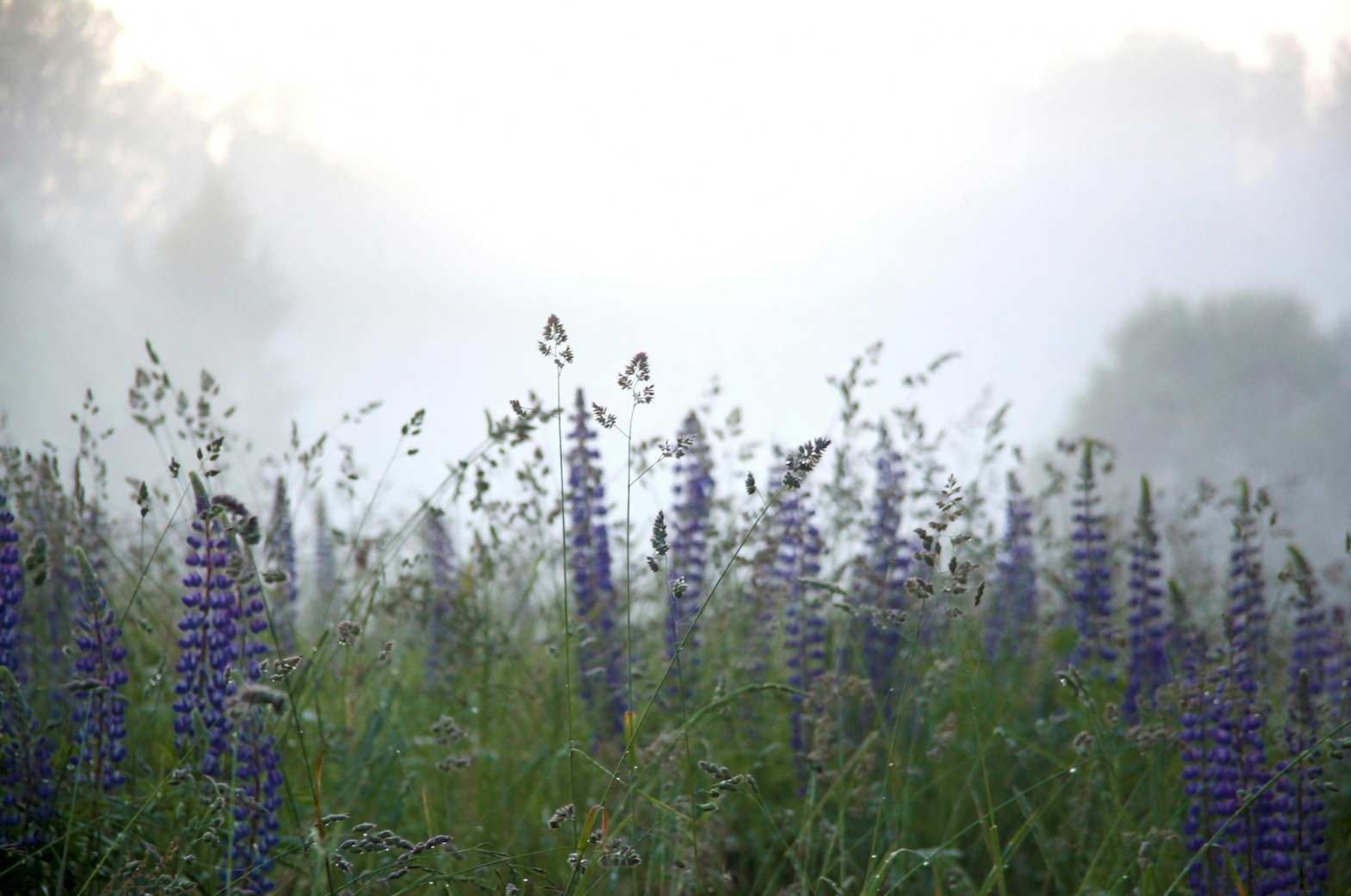
Imagine the misty edges of a Pacific Northwest stream in late spring: salmonberries glow under alder shade, and from the gravelly bank a column of color rises—first a ring of open florets at the base, then, day by day, the bloom climbs, candle-like, toward the tip. That’s Lupinus polyphyllus, the bigleaf or garden lupine—born in western North America, renamed by an old Roman rumor, and reinvented by a determined Englishman into the multicolored spires that became a cottage-garden icon.
Born of rain, rivers, and northern light
Lupinus polyphyllus is native to western North America—especially the cool, damp-to-moist landscapes of the Pacific Northwest. In the wild, it often lines waterways and meadow edges where snowmelt and spring rains keep soils evenly moist yet well drained. This is a plant built for brisk springs and gentle summers, which is why it thrives so naturally in gardens that mimic those conditions.
What you see:
- A clump-forming, herbaceous perennial with a strong taproot and a neat basal rosette.
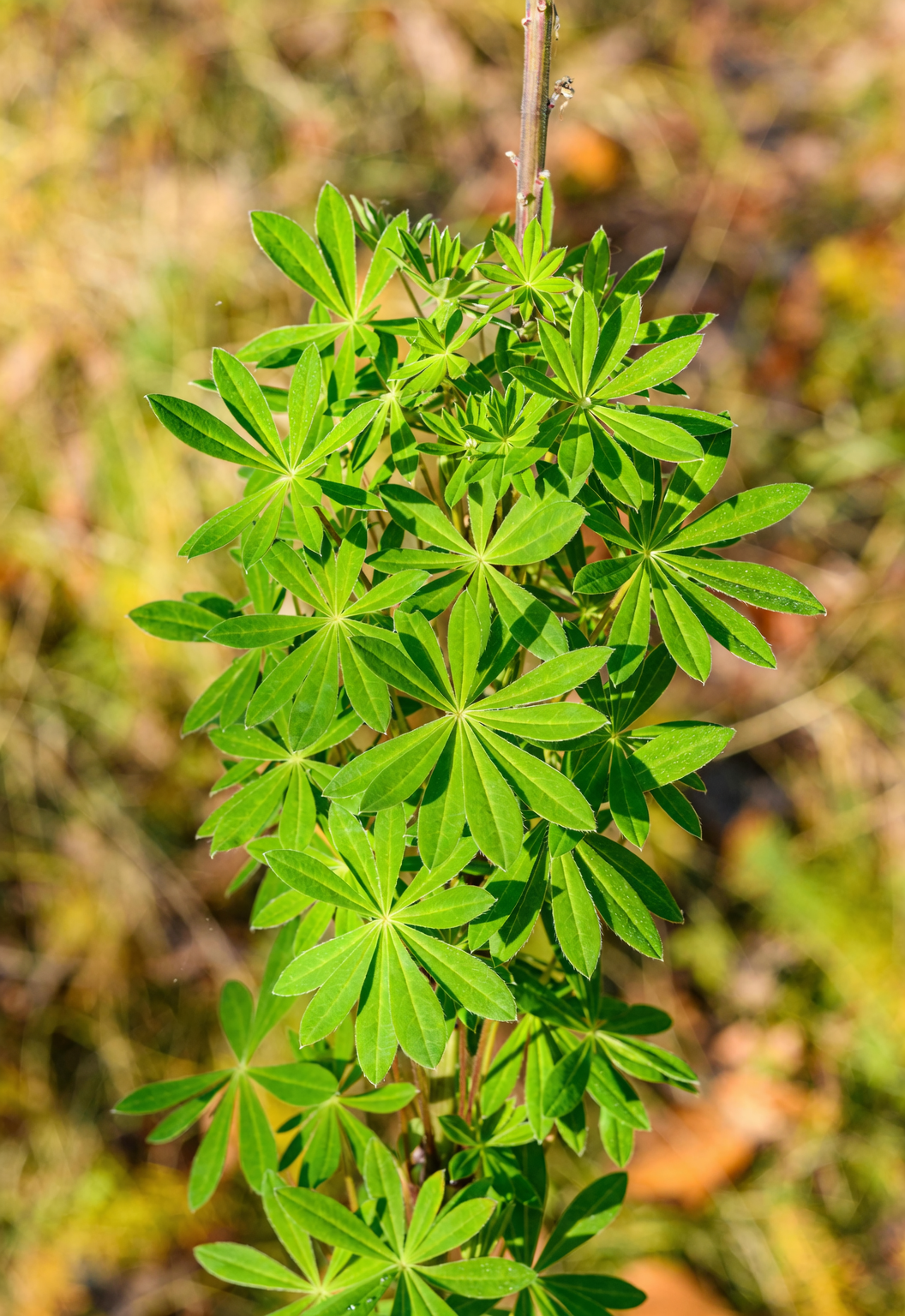
- Palmate, fan-like leaves with many narrow leaflets—silhouettes like open hands catching light.
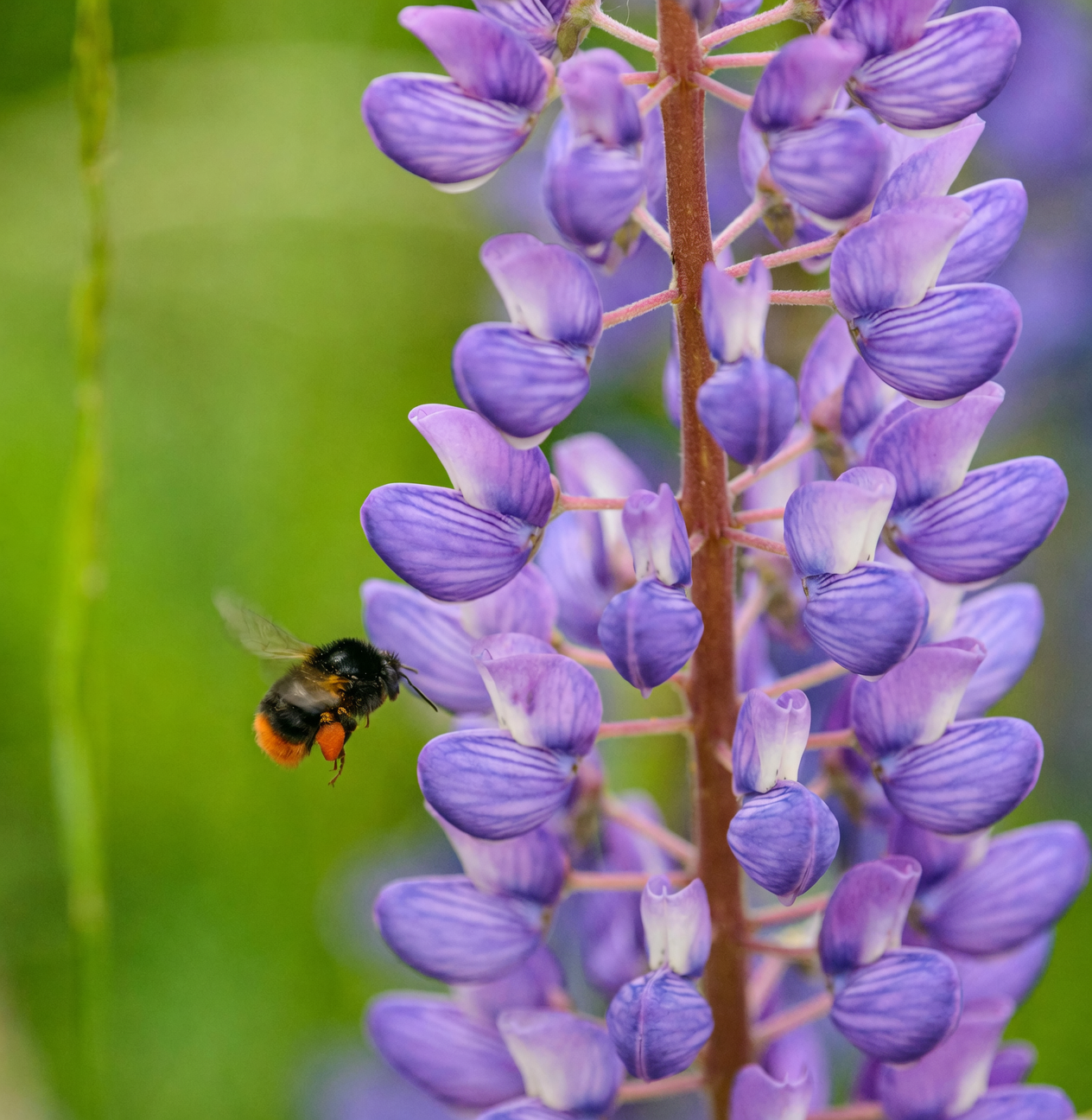
- Tall, dense spikes of pea-flowers that open from bottom to top in spring to early summer, creating that “rising candle” effect.
- Height typically 60–120 cm (24–48 in), with flower spikes sometimes pushing to about 150 cm (60 in) in good conditions.
What’s with the “wolf”?
“Lupine” traces back to the Latin lupus—wolf. Medieval lore had it that lupines “wolfed down” soil fertility wherever they grew. The reality flips that story on its head: as a legume, lupine partners with soil bacteria to fix atmospheric nitrogen. It doesn’t devour the soil; over time, it can enrich it. The wolf, then, is a fable stuck to a helpful neighbor.
A neat twist of global botany: while Lupinus polyphyllus is a North American native, the wider genus Lupinus also boasts a long Mediterranean history (especially in agriculture), which helped the misconception spread far and wide.
The Englishman who bottled a rainbow
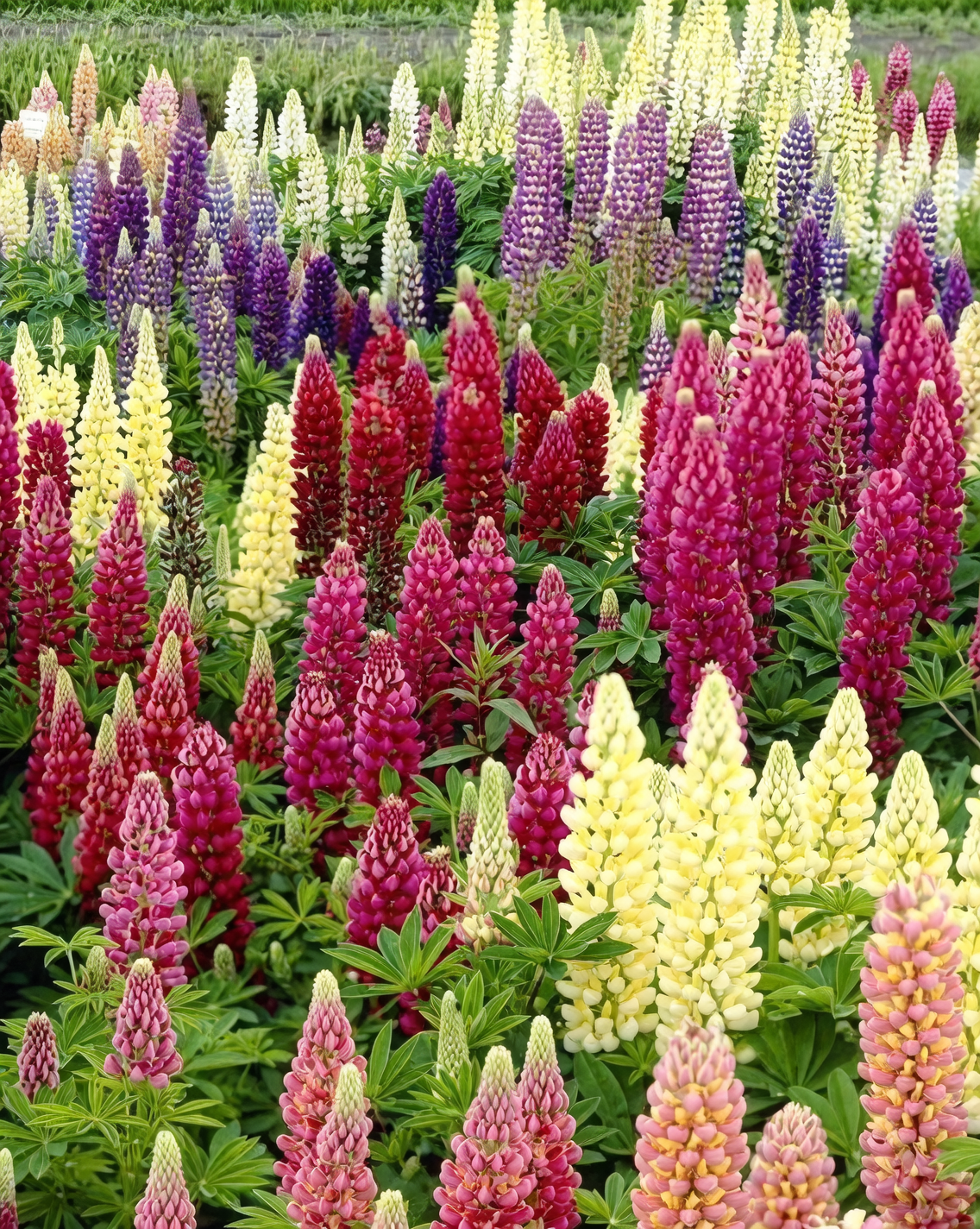
Enter George Russell, a self-taught gardener in early 20th‑century England with a vision. He wanted lupines that were taller, sturdier, more floriferous—and wildly colorful. Through years of obsessive selection and crossing (with Lupinus polyphyllus at the heart of his work), he unveiled what gardeners now call the Russell Hybrids: towering spires in saturated blues, purples, magentas, pinks, reds, whites, and striking bicolors.
Those “Russells” transformed the plant from a handsome blue-purple native into a cottage‑garden star. The rainbow you see in borders today—those regimented candelabras of color—owes much to Russell’s patient, exacting eye.
How the spires stole the show
- Color and form: From dusky indigo to lipstick red and ice-cream pastels, with bold bicolors that look hand-painted.
- Long, architectural flower spikes: Perfect vertical accents for cottage borders and meadow-style planting.
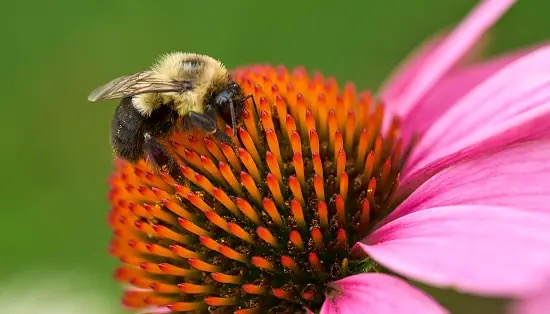
- Pollinator pull: Bumblebees especially adore the flowers; you’ll also see butterflies and, in many gardens, the quick flashes of hummingbirds.
Pro tip: For cut flowers, harvest when about half the florets are open; they’ll continue to unfurl in the vase.
A quick field guide to growing them well
Think “cool summers, bright light, and lean, well-drained soil.”
- Sunlight
- Best bloom in full sun where summers stay mild.
- In warmer regions, give light or afternoon shade to ease heat stress.
- Soil and water
- Prefer sandy or loamy, well-drained soils; slightly acidic (about pH 5.5–6.5) suits them.
- Keep evenly moist during spring growth and bloom, but avoid waterlogging—root and crown rot are real risks.
- Avoid rich, high‑nitrogen soils that push leaves over flowers.
- Climate and hardiness
- USDA Zones 4–8 (often happiest in 4–6).
- Thrive in about 13–24°C (55–75°F). Hot, humid summers can shorten their lives.
- The taproot truth
- Lupines hate root disturbance. Plant them where you want them to stay, or transplant only when young with great care.
- If container-growing, use a deep pot and excellent drainage; refresh the mix in early autumn if needed.
- Feeding
- Often minimal to none in the ground—they fix nitrogen.
- In containers, a light, low‑nitrogen feed during active growth can help, but go easy.
- Deadheading and a bonus bloom
- Snip spent spikes promptly and you may coax a smaller second flush later in the season.
- Starting from seed
- Scarify or soak seeds 24–48 hours to soften the coat.
- Direct sow in autumn or early spring, 2–3 cm (0.8–1.2 in) deep; keep evenly moist.
- Thin to 30–40 cm (12–16 in) spacing.
- Note: Many Russell-type hybrids won’t come true from saved seed—expect delightful surprises.
- Pests, diseases, and deer
- Aphids (including lupin aphids) love tender growth; blast with water, or use insecticidal soap early.
- Powdery mildew shows up in still, humid air—space plants well and avoid late overhead watering.
- Slugs/snails may nip young plants.
- Generally deer‑resistant.
- Safety
- Toxic if ingested—especially seeds—due to bitter alkaloids. Keep away from children, pets, and livestock.
The look that launched a thousand borders
Spend a moment with a single spike: pea-flowers stacked with near-geometric precision, each a tiny flag in a grand procession. They open from the base upward, so a plant seems to “climb” into color as days lengthen. Fan-shaped leaves radiate like green starbursts below, catching droplets after rain and throwing soft highlights in morning light. This is why photographers love them, and why cottage gardeners can’t resist massing them in rhythmic swathes.
A plant with passports and opinions
Garden lupines are widely cultivated and have naturalized in many places beyond their native range. In some regions they’ve even been enlisted for erosion control, later drawing controversy when they seed around too freely. The moral? Plant thoughtfully, deadhead if spread is a concern, and follow local guidance.
Flower language: imagination with a bite of folklore
In the language of flowers, lupines often symbolize imagination, creative abundance, happiness, and a generous, nurturing kind of love—fitting for a plant that turns thin soils into festivals of color and partners with microbes to share nitrogen. But that old “wolf” shadow lingers, too: some traditions tag lupines with voraciousness or greed. The duality makes sense when you know the etymology—lupus—and the myth that it “devoured” fertility. In truth, its beauty and soil-savvy biology argue for the more generous reading: visionary creativity that gives back.
Why this origin story still matters
- It roots the plant in real places: misty coasts and mountain valleys of the Pacific Northwest.
- It reveals a name redeemed: from wolfish rumor to nitrogen-fixing ally.
- It celebrates a gardener’s persistence: George Russell’s early‑1900s selections that rewrote what a lupine could be.
Plant a drift of Russell-type lupines and you’re staging a living story: wild riverside DNA rising into civilized candelabras, folklore tamed by science, and one person’s patient eye turning a native blue into a global rainbow. When those spikes lift above the border, they don’t just bloom—they narrate.