

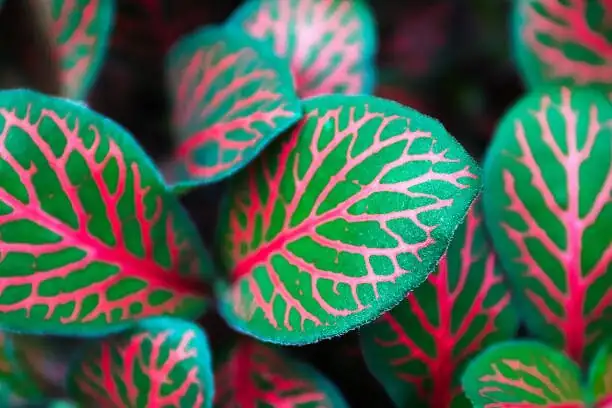
If you’ve ever watched your Nerve Plant “faint” dramatically and bounce back after a drink, you already know Fittonia albivenis is a plant with personality. The fun twist? It’s also one of the easiest houseplants to multiply. This masterclass shows you how to turn one mosaic beauty into a pot-full—fast—using tip cuttings, a warm-and-humid rooting setup, and ridiculously simple node-layering.
Meet the plant you’ll be multiplying
- Botanical name: Fittonia albivenis (Acanthaceae), aka Nerve Plant, Mosaic Plant, Pink Nerve Plant
- Origin: Tropical rainforests of western South America (especially Peru; also Colombia, Ecuador, and Bolivia)
- Habit: Petite, creeping-to-trailing stems with soft oval leaves netted in pink, white, or red veins
- Secret sauce for vigor: Bright, indirect light; consistent moisture; warm temps; and humid air (terrariums are a dream)
What you’ll need
- Sharp, clean snips or scissors
- Small nursery pots with drainage (7.5–12 cm / 3–4.7 in) or a propagation tray
- Water jar for water rooting (glass or opaque)
- Light, airy propagation mix: peat or coco coir + perlite (optionally a little coarse sand)
- Humidity aid: clear cover, dome, or a loose zip-top bag
- Optional: paperclips or plant pins for layering, labeled tags, and a gentle, balanced liquid fertilizer
Pro tip: Handle Fittonia gently—its soft, paint-like leaves can crease or bruise if squeezed.
The gold standard: tip cuttings (2–3 week roots)
Spring through early summer is prime time, though warm indoor conditions make it possible almost year-round.
Step 1: Take the cuttings
- Choose flexible, healthy tips 5–10 cm (2–4 in) long with several nodes.
- Make a clean cut just below a node.
- Strip the lowest pair of leaves so you can sink a node into water or mix.
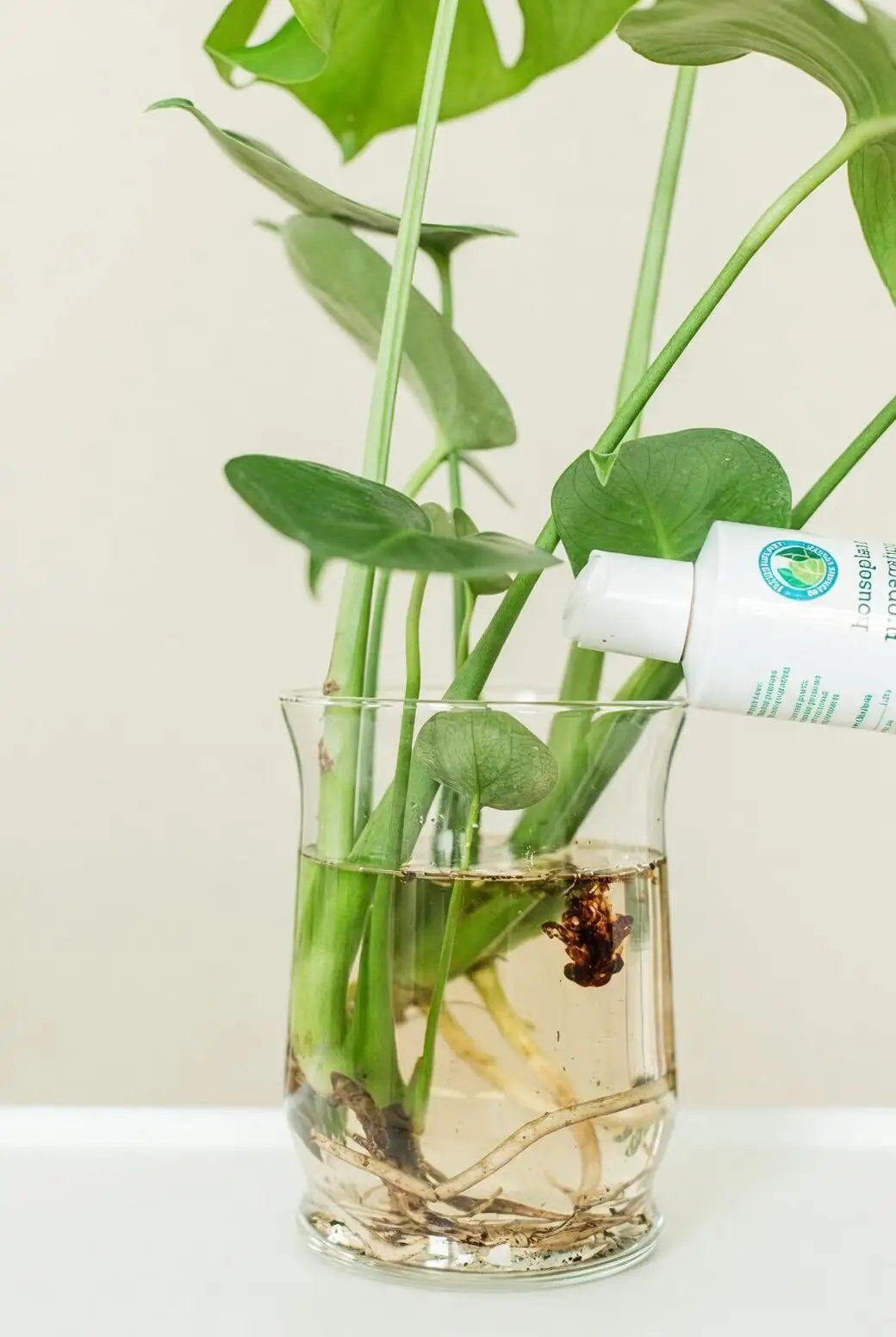
Step 2A: Rooting in water (see your progress)
- Pop the bare node(s) in water—no leaves underwater.
- Bright, indirect light; avoid direct sun.
- Keep warm at 20–24°C (68–75°F).
- Change the water every 7–10 days to keep oxygen high and rot low.
- Expect root nubs quickly, often visible around day 10, with more substantial roots by about 2–3 weeks.
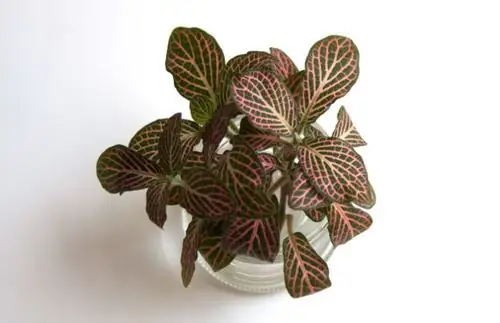
Optional for extended hydro or during propagation: add a very dilute hydroponic nutrient about every 2 weeks and keep solution off the leaves. Provide ventilation in hot weather and never cook the jar in a sunny window.
Step 2B: Rooting in mix (ready-to-pot from the start)
- Fill a small pot with a moisture-retentive, free-draining blend (peat/coco + perlite).
- Insert the cutting so at least one node is buried; firm the mix lightly.
- Water to evenly moisten—never soggy.
- Cover loosely with a clear dome/bag to keep humidity high, but allow some airflow.
- Keep at 20–24°C in bright, indirect light.
- Roots often form in roughly 2–3 weeks. You’ll feel resistance when you gently tug.
Which is faster? Both are quick. Water lets you watch roots appear; mix gives you a cutting that’s already acclimated to soil. In warm, humid conditions, expect liftoff either way within that 2–3 week window.
Step 3: When to pot up
- Water-rooted cuttings: pot up when roots are about 2–4 cm (1–1.5 in) long and branching.
- Transition gently: plant into the airy mix, keep evenly moist, and maintain higher humidity the first week. Bright, indirect light, no direct sun.
- In a 12–15 cm (4.7–5.9 in) pot, arrange 3–5 cuttings around the rim for an instant, fuller look.
The speed hack: node-layering to fill pots fast
Fittonia naturally roots at its nodes. Use that habit to thicken a pot without even taking cuttings first.
How to layer in place
- Choose a pliable stem and lay a node against the surface of moist mix.
- Pin it down with a paperclip or U-shaped wire; lightly top with mix.
- Keep the pinned spot evenly moist in bright, indirect light at 20–24°C.
- In about 2–3 weeks, that node typically roots. Snip between the mother and new start, then reposition or transplant to widen the canopy.
Layering is perfect for hanging pots and low bowls—stems knit together into a dense, mosaic carpet.
Conditions that make roots sprint
- Warmth: 20–24°C (68–75°F) is the sweet spot. Keep above about 15°C (59°F); below ~13°C (55°F) Fittonia can sulk or collapse.
- Light: Bright, indirect to partial shade. Harsh sun will scorch and fade veining.
- Humidity: 60%+ keeps cuttings perky and reduces transpiration stress. Domes, humidifiers, or pebble trays help. Avoid leaving foliage wet overnight.
- Mix and moisture: Use an airy medium and water when the top 1–2 cm (0.4–0.8 in) is just slightly dry. Evenly moist, never soggy.
- Airflow: Gentle, not drafty. Stuffy heat and stagnant air invite rot.
Aftercare: shaping, potting, and display options
- Pinch tips regularly once established to encourage branching and a compact, bushy mat.
- Remove flowers if they appear (small and tubular) to keep energy in foliage.
- Repot in spring only when needed—typically every 1–3 years—and step up just one pot size to prevent waterlogging.
- Terrariums: Fittonia is a superstar here—warm, bright shade with steady humidity is its happy place.
- Water culture option: You can keep Fittonia in water long-term in bright, indirect light. Change water every 7–10 days and feed lightly with diluted hydro nutrients about every 2 weeks during active growth. Keep solution off the leaves and avoid direct sun.
Troubleshooting your propagation
- Leaves wilting or “fainting”: The mix got too dry or humidity dropped. Water thoroughly, raise humidity, and it often perks up within hours. Aim for steadier moisture to avoid repeat drama.
- Yellowing leaves: Commonly from overwatering, cold stress, or poor drainage. Use a pot with drainage holes and an airy mix; keep warm.
- Cuttings rotting: Too wet, too cold, or too little airflow. Refresh water or lighten the mix; move to 20–24°C; add gentle ventilation.
- Slow or no roots: Light too low or temps below 18°C (64°F). Move to brighter, filtered light and warm it up.
- Pests: Dry air invites spider mites; mealybugs, scale, aphids, and fungus gnats can also appear. Treat early with insecticidal soap or horticultural oil and repeat per label.
- Water-to-soil shock: Water-rooted cuttings have brittle, water-adapted roots. Pot up at the 2–4 cm mark and keep the mix evenly moist with high humidity for the first week to ease the transition.
A quick propagation game plan
- Week 0: Take 5–10 cm tip cuttings. Start half in water, half in mix at 20–24°C with high humidity.
- Week 2: Water-cuttings show good roots; mix-cuttings resist a gentle tug.
- Week 3: Pot up water-rooted cuttings; start node-layering a few long stems across the soil surface to bulk up.
- Week 5–6: Pinch tips to branch. Continue layering to fill gaps. Begin light feeding every 2–4 weeks in spring–autumn.
Why Fittonia is the perfect “living artwork” for small spaces
- Symbolism: Often associated with vitality and living artwork—its leaf veins look hand-painted.
- Practical perks: Compact for desks and shelves, trails softly in a hanging pot, and it’s generally regarded as non-toxic to cats and dogs.
Care snapshot to keep your new clones gorgeous
- Light: Bright, indirect; avoid strong direct sun
- Temperature: Best around 18–25°C (64–77°F); keep above 15°C (59°F)
- Humidity: 60%+ preferred
- Water: Evenly moist, never soggy; water when the top 1–2 cm is slightly dry
- Feeding: Half-strength, balanced liquid fertilizer every 2–4 weeks in spring–autumn; ease off in winter
- Prune: Pinch tips often; refresh older, leggy plants by restarting from cuttings
Multiply once, and you’ll see why Fittonia albivenis is the plant that pays you back: every snip is another splash of mosaic color, and every rooted node is a fast step toward that lush, full pot you’ve been picturing. Warmth, humidity, and a light touch—then watch the roots race.