


Imagine a cold, damp morning in a Chinese mountain forest. Mist threads through broadleaf canopies; a stream stitches silver through the understory. There, on a cool bank, an evergreen with deep, lacquer-green needles holds still as a thought. By autumn, it wears a necklace of small, translucent red cups—the arils—that burn like embers against the shade. This is Chinese yew (Taxus chinensis), a tree once known mostly to ravines and scholars’ gardens, now quietly at home in courtyards, balconies, and refined modern landscapes. How did a poisonous tree come to embody composure and dignity? Pull closer.
Born of cool shade: the Chinese yew’s native world
Chinese yew is native to China, especially the cooler, moist, partially shaded fringes of forest where water is never far away and harsh sun seldom bites. In this understory niche, it grows slowly, building dense, architectural branching and evergreen poise. This background explains so much of its character in cultivation:
- It prefers filtered light to glare.
- It keeps happiest in humus-rich, evenly moist, well-drained, slightly acidic soil.
- It grows best where the air is cool and the soil never puddles.
How to recognize a Chinese yew in a crowd
- Evergreen architecture: Upright and composed, with dense branching that naturally forms a calm, compact canopy over time.
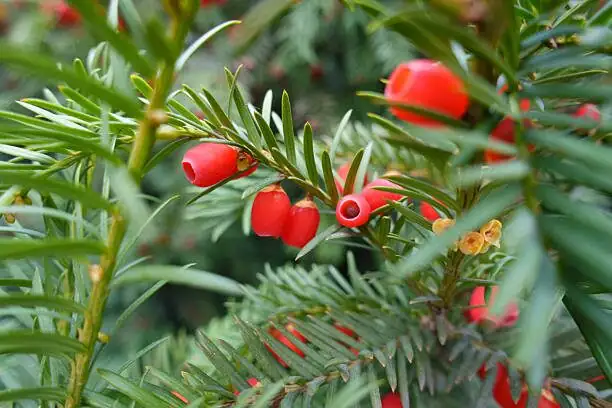
- Needles: Deep green, flat, and slightly thick to the touch; new growth flushes yellow‑green before deepening.
- Spring subtlety: Flowers are tiny and inconspicuous; this tree doesn’t perform in spring—it contemplates.
- Autumn crescendo: Bright red arils (the fleshy cup around each seed) appear in autumn and often linger into winter, glowing against the dark foliage.
In landscapes, a mature tree commonly stands 10–20 m tall with time. In the houseplant trade, you’ll most often meet it as a well-structured young plant, sold cool and compact.
From classical courtyards to modern balconies
In older Chinese gardens, evergreens like yew were chosen for steadiness—the “bone” of the scenery that holds through every season. Today, that same steadiness suits small urban gardens and containers. Chinese yew offers:
- Year-round structure without fuss.
- A gentle tolerance for cold, once established outdoors.
- A refined texture that pairs beautifully with stone, water, and shadow.
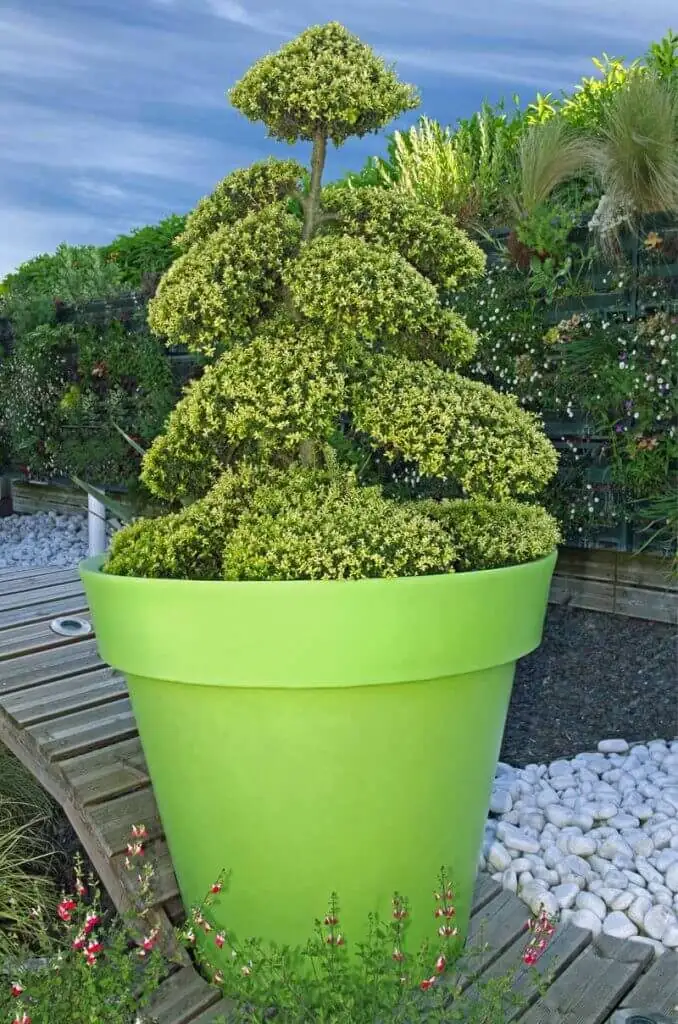
Kept in a container, it brings that courtyard calm to a townhouse porch or a bright, shaded balcony. Indoors, it prefers to stand about a meter back from an east or south window where the light is filtered rather than searing.
Poison and poise: earning trust through restraint
Every part of a yew demands respect. The needles, bark, and especially the seeds are highly toxic if ingested. The red aril is less toxic than the rest, but the seed it cups is dangerous. That paradox—luminous invitation wrapped around a lethal heart—made yews objects of solemn regard. They symbolize endurance and longevity, yet command careful handling. In horticultural literature, the genus is noted for compounds of significant medicinal interest; still, the living plant is not a medicine cabinet. Admire it, cultivate it well, and keep it away from curious mouths—children, pets, and wildlife alike.
Chinese yew and its cousins: a family portrait in contrast
Taxus is a famously look‑alike family, and botanists have long debated where one species ends and another begins. Even so, gardeners will notice character differences:
- Chinese yew (Taxus chinensis): Naturally dense and composed, with short, flat, deep‑green needles and a marked preference for cool, moist, filtered light. In containers, it especially dislikes scorching sun or stagnant, waterlogged soil.
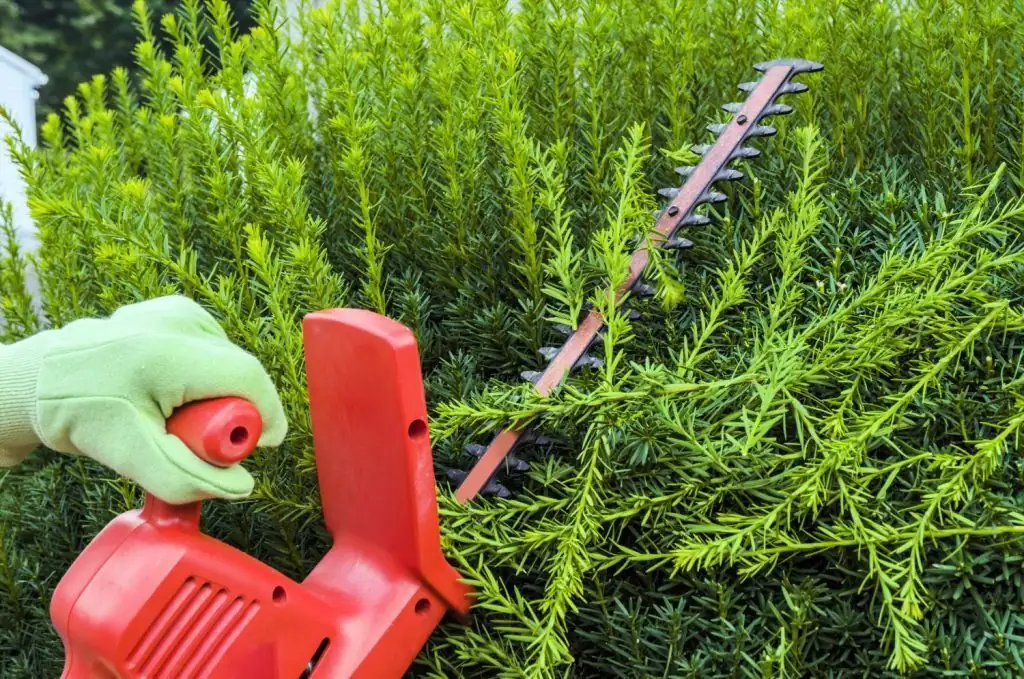
- European yew (T. baccata): The hedging legend of churchyards and manor walls, historically clipped into tight geometry. It endures hard pruning and is iconic in formal parterres.
- Japanese yew (T. cuspidata): A stalwart of Northeast Asian and North American gardens, widely used in foundation plantings; often seen where winters bite hard.
- North American yews (e.g., T. brevifolia, T. canadensis): Understory dwellers of ravines and forest margins, each with its own ecological niche.
All share evergreen endurance and red arils—but the Chinese yew typically shows best where light is filtered, air stays cool, and moisture is steady without flooding. In cold climates, some cousins are famed for deeper winter hardiness in the ground; in any case, container-grown yews of all kinds need extra protection from severe freezes because their roots are more exposed.
Growing Chinese yew with confidence
Light
- Partial shade to bright, indirect light. Avoid strong, direct midday sun.
- Indoors: place about 1 m (3.3 ft) back from an east- or south-facing window or balcony door.
Temperature and humidity
- Ideal growth: 16–26°C (61–79°F).
- Once established outdoors, it can tolerate winter lows near -15°C (5°F); container plants should be sheltered from severe freezes.
- Prefers a cool, slightly moist atmosphere; prolonged hot, dry air can stress it.
Soil and watering
- Soil: Humus-rich, acidic, and free-draining. Never let the pot sit in water.
- Watering in growth: Drench thoroughly to moisten the entire root ball, then keep the mix evenly moist—but never soggy.
- Winter: Growth slows; let the surface dry slightly between waterings while keeping the root ball from drying out completely.
Feeding
- During the growing season, feed about monthly with a balanced fertilizer (e.g., NPK 20‑20‑20) as directed, or use well‑rotted organic cake fertilizer.
Pruning and shaping
- The natural form is quietly beautiful; pruning is usually unnecessary.
- If the canopy gets too dense, thin lightly to improve airflow and maintain a clean silhouette.
Repotting
- Best time: Winter through early spring.
- Refresh a portion of the old mix with fresh, acidic, fertile medium.
- Disturb the root ball as little as possible when shifting containers.
Placement pointers
- Outdoors: Bright shade; avoid wind funnels that scorch or dehydrate.
- Indoors: Cool room, filtered light, and a stable, well-drained pot. No saucer puddles.
Propagation: slow patience, sure rewards
- Seed: Expect a long wait—many yew seeds need 1–2 years of cold stratification before they germinate well.
- Cuttings: Often the most reliable approach; take semi-hardwood cuttings from younger plants (frequently those under ~10 years old) for better rooting response.
- Grafting and layering: Also viable, especially where uniformity is prized.
Choosing a good plant (a quick buying guide)
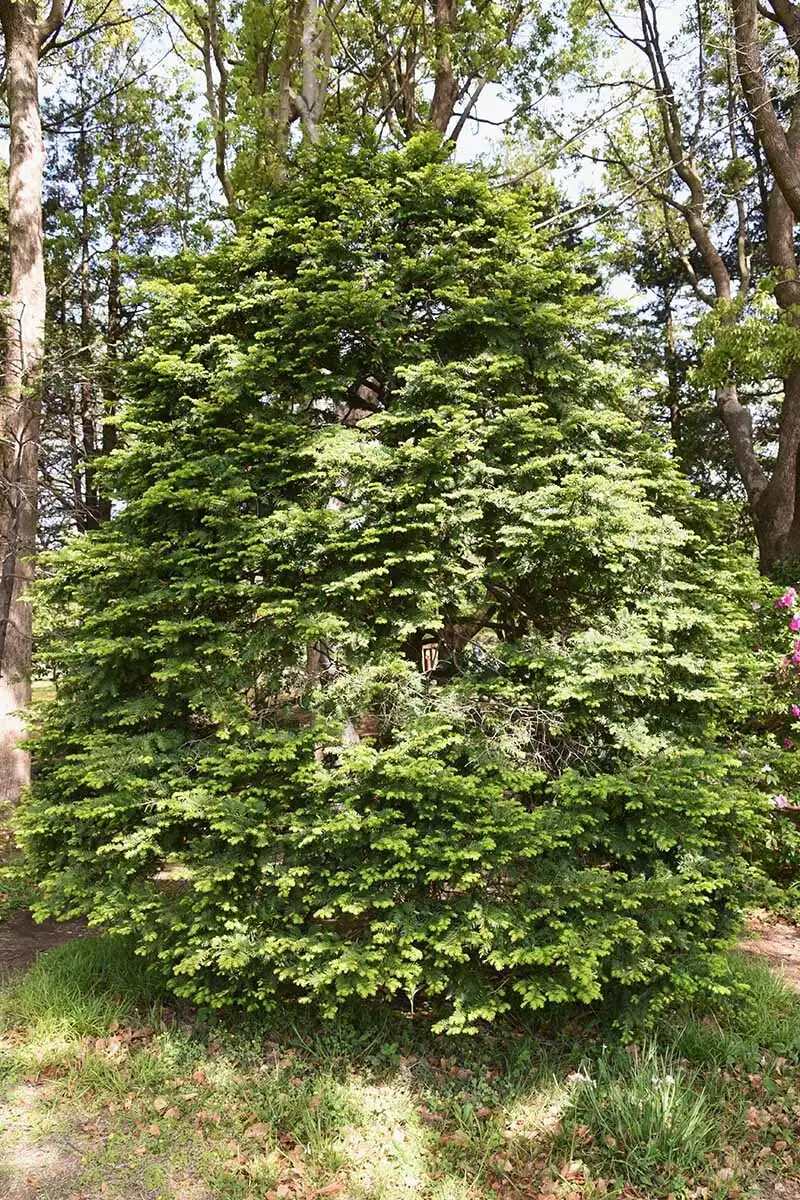
- Look for: A straight, balanced outline; healthy gray‑brown to reddish‑brown bark; well-spaced main branches with dense, fine branchlets; deep-green needles and lively yellow‑green new growth.
- Avoid: Crooked or unstable plants, missing or damaged branchlets, yellowing older foliage, or loose, poorly anchored potting soil.
- Best season to buy: Spring, when structure and new growth are easiest to read.
Troubleshooting and common pests
- Yellowing in year two? Potting soils can drift toward neutral or alkaline over time, leading to nutrient lockout. Repot into a fresh, acidic mix and consider an iron supplement (such as chelated iron) following label directions. Confirm you’re keeping the soil evenly moist without waterlogging.
- Scale insects: Uncommon but possible. Inspect regularly; trap flying adults with yellow sticky cards and treat infestations with an appropriate scale-control product (often horticultural oil or another labeled insecticide), following the label.
A gardener’s seasonal rhythm
- Growing season: Water deeply as needed to keep the mix evenly moist (not soggy). Feed monthly.
- Winter: Reduce watering; keep the mix slightly drier but never bone-dry.
- Winter to early spring: Repot and refresh soil if needed.
- Autumn into winter: Enjoy the red arils glowing against dark foliage—the yew’s quiet fireworks.
Symbolism and “flower language”
Yews, as evergreen elders, have long been linked with longevity, endurance, and resilience. In the West, their presence in churchyards added associations of remembrance and eternity. In China, 红豆杉—literally “red-bean fir”—evokes the bright arils studding the shade, a sign of life carried through cold months. Strictly speaking, “flower language” traditions arose from cultural poetry and Victorian floriography more than from botany—fitting, because Chinese yew’s flowers are modest and inconspicuous. Its meaning doesn’t come from showy bloom but from steadfast greenery, great age, and the restraint of power held in poisonous leaves and seeds. Admiration here is inseparable from respect.
Fast facts to savor
- The contrast of dense, dark needles with bright red arils makes the year’s most dramatic scene in autumn and winter.
- Yew seeds are famously patient—many need 1–2 years of stratification before sprouting.
- Cuttings from younger yews usually root more readily than those from older trees.
- Even cold-tolerant yews can suffer in pots during deep freezes; container roots are more exposed than in-ground plantings.
- The aril may look like a berry, but yews are poisonous—especially the seed inside.
In the end, Chinese yew’s journey—from cool, misted forest edges to the clipped quiet of classic gardens and the subtle polish of modern courtyards—mirrors its nature. It asks for moderation: filtered light, cool air, steady moisture, careful hands. Offer that, and it repays you with evergreen dignity and a lantern’s worth of red arils glowing through the darkest months.