

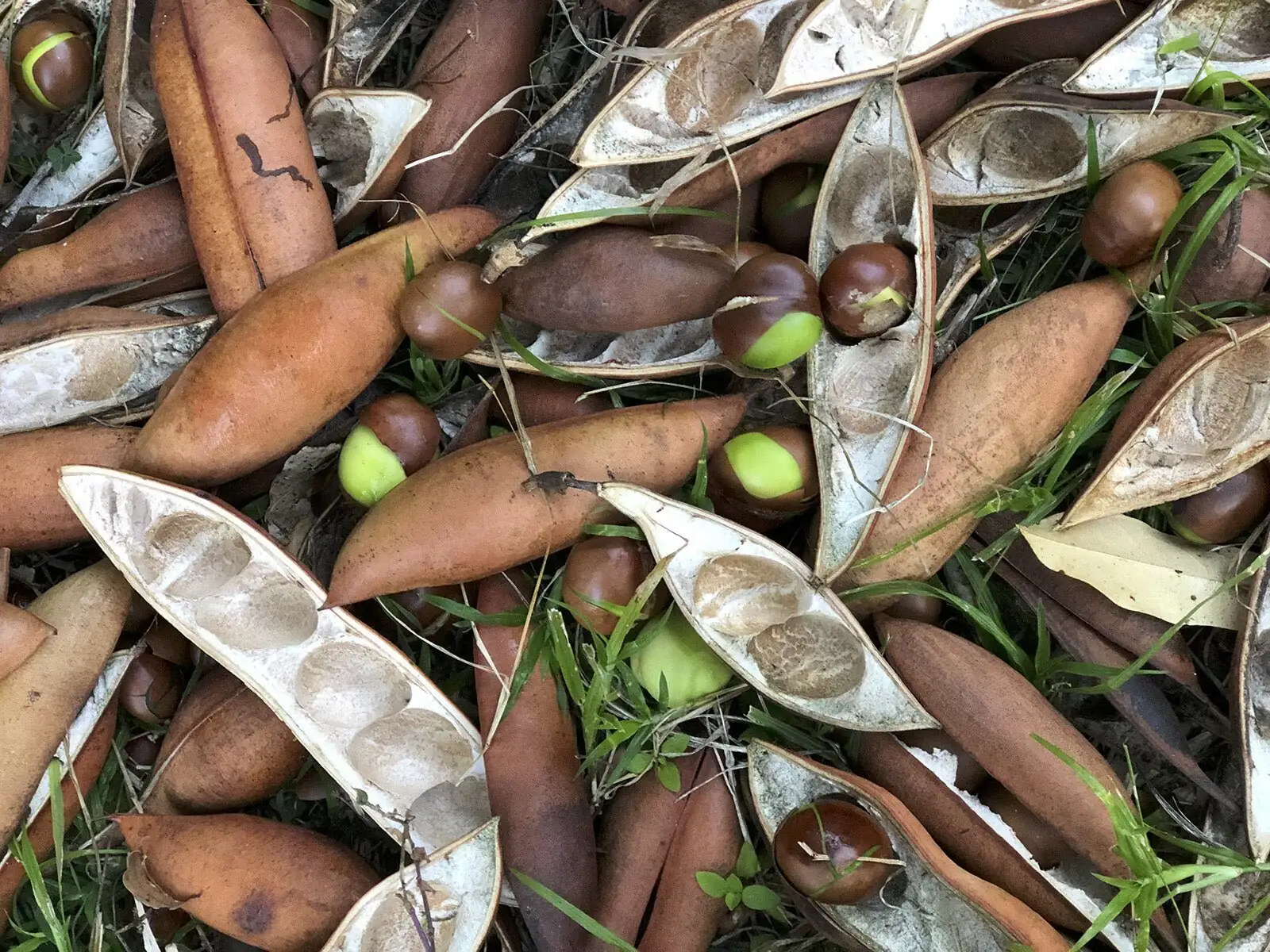
It begins on a riverbank. Warm air, glossy leaves, and a pod—thick, canoe-like—splits to spill a handful of chestnut-round seeds. Each one is primed for a small piece of theater. When Castanospermum australe germinates, its two seed leaves push upward and open like polished green ingots, a tiny tableau of prosperity staged on rainforest silt. From those northeastern Australian forests, the tree’s journey has carried it into cafés, offices, and studios around the world—sold in pint-sized pots, grinning with “ingot” cotyledons—under a name that stuck: the Money Tree.
Yet this is no novelty. Castanospermum australe—also called Black Bean Tree or Moreton Bay Chestnut—is a true evergreen tree that, with patience, can become a graceful 1–2 m indoor specimen. Its story is part ecology, part design, and part luck: a wild riverine tree that became a modern desk companion by simply showing how it spends its first weeks of life.
From rainforest edges to bright windowsills
Northeastern Australia is this species’ home turf. Think river flats, stream margins, and coastal rainforests, where warm temperatures and periodic flooding shape a plant’s survival tactics. Castanospermum australe grows upright with dense branching and glossy, pinnate leaves, tolerating partial shade beneath taller canopies. Those buoyant, cylindrical pods ride seasonal waters, placing seeds on fresh silt where light is dappled and soils are rich but well drained.
Indoors, we recreate that edge-of-forest feel: bright, filtered light; warmth; and steady moisture without stagnation. It’s an adaptable plant, happy in bright indirect light as a seedling and increasingly tolerant of stronger light as it matures—so long as harsh summer midday sun is softened by a sheer curtain.
The seed that looked like a fortune
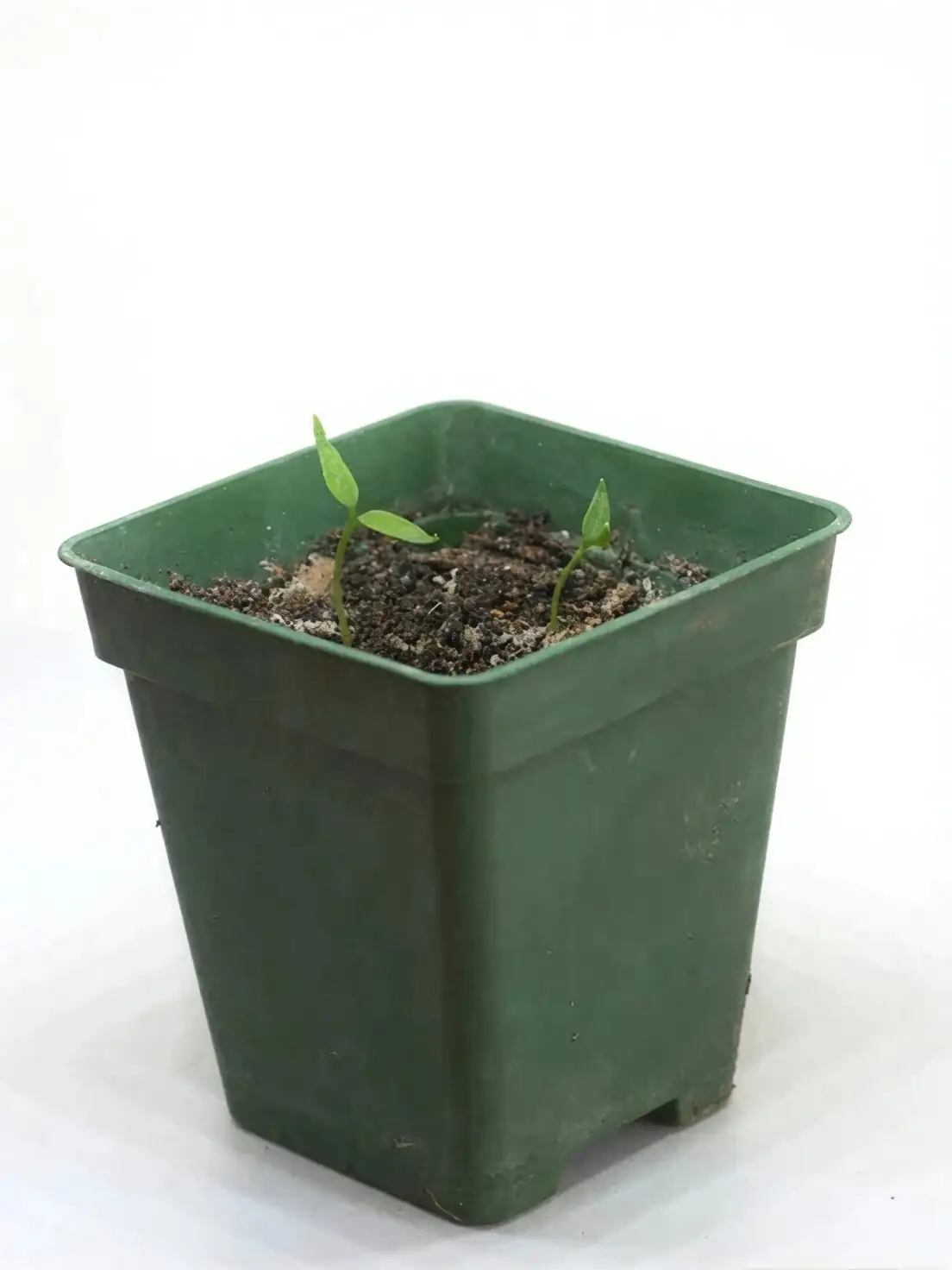
The plant’s rise as a houseplant rests on one irresistibly photogenic moment: germination. The chestnut-like seeds transform as two thick, fleshy green cotyledons spread like a pair of coin bars. Retail growers lean into the spectacle, clustering several seedlings in 12–15 cm pots for a lush, jewel-box effect. Shoppers see “ingots,” imagine good fortune, and take the plant home. Over the next months, glossy true leaves unfurl in tidy, pinnate ranks while those plump green cotyledons remain—a sculptural base that reads like a living talisman.
Habitat, ecology, and quiet drama
- Growth habit: Upright, evergreen, and densely branched—built for warmth, moisture, and bright light under forest canopies.
- Leaves: New growth emerges fresh green; mature leaves are glossy and pinnate with multiple leaflets.
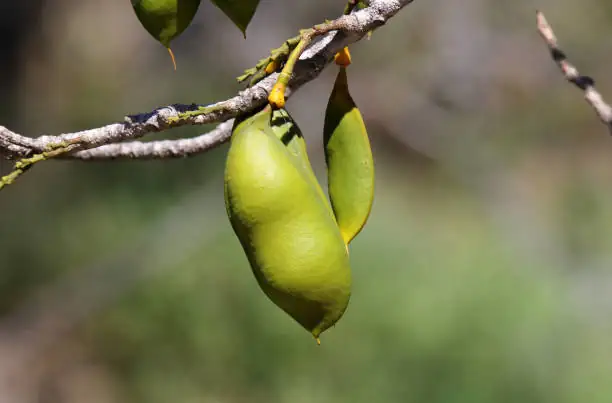
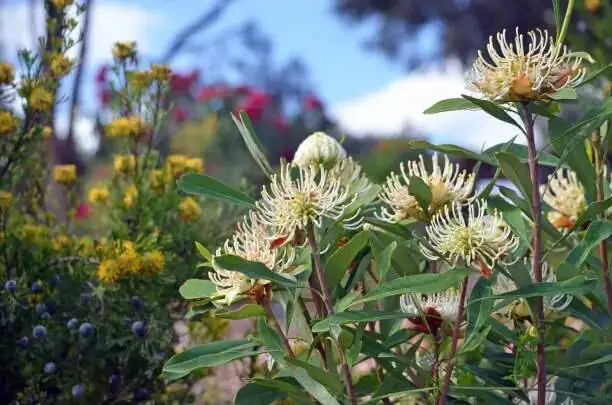
- Flowers and fruit: On mature plants, late spring through late summer brings racemes of showy, red-to-yellow, pea-like blooms tucked among leaves; large pods follow, each with a few substantial seeds.
- River logic: In habitat, pods are well positioned to disperse along waterways, explaining the tree’s affinity for evenly moist, well-drained soils and its indoor dislike of both drought and waterlogging.
Buying guide: choose seedlings that “hold their coin”
- Look for intact, fully green cotyledons (the “ingots”) and fresh green emerging pinnate leaves.
- For 12–15 cm pots, clumps with about 7–9 vigorous sprouts create a full, balanced look.
- After purchase, give bright, indirect light and steady humidity; avoid direct midday sun on young plants.
Light, warmth, and water: turning habitat into a home
- Light: Bright, indirect light to partial shade when young; larger plants can handle brighter exposures. Avoid harsh summer midday sun that can scorch leaves and trigger drop. East or south windows filtered by a sheer curtain are ideal.
- Temperature: Best growth at 20–28°C (68–82°F). Keep above 7°C (45°F) in winter; below about 5°C (41°F) leaf drop is likely.
- Humidity: Prefers humid air. In dry summer or autumn conditions, mist foliage about twice per week; reduce watering in winter.
- Watering: During active growth, keep the potting mix evenly moist but never soggy. Overwatering can cause root and leaf rot.
- Soil: Use a rich, well-drained mix—fertile loam or garden soil blended with a peat-based medium and sand, plus a small amount of well-rotted organic matter. Avoid waterlogged mixes.
Tip for desktops: Seedlings can be displayed in water culture for a time—an elegant, transparent stage for those “ingots.” Keep roots clean and oxygenated; transition to potting mix once vigorous leaf growth begins.
Training it for the long game
You can enjoy Castanospermum australe as a compact tabletop plant for years, or let it graduate to a statement specimen:
- Compact mode: Refresh from new seed every few seasons to preserve that ingot-and-sprout charm.
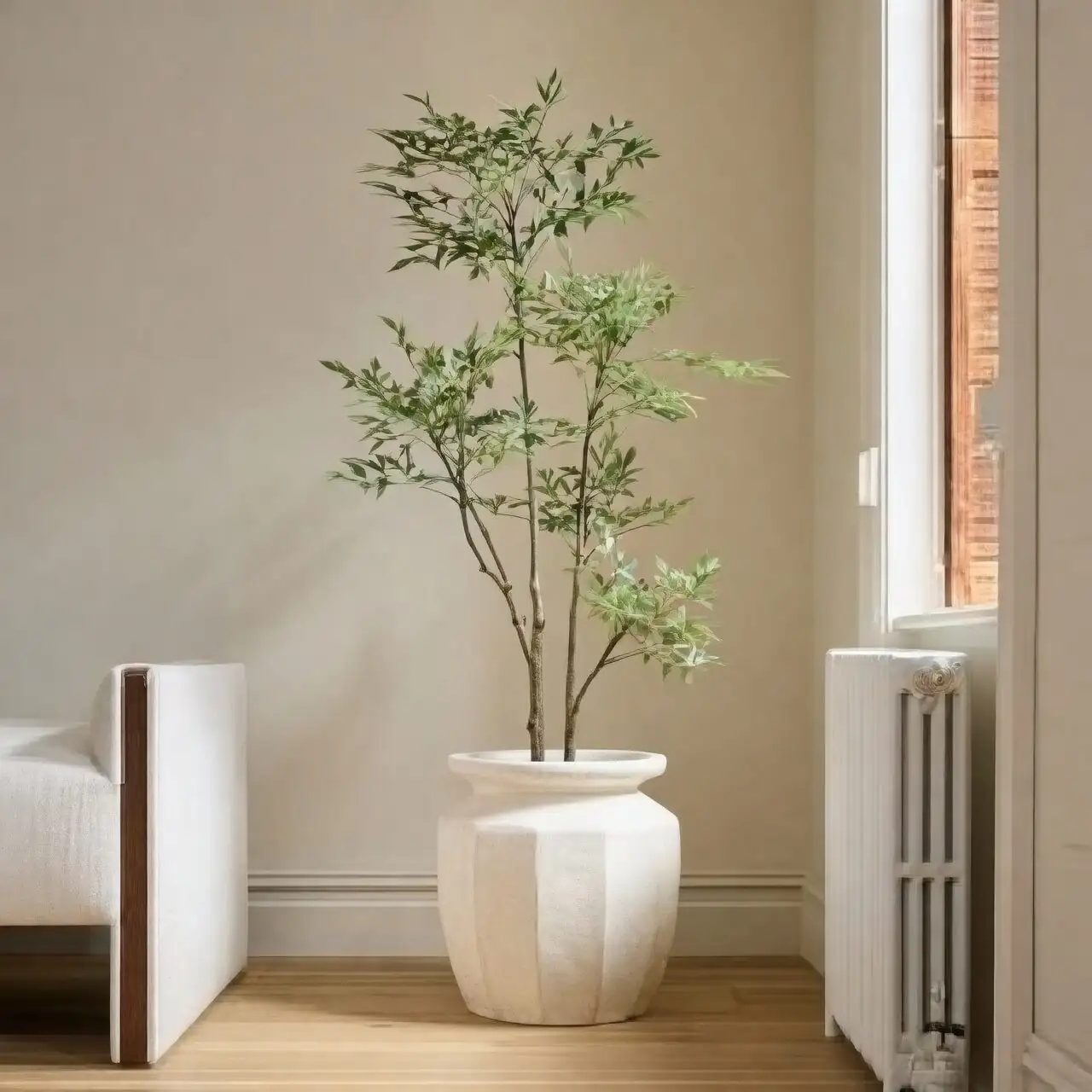
- Grown-on mode: Combine several strong seedlings in a deeper container (20–30 cm deep) and train over a few years into a 1–2 m indoor tree for an entryway or living room. Pinch or cut back shoot tips in autumn to winter to control height and encourage branching.
Feeding, repotting, and simple routines
- Fertilization: During the growing season, feed every 2–3 months with a balanced fertilizer (e.g., 20-20-20) or a diluted organic feed. Avoid overfertilizing, which can cause lanky growth.
- Repotting: Typically grown in 5–15 cm (2–6 in) pots at first; repot every 2 years. Trim old or rotten roots, refresh with fertile, well-drained mix, and keep in partial shade while it re-establishes.
- Placement: A natural on desks and countertops—especially near computers—where bright, filtered light and consistent care are easy to provide.
Propagation: sowing “treasure” seeds
- Method: Primarily by seed. Sow fresh seeds soon after maturity or indoors from spring to summer.
- Prep: Soak seeds in warm water for 24 hours; place on clean, moist sand or medium with the seed seam facing downward.
- Conditions: Maintain high humidity. Germination is best at 13–18°C (55–64°F).
- Display: Early seedlings are striking in water culture; pot up into mix as roots and true leaves develop.
Pests, diseases, and practical precautions
- Diseases: Rust can occur. Improve airflow, avoid prolonged wet foliage, and treat early with an appropriate fungicide where permitted.
- Pests: Watch for spider mites and scale. Rinse plants thoroughly, then use horticultural oil/soap or a suitable miticide/insecticide as needed.
- Safety: Household toxicity is not reliably established in this source. As a precaution, keep all seeds and plant parts away from pets and children and avoid ingestion.
A seasonal cheat sheet
- Spring–summer: Keep evenly moist; fertilize every 2–3 months; protect from harsh direct sun.
- Summer (dry climates): Mist about twice weekly to boost humidity.
- Autumn: Continue humidity support as air dries; pinch or cut tips to shape if needed.
- Winter: Water less and keep above 7°C (45°F). Repot every 2 years.
Why this tree won our desks
- The look: Those thick, green cotyledons read as “wealth,” while glossy pinnate leaves lend a polished, contemporary profile.
- The temperament: Adaptable to bright indoor light, tolerant of partial shade, and happy with warmth and humidity.
- The narrative: Marketed as a “money tree” thanks to its ingot-like seed leaves, it delivers a story you can literally watch unfold on a windowsill.
Symbolism, briefly and thoughtfully
Gifted as a good-luck plant, Castanospermum australe carries themes of prosperity and steady growth. The symbolism isn’t ancient folklore; it springs from modern houseplant culture and the visual metaphor of the seed leaves—miniature “ingots”—opening to fund the future canopy. It’s a living reminder that fortune often starts as a seed, then prospers with consistency: bright light, regular care, and a bit of patience.
Quick answers
- How do I keep a mature plant neat? Either refresh with new seedlings to maintain compact charm, or commit to training a larger specimen by potting several strong plants into a deeper container and shaping it over a few years into a 1–2 m indoor tree.
- What should I do right after purchase? Give bright, indirect light; keep the mix evenly moist but never soggy; and mist occasionally to support new growth. Avoid direct midday sun on young leaves.
Small delights to share
- Its “money tree” moniker comes from cotyledons that open like little ingots—a moment that made it a desk favorite worldwide.
- Although sold as a tiny pot plant, it is an evergreen tree in the wild.
- Seedlings can be displayed in water culture, turning roots and “ingots” into a minimalist living sculpture.
- Ideal temperatures: germination at 13–18°C (55–64°F); active growth at 20–28°C (68–82°F).
- Native to northeastern Australia, where rivers and rainforests taught it the art of thriving in bright, filtered light and steady moisture.
From riverbank to countertop, Castanospermum australe proves that a good origin story—and a pair of gleaming seed leaves—can carry a forest tree all the way to the modern desktop.