


Imagine a tree that learned to cry beautifully. In the monsoon-swept forests of tropical Asia and the sun-warmed edges of northern Australia, a young Ficus benjamina began life with supple twigs that curved toward the ground like brushstrokes—an elegant “weeping” habit that would one day charm apartment dwellers and office lobbies from Bangkok to Berlin. That droop, that quiet cascade, is the signature that carried this ficus from wild canopy to global houseplant stardom.
Roots in the monsoon: where the weeping fig began
Native to tropical and subtropical Asia and northern Australia—and widely cultivated across China, India, and Southeast Asia (including Malaysia)—Ficus benjamina grew up where warm air hums with humidity and light shifts through high forest. Outdoors in those climates, it can become a substantial evergreen tree with smooth, gray bark and glossy, ovate leaves that glint in the rain. In the wild, it sometimes begins life perched in another tree’s crotch, sending down aerial roots that thicken and feed the growing crown.

- Official honors: It’s celebrated regionally—famously, the official tree of Bangkok—lining boulevards and temple courts in warm cities.
- Fig-in-trick: Like all figs, its “flowers” hide inside a little urn-like structure called a syconium. In nature, tiny fig wasps handle pollination; indoors, you’ll rarely see fruit because those specialist pollinators aren’t part of the home ecosystem.
The droop that launched a thousand living rooms
That graceful, weeping architecture made Ficus benjamina the darling of interior plant design. Stems are flexible, easily braided or trained, and the arching silhouette softens straight walls and glassy corners. It’s a sculptor’s plant:
- Braids, hoops, and standards: Growers weave multiple stems, clip into neat topiary domes, or train bonsai-style forms (miniature cultivars like ‘Too Little’ are popular).
- A living barometer: Its pendulous leaf canopy reacts visibly to change. When light shifts or soil dries, it “tells you” by shedding leaves—an expressive trait that shaped how we care for it indoors.

From Bangkok boulevards to global houseplant fame
As modern interiors embraced greenery, the weeping fig checked all the right boxes: evergreen, glossy, clean-lined foliage; tolerance of medium indoor light; good manners in containers. It naturalized in a few warm places (like parts of Florida and Arizona), but most of the world knows it as an indoor evergreen that can be styled to fit a shelf or anchor a lobby.
- Indoors: commonly grown in 12–20 cm (4.7–7.9 in) pots; larger floor specimens in about 30 cm (11.8 in) containers.
- Outdoors year-round: best reserved for frost-free climates roughly equivalent to USDA zones 10–12. In urban tropics, it’s frequently clipped into hedges and shade trees.
Care, shaped by its weeping habit
Those graceful cascades aren’t just for looks—they inform the whole playbook. Arching branches produce dense, layered foliage that’s gorgeous when conditions are steady. Keep conditions steady and the canopy stays lush.
Light
- Ideal: bright, filtered light. It tolerates partial shade and typical indoor “medium” light, but brightest indirect light gives the fullest silhouette.
- Avoid harsh midday sun outdoors and cold drafts indoors. If you move it, expect temporary leaf drop as it rebuilds leaves tailored to the new light.
Temperature
- Sweet spot: 20–25°C (68–77°F). It copes with >30°C (86°F) if watering is adjusted.
- Cold is the enemy: avoid below 5°C (41°F). Indoors, sustained temps below 10°C (50°F) often cause yellowing and stalled growth. In winter, a steady 13–16°C (55–61°F) is especially comfortable.
Humidity
- Prefers 60–70%. In dry rooms, misting or a humidifier helps reduce yellowing and leaf drop and keeps that elegant canopy intact.
Watering
- Growing season: water thoroughly and keep the mix slightly moist. More harm comes from drought than from being a touch moist—but never let pots sit in standing water.
- Rhythm: in summer, watering is often needed every 2–3 days (adjust for light, heat, and pot size). A periodic full soak is fine if all excess drains away.
- Winter: reduce to roughly once every 10 days and mist if air is dry.
- A warning signal: if the mix dries too far, leaf drop is common and shoot tips may blacken and dry.
Soil and potting
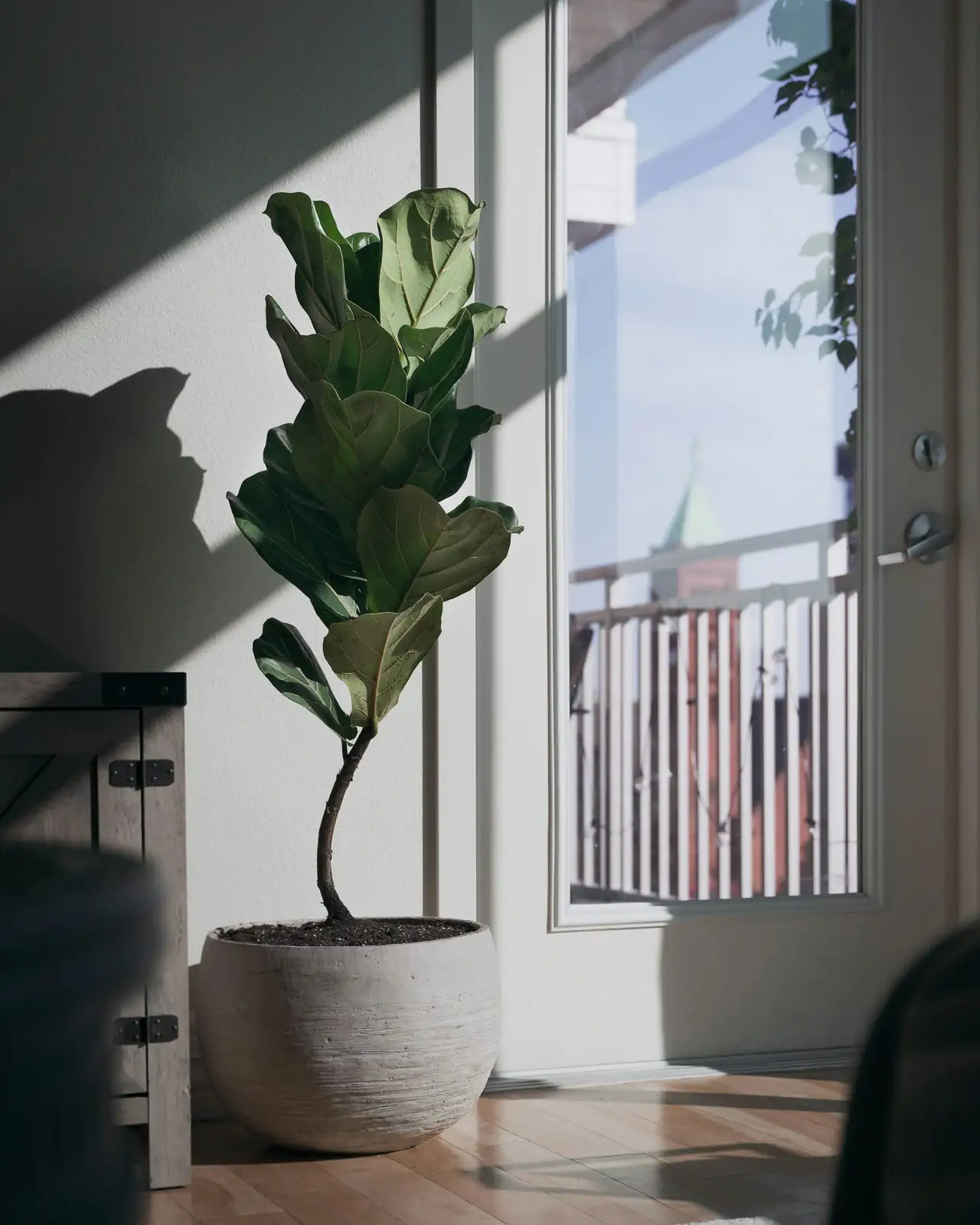
- Mix: loose, well-aerated, and free-draining—think quality houseplant compost or leaf-mold base blended with coarse sand or perlite.
- Repotting: spring is best. Smaller plants in 15–20 cm (5.9–7.9 in) pots often move up yearly; larger 30 cm (11.8 in) specimens typically every 2 years.
Feeding
- During active growth, feed about every 10 days (around 3 times per month) with a balanced houseplant fertilizer; a 15-15-30 is one effective option. Ease up in autumn and winter.
Pruning and shaping
- Trim during strong growth to maintain the drape without letting it close in on itself. Remove weak, dead, or crowded twigs to improve airflow and light to inner leaves.
- Styling: braid young, flexible stems; clip into cones or domes; or train as bonsai-like specimens—its weeping habit takes to shaping beautifully.
Placement through the seasons
- Winter: indoors near a bright window, away from drafts.
- Warm months: a sheltered balcony or patio with bright, filtered light is ideal; protect from scorching midday sun and sudden chills.
Propagation: making more of a good thing
- Stem cuttings (May–June): take 10–12 cm (3.9–4.7 in) tip cuttings with 2–3 leaves, let latex dry briefly, and root in a sandy medium—often in about 4 weeks.
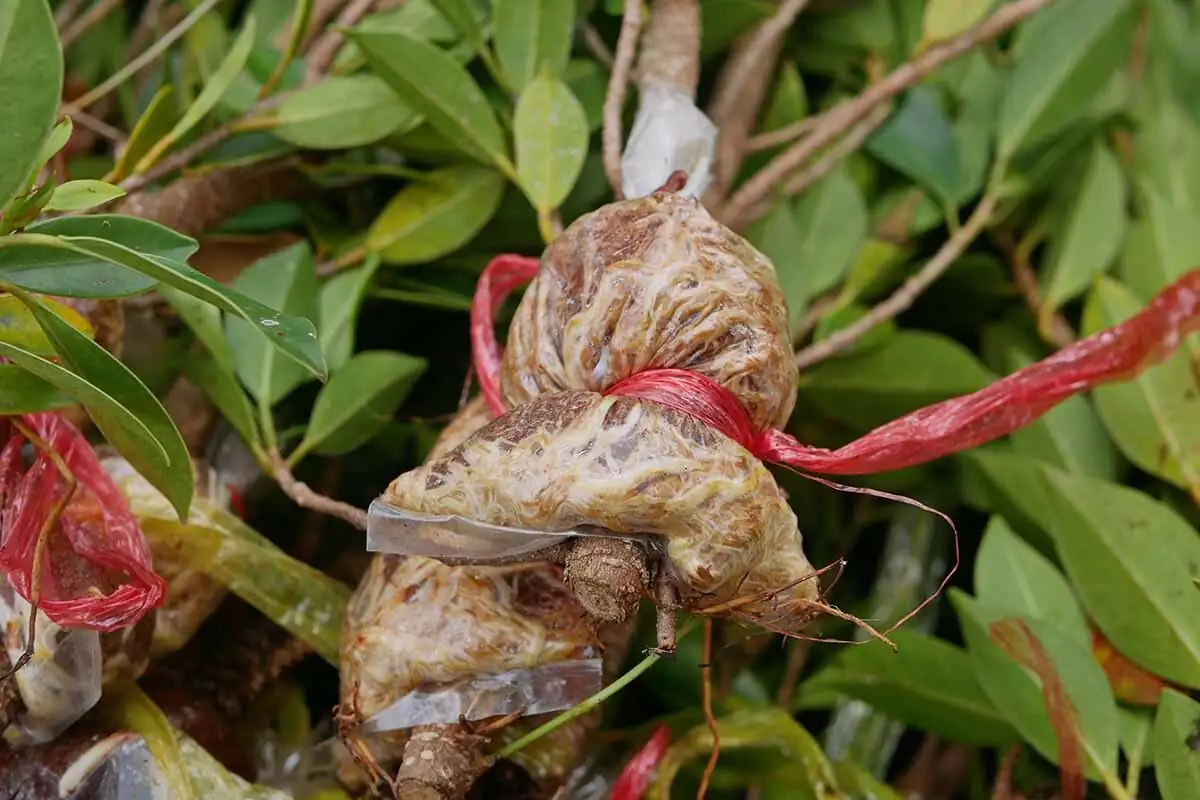
- Air-layering (May–July): remove a 1.5 cm (0.6 in) bark ring 20–25 cm (7.9–9.8 in) below the tip, wrap with moist leaf mold and plastic. Roots may show in ~2–3 weeks; after ~4 weeks, cut below the layer and pot up.
When the fig “speaks” by shedding leaves
A month after you bring it home, it sighs and drops a handful of leaves—classic weeping fig theater. Don’t panic; diagnose.
Common triggers:
- The potting mix dried out too much
- Very dry indoor air
- Low temperatures or cold drafts
- Sudden changes in light or placement
- Insufficient light over time
- Spider mites
Fixes that matter most:
- Water consistently and thoroughly, then let the top layer just begin to dry
- Provide bright, steady light
- Keep it warm; avoid drafts
- Raise humidity
Pests and diseases
- Most common indoors: spider mites in dry air. Increase humidity and treat with insecticidal soap, horticultural oil, or an appropriate miticide if needed.
- Leaf spot can appear; address early with a copper-based fungicide (e.g., Bordeaux mixture), improve airflow, and avoid chronically wet foliage.
- Also watch for scale, mealybugs, and thrips; wipe leaves regularly to catch issues early.
Safety notes
The milky sap (latex) can irritate skin and eyes. Keep it away from pets—if chewed, it’s considered toxic to cats and dogs, often causing drooling, vomiting, and irritation. Wear gloves when pruning, and wash up afterward.
Symbolism and the “flower language” of a fig
No flamboyant petals here; the “flowers” of Ficus benjamina are tucked inside fig-like syconia, invisible to casual eyes. So its cultural meaning isn’t about blossoms—it’s about bearing.
- Core themes: resilience, steadiness, and a calming green presence. Its longevity, evergreen gloss, and sculptural poise earned it a reputation as a stabilizing force in homes and offices.
- A critical lens: where “flower language” traditions assign meanings to petals, the weeping fig’s message comes from form, growth, and habit. Its cascading canopy suggests gentleness; its sensitivity to change reminds us that stability and care are reciprocal—you keep it steady, it keeps your space serene.
Fun facts for plant nerds and stylists
- Indoors, it’s often sold as sculpted, braided, or clipped forms grown from cuttings—instant architecture in a pot.
- The “flowers” are hidden inside the fruit; the fig wasp relationship is one of botany’s best love stories, but indoors, they rarely meet.
- Tip cuttings commonly root in about 4 weeks; air-layered sections can be potted after roughly 4 weeks of rooting.
- It’s famously sensitive to sudden changes—moving day often comes with a sprinkle of leaves.
Why the weeping habit still wins
In an age of statement foliage and exotic variegation, the weeping fig endures because it brings movement to a room—an elegant arc, a quiet ripple of glossy leaves, a living silhouette that responds to light and care. From monsoon forests to minimalist lofts, Ficus benjamina built its fame on a single graceful gesture: the art of falling, beautifully. Keep it warm, bright, and evenly moist, and it returns the favor with calm, green constancy.