

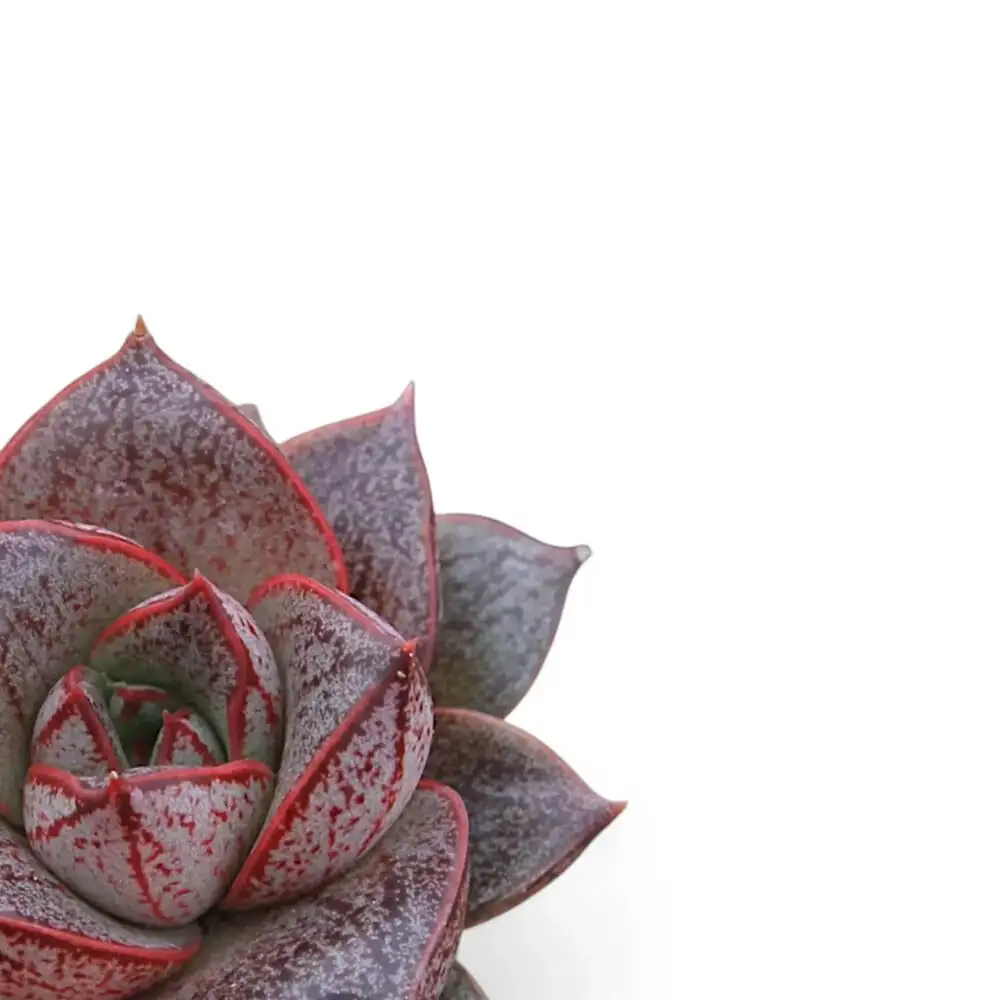
Picture a lotus sculpted from moonlit jade, crouched on a sun-baked cliff while hummingbirds trace arcs through hot air—that’s the wild beginning of Echeveria, the rosette succulent that leapt from Mexican canyons into our windowsills and became a modern design icon.
Born of sun and stone: the native stage
Across Mexico and Central America, Echeveria evolved to make the most of lean, fast-draining slopes and bright, open skies. Think rocky ledges, mineral soils, and a rhythm of quick soakings followed by long dry-downs. This is where their signature form makes perfect sense:
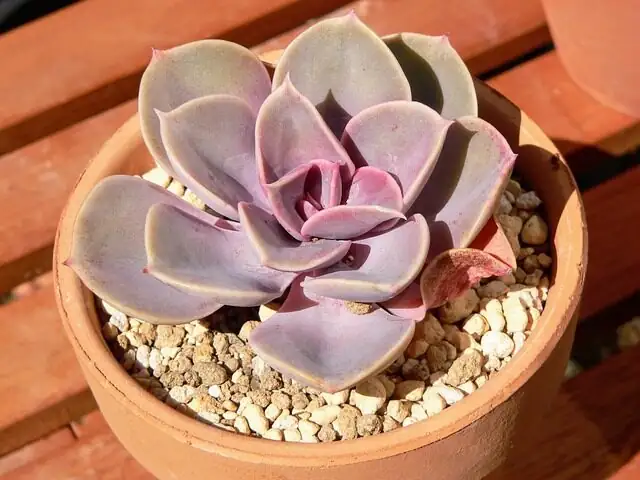
- The rosette: overlapping, fleshy blue‑green leaves store water efficiently and shade one another like tiles on a desert roof.
- Blushing margins: in strong sun and with modest “dry stress,” leaf edges often blush burgundy to wine-red—a living sunscreen and a colorist’s delight.
- Farina: many rosettes wear a powdery, waxy bloom that scatters harsh light and slows water loss. It’s delicate—once rubbed, it doesn’t return on that leaf.
- Summer drama: tall, sometimes arching pink stalks rise to carry clusters of bell-shaped flowers—pink outside, yellow to yellow‑orange within.
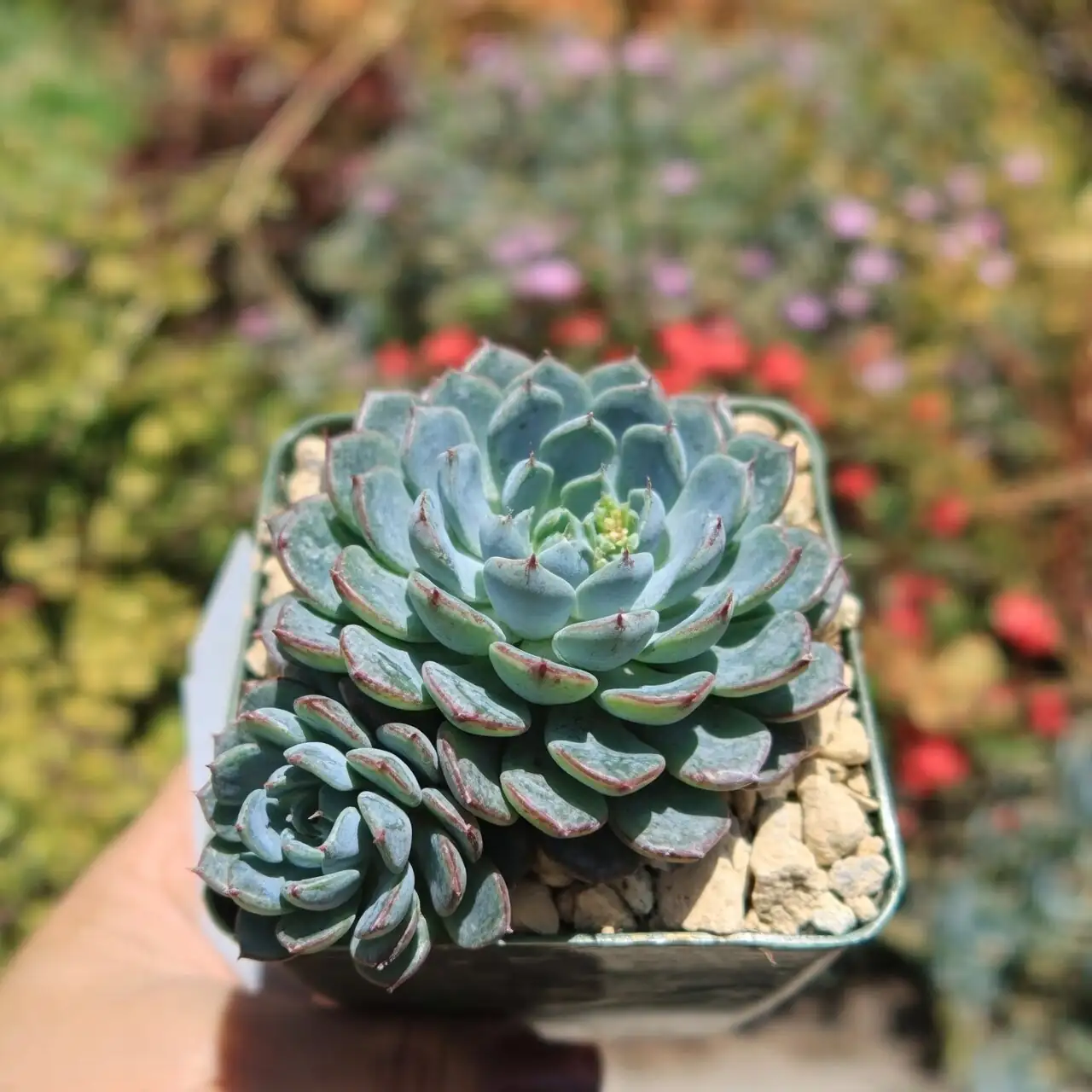
A typical rosette sits 10–20 cm (4–8 in) tall and 10–25 cm (4–10 in) wide; flowering stems can reach 20–50 cm (8–20 in), depending on variety and growing conditions.
A name sketched in watercolor
Echeveria carries the legacy of Atanasio Echeverría y Godoy, the 18th‑century botanical illustrator from New Spain whose field work and meticulous paintings helped document the region’s flora. So striking were those portraits that Augustin Pyramus de Candolle later honored him by naming the genus Echeveria. It’s a fitting tribute: a plant that looks like a poised watercolor wash—soft edges, cool glaucous tints, and, under sun, a rim of wine.
From wild rosette to houseplant icon
The leap from cliff to coffee table happened thanks to growers who saw in that tidy rosette a blank canvas. Over time, horticulturists selected and hybridized for:
- Compact, symmetrical forms that keep their “lotus” outline on a sunny sill
- Dazzling leaf colors and margins that deepen under bright light
- Thick leaves dusted with protective farina (that ethereal, frosted look)
- Reliable flowering on elegant, pink wands
Today, many plants sold simply as “Echeveria” are hybrids or unnamed selections—brilliant for arrangements and dish gardens. You’ll also see friendly aliases like “Mexican Snowball” and “Hens and Chicks” (the latter nickname is shared with other genera, but the idea—one rosette mothering offsets—fits perfectly).
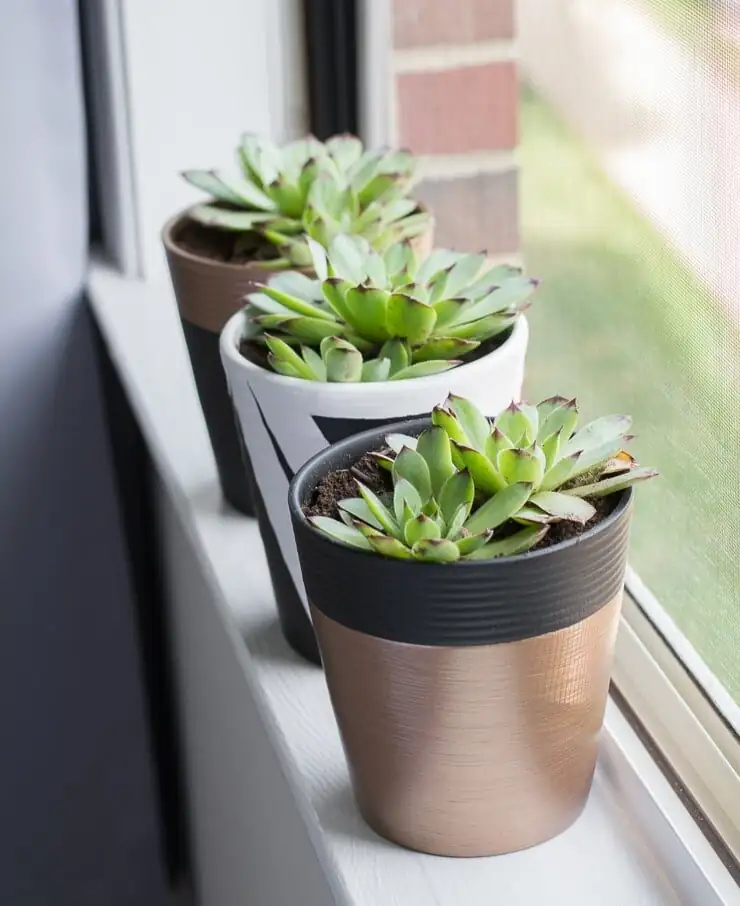
Look closer: signature features
- Tight, geometric rosettes with blue‑green, fleshy leaves
- Burgundy to wine-red edging under strong light and light water stress
- A powdery farina on many forms—avoid touching to keep that frosted finish pristine
- Summer bloom stalks in pink, with small pendant bells, pink outside and yellow to yellow‑orange inside
- Growth habit: generally compact; some forms slowly clump with offsets while others remain solitary
How to keep the story going at home
Honor those sunlit origins, and Echeveria rewards you with poise and color.
Light
- Bright light to full sun for best shape and color; aim for 4–6+ hours daily.
- Indoors, choose the brightest window (south or west in the Northern Hemisphere) or strong grow lights with good airflow.
- Acclimate gradually to avoid sunburn when moving to stronger light.
Water
- Use the “soak and dry” method: water thoroughly, then let the mix dry out completely before watering again.
- Typical rhythm: every 7–14 days in warm, bright conditions; every 3–5 weeks in winter or low light.
- Keep water out of the rosette center and never leave the pot sitting in water.
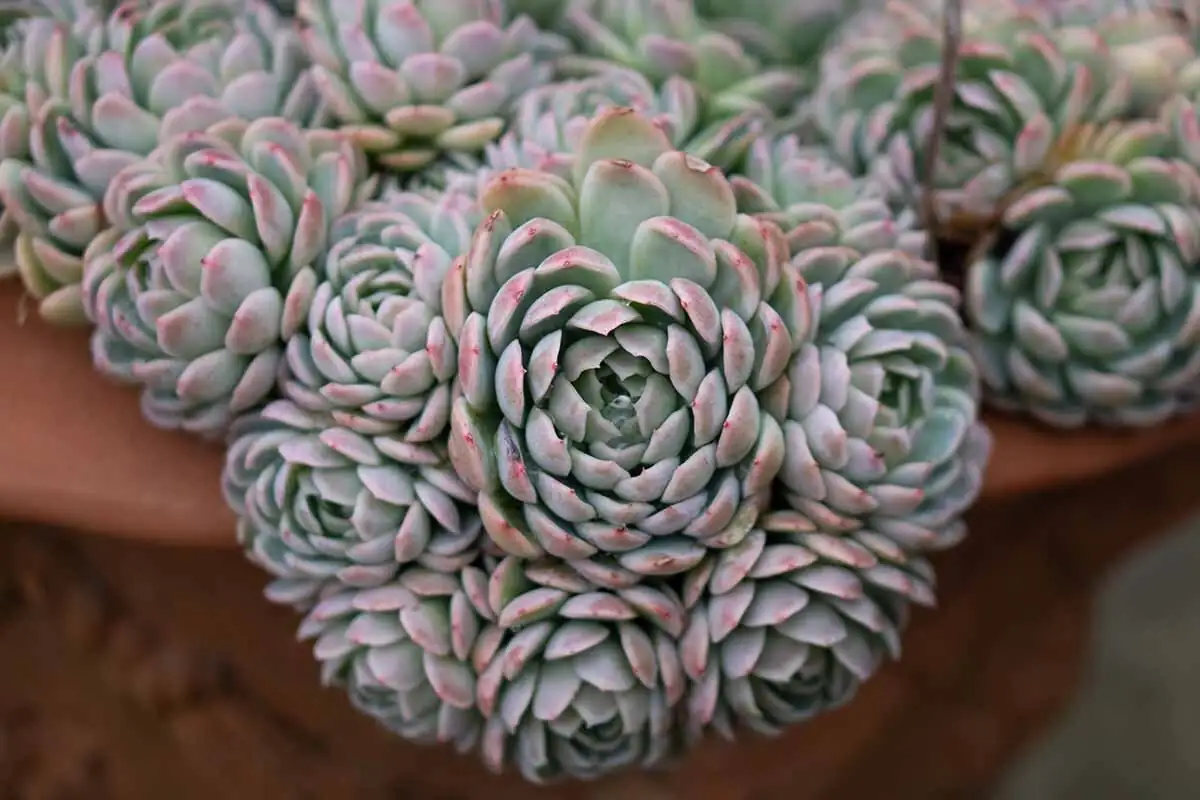
Temperature and airflow
- Best growth: 15–27°C (59–81°F).
- Protect from frost; most do best kept above 5°C (41°F). Approx. USDA Zone 9–11.
- In extreme heat, provide ventilation and light midday shade to prevent scorch.
Humidity
- Prefers low to average humidity. Stagnant, humid air invites rot and pests.
Soil and pot
- A very fast‑draining cactus/succulent mix. Boost drainage with pumice or perlite; a gritty texture keeps roots airy.
- Use a pot with drainage; terracotta helps the mix dry faster.
Feeding
- Light feeder: apply a diluted, low‑nitrogen cactus/succulent fertilizer (1/4–1/2 strength) every 4–6 weeks in spring and summer. Skip feeding in winter.
Grooming and repotting
- Snip spent flower stalks after bloom.
- Gently remove crisped lower leaves to improve airflow—don’t tug at firm, healthy foliage.
- Repot every 1–2 years or when crowded. After repotting, wait 3–7 days before watering so any nicks can callus.
Placement
- Sunny windowsill, bright balcony/patio, or under grow lights with airflow.
- Outdoors in mild climates, shelter from prolonged rain to avoid soggy soil.
Propagation: writing sequels
- Offsets: detach when sizable and root in a dry, gritty mix.
- Leaf cuttings: twist off a whole, healthy leaf, let it callus 2–5 days, then place on dry mix and mist sparingly until roots and a baby rosette appear.
- Stem cuttings (“beheading”): if the plant stretches, cut the top rosette, let it callus, then root; the base often sprouts new offsets.
Troubleshooting and health
- Stretching, open rosette: etiolation from low light. Move brighter gradually or add a strong grow light. Behead and re‑root if the stem is lanky.
- Wrinkling or dropping bottom leaves: a few is normal; many shriveling = likely underwatering. Leaves turning translucent or mushy = overwatering or rot. Let the mix dry fully, improve drainage, and increase light/airflow.
- Pests: mealybugs (often in leaf joints), aphids on flower stalks, and spider mites in hot, dry rooms. Dab with alcohol on a cotton swab, or use insecticidal soap/horticultural oil; correct the care to prevent rebounds.
- Disease: most issues trace back to soggy soil and low light—speed drainage and boost brightness.
Safety, symbolism, and meaning
- Safety: generally considered non‑toxic to people and pets, though nibbling any plant can upset a stomach. Keep out of reach of curious chewers.
- Symbolism: often linked with enduring love and resilience. The rosette’s embrace of stored water, its poise through drought, and its many years of bloom inspire the idea of steadfast affection. As with most “flower language,” this meaning is cultural rather than botanical—but it pairs beautifully with a plant that survives on little and still looks like a jewel.
Seasonal notes: summer bells
Expect bloom stalks mainly in summer. Pink wands lift above the rosette, each flower a small bell—pink outside, yellow to yellow‑orange within—adding a delicate contrast to cool-toned foliage.
Buying guide
- Choose compact, symmetrical rosettes with firm leaves.
- Avoid plants with translucent spots, mushy stems, or blackening at the base (possible rot).
- Inspect leaf joints and undersides for white, cottony mealybugs.
Quick reference
- Size: 10–20 cm (4–8 in) tall; 10–25 cm (4–10 in) wide; flower stalks 20–50 cm (8–20 in)
- Habit: compact rosette; may slowly offset
- Light: bright to full sun
- Water: soak and dry; keep center dry
- Temperature: 15–27°C best; above 5°C minimum
- Hardiness: approx. USDA 9–11
- Soil: very fast‑draining, gritty succulent mix
Fun facts
- Many Echeveria in shops are hybrids with trade names—so don’t be surprised if flower size and color vary a bit.
- The powdery leaf coating (farina) is a natural shield against sun and water loss; once rubbed off, it usually doesn’t return on that leaf.
From high, sunlit ledges in Mexico and Central America to your favorite windowsill, Echeveria proves that good design starts in the wild: a perfect spiral, a touch of frosted blue, and courage in the face of drought—enduring, elegant, and endlessly collectable.