

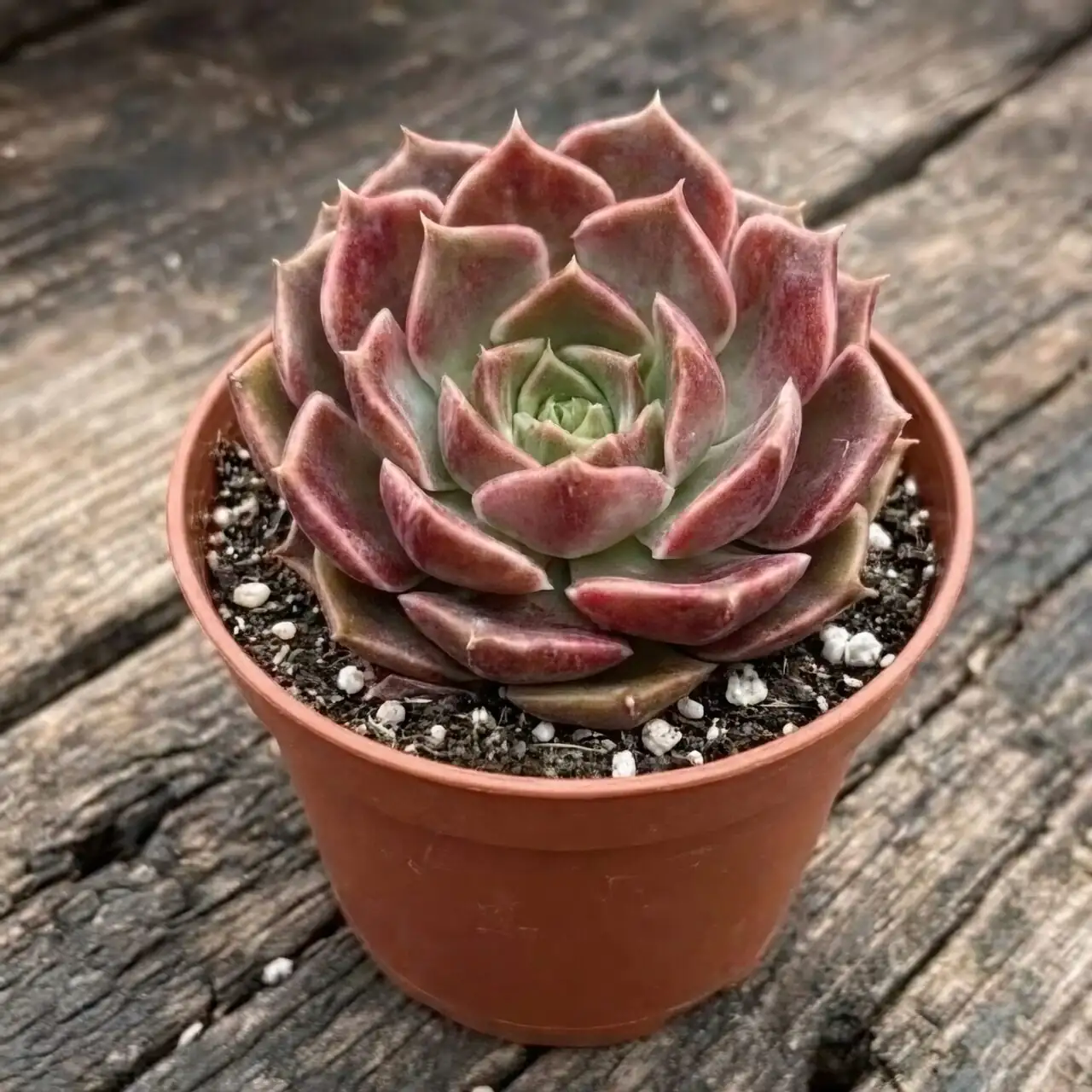
If you’ve ever stopped mid-scroll at a photo of a succulent glowing burgundy like a glass of Pinot Noir in the sun, chances are you’ve met Echeveria ‘Red Taurus’. Its story begins far from windowsills and patio pots—on rocky Mexican hillsides where the genus Echeveria learned to hold tight to life, and much later, in greenhouses where modern breeders coaxed sunset tones into the leaves themselves.
From canyon walls to windowsills: Echeveria’s wild beginnings
A genus written in sun and stone
Echeveria belongs to the Crassulaceae, a family famous for thriftiness with water. In the wild, most Echeveria species are native to Mexico and Central America, where they root into rubble, cliff ledges, and mineral-rich slopes that shed water fast. Those tight rosettes aren’t just beautiful; they’re survival architecture:
- Fleshy leaves store water for drought.
- The rosette shape shades the crown and soil line, keeping precious moisture where it matters.
- Tall, seasonal flower stalks lift bicolored blooms—often in reds with yellow throats—into the path of pollinators, while keeping the nectar buffet away from rosette-munchers on the ground.
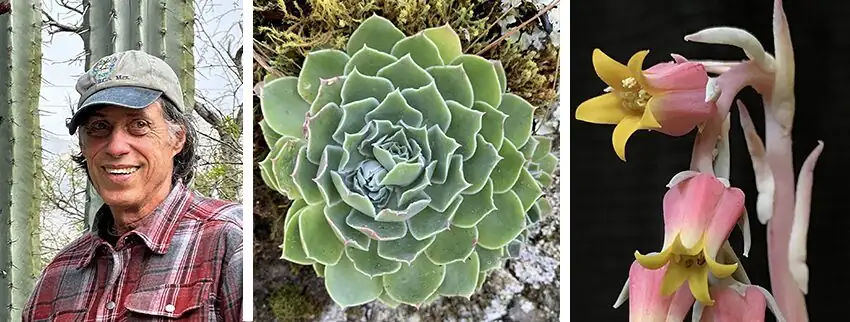
Over time, many species learned to multiply by offsets: a conservative, clump-building strategy that hedges bets against wind, grazing, and drought. When conditions are kind, they’ll flower repeatedly through life—another hallmark of their resilient strategy.
A name and a slow-blooming fame
The genus honors the Mexican botanical illustrator Atanasio Echeverría y Godoy, whose work helped fix Mexico’s flora into the scientific record. By the late 19th and early 20th centuries, Echeverias were capturing imaginations well beyond their homeland. Succulent fever spread through California, Europe, and later Asia, and with it came experimentation: selecting rosettes with tighter symmetry, redder pigments, and showier flower stalks.
How breeders bottled the sunset: the rise of red-leaf Echeverias
Color that comes from within—and from the weather
Red Echeverias are powered by anthocyanins, protective pigments that act like a built-in pair of sunglasses. Breeders select plants that naturally produce more of these pigments and hold them well. Growers then “turn up the color” by giving:
- Strong light (at least several hours of direct sun),
- Lean, fast-draining soils,
- And often, cooler nights—another nudge that deepens red tones.
The result? Leaves that don’t just blush at the tips; they saturate into wine-red and burgundy across the whole rosette.
The breeder’s toolkit
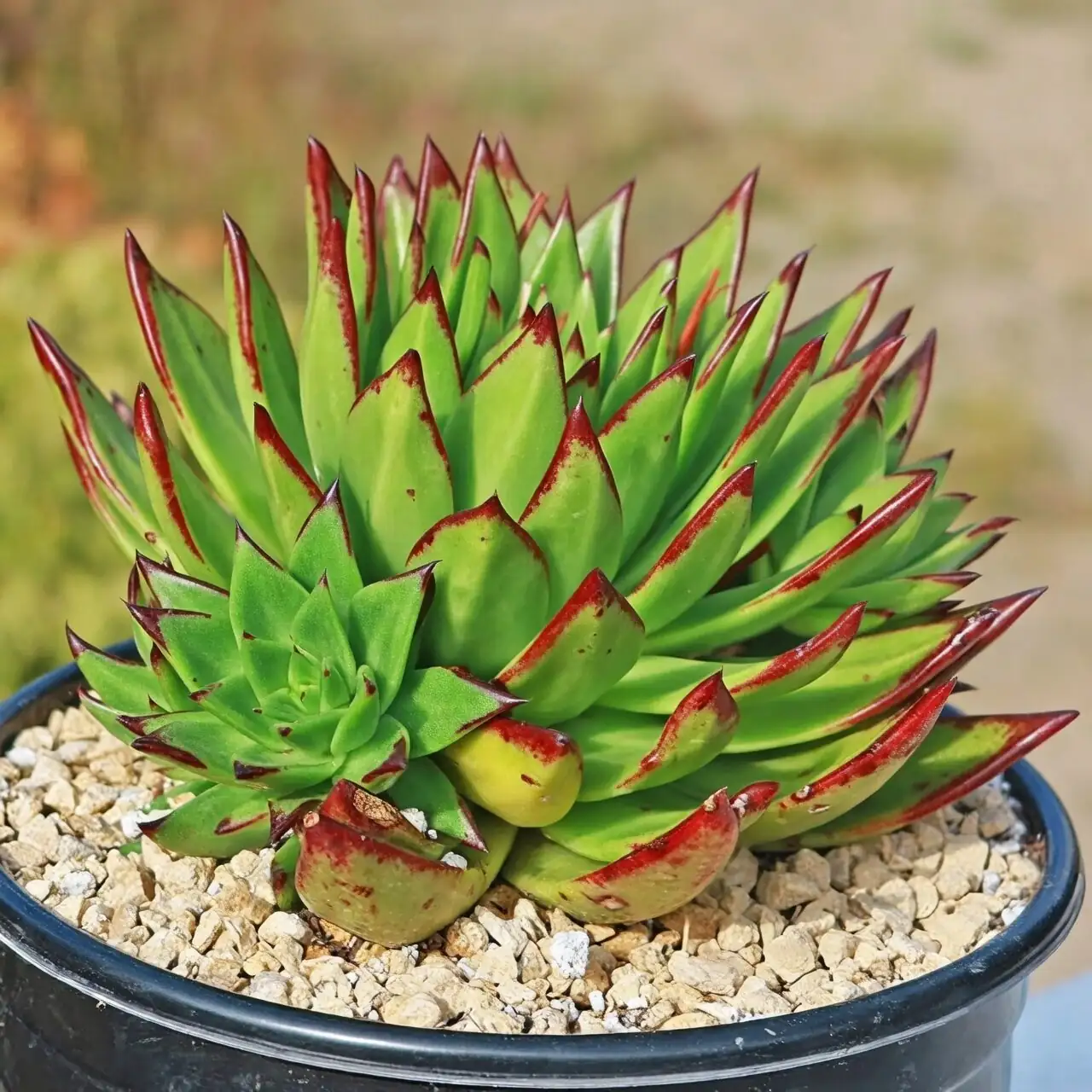
To get those vivid reds, breeders have long tapped naturally colorful species and standout garden selections, then refined their traits over generations. Some famous red-forward cultivars, such as those derived from Echeveria agavoides (e.g., ‘Romeo’), show how intense color, pointed leaves, and classic red-and-yellow flowers can combine. While each named form follows its own path, the broader playbook remains the same: select hard for pigment, symmetry, and a flower display that rises cleanly above the rosette.
Enter Echeveria ‘Red Taurus’
What we know
- Horticultural origin: ‘Red Taurus’ is a modern garden cultivar, not a wild-collected form.
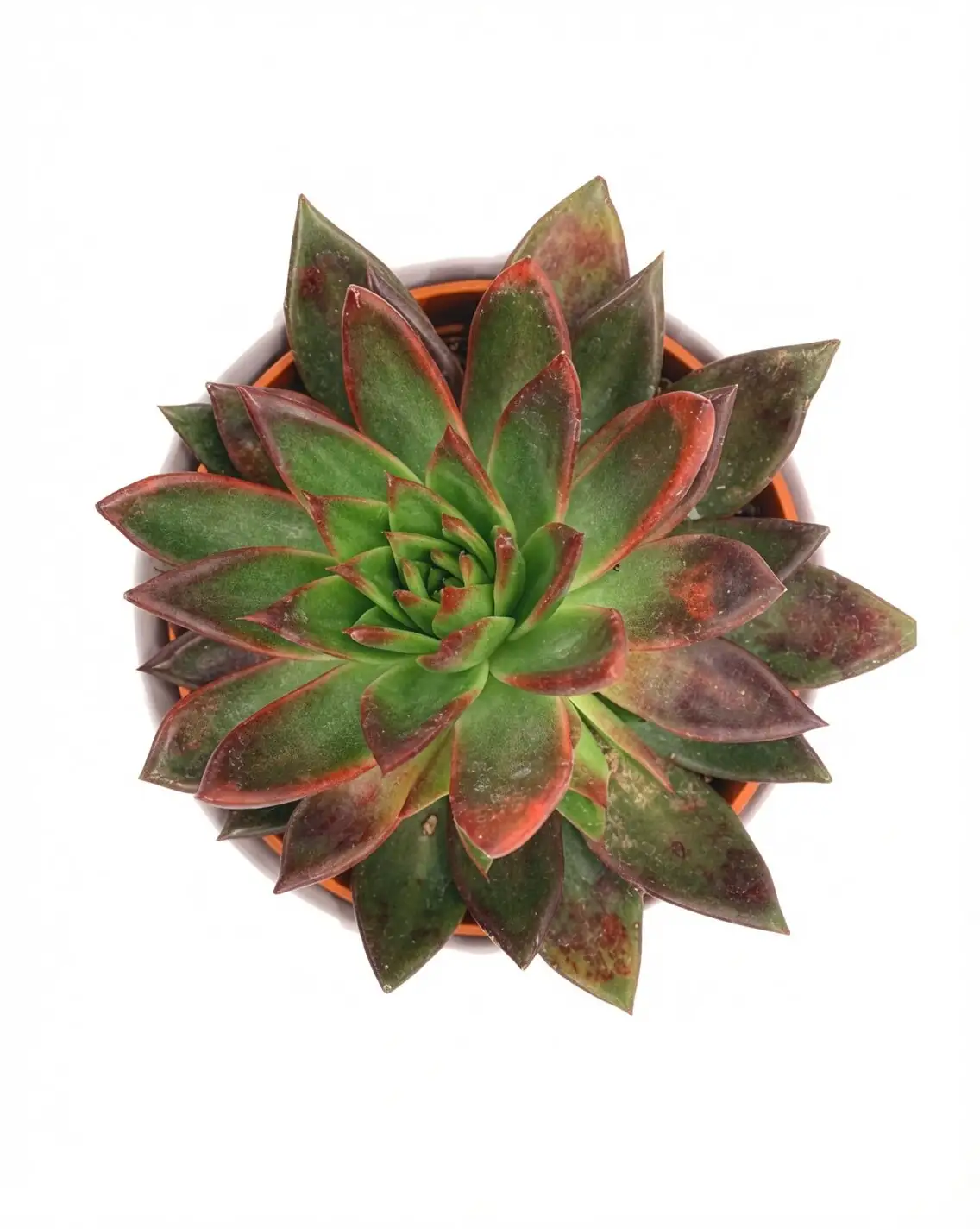
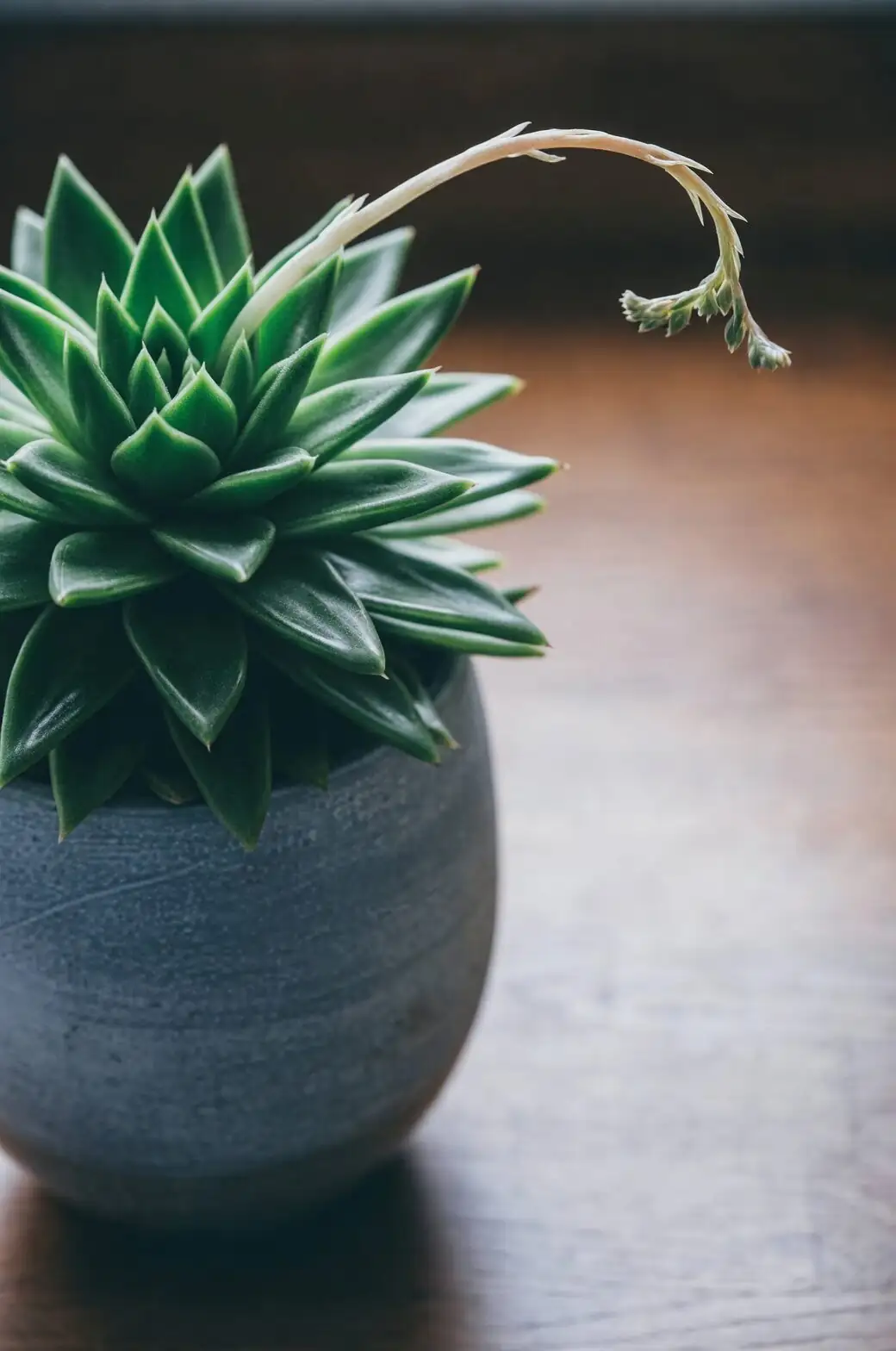
- Habit and color: It forms tight, symmetrical rosettes packed with deep wine-red to burgundy leaves. With strong light, it keeps that rich color and gradually offsets to form a small clump.
- Summer show: Upright, elongated flower stalks lift bicolored blooms—red with yellow tones—above the foliage.
- Scale: Rosettes typically reach about 8–15 cm (3–6 in) across; the plant stands roughly 10–20 cm (4–8 in) tall, with flower stalks that can rise to 20–40 cm (8–16 in).
What isn’t published
- Exact parentage: The detailed breeding background of ‘Red Taurus’ has not been widely disclosed. In other words, there’s no official, confirmed parent list in the public record.
- Breeder details: Similarly, the lineage and method—whether selection from a seed batch, a sport, or a complex cross—haven’t been formally reported.
Educated parallels (with a clear caveat)
While we can’t assign parents without published proof, ‘Red Taurus’ does echo traits seen in popular red-forward lines:
- Robust anthocyanin expression that saturates entire leaves, not just tips.
- Upright, red-and-yellow flowers typical of many Echeveria species in cultivation.
- A willingness to offset into clumps over time.
These are common goals in modern Echeveria breeding, but they do not confirm the plant’s parentage.
From specialty benches to every balcony: how ‘Red Taurus’ spread
What began as an eye-catching selection rode the wave of a global succulent renaissance. Two forces helped:
- Offsets and cuttings: Echeverias are naturally generous. A single mother plant can populate a tray in a season or two.
- Modern propagation: Today’s growers lean on meticulous vegetative propagation—sometimes tissue culture—to offer uniform, richly colored clones at scale.
You’ll often see it sold simply as “Red Taurus,” a marketing-friendly shorthand that keeps this clone recognizable across catalogs and garden centers.
Why this color holds our gaze
Red-leaf Echeverias collapsed the distance between flower and foliage drama. Instead of waiting for bloom time, growers and gardeners get year-round intensity right in the leaves. In a bright spot, ‘Red Taurus’ looks perpetually backlit—like stained glass catching the late sun—then doubles down in summer with those classic red-and-yellow flowers that nod above the rosette.
Symbolism, “flower language,” and the bull in the name
- Endurance and self-reliance: Succulents often symbolize grit—beauty forged by restraint rather than abundance. ‘Red Taurus’ fits that story: tight rosettes, lean soils, and a flair that thrives in bright light.
- Flower language notes: Modern “花语/flower language” claims are more cultural poetry than botany. Still, they resonate here: the steadfast “Taurus” name suggests grounded strength, while the deep red foliage hints at passion restrained by discipline. Charming, yes—but remember, it’s marketing and metaphor, not scientific classification.
Spotting ‘Red Taurus’ at a glance
- Deep wine-red to burgundy rosettes that stay tight in strong light
- Clump-forming habit as offsets appear over time
- Summer bloom on tall, upright stalks; flowers bicolored red with yellow tones
- Best color with 4–6+ hours of direct sun; a touch of afternoon shade in very hot climates helps prevent scorch
A short timeline of a long journey
- Ancient past: Echeverias evolve in Mexico and Central America, mastering drought with rosette architecture and water-storing leaves.
- Scientific era: The genus is named for Atanasio Echeverría y Godoy; collectors and horticulturists begin spreading Echeverias far beyond their native range.
- Modern breeding: Growers around the world select for saturated pigments, tight symmetry, and elegant flower displays.
- Present day: Echeveria ‘Red Taurus’—its exact parentage unpublished—wins hearts as a clumping, wine-red rosette that brings both heritage and horticultural artistry to the windowsill.
In the end, ‘Red Taurus’ is a conversation between place and people: the stony sunlands that shaped Echeveria’s resilience, and the patient hands of breeders who taught that resilience to glow.