

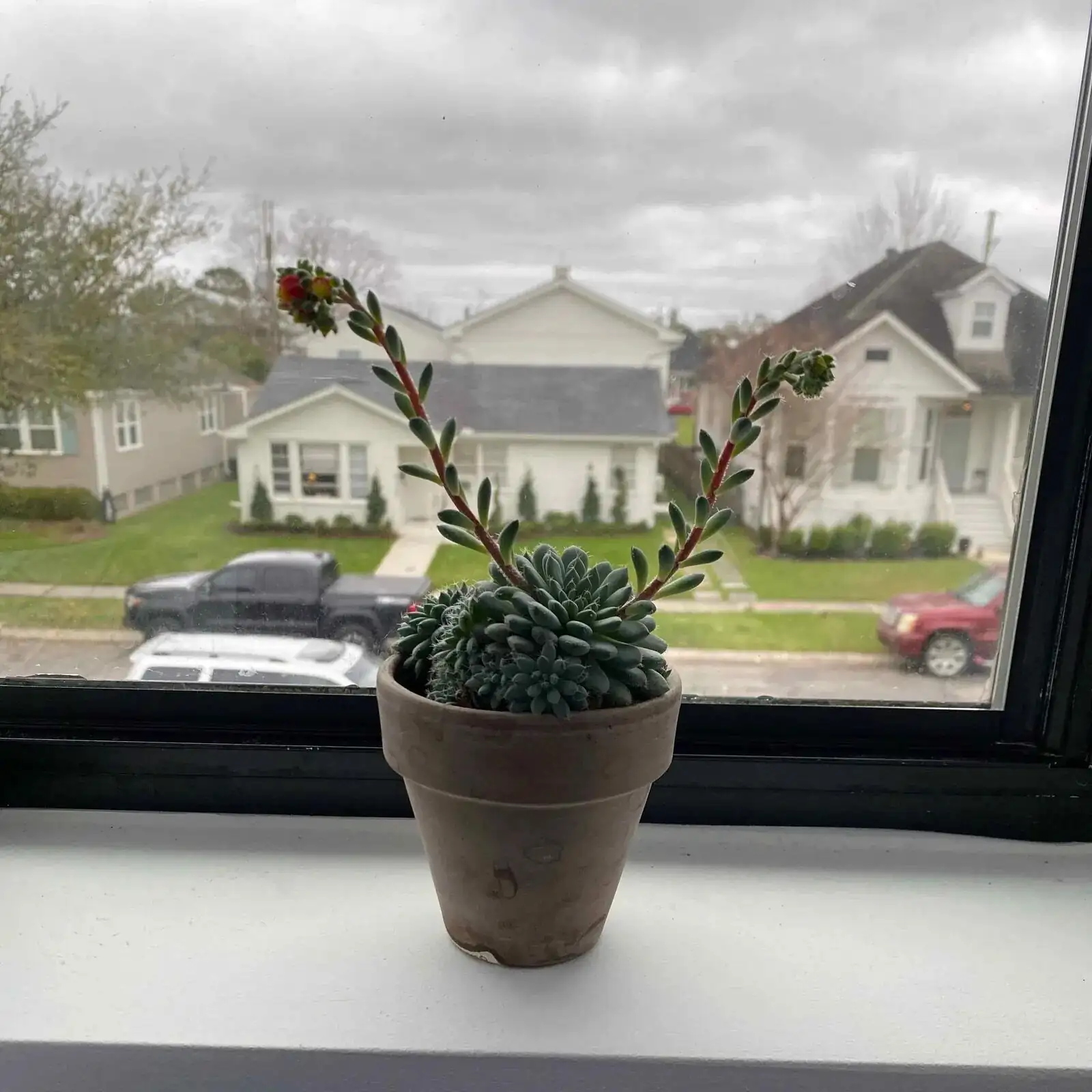
Imagine a tidy gray rosette perched on a sunny sill, every leaf tucked just so, like a lotus folded from stone. Then, one spring day, it sends up airy, branched stalks capped with vivid pink‑to‑red, starry flowers—tiny fireworks hovering above the calm. That’s the charm of Echeveria sold under the trade name “Meililian” (美丽莲): a lotus-like succulent with a story that begins in Mexico and Central America, picks up an artist’s legacy, and then catches a wave across Asia’s modern succulent boom.
From sketchbook to windowsill: roots in Mexico and a namesake’s legacy
A genus with sun on its shoulders
Echeveria belongs to the Crassulaceae, a family famous for water-wise beauties. The genus is native mainly to Mexico and Central America, where many species carve out a living on bright, dry slopes and rocky ledges. Rosette-forming and drought-tolerant, they’re built for brilliance in high light and for long pauses between rains.
Atanasio Echeverría y Godoy: the illustrator behind the name
The genus name honors Atanasio Echeverría y Godoy, the 18th‑century botanical artist from New Spain whose keen eye and steady hand helped document the region’s extraordinary flora. His illustrations—produced during scientific expeditions led by Martín Sessé y Lacasta and colleagues—bridged field and page so beautifully that Augustin Pyramus de Candolle immortalized him in the name Echeveria. Today, every windowsill rosette bearing that name nods to a young artist who turned wild plants into lasting art.
Meet “Meililian” (美丽莲): the lotus you hardly ever have to water
“Meililian” is a cultivated, trade-name ornamental Echeveria grown for its spotless symmetry and unexpectedly showy bloom display.
What it looks like
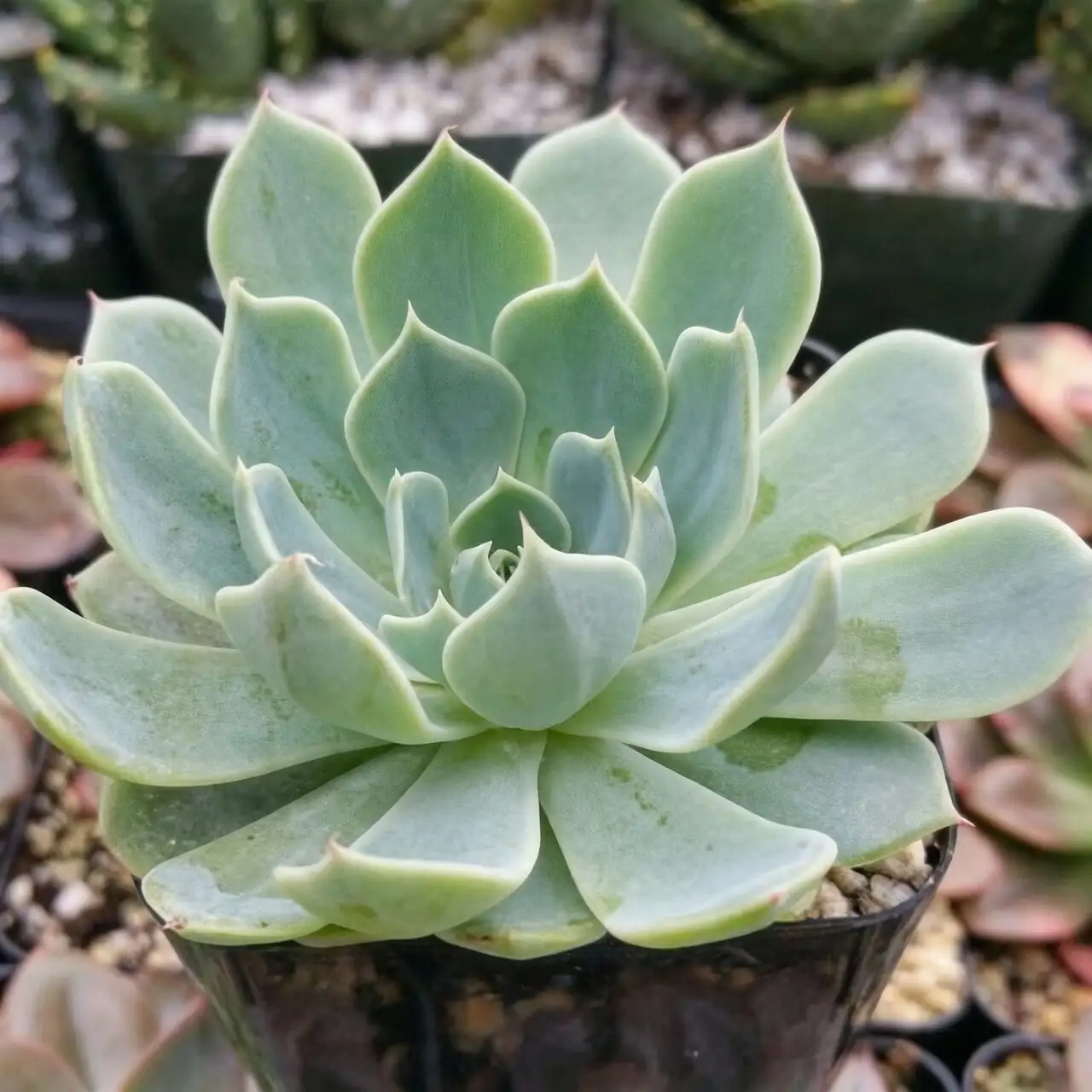
- Form: Compact, slow-growing, rosette-forming succulent
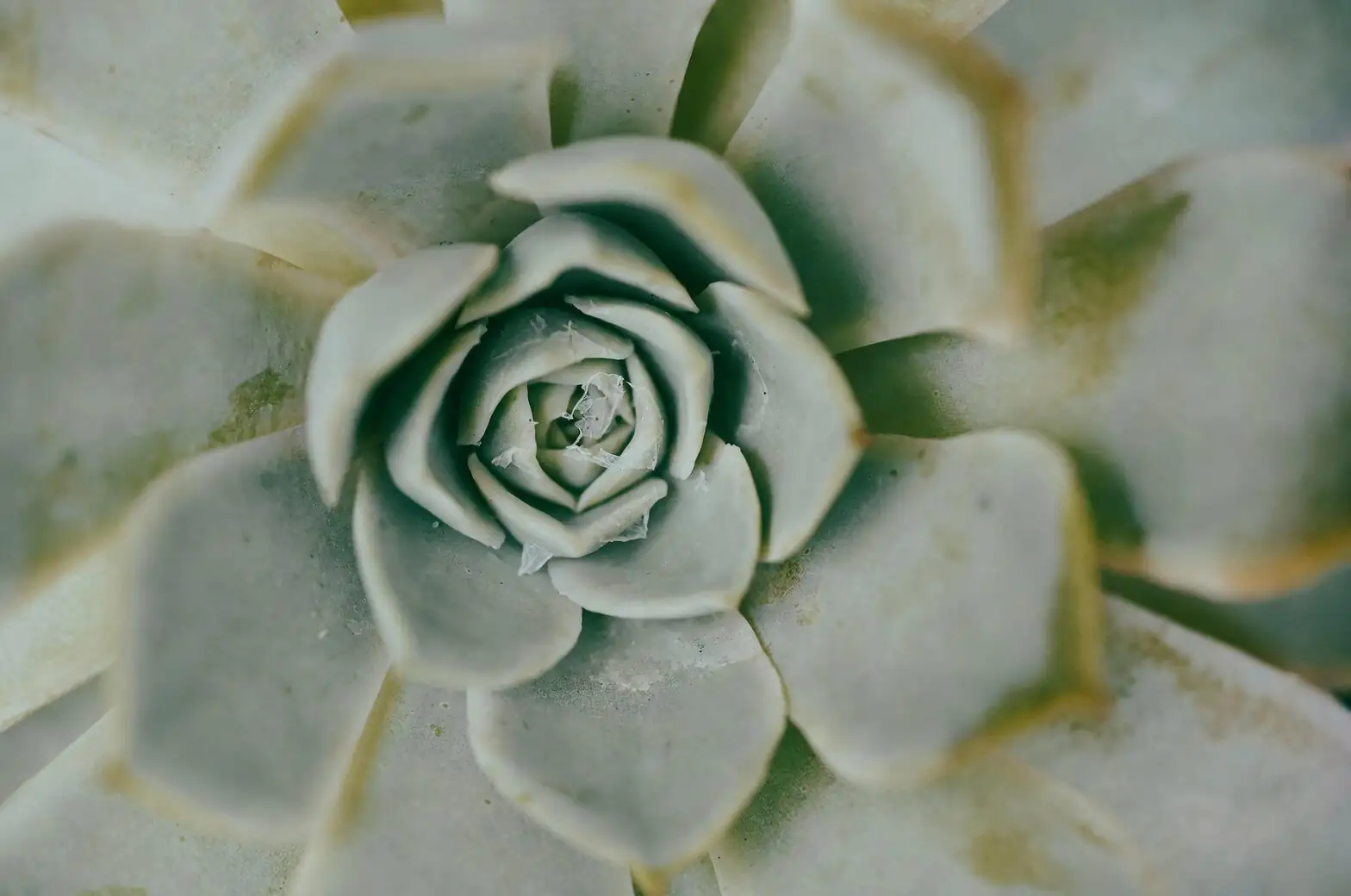
- Foliage: Thick, fleshy leaves in gray to dark gray tones, often edged in paler margins; color deepens with strong light
- Size: About 15 × 10 cm (height × spread) or 6 × 4 in; flower stalks can rise several times taller than the rosette
- Habit: Neat, balanced, and tidy—perfect for small pots or grouped succulent trays
Bloom season: calm below, celebration above
- Timing: Typically spring to early summer (best with strong light)
- Show: Long, branched stalks emerge from the rosette center, each holding clusters of bright pink‑to‑red, star-shaped flowers
- Effect: An airy, “floating bouquet” or fireworks-lift above the steady rosette
Fun fact:
- Right before flowering, leaf color often deepens under strong light—like a stage dimming to spotlight the main act.
How Asia crowned it “beautiful lotus”
As succulents surged across Asia’s gardening scene, growers and shops needed names that captured feeling at a glance. Enter 美丽莲—“Meililian,” literally “beautiful lotus.” It’s an evocative trade name used for compact, lotus-like Echeveria selections with pristine symmetry and refined gray tones. The name stuck because:
- The rosette echoes a lotus, a symbol of poise and grace.
- Plants thrive in bright indoor nooks—ideal for urban life.
- The look is consistent and photogenic: tidy form now, joyful bloom later.

You might also encounter it marketed as “Beautiful Echeveria” or even “Black Prince‑type Echeveria” in some shops. Remember, “Meililian” is a trade name for ornamental selections rather than a single botanical cultivar with a formal pedigree.
Light, water, and the art of keeping symmetry
Light
- Full sun to bright partial sun; acclimate gradually to prevent scorch.
- More light = deeper gray coloration and better flowers.
Temperature and air
- Best between 10–27°C (50–81°F).
- Keep warmer and brighter during growth; cooler and drier in winter.
- Low humidity and good airflow suit it perfectly.
Soil and pots
- Use a very well-draining cactus/succulent mix.
- Regular potting soil can work if heavily amended with grit, pumice, or coarse sand.
- Always choose containers with drainage holes.
Hardiness and placement
- Frost-tender; suitable outdoors year-round only in USDA Zones 10–11.
- Indoors: a very bright south‑ or west‑facing windowsill.
- Outdoors (seasonally, if cold where you live): a sunny, warm, rain-sheltered spot.
Watering rhythm, feeding, and seasonal flow
Watering: soak, then let it forget
- Spring to autumn: water deeply, then allow the mix to dry out completely before watering again.
- Winter: go very light—just enough to prevent excessive shriveling.
- Tip: Avoid water pooling in the rosette to reduce rot risk.
Feeding
- During active growth (spring to autumn): feed 2–3 times with a balanced liquid fertilizer at 1/2 strength, or a low‑nitrogen succulent formula.
- Skip feeding in winter dormancy.
Calendar at a glance
- Spring–autumn: bright light, soak‑and‑dry watering, light feeding.
- Winter: keep cooler, bright if possible, and much drier; resume typical watering when new growth restarts.
Pruning, propagation, and repotting
Pruning
- Minimal. Snip off spent flower stalks after blooming to keep things tidy and reduce energy drain.
Propagation
- Leaf cuttings or offsets (if produced).
- Let cut surfaces callus; place on dry, gritty mix.
- Mist or water lightly only after roots begin to form.
Repotting
- Only when root‑bound—typically every 2–3 years.
- Use a fast-draining mix and a modest pot (about 10–12.5 cm / 4–5 in wide).
Buying and keeping it healthy
Buying guide
- Look for a firm, symmetrical rosette with tightly arranged leaves.
- Avoid mushiness at the base, black spots, or pests—especially mealybugs.
Common issues, quick fixes
- Pests: Mealybugs and scale are the usual suspects.
- Dab with cotton swabs dipped in alcohol or use an appropriate insecticidal soap.
- Rot: Usually from overwatering or dense soil.
- Prevent with strong light, airflow, and a gritty, free‑draining mix.
Safe around the family?
- Generally considered non‑toxic.
- The sap may cause mild skin irritation for sensitive people—best to keep curious pets and children from nibbling.
Symbolism and the “flower language” behind the lotus look
Echeveria “Meililian” is often linked with resilience, balanced calm, and quiet beauty—the kind that seems simple at first, then surprises with a dramatic bloom show. Unlike old-world floriography, this “flower language” grew from modern succulent culture: the rosette’s serene geometry suggests composure, while its drought tolerance stands for steadiness in lean times. When those starry pink‑to‑red flowers finally unfurl, they read as celebration earned—grace under bright skies.
Quick answers (FAQ)
- Why are my leaves turning soft or dropping from the bottom?
- A little shedding of older bottom leaves is normal. Widespread softness or sudden drop usually indicates overwatering or poor drainage. Let the soil dry fully, improve airflow, and repot into a grittier mix if needed.
- How can I get better color and flowers?
- Increase light gradually to bright sun/very bright conditions, keep to a soak‑and‑dry watering schedule, and avoid heavy feeding. Strong light is the top driver of richer leaf color and reliable blooming.
From highland sun to sketchbook, from studio to sill, Echeveria “Meililian” carries the spirit of its Mexican and Central American kin—and a namesake artist’s legacy—right into your home. Keep it bright, keep it dry between drinks, and let the fireworks hover over your lotus.