

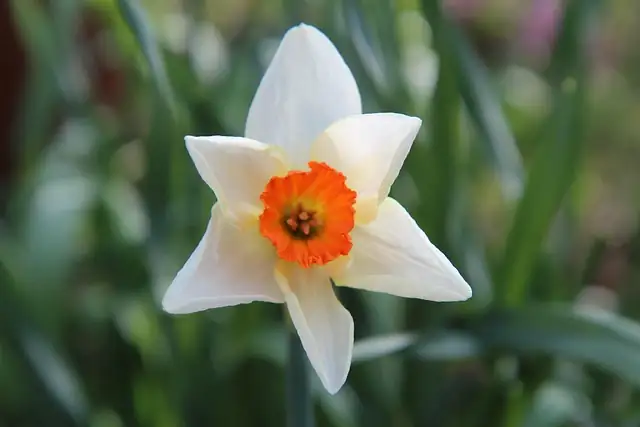
Imagine a fragrance so sweet it feels like winter tipping into spring—salt-air bright, honeyed, a little heady. Follow that scent and you’ll trace a plant’s journey from Mediterranean shores to porcelain bowls on Chinese windowsills, where it still opens for Lunar New Year as a promise of luck and renewal. Meet Narcissus tazetta, the “paperwhite” clan with a passport full of stamps.
Salt-air beginnings: a Mediterranean native with a winter soul
Narcissus tazetta belongs to the Amaryllidaceae, a bulbous perennial that wakes up in the cool season. In its homeland—southern Europe and North Africa, especially the coast—it learned to time growth for winter rain and spring light, then retreat into summer dormancy. That rhythm is the secret behind its indoor magic.
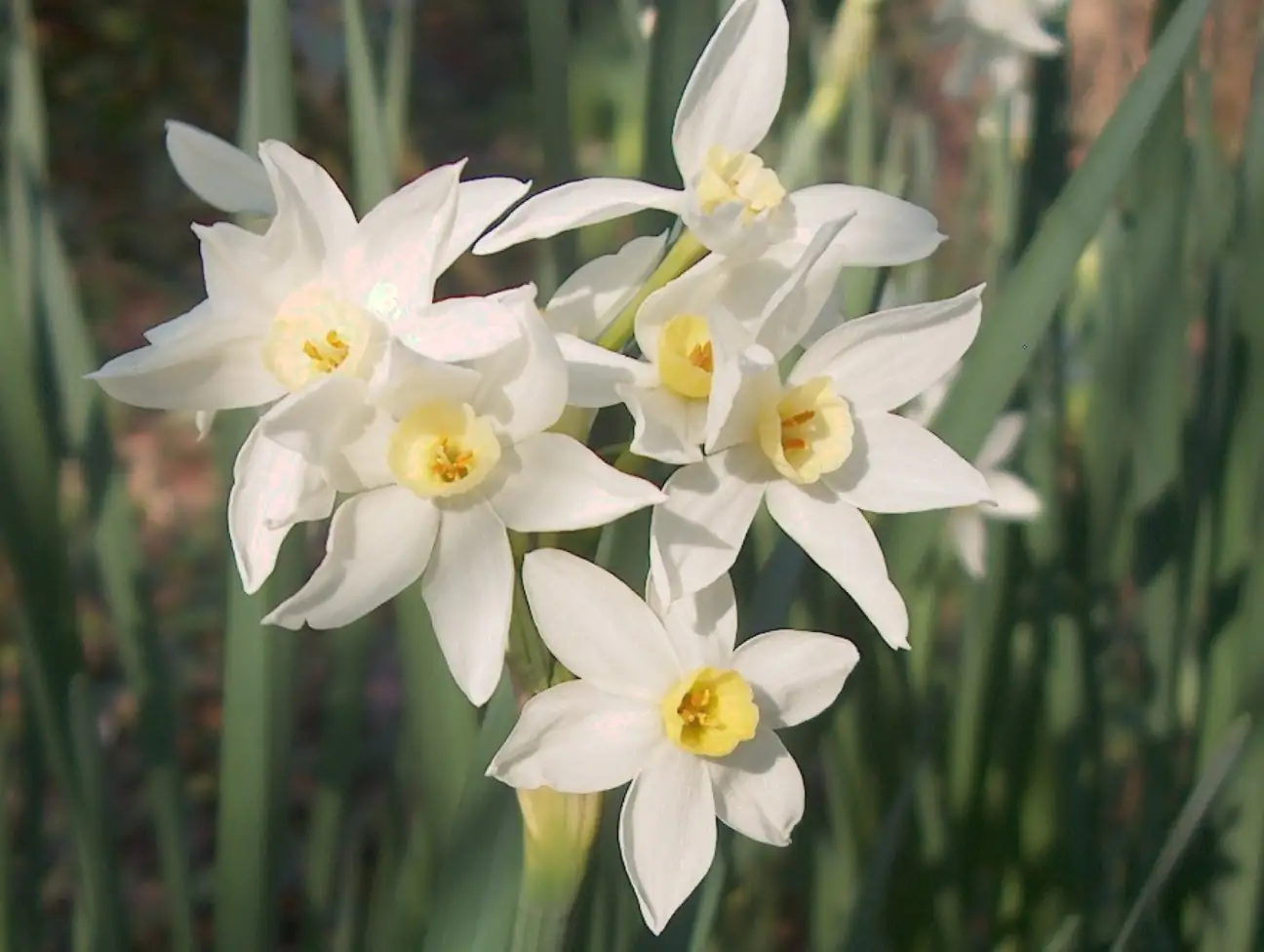
- Habit and look: narrow, strap-like leaves; upright stems topped with tight clusters of starry blooms, usually white with a tiny cup (the “tazetta,” Italian for little cup).
- Scent: famously strong and sweet—small flowers, big perfume.
- Timing: indoors, bulbs can be coaxed to bloom in about 4–6 weeks; outdoors, late winter to early spring in mild climates.
From seaside scrapes and sun-paled rocks, tazettas took their fragrance on the road.
What’s in a name? The “paperwhite” tangle explained
When gardeners say “paperwhites,” they often mean tazetta-type daffodils with multiple small, white flowers per stem. But there’s a twist.
- Narcissus tazetta: the broad species that includes many multi-flowered, highly fragrant forms. It’s the safest umbrella name for the plants people force indoors for winter.
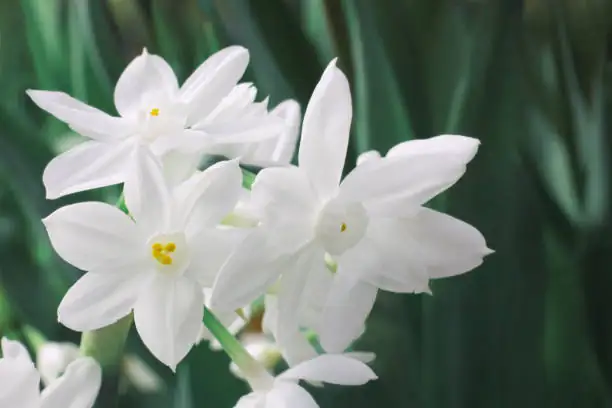
- Narcissus papyraceus: the pure-white “paperwhite” many Western holiday bulbs belong to—botanically treated by some as a separate species closely allied to N. tazetta, by others as part of the tazetta group. The name “papyraceus” nods to the papery-white petals.
- Chinese Sacred Lily (Narcissus tazetta subsp. chinensis): the beloved East Asian form often seen at Lunar New Year—typically white petals around a soft yellow cup, prized for bowl culture and artistic leaf-and-stem training.
- Jonquil? In everyday speech, some call any multi-flowered daffodil a “jonquil,” but true jonquils are N. jonquilla. Language wanders; botany tries to keep it tidy.
Think of “paperwhite” as a friendly nickname and Narcissus tazetta as the solid family name that ties the story together.
Caravan lanes and sea roads: how tazetta reached China
Bulbs are born travelers. They sleep dry for months, wrapped in their own paper, tough enough to cross deserts. By the late Tang dynasty (7th–10th centuries), traders carried tazetta bulbs east along Silk Road networks and by maritime routes steered by Arab and Persian sailors.
- Overland: camels plodding from the Levant and North Africa through Central Asian waystations.
- By sea: dhows stitching together ports from the Mediterranean and Red Sea to the Indian Ocean, then on to China’s coast.
- Why bulbs make perfect cargo: 7–8 months of dormancy—no soil, no fuss, and small enough to tuck into a bale or crate.
Once in East Asia, tazetta settled happily into coastal climates. It naturalized in parts of Fujian and Zhejiang and charmed households with a winter-blooming habit that fit celebrations welcoming a new lunar year.

Bowls of winter light: China’s water-culture tradition
Where Mediterranean rains once woke the bulbs, Chinese households used bowls of clean water and smooth pebbles to cue growth right on schedule for the Spring Festival.
What you see on a New Year windowsill:
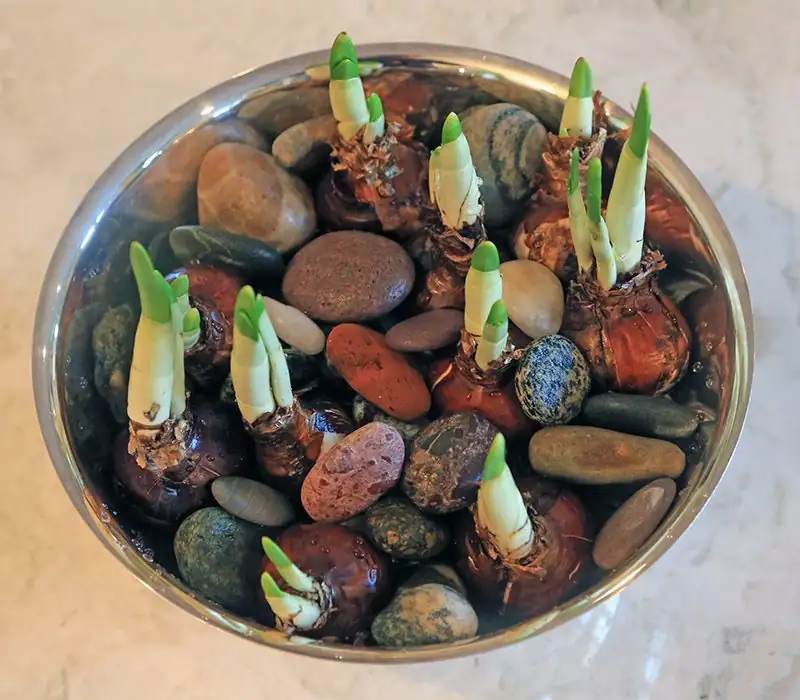
- A shallow porcelain or glass bowl filled with pebbles.
- Fat, papery bulbs set with their bases just above the waterline—roots in water, bulbs mostly dry.
- Bright winter light and cool air helping the leaves and stems rise strong.
- After 4–6 weeks, a cluster of white stars and golden cups unfurling like a tabletop sunrise.
Artful training and carving developed into its own winter craft. Growers gently guide leaves into fans and curves, or carve away bulb layers so flower stalks emerge in pleasing arcs—living sculpture for the festival table. The practice demands clean tools, bright air, and patience; the results look as if calligraphy learned to bloom.
Flower language, myth, and meaning: from reflection to renewal
Narcissus carries two very different cultural stories:
- The Greek mirror: From the myth of Narcissus—entranced by his reflection—Western “flower language” often assigns self-regard or introspection to narcissi. Victorian floriography further codified such meanings, treating flowers like words in a secret social code.
- The East Asian lantern: In China, 水仙 (shuǐxiān) is entwined with the New Year—fresh starts, prosperity, and a household brimming with good fortune. A bowl in bloom at the right moment is a gentle omen of thriving days ahead.
Both stories grew from human lives: winter hunger for beauty, memory sparked by scent, and the solace of green leaves in the cold. If the Greek tale warns against vanity, the Chinese tradition celebrates renewal—two sides of one reflective pool.
How to stage your own New Year bowl (or any midwinter bloom)
You don’t need a garden—just a cool windowsill and a little discipline about water.
- Choose bulbs: firm, heavy, unblemished. Larger bulbs bloom more reliably.
- Prepare the bowl: a shallow, stable container with clean pebbles or gravel.
- Set the bulbs: nestle them so the basal plate sits just above the water; let only the roots drink. Keep water shallow.
- Light and temperature: brightest window you have, with cool air (about 10–20°C / 50–68°F; cooler—5–15°C / 41–59°F—keeps stems compact and blooms longer). Keep away from radiators and hot vents.
- Air and hygiene: refresh water frequently, keep the container clean, and avoid damp, stagnant air.
- Timeline: expect flowers in roughly 4–6 weeks.
- After bloom: if you plan to keep the bulbs, let the leaves stay green in bright light until they yellow naturally, then allow a dry, airy rest.
Outdoors in mild climates (roughly USDA Zones 8–10/11), tazettas can be planted in well-drained spots to naturalize, where deer and rodents usually leave them alone. In colder regions, enjoy them as a seasonal indoor show.
Quick troubleshooting
- Tall and floppy? It’s almost always warmth plus low light. Move to a brighter window and a cooler room.
- Leaves but no flowers? Bulbs may be too small/young, crowded, weakened by early leaf cutting, or underlit. Paperwhites are famous for flowering without chilling, but they still need strong light.
- Mixing in vases: daffodil sap can shorten the life of other cut flowers—condition stems separately before combining.
Safety note
All parts are toxic—especially the bulbs. Keep out of reach of children and pets, and wash hands after handling.
Why this little cup keeps traveling
From Mediterranean cliffs to Chinese windowsills, Narcissus tazetta thrives because it learned to bloom when we need it most. It asks for bright light, cool air, and a sip of clean water, then floods the room with scent and starry bloom when winter runs thin.
Maybe that’s the real meaning stitched through its many names—paperwhite, tazetta, Chinese Sacred Lily: not vanity, but reflection; not just luck, but the steady craft of bringing new life to the table, right on time.


