

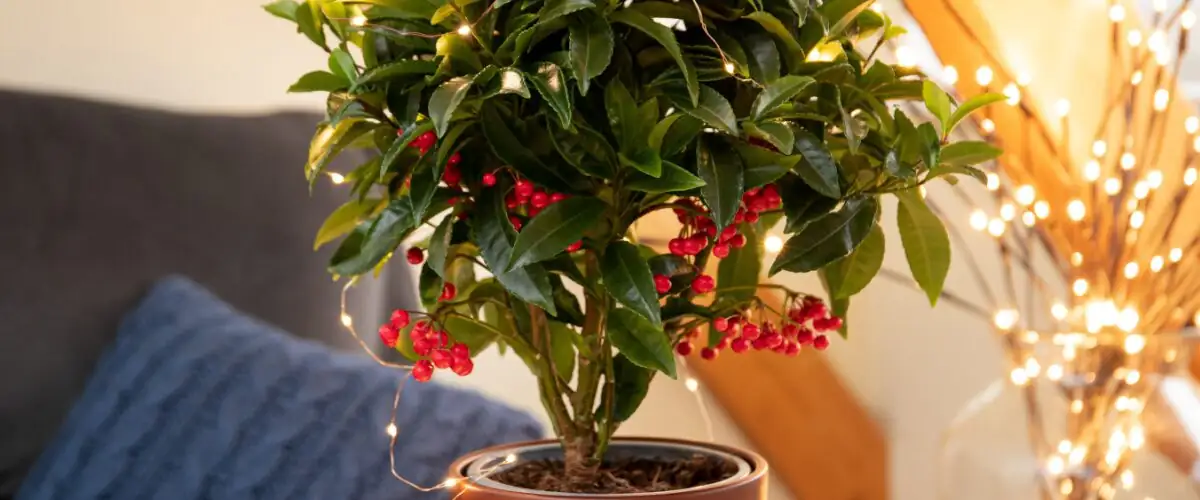
Step into a winter street market in Tokyo or Shanghai and you’ll spot it immediately: a neat little shrub wearing glossy green leaves and strings of lacquer-red beads. In Japan it’s called “Manryō”—ten-thousand ryō, a wish for overflowing prosperity. In botany, it answers to Ardisia crenata, the coralberry. From the cool, dappled understories of East Asia to modern windowsills from Berlin to Boston, this slow-growing evergreen has become the pocket-size holiday shrub that says “welcome” and “good fortune,” all winter long.
From forest understory to “Manryō”
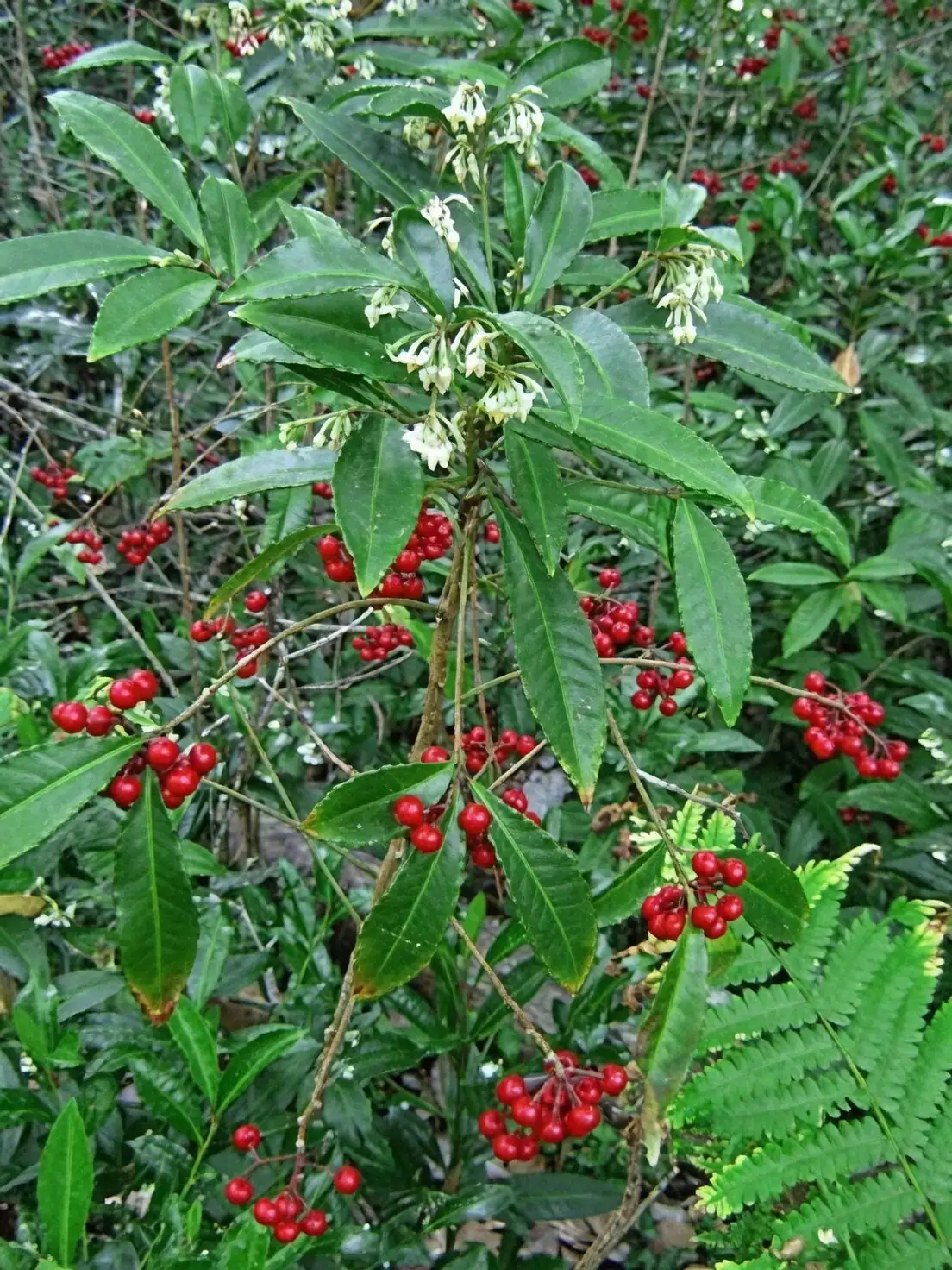
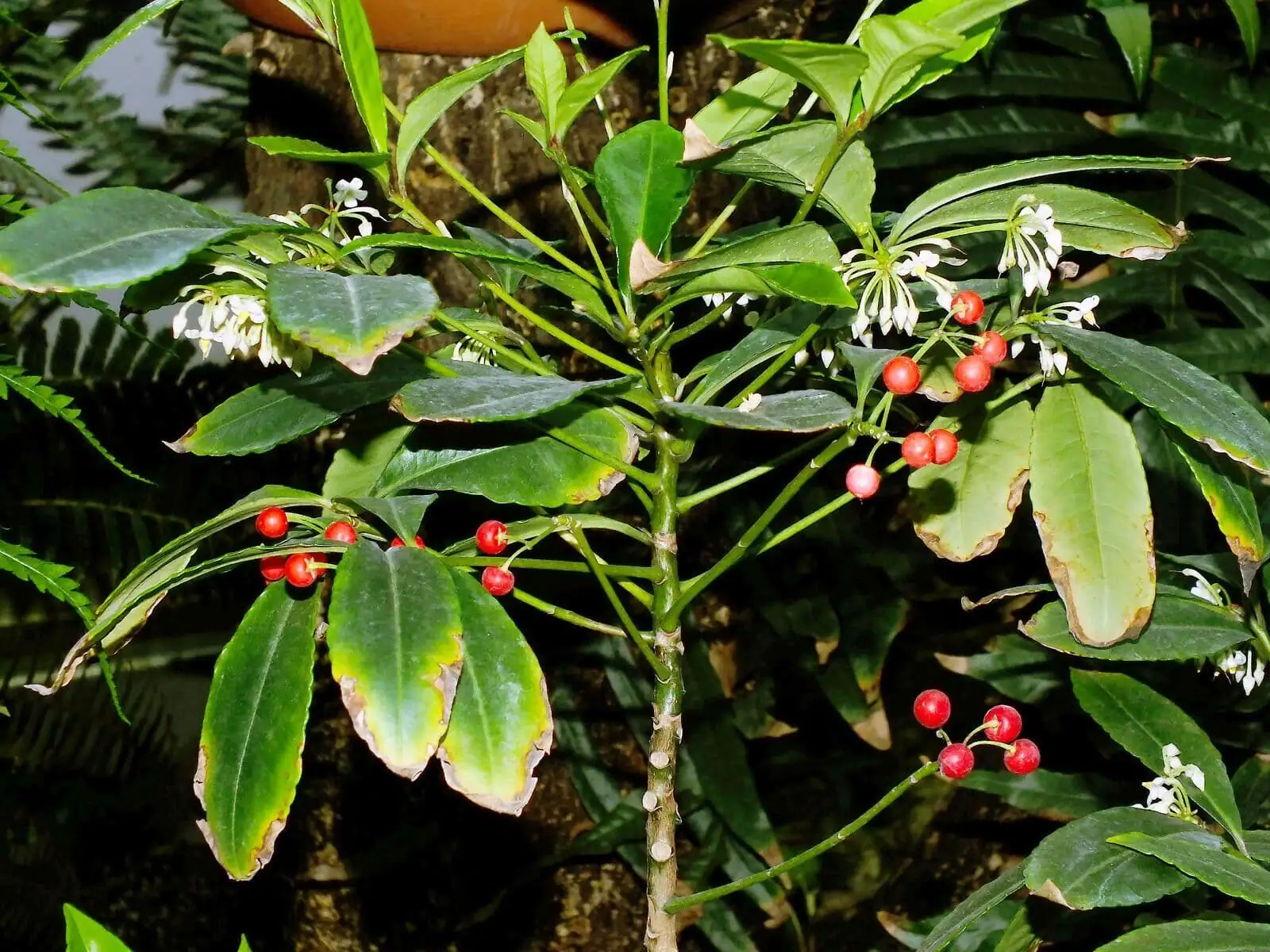
Ardisia crenata is native to China and Japan, where it thrives under trees in bright, filtered light and steady humidity. In late spring to summer, it produces small, starry white-to-pale-pink blossoms; by autumn those give way to heavy clusters of round fruit that ripen a vivid red and hold for months—often right through winter into spring.

- Name and meaning: In Japanese, Ardisia crenata is celebrated as Manryō (万両)—“ten-thousand ryō,” evoking abundant wealth. The berries’ coin-like roundness and festive red color made the plant a natural for New Year displays and auspicious doorway decor.
- Wild-to-home appeal: Its compact, woody habit and patient pace make it perfect for pot culture. Gardeners in East Asia have long grown it as a “miniature shrub,” and its winter berries carried that tradition global.
How it became a winter-holiday darling
What do holidays need? Evergreen gloss, cheerful red, and staying power. Coralberry delivers all three:
- The berries don’t rush; they hold beautifully for months.
- The plant fits comfortably on side tables and windowsills.
- Its deep green and berry red practically gift-wrap themselves, so nurseries time crops to look peak-festive for Christmas and Lunar New Year.
Today you’ll find compact, giftable forms at florists and garden centers worldwide—each little shrub a portable symbol of prosperity.

Look closer: what sets coralberry apart
- Habit and size: Upright to bushy evergreen shrub, naturally compact and slow-growing; typically 30–120 cm tall in cultivation, usually smaller in pots.
- Foliage: Dense, glossy, deep-green leaves with subtly scalloped (crenate) margins.
- Flowers and fruit: Clusters of small starry blossoms in late spring–summer; bright red round berries develop through autumn and look their best from winter into spring.
Aliases you might see on tags: Christmas Berry, Coral Ardisia, Coral Bush, Coralberry Ardisia, Fortune Berries, Spiceberry.
Home care for long-lasting berries
Give it a bright, forest-edge vibe indoors—soft light, gentle warmth, and steady moisture.
- Light: Bright, filtered light to partial shade. An east-facing window or a south window with a sheer curtain is ideal. Avoid harsh midday sun.
- Temperature: 13–27°C (55–81°F) is the comfort zone. Keep above 5°C (41°F) in winter; near or below freezing can cause leaf and berry drop.
- Humidity: Prefers moderate to high humidity (aim for ~50%+). Light misting during hot/dry spells helps, paired with good airflow.
- Watering: Aim for “evenly moist, never soggy.”
- Growing season: Water thoroughly when the top 2–3 cm of mix starts to dry—often every 3–5 days in warm weather (about twice a week at peak summer, depending on pot size and heat).
- Winter: Reduce to about every 10 days, keeping the mix slightly moist.
- Soil: A rich, well-drained, slightly acidic mix (peat/coir with coarse sand or perlite). Avoid alkaline, waterlogged conditions.
- Feeding: Every 2 weeks in the growing season with a balanced fertilizer at label rate. After buds form, add 2–3 feeds higher in phosphorus and potassium to support flowering/fruit set. Stop feeding in winter once berries are red.
- Pruning: Pinch back new shoots at about 10 cm (4 in) to encourage branching and a fuller crown. Lightly thin crowded fruiting stems to improve airflow.
- Placement: Indoors, a bright living room or study works well; outdoors in warm seasons, try a sheltered balcony or patio in partial shade. When heavy with fruit, avoid moving or shaking the pot—jostling can trigger berry drop.
- Repotting: About every 2 years in spring. A pot around 20 cm (8 in) suits many specimens; trim circling roots and refresh the mix.
Your year with Ardisia crenata
- Spring: Repot if due; resume feeding; pinch for shape.
- Late spring–summer (flowering): Keep in bright, filtered light; protect from harsh sun. Indoors, hand-pollinate with a soft brush to boost fruit set.
- Summer–autumn: Active growth—water as the surface begins to dry; support humidity in heat. After buds appear, switch in 2–3 higher P/K feeds.
- Winter: Berries turn red—stop feeding; water sparingly (about every 10 days); keep warm and away from drafts and cold windows.
Troubleshooting and pro tips
- Berries dropping? Common triggers include sudden moves or shaking, cold stress (especially near 0°C/32°F), overly dry air, or waterlogging. Keep it above 5°C (41°F), maintain even moisture, and stabilize humidity. Once fruiting heavily, keep it parked in one spot.
- Pests: Scale insects are the main culprit. Remove by hand and treat with horticultural oil or insecticidal soap; repeat as needed.
- Leaf spot: Improve airflow, avoid wet foliage late in the day, and remove badly affected leaves. Use a suitable fungicide only if needed.
- Root issues: Poor drainage invites trouble. Keep the potting mix airy and never waterlog.
Propagation: making more “Manryō”
- Cuttings: In June–July, take semi-ripe cuttings 5–6 cm long. Root in moist sand/vermiculite under warm, humid, lightly shaded conditions. Roots often form in 3–4 weeks.
- Seed: Use fully ripe bright-red berries; remove the pulp, soak seeds in warm water (25–30°C/77–86°F), and sow shallowly—about 0.5 cm (0.2 in) deep. Germination commonly takes ~5–9 weeks. Transplant once seedlings have established leaves.
- Grafting: Possible in early summer; keep humidity high afterward.
Outdoors and ecology
- Hardiness: Frost tender (roughly USDA Zone 9–11). Protect from freezing temperatures.
- Summering outside: A sheltered, part-shade patio suits it perfectly. Bring indoors before nights cool below 10°C (50°F).
- Regional caution: In some warm regions outside its native range, coralberry can become invasive. Check local guidance before planting it outdoors.
Safety with children and pets
Treat coralberry as potentially toxic if eaten. Some references list the berries as poisonous while others are cautious or uncertain. For safety, do not ingest any part and keep the plant out of reach of children and pets.
Flower language and symbolism: prosperity that lingers
The cultural “language” of this plant springs from sight and season more than scent or bloom. Manryō’s bead-like red fruit recall auspicious coins and coral beads; the word itself—“ten-thousand ryō”—is an exuberant wish for abundance. Displaying a plant heavy with berries at the turn of the year suggests wealth that’s not fleeting: the fruit stay on for months, implying prosperity that endures. Consider it a household talisman of welcome, luck, and steady plenty—meanings rooted in tradition and seasonal aesthetics rather than botany alone.
Choosing the perfect gift plant
- Look for: A compact, well-branched plant with dense, glossy deep-green leaves and lots of firm, vividly colored berries.
- Avoid: Sticky residue (possible scale), leaf spotting, soft stems, or bare patches.
- Quick test: Gently shake the plant; well-set berries shouldn’t rain down. After purchase, keep handling minimal while it’s fruiting.
Quick FAQ
- How can I get my coralberry to produce more berries indoors?
- During flowering, hand-pollinate with a small soft brush on several days in a row. Keep bright, filtered light and even moisture. After buds form, give 2–3 feeds higher in phosphorus and potassium.
- Why are my berries dropping off?
- Sudden moves, cold stress (especially near 0°C/32°F), overly dry air, or waterlogging can all cause drop. Keep above 5°C (41°F), maintain even moisture, and raise humidity moderately. Avoid relocating the pot once it’s heavily in fruit.
- How do I choose a good plant at the store?
- Pick a compact, well-branched specimen with glossy leaves and firm, brightly colored berries. Skip any with signs of pests or spotting—and don’t buy one that sheds berries when lightly jostled.
From shadowy woodland understory to the glow of holiday windows, Ardisia crenata keeps telling the same evergreen story: patient growth, lasting color, and a hopeful promise that abundance can linger, bright as a string of winter berries.