

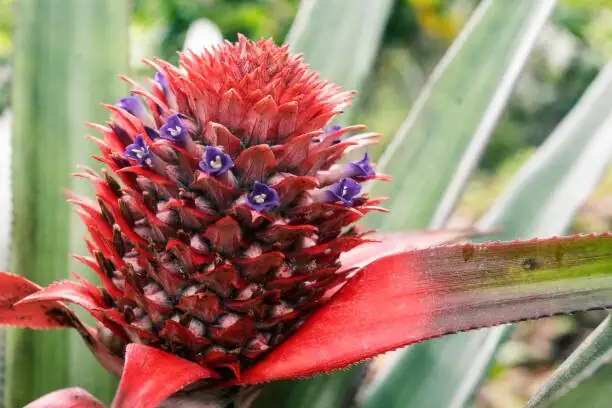
Silvery threads that once sat in the heart of a thorny rosette now glow on a runway, catching light like sea mist. That’s the quiet magic of Ananas comosus—the pineapple—whose leaves have dressed generations in the Philippines with ethereal piña cloth and are now being reinvented for a new era of sustainable fashion.
Meet the plant behind the fabric
Before it becomes cloth, pineapple is a sun-loving tropical bromeliad with a tough rosette of waxy, sword-like leaves. Native to South America—specifically the Paraná–Paraguay River drainages between southern Brazil and Paraguay—the plant traveled the world after the 15th century and reached the Philippines via Spanish trade in the 1500s. There, artisans transformed its leaves into a gossamer textile unique to the archipelago: piña.
- What makes pineapple leaves special for fiber?
- Strength with fineness: the leaf’s inner fibers can be extracted as silky, translucent strands that weave into a sheer, luminous cloth.
- Botanical design: the rosette concentrates long, narrow leaves (often up to 1 meter), perfect for fiber harvest.
- Resilience: as a bromeliad using CAM photosynthesis, pineapple grows well in hot, bright conditions—supporting leaf production in tropical fields.
A small, hearty variety known as Red Spanish became the traditional fiber pineapple in parts of the Philippines. It’s often planted with some shade to encourage long, fine leaves rather than big dessert fruit.
From leaf to luminous thread: the piña process
Piña weaving is centered in Aklan on Panay Island in the Western Visayas, where vocabulary, tools, and knowledge have been refined over centuries. Each stage is slow, precise, and deeply embodied—every filament is literally made by hand.
1) Pagkigue: harvesting and scraping
- Mature leaves are cut and scraped with a blunt edge (often a coconut shell or similar tool).
- Two fiber grades are hand-lifted:
- Bastos: coarser, stronger fibers for cordage or structural weft.
- Liniwan (“washout”): the prized, fine fibers used for the sheerest fabric.
- The green epidermis is rinsed away; fibers are washed and sun-dried to a pale, opaline white.
2) Pagpisi and pagpanug-ot: knotting the invisible
- Individual fibers are painstakingly hand-knotted and trimmed to make continuous filaments—often only a few feet long per strand at a time.
- To prevent tangles, loose fibers may be lightly mixed with fine sand between handling sessions.
3) Pagtalinuas: warping and spooling
- The filaments are aligned, spooled, and readied for the loom. Tension must be feather-light to protect the delicate, glassy threads.
4) Paghaboe: weaving the cloud
- Artisans work on upright, two-treadle looms. The result is a cloth that is translucent, crisp, and airy—like a morning veil.
- Embellishment follows: calado (openwork) and other embroidery techniques turn the fabric into lace-like fields of blossoms, scrolls, and stars.
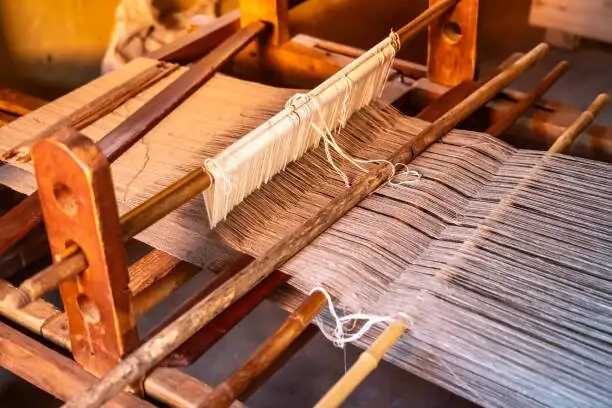
Piña’s natural color ranges from ecru to the palest champagne. It’s often blended with silk to create piña seda—still sheer and breathable, but slightly more supple and affordable. Contemporary blends with polyester also appear in the market, broadening access while preserving the look.
Dressing a nation: the heritage of piña in the Philippines
By the late 18th and 19th centuries, piña reached a golden age, especially on Panay. Its featherweight hand and cool drape made it ideal in a tropical climate, and its sheer ground showcased spectacular needlework introduced and adapted during centuries of Spanish influence.
- Women’s wear: the María Clara ensemble—a bell-sleeved camisa (blouse), long saya (skirt), and a starched pañuelo (kerchief)—often appeared in fine piña with elaborate calado.
- Men’s wear: the barong tagalog, the Philippines’ formal national shirt, has long been rendered in piña or piña seda, letting the skin’s warmth tint the cloth from beneath.
- Global desirability: piña garments and even the pineapple fruit were coveted abroad. Fine examples traveled to Europe as luxury gifts, where the fabric’s embroidery drew comparisons to—sometimes outshining—the lace traditions of Spain and France.

As fashion industrialized in the early 20th century, demand waned in favor of cheaper, less labor-intensive textiles. Yet by the late 20th century, a revival began—grounded in cultural pride, heritage conservation, and the distinct beauty only hand-processed pineapple leaf can deliver.
Sustainability, with nuance
Piña’s sustainability story starts in the field and ends in the atelier—but it’s not a monolith. Here’s how to think about it:
- Resource wisdom
- Many piña fibers come from leaves grown specifically for textiles (e.g., Red Spanish), but pineapple is also widely cultivated for fruit. Using post-harvest leaves as feedstock helps reduce agricultural waste.
- Processing relies on hand scraping, washing, and sun-drying—low energy but high skill and time.
- Social impact
- The craft supports intergenerational women’s knowledge in communities such as Aklan. Fair pricing and long-term orders directly affect livelihood stability.
- Material innovation
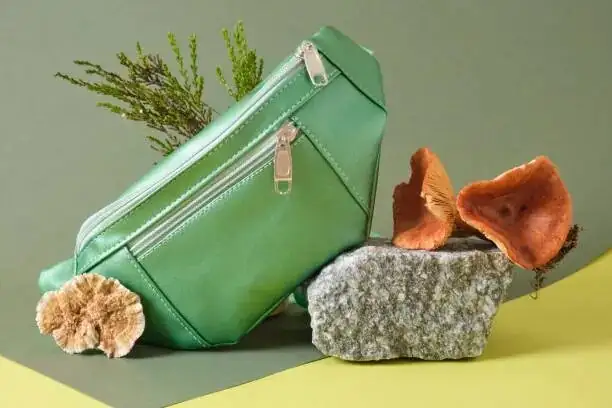
- Piñatex, a nonwoven material developed by Dr. Carmen Hijosa with research at the Royal College of Art, repurposes pineapple leaf fibers into a felt-like “vegan leather.” It’s been trialed in footwear and accessories by brands such as Puma and Camper.
- Note the difference: woven piña cloth is a loom-woven textile prized for translucent elegance; Piñatex is a composite sheet material suited to structured bags and shoes. Both advance circular use of leaves but serve different design goals.
- Care equals longevity
- Well-cared-for piña garments can last generations, extending the life-cycle benefits of a resource-intensive handcraft.
How designers use piña now
- Bridal and formalwear: sheer overlays, sculpted sleeves, and detachable pañuelo-inspired capes.
- Barong reimagined: cropped, gender-fluid silhouettes; hand-embroidered narratives; natural-dye accents while respecting piña’s pale base.
- Textural play: pair piña with silk organza or abacá for volume; use piña seda for softening pleats.
- Accessories: delicate scarves, veils, and embroidered panels framed as wall art to celebrate craft.

Tips for working with piña:
- Pre-plan seam lines—piña is crisp and can show puncture marks; use fine needles and consider French seams.
- Steam, don’t press hard. Avoid high heat that can flatten texture.
- Store hanging with breathable covers; keep away from moisture.
A quick, respectful look at DIY leaf fiber
Curious crafters sometimes try small-scale scraping of post-harvest leaves. If you do:
- Wear gloves—many pineapple leaves are edged with sharp teeth.
- Use a dull scraper; rinse and sun-dry fibers patiently.
- Expect delicate, short filaments at first; true piña finesse comes with practice and community-taught technique. When possible, learn directly from artisans or support workshops in Aklan and other weaving centers.
Symbolism and meaning
Across cultures, the pineapple symbolizes hospitality and welcome—its crown and radiant “multiple fruit” once signifying abundance and warmth. In the Philippines, piña’s social meaning braids craft, identity, and dignity: the barong tagalog in piña signals respect and formality; the María Clara ensemble in embroidered piña whispers of modesty, grace, and national memory.
About “flower language” and textiles: piña isn’t part of classic Victorian floriography. Its cultural resonance comes not from a codified bloom-by-bloom vocabulary but from material storytelling—who wove it, which motifs were stitched, and how the garment was worn in life’s milestones.
Botanical sidebar for fashion minds
- Species: Ananas comosus (pineapple), family Bromeliaceae.
- Habit: herbaceous perennial forming a tight rosette of stiff, gray-green leaves; after 12–20 months it flowers, and many fused blossoms form a single fruit topped by a leafy crown.
- Climate: thrives in bright, direct sun and warmth (roughly 18–35°C). In the Philippines and other tropical zones (broadly between 30°N and 30°S), fields produce both fruit and leaf resources.
- Fun to know: pineapple fruits often display Fibonacci spirals—8 one way, 13 the other—patterns that echo the mathematical grace artisans stitch into piña’s embroidered grids.
Buying and caring for piña today
- What to look for
- Sheer, parchment-like hand with visible, fine fibers.
- Even, tiny hand-knots in high-end pieces; delicate calado embroidery.
- Labels may note “piña,” “piña seda” (with silk), or modern blends.
- Care basics
- Spot-clean only; avoid soaking.
- Air gently after wear; store flat or hung with soft support.
- For heirloom pieces, consult conservators—piña rewards careful stewardship.
Why it matters
Piña connects a South American native plant to a uniquely Filipino textile, then threads that heritage through contemporary sustainability and design. Each length of cloth carries the hush of sunlit courtyards, the rhythm of two-treadle looms, and the future-focused ingenuity of circular fashion. From rosette to runway, pineapple keeps welcoming us in—crown first—offering a story you can feel between your fingertips.