

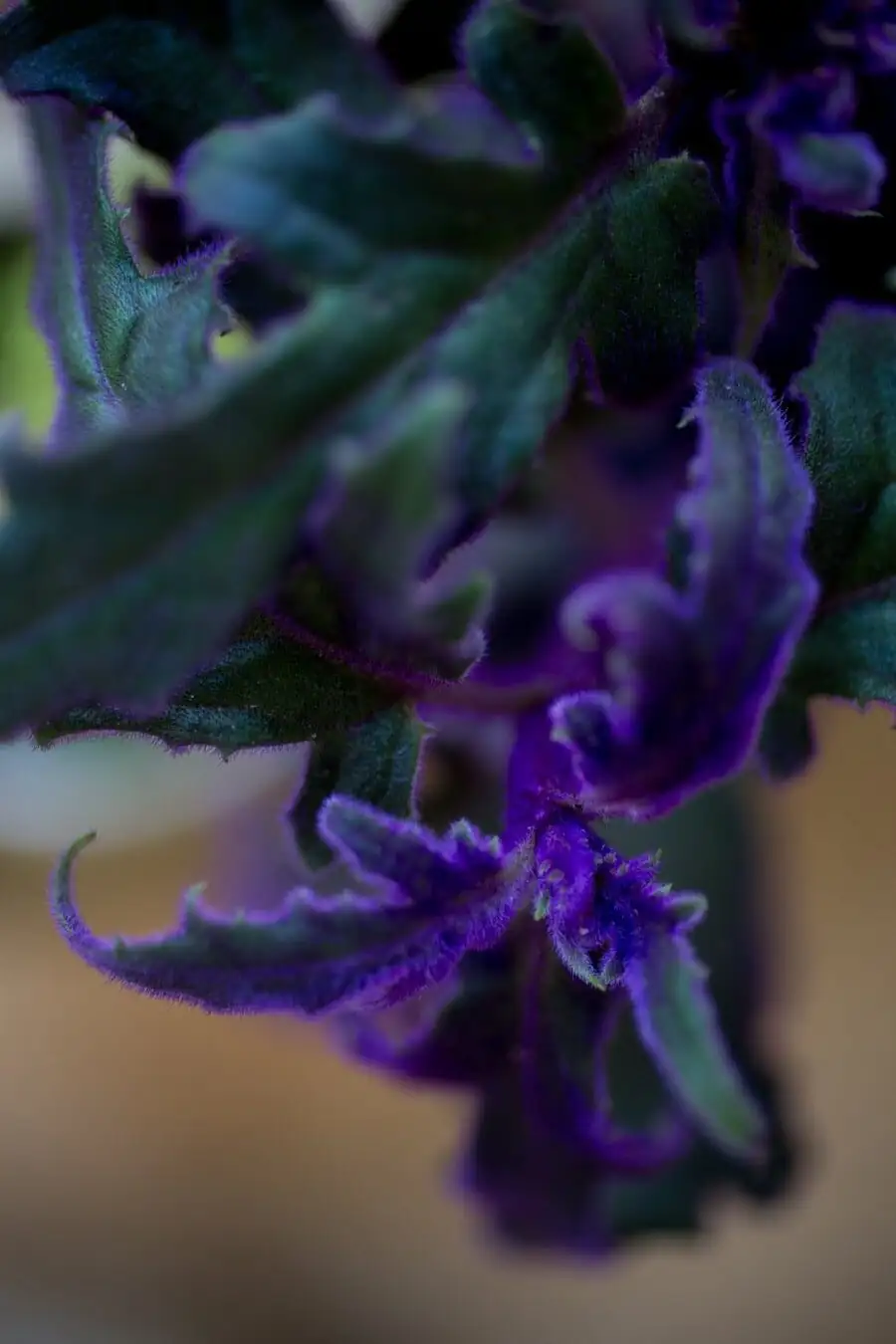
The first time you see it, you think the light is playing tricks: a plant that seems to glow from within, cloaked in royal purple, as if dusted with amethyst. That shimmer began far from our windowsills—on the damp, dappled forest edges of Java, Indonesia—then trailed its way into pots, across garden centers, and finally into hanging baskets around the world. Meet Gynura aurantiaca, the Purple Passion Plant, a houseplant celebrity that rose to fame not because of its blooms, but because of leaves so plush and luminous they’ve become legend.
Born in Java: a rainforest original
In its native Indonesia—especially Java—Gynura aurantiaca grows close to the ground where morning light arrives filtered through a green canopy. There, stems creep and lean, ready to root at the nodes when humidity is high. That semi-trailing habit makes perfect sense in the understory: it reaches, softens the forest floor, and catches light in a way that looks almost metallic.
The velvet illusion
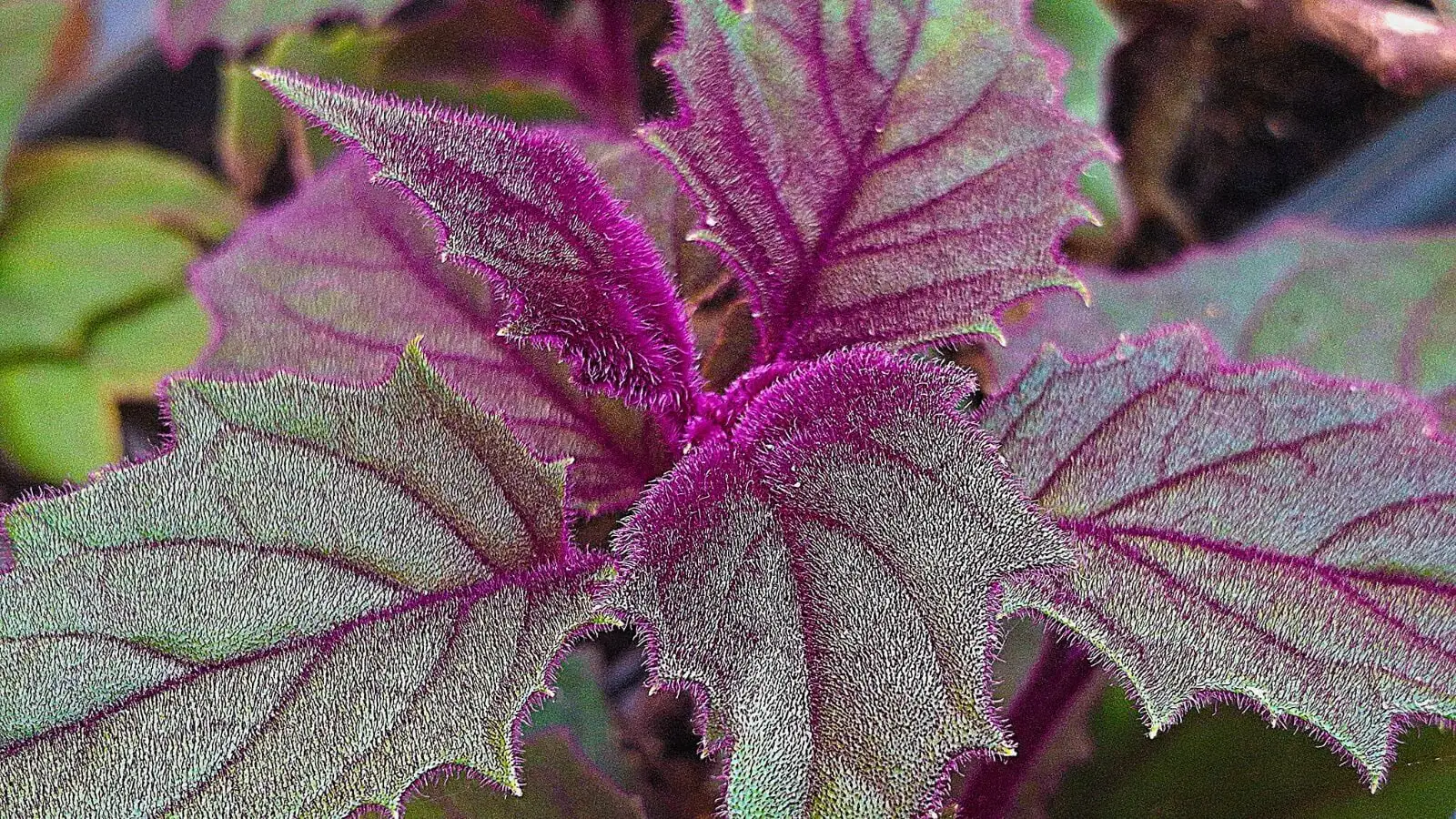
What your eye reads as purple velvet is really a dense coat of fine, light-catching hairs over green leaf blades. These hairs act like tiny prisms, turning ordinary leaf surfaces into plush, purple glamour. In brighter, indirect light the effect intensifies; in low light (or as leaves age) the color fades toward green and the glow dulls. Keep the leaves dry—water clings to those hairs, leaving spots or encouraging rot that steals the sheen.
From jungle floor to hanging-basket icon
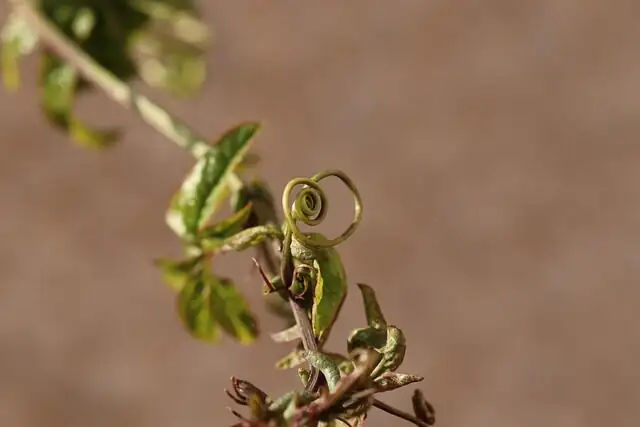
Once growers noticed how Purple Passion’s shoots spill elegantly over the rim of a pot, its destiny was set: the plant that once sprawled along forest edges became a cascading star in hanging baskets. Young plants stay compact; with time they turn semi-upright to trailing, and a quick pinch of the tips coaxes branching into a fuller waterfall.
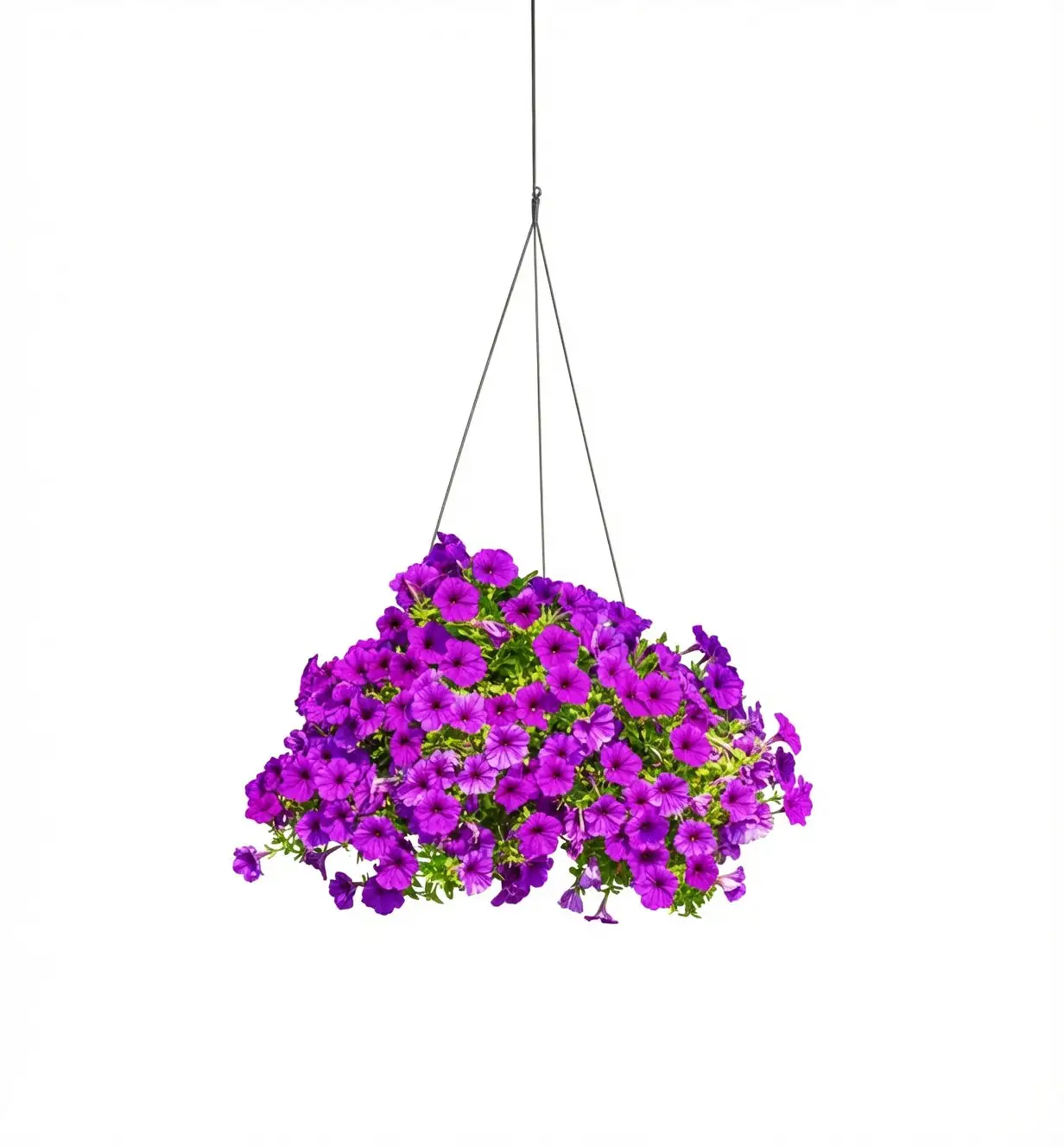
- Classic look: Three young plants grown together in a 12–15 cm (4.7–5.9 in) pot create an instant, lush “curtain” of velvet.
- Mature footprint: Often around 20 × 20 cm (8 × 8 in) indoors, then spreading wider with age as stems trail.
Why the leaves steal the show (and the flowers don’t)
Purple Passion is loved for foliage, not flowers—and that’s by design for most indoor growers.
- The blooms: small, yellow to yellow-orange daisies that often appear from late fall into winter.
- The twist: Indoors, these flowers can smell unpleasant. Many enthusiasts pinch off buds before they open, both to avoid the scent and to keep energy flowing to new, richly colored foliage.
How to keep the velvet glowing: care essentials
Think “bright, gentle light” and “even, light moisture,” with one golden rule—don’t wet the leaves.
Light
- Best: bright, indirect light to light shade (an east or west window, or filtered south light).
- Avoid: harsh midday sun that scorches and dulls the fuzz; too little light causes leggy, greener growth and faded color.
Water
- Spring–fall: water when the surface of the mix just begins to dry; keep evenly, lightly moist—not soggy.
- Winter: reduce; keep barely moist but well-lit and warm.
- Always water at the soil line. No misting or overhead splashing—the velvet prefers to stay perfectly dry.
Temperature and humidity
- Comfort zone: about 13–27°C (55–81°F), with many aiming for 15–24°C (59–75°F).
- Never below: roughly 10°C (50°F)—chill shows up as yellowed edges and scorched-looking patches.
- Humidity: moderate (around 40–60%) is ideal. Pair higher humidity with airflow to prevent issues like rust.
Soil and potting
- Medium: loose, fertile, well-draining potting mix. A standard houseplant mix with added perlite works beautifully; a little compost or leaf mold boosts vigor.
- For cuttings: use a lighter, airy rooting medium (compost/leaf mold with coarse sand, or similar).
Feeding
- During active growth (spring–fall): either monthly at normal strength or every 2 weeks at half strength with a balanced houseplant fertilizer.
- Go easy on nitrogen to avoid weak, leggy stems. Pause or reduce in winter.
Pruning and shaping
- Pinch tips regularly—especially when shoots reach about 20 cm (7.9 in)—to promote bushiness and a full cascade.
- Remove yellowing leaves anytime.
- Many indoor growers remove flower buds to keep foliage in top form.
Repotting
- Refresh in spring. For best appearance, repot yearly; otherwise every 2–3 years, or sooner if root-bound.
- Typical pot sizes range from 12–15 cm (4.7–5.9 in) up to 15–20 cm (6–8 in).
Placement
- Indoors near a bright window, on shelves with filtered light, or in hanging baskets.
- For humidity, choose a pebble tray rather than misting, and water directly into the soil.
Propagation: refresh it like a pro
Purple Passion is delightfully easy to renew. Many treat it as a “renewable” houseplant, restarting from cuttings when older plants grow leggy.
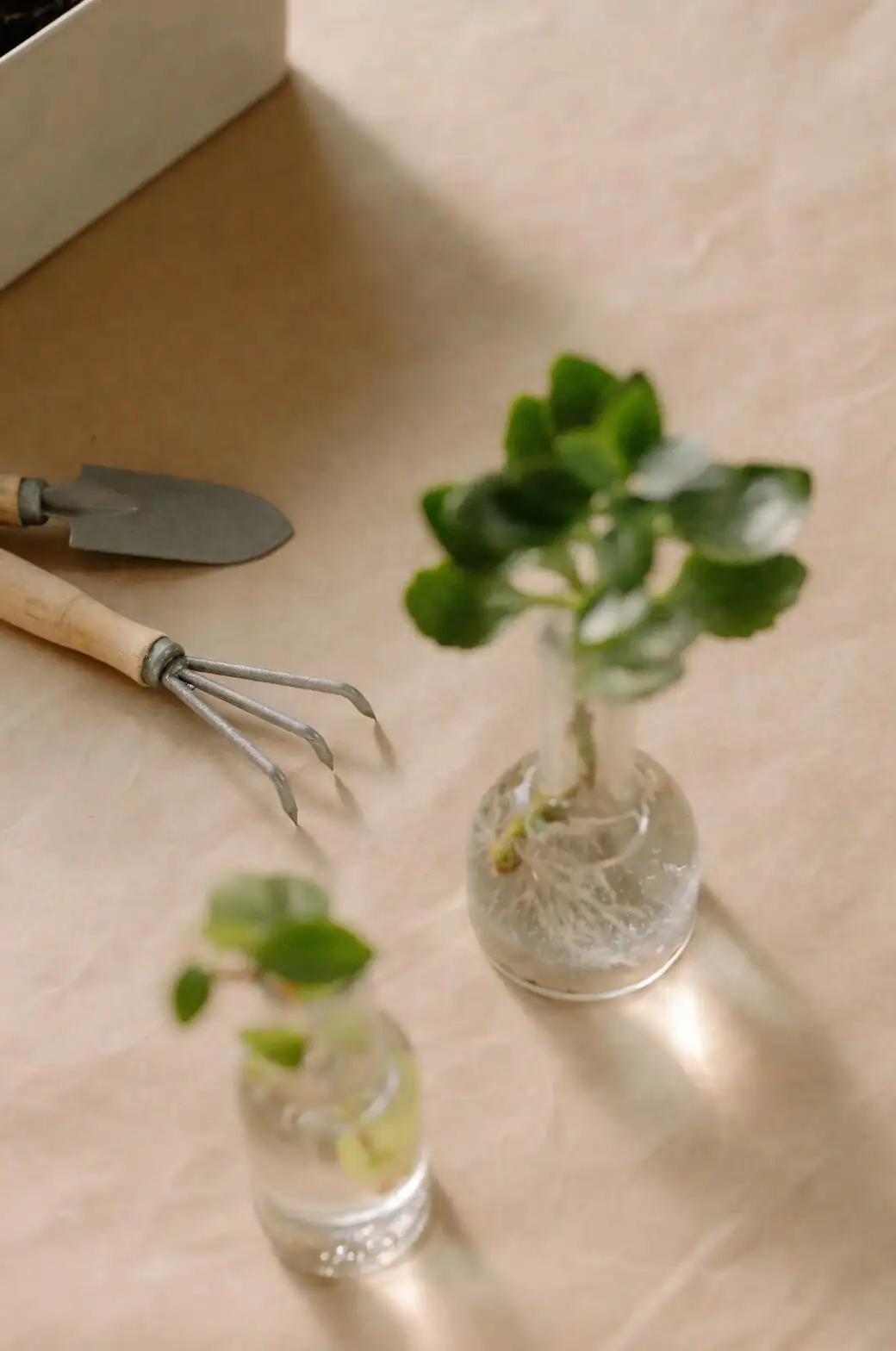
- Take 7–10 cm (3–4 in) tip cuttings with 4–5 leaves; remove the lower leaves.
- Root in water or a moist, airy mix at 20–25°C (68–77°F) in bright, indirect light.
- Expect roots in about 2 weeks. In humid air, stems may form adventitious roots—clip and pot those rooted nodes straight away.
- Water method tip: once water-grown roots reach ~10 cm (4 in), you can add a diluted nutrient solution. In hot spells, switch back to plain water and change it frequently—skip fertilizer during heat.
Troubleshooting and plant health
- Fading purple, legginess: increase light to bright, indirect; pinch to encourage branching.
- Scorched or yellowed edges, patchy spotting: often cold injury or leaf-wetting damage; keep above 10°C (50°F) and avoid wetting foliage.
- Pests: watch for spider mites, aphids, mealybugs, and whiteflies, especially in dry air. Treat early with insecticidal soap or horticultural oil; isolate affected plants.
- Diseases: overwatering leads to root rot; wet foliage plus stagnant air can invite rust. Improve drainage and airflow; remove affected parts promptly.
Safety notes
Not considered highly toxic, but ingestion may cause mild stomach upset, and the sap or fuzzy hairs can irritate sensitive skin. Keep away from curious pets and children, and wash hands after handling if you’re prone to irritation.
Style it like a star
- Hanging basket hero: its semi-trailing habit and plush leaves make a dramatic cascade—perfect at eye level where the velvet glows.
- Mixed planters: pair with fine-textured companions to set off the bold purple.
- Small-space friendly: typically sold in 12–15 cm pots and happy as a compact centerpiece before it spills with age.
Symbolism and the modern “flower language”
While traditional flower languages (like Victorian floriography or Japanese hanakotoba) rarely chronicled tropical foliage houseplants, modern plant culture has given Purple Passion its own meaning: bold individuality and vibrant energy. It fits—the plant refuses to be background greenery. The deep purple fuzz reads as unapologetic color and texture, while its trailing, renewing growth hints at resilience and reinvention. In short, this is a plant that encourages you to take up visual space—and to glow while you do it.
Quick facts to show off
- Scientific name: Gynura aurantiaca (Asteraceae)
- Origins: Indonesia, especially Java; now grown worldwide as a houseplant
- Grown for: extraordinary purple-velvet foliage; small yellow–orange flowers are non-showy and can smell unpleasant
- Habit: compact when young, then semi-upright to trailing; a natural for hanging baskets
- Light: bright, indirect; avoid harsh midday sun
- Water: keep lightly moist in the growing season; reduce in winter; always water at the soil line
- Temperature: thrives around 13–27°C (55–81°F); protect from chills below ~10°C (50°F)
- Hardiness outdoors: frost-tender; mainly suitable year-round in USDA Zone 10–11
- Propagation: very easy from soft stem cuttings; roots in about two weeks
From the humid edges of Java to the bright corner of your living room, Purple Passion’s journey is a story of light, texture, and movement—of a plant that learned to trail into our lives and turn everyday light into velvet. Keep its leaves dry, give it gentle brightness, and it will reward you with that unmistakable, royal glow.