

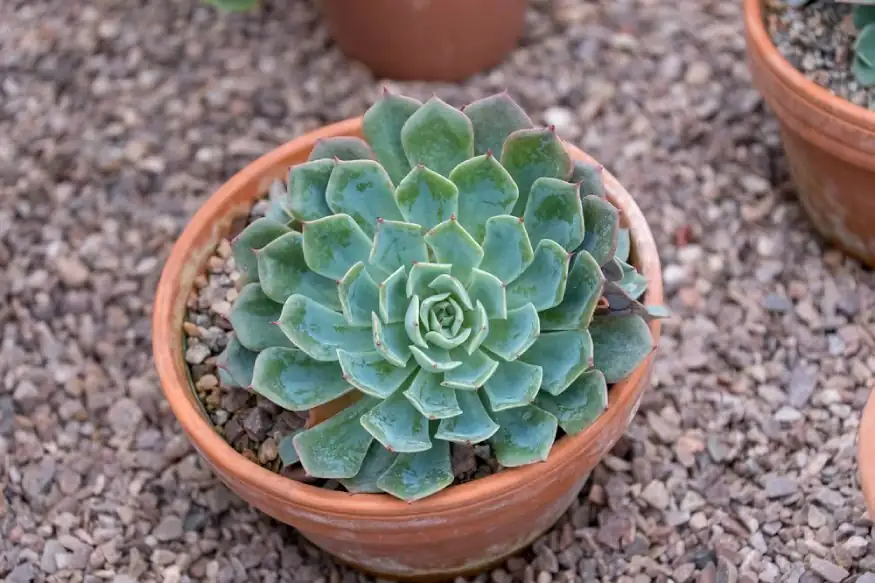
Sun-soaked and sky-colored, the Mexican snowball is a plant that seems to remember where it’s from. Picture a chalk-blue rosette snug against a rocky slope in central Mexico—Hidalgo’s light is high and clear, rain is a rumor, and the wind is a constant tutor. Out of that lean classroom, Echeveria elegans learned to keep its leaves tight, its water close, and its surface dusted with a protective bloom. Centuries later, it sits content on a sunny windowsill in London, Lagos, or Los Angeles, still wearing that same quiet armor of light.
From the mesas of Mexico to the world
Echeveria elegans is native to Mexico’s semi-arid hills—often reported from Hidalgo—where stony soils drain in a heartbeat and sunshine writes long signatures across the land. There, the plant grows as compact, lotus-like “stone roses,” each rosette a tidy spiral of thick, blue‑green to powdery blue‑gray leaves that may blush faintly pink in cool light.
That frosted look isn’t an accident. It’s strategy.
Farina: the plant’s soft armor
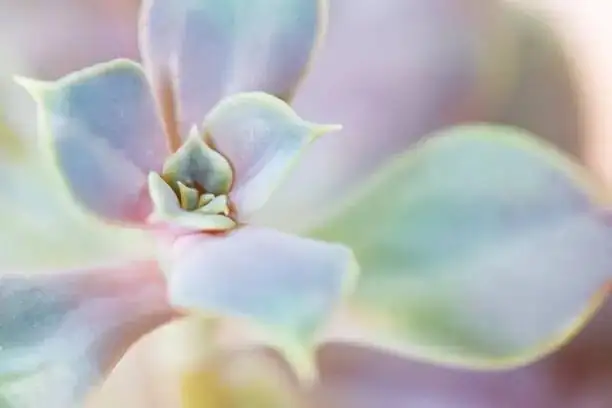
Run a finger across a leaf (actually, don’t), and you’d find a delicate, chalky coating called farina—an epicuticular wax the plant lays down like sunscreen, raincoat, and mirror all in one. It:
- Scatters harsh sunlight, preventing leaf scorch
- Slows water loss by reducing evaporation
- Helps water bead and shed from the rosette, limiting rot
Because farina is easily smudged and doesn’t “grow back” the same way, these rosettes are best admired hands-off. Fingerprints become souvenirs the plant didn’t ask to keep.
The illustrator behind the name: Echeverría’s enduring legacy
Before Echeveria was a global houseplant staple, the genus needed a name—and a story. In the late 18th century, a teenage prodigy named Atanasio Echeverría y Godoy trained at the Royal Art Academy in Mexico City and joined the famed Royal Botanical Expedition of New Spain. He sketched plants with an eye that seemed to understand both their mechanics and their charisma—how a calyx leans, how a leaf holds its light.
His work traveled farther than he did. The Swiss botanist Augustin Pyramus de Candolle later honored him by naming the genus Echeveria. Every time we speak of Echeveria elegans, we’re also speaking, quietly, of a young Mexican artist bent over a field notebook, capturing life with graphite and watercolor.
How a stone rose conquered houseplant culture
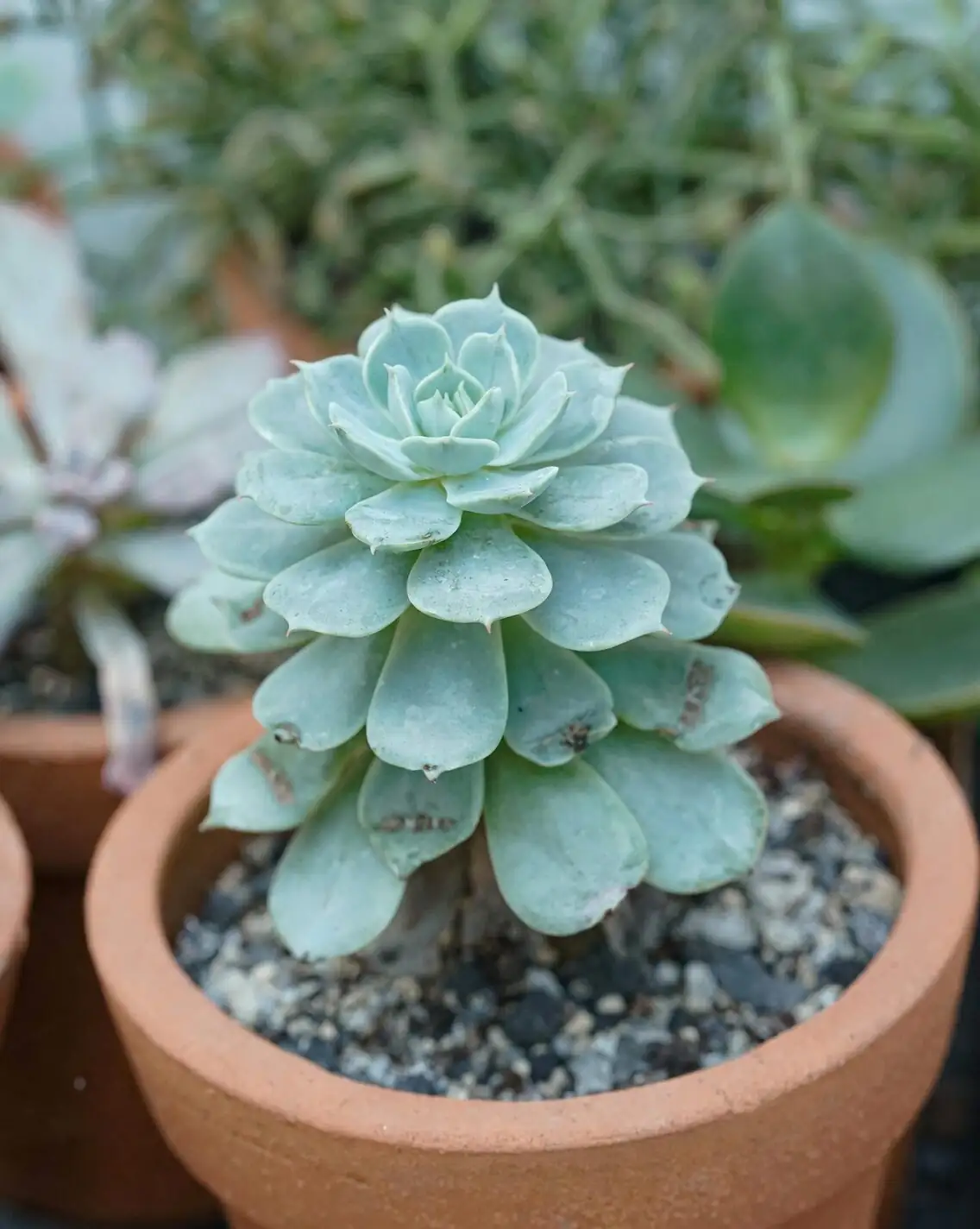
Echeveria elegans didn’t go viral because it tried. It simply looked perfect on camera and behaved beautifully at home:
- Compact symmetry: Rosettes often 8–15 cm (3–6 in) across, naturally sculptural
- Color that holds: Powdery blue‑gray to blue‑green with that matte farina glow
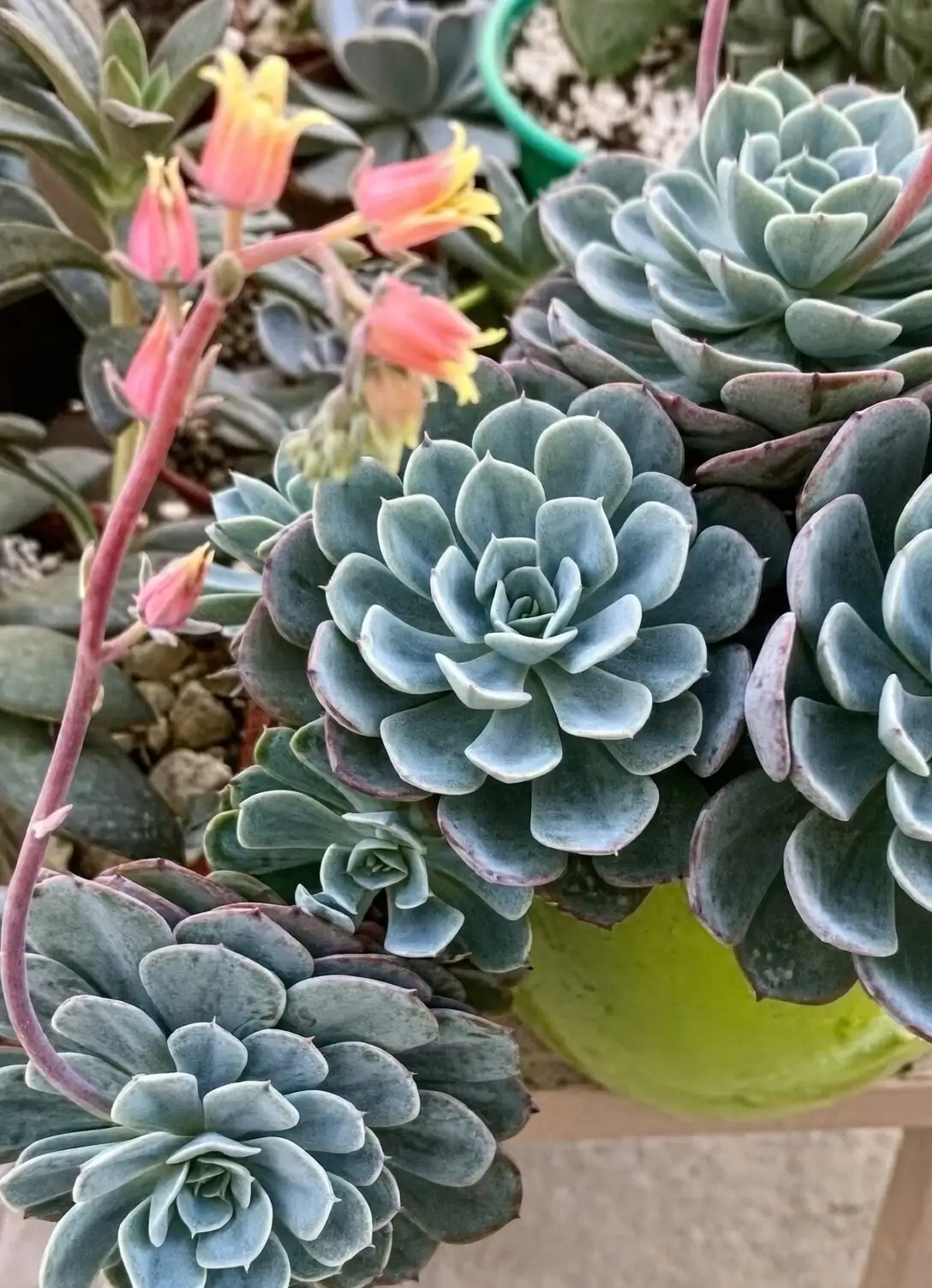
- Bloom drama, minimal effort: In late spring to summer, slender stalks rise with nodding, bell-shaped flowers—pink to coral outside, yellow within
- Clumping habit: Offsets gather into a shareable colony over time
- Easy propagation: Leaf, offset, or rosette cuttings make generosity inevitable
It was made for bright windowsills and sunlit balconies, for clean-lined pots and desk corners—modern living with a desert soul.
Meet the plant up close
- Family and genus: Crassulaceae, Echeveria
- Common names: Mexican snowball, White Mexican rose, Glaucous echeveria, Mexican gem, Pearl echeveria
- Habit: Compact rosette-forming succulent; offsets readily into low mounds
- Size: About 10 cm (4 in) tall when not in bloom; flower stalks can lift the show to roughly 10–20 cm (4–8 in)
Grow it like it grows itself: care distilled
Echeveria elegans is famously forgiving when you follow two big rules: abundant light and swift drainage.
Light
- Aim for bright light to full sun: about 4–6+ hours daily for best color and a tight rosette.
- In very hot climates, offer light afternoon shade; avoid long stretches of scorching midday sun.
- Low light causes stretching and a flatter, open rosette—your cue to move it to a brighter spot or add a grow light.
Soil and pot
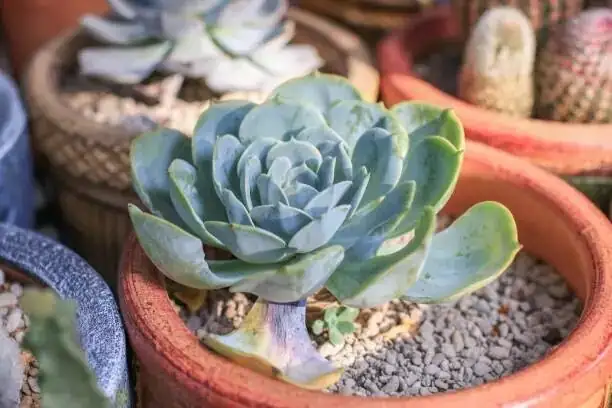
- Use a very fast-draining cactus/succulent mix—gritty and mineral-rich.
- Blend a modest organic base with plenty of coarse sand, pumice, or grit.
- Always choose a pot with drainage holes.
Watering
Use a soak-and-dry rhythm:
- Water thoroughly, then allow the mix to dry out completely before watering again.
- Keep water out of the rosette.
- Typical cadence:
- Spring–summer: about every 7–14 days (adjust for heat, pot size, and airflow)
- Autumn: reduce to roughly every 2–3 weeks if growth slows
- Winter: keep much drier—often every 3–5+ weeks indoors, or as little as 1–2 times total if kept cool
Curiosity corner: Some growers experiment with water culture. If you try it, keep part of the roots above the waterline, use nutrients lightly in spring/autumn only, and refresh the water often. Rot risk is higher than in gritty soil.
Temperature, humidity, and air
- Best growth: 15–27°C (59–81°F), with a sweet spot around 18–25°C (64–77°F)
- Protect from frost; keep above 5–10°C (41–50°F) for safer overwintering
- Loves dry air and strong airflow; avoid cool, stagnant, humid conditions
Feeding
- Light feeding in spring–summer: dilute cactus/succulent fertilizer to about 1/4 strength every 4–8 weeks.
- Skip fertilizer in winter; never splash fertilizer onto leaves.
Placement
- Sunny east or south windowsill; bright balcony or patio; or strong grow lights
- Outdoors, shelter from prolonged rain; acclimate to stronger sun gradually (a few days behind a sheer curtain works wonders)
Bloom time and what to expect
Late spring into summer, mature rosettes send up elegant, elongated stalks. The flowers are often bicolored—pink to coral on the outside, yellow within—little hanging bells that capture morning light. After blooming, you can trim spent stalks to keep the plant’s profile crisp.
Propagation: making many from one
Few plants are this generous.
- Offsets (pups): The simplest route. Separate once the pup has its own roots.
- Leaf propagation: Gently twist off a healthy leaf cleanly; let it callus for several days. Lay it on dry, gritty mix and mist sparingly until roots and a new rosette appear.
- Rosette/stem cuttings: Behead a leggy rosette, let the cut callus, then root in a gritty medium.
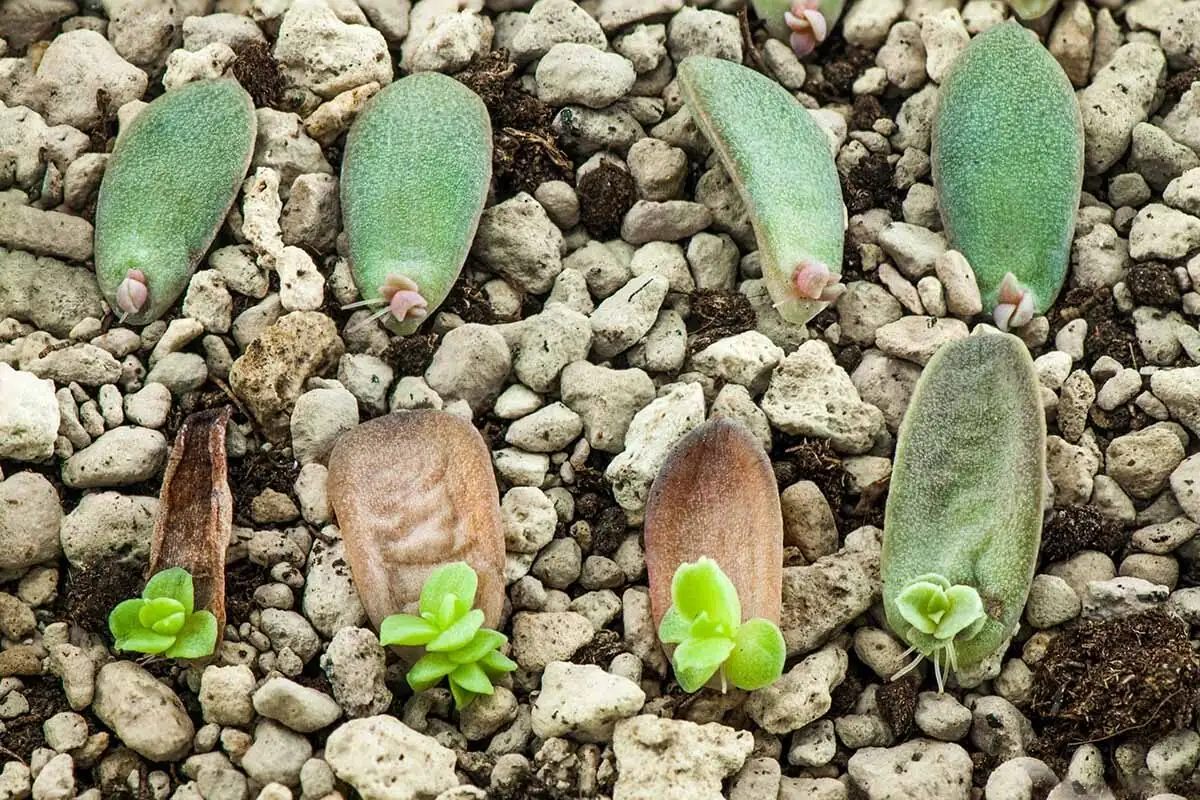
Timing: Works year-round in warm, bright conditions; many find late summer to early autumn especially reliable. In warm light, roots can appear in about 20 days. Pot up when they reach 2–3 cm (0.8–1.2 in).
Annual rhythm: a simple calendar
- Spring: Increase light and resume watering as growth wakes up; repot; remove dead leaves; begin light feeding.
- Summer: Shield from extreme heat and heavy rain; water only after a full dry-down; enjoy the blooms.
- Autumn: Ease off watering as temperatures drop; prime time for propagation.
- Winter: Keep bright and on the dry side; protect from frost and avoid cold, wet soil.
Buying and staging tips
- Choose symmetry: a tight, centered rosette with firm, plump leaves and an even powdery coating
- Avoid trouble signs: translucent or mushy leaves, blackened bases, heavy leaf drop, scars/soft spots, visible pests
- Starter size sweet spot: a compact plant around 10 cm (4 in) tall or less
- After purchase: acclimate to stronger sun gradually to prevent scorch—and don’t park it in deep shade
Pests, diseases, and how to sidestep them
- Usual suspects: mealybugs (especially in leaf axils), aphids on flower stalks, scale, thrips; occasionally weevils; in the root zone, root-knot nematodes can occur
- Diseases: leaf spot and rust, with root rot the classic issue in soggy soil
- Prevention is cultural: bright light, excellent airflow, gritty soil, and strict soak-and-dry watering
- Treatment: isolate affected plants; remove damaged tissue; dab mealybugs/scale with isopropyl alcohol or use insecticidal soap; use labeled fungicides if needed for fungal leaf diseases
Safety for homes with pets and people
Generally regarded as low-toxicity/non-toxic to people and pets. Still, nibbling may cause mild stomach upset—keep it out of reach of curious mouths.
Names that tell the tale
Common names—Mexican snowball, White Mexican rose, Glaucous echeveria, Mexican gem, Pearl echeveria—hint at frost, roses, and glow, all of it earned by those powder-blue rosettes. In Chinese horticulture, it’s widely known as 玉蝶, a name that reads like poetry: “jade butterfly.”
Flower language, symbolism, and what’s real
No ancient legend crowns this plant; its “flower language” (花语) is a modern garden invention. But the meanings ring true:
- Resilience and constancy: a rosette that holds its form through dry spells
- Enduring love: offsets gather around the mother plant, a quiet family story
- Quiet beauty: color without gloss, delicacy with toughness
These aren’t folklore so much as observation turned metaphor—how a form that survives elegantly begins to stand for what we hope to cultivate in ourselves.
Fast facts to share
- Farina is both sunscreen and rain-shedding cloak—one reason to keep water and fingers off the leaves.
- Even a single healthy leaf can become a new plant with patience, warmth, and light.
- Cold plus wet is the riskiest combination; warmth plus wind is its best friend.
- It’s best kept in USDA Zones 9–11 outdoors, with frost protection.
Why this plant still feels modern
Echeveria elegans is minimalist design perfected by evolution: clean geometry, matte color, small footprint, low maintenance. It’s a desert lesson you can keep beside your morning coffee: save what matters, shine without glare, and grow in the direction of the light. From the stone-bright slopes of Mexico to a sunlit sill anywhere, the Mexican snowball keeps its promise—beauty that endures by being prepared.