

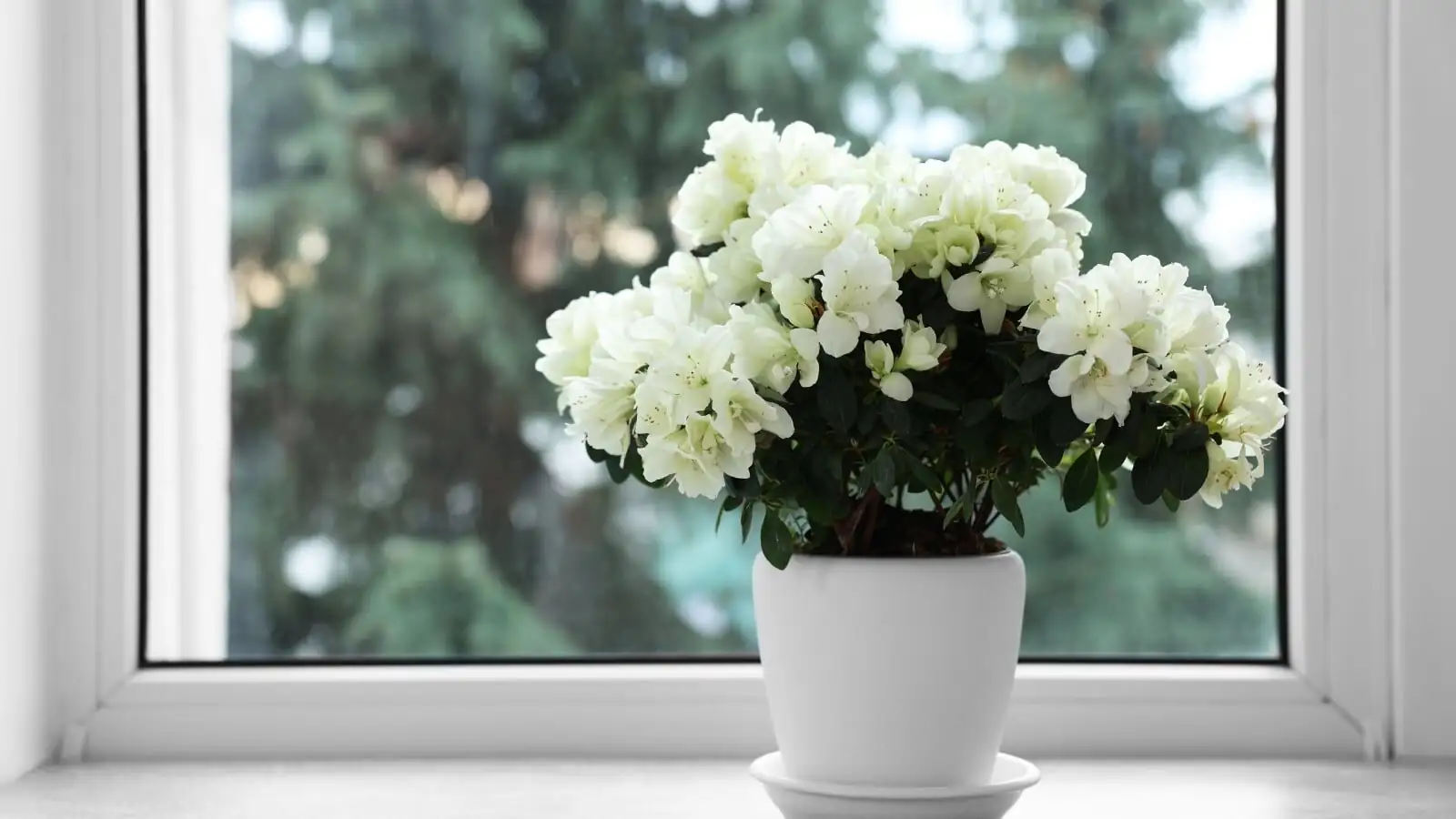
Think of winter in Europe: grey skies, a draft at the window—and on café counters and living-room sideboards, compact shrubs exploding with pink, red, and white flowers like tiny fireworks. That cheerful winter spectacle is the Belgian Azalea: Rhododendron Simsii Group, the classic “florist azalea.” Its story is a tale of trade routes, Belgian ingenuity, cool greenhouses, and one very persistent label mix-up.
From Canton to Ghent: how a Chinese shrub became Europe’s winter star
In the late 18th and early 19th centuries, evergreen azaleas from East Asia arrived in Europe by way of bustling ports and botanic go-betweens. Growers in and around Ghent, Belgium—already a powerhouse of floriculture—spotted a prize in these compact, glossy-leaved azaleas that loved cool air and bloomed in waves.
- The evergreen “florist azalea” lines were gradually forged from Asian parentage centered on Rhododendron simsii and close allies.
- Belgian nurserymen proved astonishingly adept at turning these into pot-perfect shrubs with dense branching, glossy foliage, and bud-packed trusses that open right when Northern Europe needs them most: mid-winter to early spring.
The Ghent region doubled down. Generations of breeders selected for compact habit, profuse budding, and a palette ranging from bridal white to lipstick reds and every strawberry-milkshake bicolor in between. Today, the European florist azalea industry remains concentrated in East Flanders, where “Ghent azalea” is a Protected Geographical Indication (PGI). Nearly 85% of Europe’s azaleas are grown there under strict quality standards (the PAK conditions), which even dictate the stage of bloom at sale: lots of firm buds with good color, a modest portion just opening, and pristine foliage.
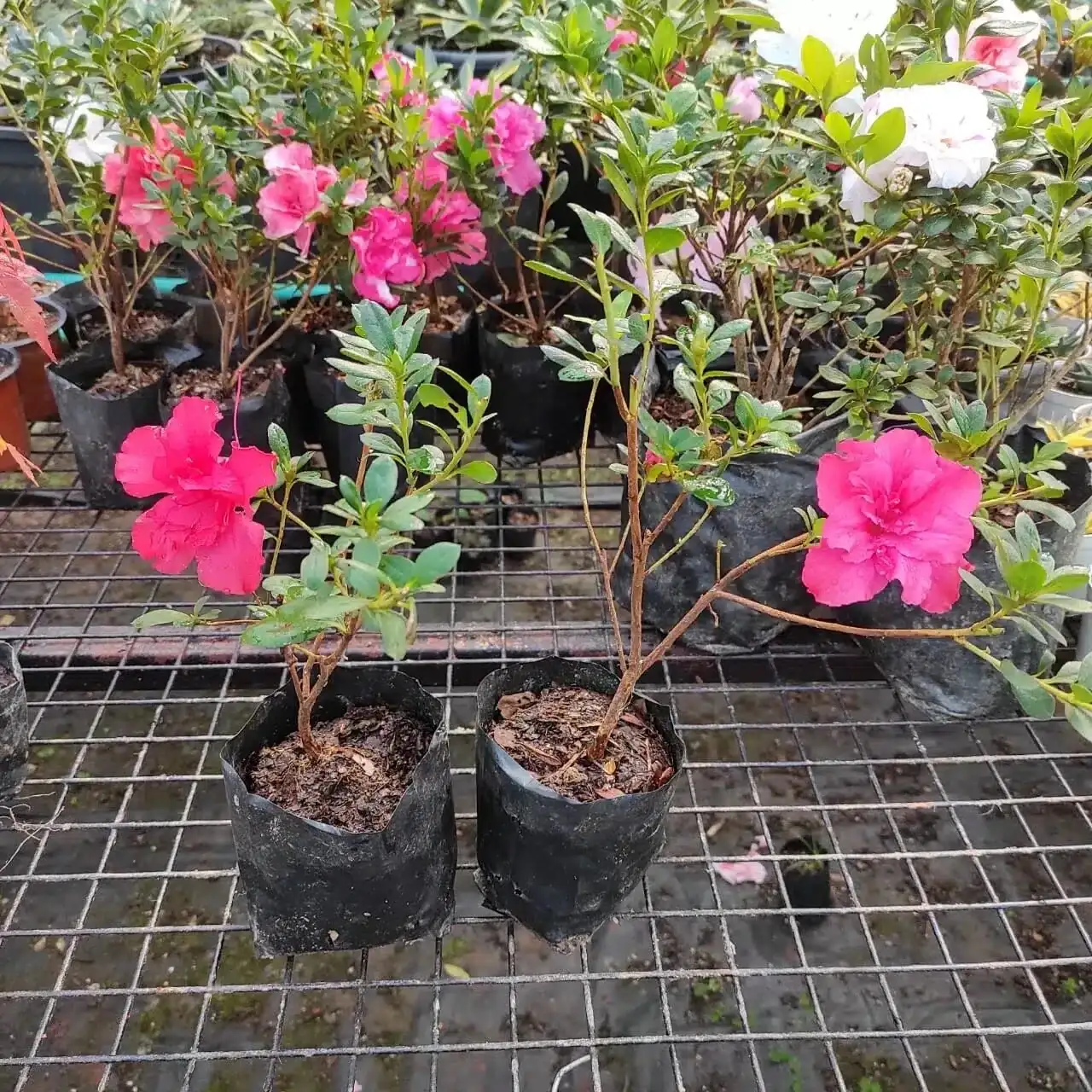
Note: Don’t confuse these evergreen florist azaleas with the historic “Ghent hybrid” deciduous azaleas of the 1800s—also bred in Belgium but a different group entirely. The PGI Ghent azalea you’ll see in winter shops is the evergreen, pot-grown Simsii Group.
The Belgian playbook: cool-air craft and winter forcing
Why do florist azaleas look their best precisely when days are shortest? Because Belgian and other European growers learned to choreograph them with the seasons.
Here’s the simplified rhythm behind those holiday-perfect plants:
- Shape and branching: Plants are pinched and lightly pruned through the growing season to form dense, mounded shrubs ideal for 15–20 cm (6–8 in) pots.
- Bud initiation: As late summer turns to autumn, cool nights and steady, bright light cue flower-bud formation.
- The cool chain: Plants are kept cool and airy—conditions they adore—to pack on buds. They’re then timed in greenhouses so buds color and open on schedule for Christmas, Valentine’s, or Easter markets. The best retail plants show many plump buds with roughly 20% of flowers just starting to open for a long display at home.
- The home hand-off: Keep them doing what the growers did—bright light, cool-to-mild temperatures, and consistent moisture in acidic, well-drained mix.
It’s equal parts horticultural instinct and calendar math. The result is a plant that turns chilly months into a private spring.
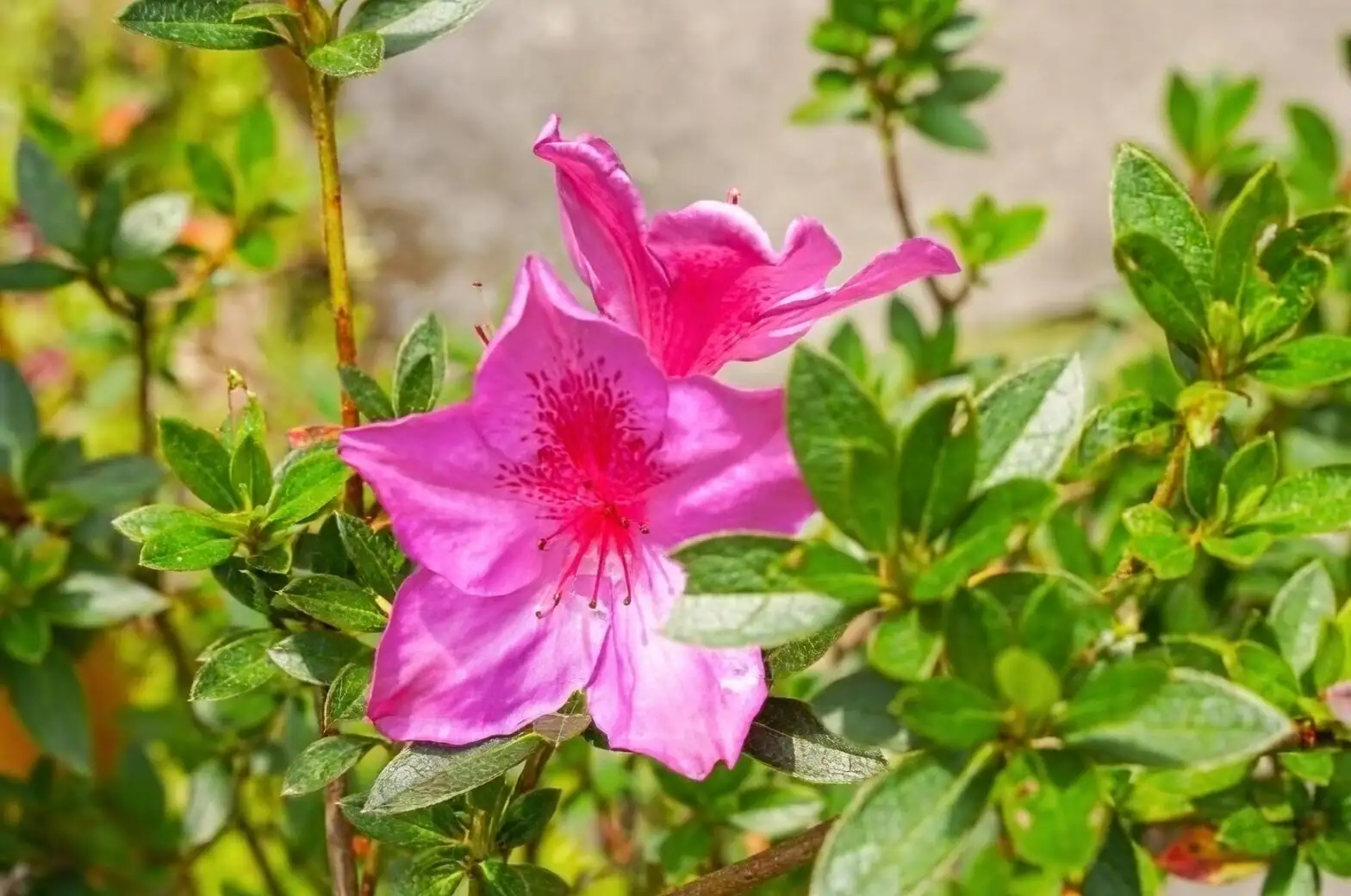
Why your label says “Rhododendron indica” (and what it really is)
Open a garden-center tag and you’ll often see “Rhododendron indica” or “Indian Azalea.” Here’s the backstory:
- In 19th-century Europe, evergreen azaleas arriving from East Asia were bundled under the catch-all trade name “Azalea indica” or “Indian azalea.” The name stuck in catalogs and on benches for generations.
- Botanical taxonomy later clarified the picture: what the florist trade was growing were hybrids centered on Rhododendron simsii. Modern, accurate usage is Rhododendron Simsii Group for the Belgian/European florist azalea hybrids.
- Many retailers still use “Rhododendron indica” as a legacy sales label. It’s handy shorthand in horticulture, but not a precise botanical ID for these modern Belgian lines.
Short version: If your winter-blooming pot azalea is labeled “R. indica,” it’s almost certainly a florist azalea of the Simsii Group.
Meet the plant: compact poise, generous bloom
- Habit and size: A compact, mounded evergreen shrub—most often 30–60 cm (12–24 in) tall and wide in pots; desktop beauties are typically 30–40 cm (12–16 in).
- Leaves: Glossy, deep green, with fine, shallow roots that demand steady moisture and excellent drainage.
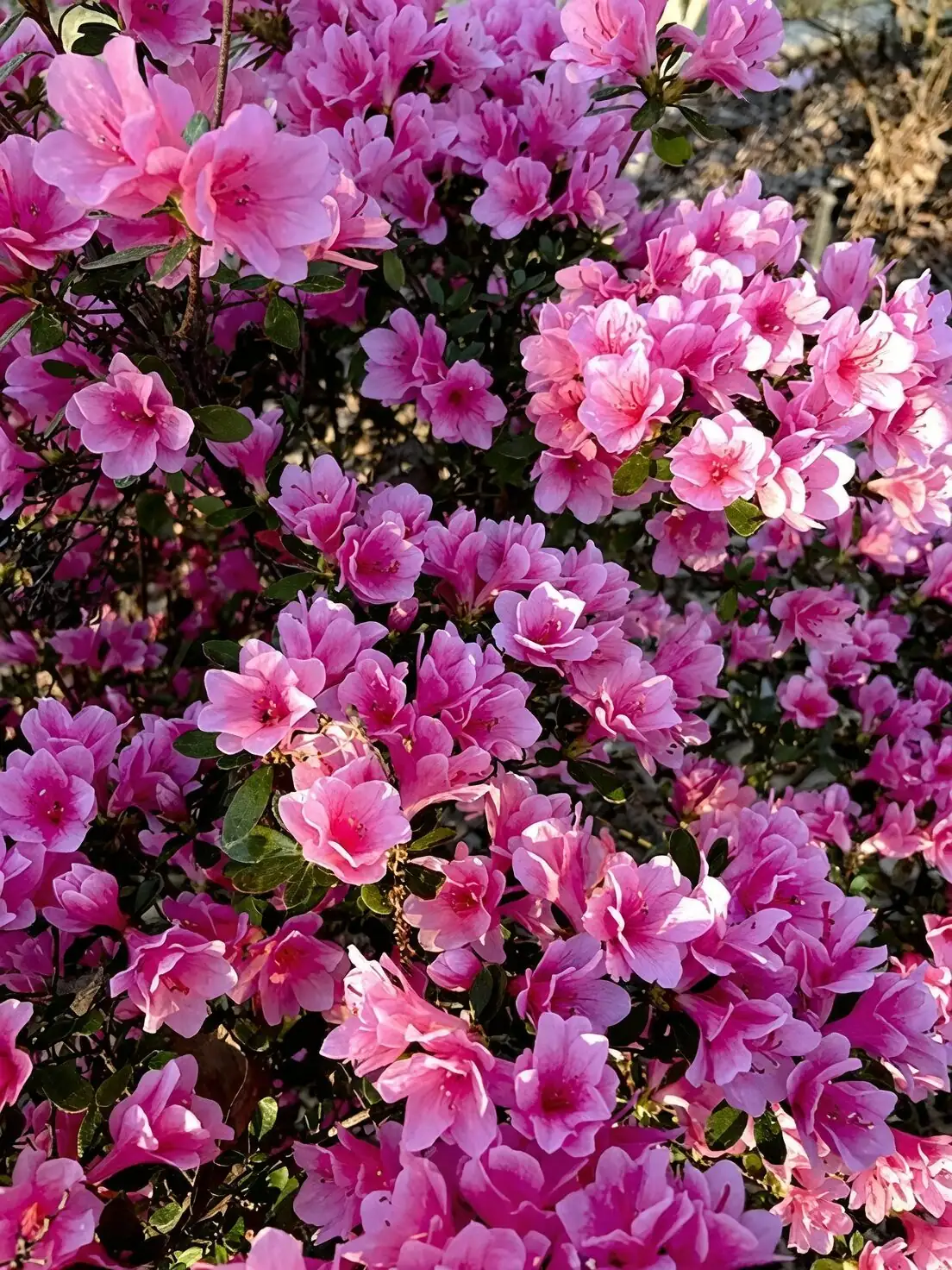
- Flowers: Dense clusters of funnel-shaped blooms—single to ruffled—spanning pinks, reds, whites, and lively bicolors.
- Season: Peak winter to spring. With excellent care indoors, some cultivars can rebloom 2–3 times per year.
At home: how to keep the show going
Think “cool mountain air in a bright room,” and you’re halfway there.
- Light: Bright light with gentle sun. An east window is ideal; a bright south window works if you avoid midday scorch.
- Temperature: Cool-to-mild (about 12–25°C / 54–77°F). Performance is best in the mid-teens to low 20s °C. Keep above 10°C (50°F) indoors in winter; avoid hot, dry heater blasts.
- Humidity: Aim for 50%+. Dry air shortens bloom and invites mites. Use a humidity tray or light evening misting during hot, dry spells (avoid leaving foliage wet overnight in cool rooms).
- Watering: Keep evenly moist—not soggy. Let the top 1–2 cm (0.4–0.8 in) begin to dry, then water thoroughly and drain. Never let the rootball go bone-dry; never let it sit in water.
- Soil: Acidic, well-drained, peat- or leaf-mold-based mix with perlite/coarse sand for air space. Always excellent drainage.
- Feeding: During active growth, feed lightly every two weeks with an acid-loving azalea/rhododendron fertilizer. If leaves yellow from alkaline water/soil, a chelated-iron supplement can correct chlorosis. Avoid heavy feeding.
- Hardiness: Treat florist azaleas as container plants—many are frost-tender and not reliably hardy outdoors. In mild climates, some may cope outside roughly in USDA Zone 8–11 (often cited 8–10), but freezing can damage or kill them.
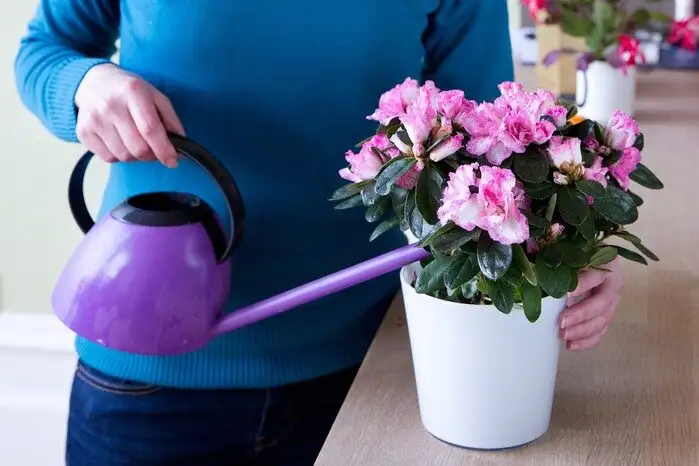
Pro tip for longest bloom: Choose a plant with lots of firm buds and about 20% just opening, then keep it cool, bright, and evenly moist.
Buying like a pro
- Look for a dense, symmetrical canopy and sturdy shoots.
- Leaves should be glossy deep green—no spots, tears, stickiness, webbing, or pests beneath.
- Pass on plants with browned flowers or many buds already dropping.
- Get it into bright, cool air immediately after purchase; keep above 10°C (50°F).
Pruning, repotting, and propagation
- Prune/pinch after flowering through the growing season to keep a rounded, airy shape; remove dead or crowded twigs.
- Repot annually in spring or right after bloom into a fresh, well-aerated acidic mix; roots are brittle, handle gently.
- Propagation: Semi-ripe cuttings in late spring to early summer (12–15 cm/4.7–5.9 in) root in roughly 8–10 weeks with warmth and humidity. Air-layering in spring takes about 4–5 months. Grafting is also used commercially.
Troubleshooting quickly
- Rapid leaf drop, stippling, or webbing? Hot, dry air and spider mites are classic culprits. Move to a cooler, brighter spot, raise humidity, improve airflow, and treat early with insecticidal soap or horticultural oil.
- Buds falling before opening? Stress—from low light, warm rooms, dry air, stagnant air, or watering swings. Keep it bright, cool, and evenly moist; smaller, more frequent sips help during bloom.
- Leaf spot or sooty mold? Improve ventilation, avoid wet foliage late in the day, remove affected leaves, and use a suitable labeled fungicide if needed.
Safety note: Toxic if ingested (grayanotoxins). Keep away from children and pets.
The Ghent azalea today: a regional craft with modern standards
East Flanders didn’t just nurture these plants—it built a brand around them. The Ghent azalea PGI means:
- Local provenance: Cultivated in East Flanders under defined conditions.
- Quality control: PAK standards oversee branching, bud stage, leaf quality, cleanliness, and overall plant vigor.
- Sustainability strides: Growers balance organic and conventional methods and often utilize outdoor or cool-house culture to minimize inputs.
When you see the Ghent azalea label or PGI stamp, you’re buying a local European product refined by two centuries of expertise.
Flower language—what these blooms have come to mean
Florist azaleas have been exchange-worthy gifts since the rise of European floriography and, later, modern gifting culture. Over time they’ve gathered meanings like:
- The joy of love and tender affection: all those soft petals in winter speak of warmth in cold times.
- Elegance and a gentle “take care of yourself”: fitting for convalescence, new homes, or simply brightening dark days.
As with most flower-language traditions, these meanings are cultural rather than botanical; they evolved in parlors and shop windows, not laboratories. Still, when an azalea lights up a room for weeks, it’s hard not to read care and cheer in the display.
Fun to know
- Many Belgian florist azaleas are bred specifically to bloom heavily in winter under cool greenhouse conditions—hence their astonishing bud counts.
- Because they’re acid-loving, hard water can lock up iron and turn leaves yellow—think “soft water, soft colors.”
- Their fine, shallow roots explain their split personality: they wilt fast if dry and crash if kept soggy. Even moisture is the magic trick.
In short: the Belgian/European florist azalea—Rhododendron Simsii Group—is a living piece of greenhouse theater. Bred for compact grace, tuned to the winter calendar, and occasionally mislabeled by history, it’s still the plant that turns January into spring on your windowsill. Keep it cool, keep it bright, and it will keep the curtain up for weeks.