

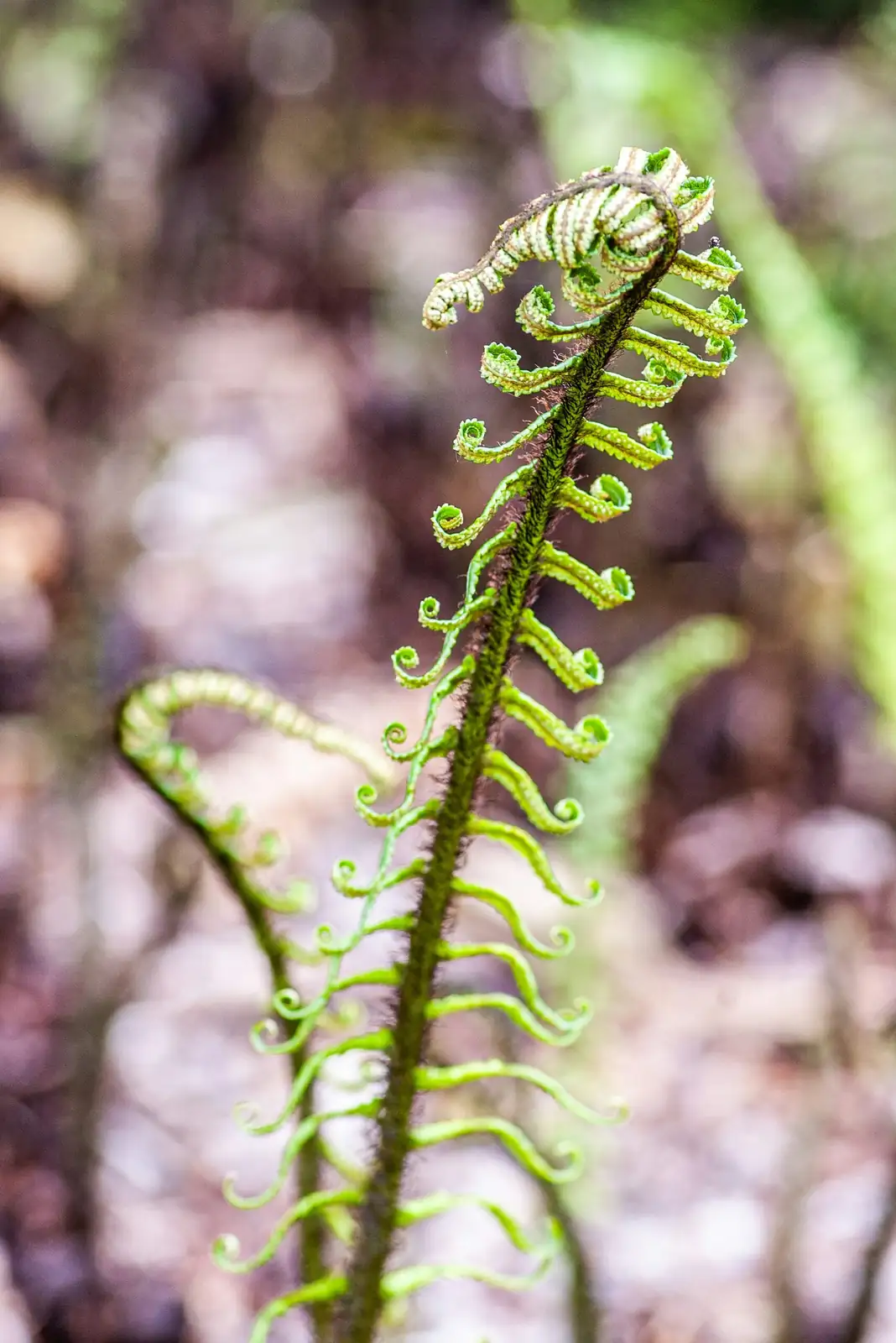
If you love the look of fresh, woodland green without the fuss of blooms, ferns (Polypodiopsida) are your people: ancient, elegant, humidity-loving, and at their best in bright shade. Dial in steady moisture and gentle light, and they’ll reward you with a fountain of feathery fronds unfurling from curled fiddleheads. Here’s your season-by-season, fail-safe care plan—complete with exact watering triggers, light thresholds, humidity hacks, soil recipes, placement smarts, and the rookie mistakes to skip.
Quick ID and Vibe
- What they are: Ferns are spore-producing plants (no flowers or fruit) with graceful, pinnate fronds. Many grow as clumps; some creep via rhizomes.
- Indoor size: Most popular house ferns reach 12–24 in (30–60 cm).
- Light style: Partial shade to bright, indirect light.
- Comfort zone: 60–80°F (15–27°C) and 50%+ humidity.
- Big mood: Shade-loving, humidity-thrilled, and happiest with evenly moist, airy, organic soil.
The Light Play: How Bright Is “Bright Indirect”?

- Target range: 1,000–3,000 lux (90–280 foot-candles) for steady indoor growth.
- Tolerable low: 500–1,000 lux (45–90 fc) slows growth but keeps fronds alive.
- Avoid: Sustained direct sun on fronds (often >10,000 lux) which scorches tips and edges.
- Window placement:
- East- or north-facing windows: Ideal, close to the glass.
- South or west windows: Back up 3–8 ft (1–2.5 m) or filter with sheer curtains.
- Tool tip: Use a free phone lux app to confirm you’re in range.
Humidity That Ferns Actually Feel
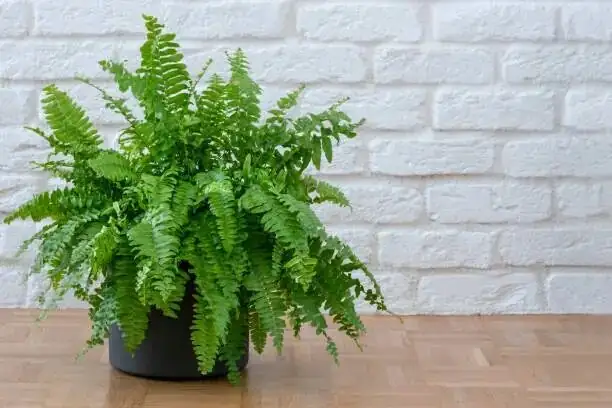
- Baseline: 50%+ RH; sweet spot 60–70%.
- High-impact hacks (ranked by effectiveness):
- Humidifier with a 60–65% setpoint (most reliable).
- Pebble tray: A wide tray filled with pebbles and water beneath the pot (pot stays above waterline).
- Grouping plants to create a local moisture bubble.
- Bathrooms/kitchens with a window: naturally higher humidity.
- Gentle, fine misting in the morning only if your room dries out—avoid drenching fronds chronically (can invite leaf spot). A humidifier is better for daily use.
- Airflow: Moderate circulation prevents fungal spots—no cold drafts or blasting vents.
Soil: The Fern-Favorite Mix (Slightly Acidic, Loose, and Moisture-Retentive)
- Target traits: Airy, organic-rich, well-draining, slightly acidic.
- DIY mix by volume:
- 40% peat moss or leaf mold (or coco + a pinch of garden sulfur if needed for acidity)
- 30% fine bark or fern fiber for structure
- 20% perlite
- 10% coarse sand
- Why it works: Holds even moisture around shallow roots but drains fast enough to dodge rot.
Watering Like a Pro: Triggers, Not Calendars
Ferns want “consistently moist, never soggy.” Over- or underdo it and you’ll see droop, crisp tips, or root rot.
- Core trigger (spring–summer): Water when the top 1 in (2–3 cm) feels slightly dry.
- Core trigger (fall–winter): Let just the top 0.5–1 in (1–2 cm) dry; never let the root ball fully dry out.
- How to water: Use room-temp water, ideally rainwater. Water slowly at soil level until 10–20% drains from the bottom. Empty saucers.
- Practical cues:
- Pot feels noticeably lighter, but not “feather light.”
- Moisture meter reads 3–4 in the top half.
- Fronds start to soften slightly at the tips (do not wait for full wilt).
- Frequency ballpark (varies with light/humidity/soil/pot):
- Warm months: often 2–3 times per week.
- Cool months: typically every 5–10 days.
- Avoid: Repeatedly soaking fronds if it causes spotting; focus on the soil.
Season-by-Season Care Calendar
Spring (Mar–May): Kickstart
- Water: Follow the spring–summer trigger (top 1 in slightly dry).
- Feed: Monthly at half-strength with a gentle liquid houseplant fertilizer.
- Repot/divide: Best time; choose a shallow pot and keep some old soil around roots to reduce shock.
- Light: Bright, indirect. Move a little closer to windows for a growth boost.
Summer (Jun–Aug): Heat Management
- Water: Check more often—heat dries pots fast. Maintain even moisture.
- Humidity: Run a humidifier or pebble trays; keep above 50%, ideally 60–70%.
- Light: Shield from harsh midday sun; east light is prime.
- Watch: Brown edges (too dry/hot) or faded fronds (too much light).
Fall (Sep–Nov): Gentle Slowdown
- Water: Gradually increase intervals; keep root ball from drying out.
- Feed: Stop once growth slows.
- Light: Shorter days—consider edging closer to windows or using a soft grow light if growth stalls.
Winter (Dec–Feb): Cozy and Consistent
- Water: Less frequent, but don’t let the core go bone dry. Use the fall–winter trigger.
- Temperature: Keep 60–75°F (15–24°C) and away from drafts and cold panes.
- Humidity: Indoor heat is thirsty—double down on humidifiers/pebble trays.
- No fertilizer. Just maintenance and tidying.
Placement Wins
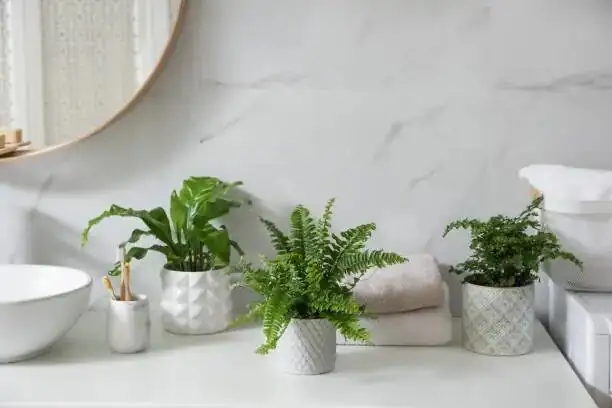
- Best rooms: Bathrooms or kitchens with a window; living rooms with bright shade.
- Display ideas: Hanging baskets or stands where fronds can arch freely.
- Draft watch: Keep away from doors, AC/heater vents, and chilly window drafts.
- Outdoor (temperate ferns): Only where species are hardy; many tropical house ferns want to stay above 50°F (10°C).
Pruning, Repotting, and Propagation
- Pruning: Snip yellow/brown/damaged fronds at the base with clean scissors. Avoid tearing the crown.
- Repotting: Every 1–2 years in spring. Many ferns prefer shallow pots.
- Propagation: Divide clumps in spring; ensure each division has roots and a few healthy fronds. Spore growing is possible but slow and fiddly for most.
Troubleshooting at a Glance
- Crispy tips/browning edges: Usually low humidity or too much direct light. Boost humidity and soften light.
- Wilting/drooping: Check the soil. Bone-dry? Water thoroughly and raise humidity. Soggy/smelly? Improve drainage and repot if roots are mushy.
- Pale or yellowing fronds: Often insufficient light or chronic overwatering. Nudge closer to bright shade and reset watering to triggers.
- Speckling/webbing: Spider mites (less common when humidity is high). Treat early with insecticidal soap; increase humidity and airflow.
- Other pests: Scale and aphids—use horticultural oil or insecticidal soap and repeat as needed.
- Fungal leaf spots/anthracnose: Improve airflow, avoid chronically wet fronds, and remove affected leaves. Use an appropriate fungicide if needed.
Rookie Mistakes to Dodge
- Letting the root ball fully dry out—sets ferns back fast.
- Parking in direct, hot sun—frond scorch is almost guaranteed.
- Overpotting in dense soil—stays wet, invites root rot.
- Constantly misting instead of humidifying—wet leaves + still air = spotting.
- Cold drafts or rapid temperature swings—fronds sulk and drop.
- Heavy feeding—fern roots burn easily; use dilute, infrequent feed in growing season only.
- Rough pruning—tearing fronds stresses the crown; always cut cleanly at the base.
A Note on Types and Tolerances
- Tropical house ferns (e.g., Boston fern types, many Asplenium, etc.) thrive indoors with bright shade, warmth above 50°F (10°C), and high humidity.
- Some temperate ferns tolerate cooler conditions down to about 40°F (5°C), but these are typically outdoor selections. Know your species before overwintering outside.
Safety, Pets, and People
- Most commonly grown house ferns are considered non-toxic to people and pets.
- Exception watch: Some species like bracken fern (Pteridium aquilinum) can be irritating or harmful if eaten in quantity—don’t forage unless you’re certain of ID and preparation.
- Sensitive individuals may react to spores—good ventilation helps.
Fern “Flower Language” and Meaning
Ferns don’t bloom, so their symbolism springs from story rather than petals. Across cultures they represent new life, growth, resilience, fertility, and protection—apt for plants that predate flowers by more than 300 million years. Victorian “Pteridomania” made ferns icons of refined taste and renewal. European folklore even imagines a mythical fern “flower” appearing on Midsummer’s Eve, a symbol of luck and secret knowledge. In truth, the magic is in the sori—the tiny sporangia under fronds where spores form—quietly promising new beginnings without ever opening a blossom.
Your Fern-Friendly Routine (One-Minute Recap)
- Light: Bright, indirect (1,000–3,000 lux). No harsh sun.
- Water: Keep mix evenly moist; water when top 1 in (2–3 cm) is slightly dry in warm months; never let the root ball fully dry.
- Humidity: 50%+, aim 60–70%. Humidifier > pebble tray > grouping. Gentle morning mist only if needed.
- Soil: Loose, organic-rich, slightly acidic; peat/leaf mold + bark + perlite + coarse sand.
- Feeding: Half-strength monthly in spring/summer. Skip fall/winter.
- Temp: 60–80°F (15–27°C). Protect from drafts and cold snaps.
Do these few things consistently, and your fern will keep rolling out those elegant, lacy fronds—like a living time capsule of the world’s green beginnings.