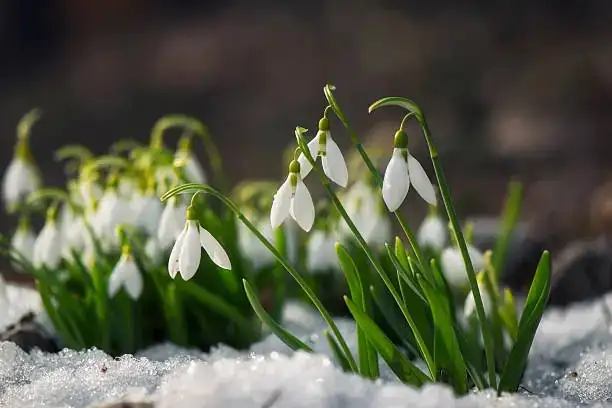
On a gray morning when the garden still wears winter’s hush, a small white bell leans out of the frost and nods. It looks like a droplet of milk suspended on a green thread—and that’s no coincidence. This is Galanthus nivalis, the snowdrop, a plant whose story runs from stony European hillsides to medieval herbals and modern lawns, earning it a place as Europe’s beloved first sign of spring.
Born of mountains and winter light
The native homeland of Galanthus nivalis is a broad European ribbon of cool woods and limestone slopes—beginning in the Pyrenees and running east and north through France and Germany to Poland, south through Italy and northern Greece, and on into Bulgaria, Romania, Ukraine, and the west and north of Turkey. In these places, snowdrops learned to seize the earliest light that filters through leafless branches, flowering when moisture is plentiful and competition is low.
From these origins, snowdrops slipped into gardens and naturalized beyond their native frontier—especially in Britain and the Netherlands, and later in parts of North America—always choosing the same kind of setting: bright winter sun under deciduous trees, then gracious summer shade after the canopy leafs out.
“Milk flower,” named for a miracle of timing
The genus name Galanthus blends two Greek words—gala (milk) and anthos (flower)—a perfect nod to those milky, bell-shaped blooms. The species epithet nivalis means “of the snow,” a wink to both the flower’s color and its astonishing schedule. Together, the name reads like a tiny poem: milk flower of the snow.
Common names have always loved the snowdrop too. “Snowdrop” captures the droplet form; “February Fairmaids,” a traditional English name, marks the plant’s favored month and its pure white dress. Many of these names circle around the same idea: brightness and bravery in the last weeks of winter.
Early garden fame: from herbals to hedgerows
The snowdrop slipped into the European gardening imagination early. By 1597, it appears in John Gerard’s famed herbal—clear evidence of its presence in cultivated gardens. In the years that followed, it took root in monastic grounds, manor lawns, and cottage borders alike, quietly escaping to the countryside where it found the dappled woodland edges it loves.
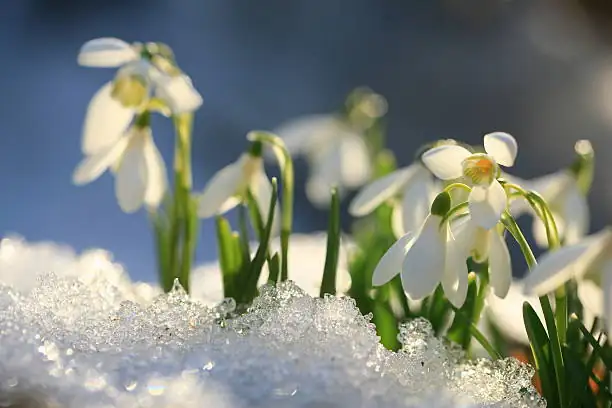
- 16th–17th centuries: Snowdrops move from continental woods into northern European gardens; “snowdrop” appears in print by the early 17th century.
- 18th–19th centuries: They spread and self-sow into great naturalized drifts, particularly in Britain and across northern Europe, becoming seasonal landmarks along paths, riverbanks, and churchyards.
- Today: Galanthophiles—the dedicated devotees—trade subtle forms with green-tipped petals and doubles, while conservation-minded growers emphasize garden propagation. The genus Galanthus is listed under CITES Appendix II, so international trade is regulated to protect wild populations.
How the snowdrop became Europe’s first sign of spring
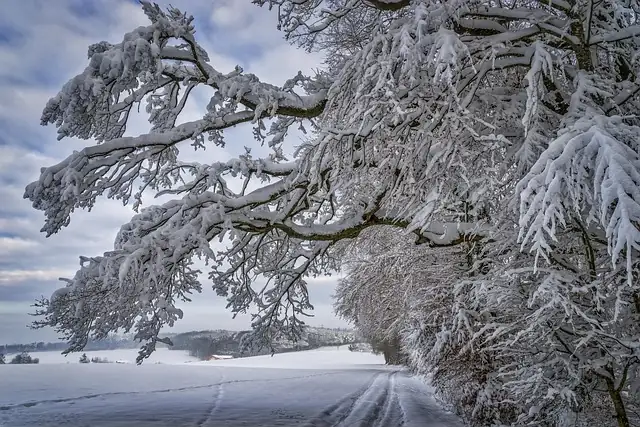
Snowdrops are master strategists in cold climates. They flower late winter to early spring (often January to March), long before most competitors stir. Their leaves are tough and pointed, built to “drill” through crusted soil and even a thin cap of snow. The blooms hang downward like lanterns turned toward the earth, protecting precious pollen from sleet and drizzle. And the plant’s cold-hardiness—down to around -20°F (-29°C)—lets it risk a bet that few others can.
Culturally, this timing wrote the legend. When a carpet of white bells appears beneath bare boughs, the landscape seems to exhale. Church calendars once met them at Candlemas (early February), and village paths are still mapped by their appearance. In a season of scarcity, they also feed the first hungry pollinators—a quiet ecological kindness.
Symbols, stories, and the “flower language” of snowdrops
The snowdrop’s flower language—its symbolic “speech”—is widely glossed as hope, renewal, purity, consolation, and new beginnings. Unlike invented meanings that sometimes cling to flowers, snowdrop symbolism is grounded in what the plant actually does: it refuses to wait for comfort. It blooms into cold and persuades the year to turn.
- In Christian lore, snowdrops are linked with the Virgin Mary and with Candlemas, their whiteness echoing purity and their timing promising light after darkness.
- Victorian folklore is intriguingly divided: a lone snowdrop brought into a house was sometimes considered unlucky, a harbinger of death; yet drifts of them in churchyards and meadows symbolized comfort and hope. The tension makes sense—white can mean shroud or bridal veil, sorrow or celebration—yet the living plant insists on resilience.
- Modern readers of “花语” (flower language) can take a cue from nature: the snowdrop’s deepest meaning is earned by its behavior—steadfastness under hardship, and the clear, calm courage to begin again.
A quick field portrait
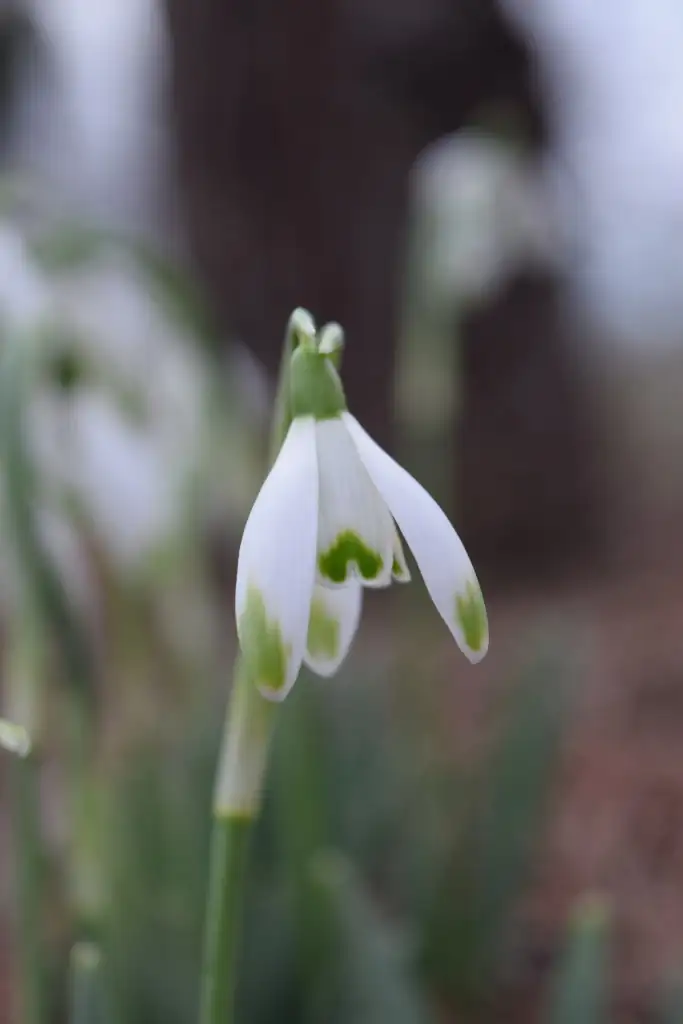
- Habit and height: Perennial, bulb-forming, typically 7–15 cm (3–6 in) tall, clumping up over time and naturalizing where happy.
- Leaves: Two to three basal, glaucous gray-green, lightly waxy, with tough, pointed tips designed for punching through frozen, compacted soil.
- Flowers: Usually one nodding, bell-shaped white bloom per stem. Six tepal segments in two circles—three pure-white outer segments and three shorter inner ones marked with green at the tips.
- Season: Late winter into early spring—just when the garden needs a banner of hope the most.
Bringing the legend home: how to grow it
Think like a woodland edge, and the snowdrop will reward you for decades.
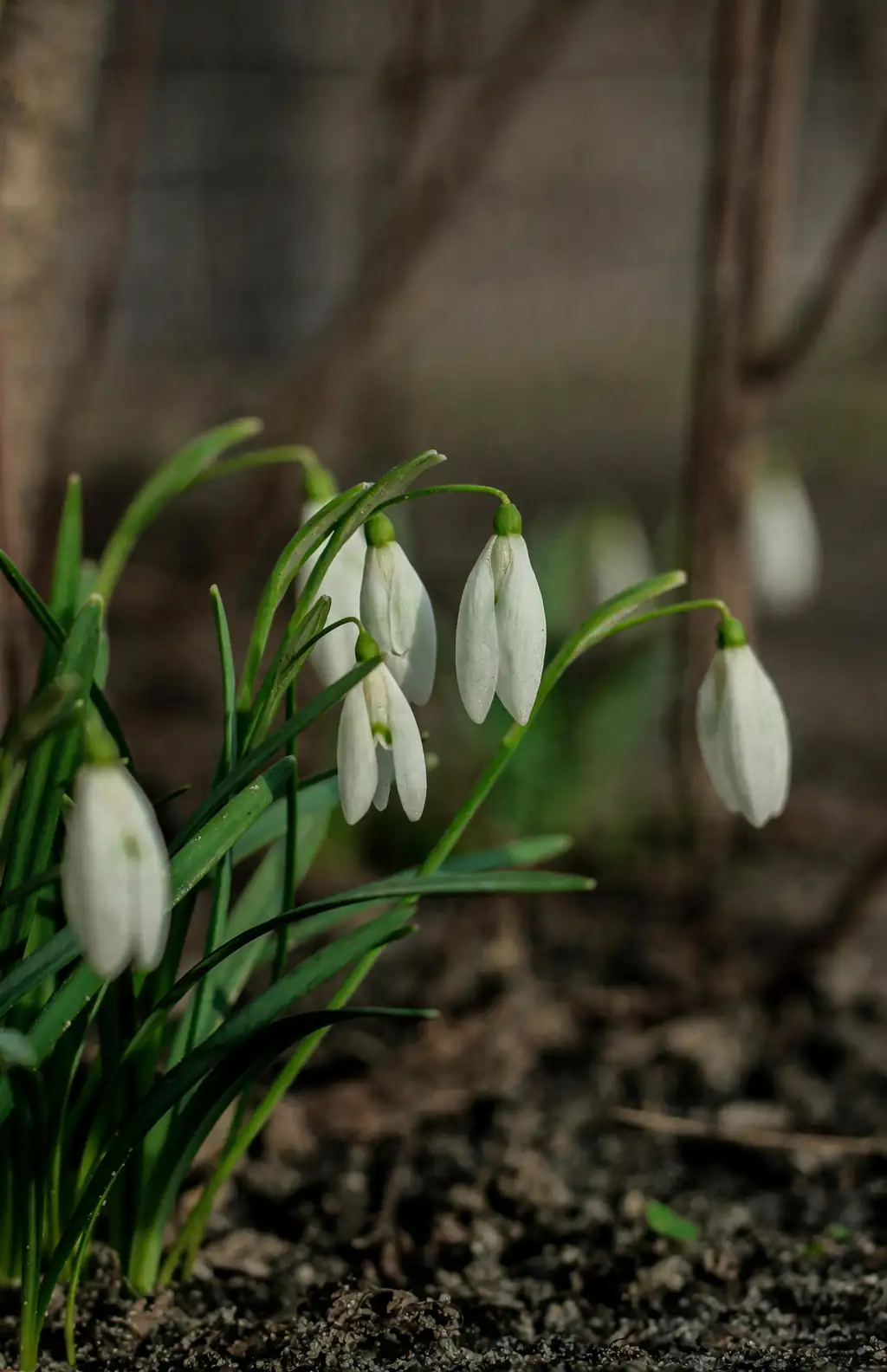
- Light: Full sun in late winter/early spring; part shade later. Under deciduous trees is ideal.
- Soil: Humus-rich, well-drained, often happiest in alkaline/limestone soils with plenty of organic matter.
- Moisture: Evenly moist while in growth; avoid waterlogging. During summer dormancy, keep it on the drier side.
- Cold: Very hardy; thrives in cooler climates (USDA Zones 3–7; some forms edge into Zone 8).
- Planting:
- Best: “In the green” right after flowering (late winter to early spring), replanting immediately.
- Or: Dry bulbs in autumn, about 7–8 cm (3 in) deep—but know they can dehydrate and may establish more slowly.
- Aftercare: Let foliage die back naturally; don’t tidy too soon. Light feeding around bloom or in early spring is plenty.
- Multiplying the magic: Divide clumps “in the green” after flowering every few years if bloom wanes; they also self-seed and naturalize gently.
- Companions: Hellebores, winter aconites, and early crocuses make beautiful February company.
Safety, resilience, and small marvels
- Largely trouble-free and unpalatable to deer, rabbits, and rodents thanks to protective alkaloids.
- Toxic if ingested by people or pets—handle sensibly and keep away from curious mouths.
- The alkaloid galantamine, associated with snowdrops, is used in modern medicine to treat certain symptoms of Alzheimer’s disease—another way this little bulb has touched human life.
A brief timeline: from woodland whisper to spring’s headline
- Ancient times: Adapts to cool European woods and limestone slopes, perfecting its early-bloom strategy.
- 16th century: Enters northern European gardens; firmly on record by 1597 in herbals.
- 18th–19th centuries: Naturalizes widely; becomes a seasonal sensation in estates and village greens.
- Today: Regulated international trade for wild populations; garden-propagated forms flourish; snowdrops remain the continent’s quintessential first bloom of spring.
Step outside on a late-winter day and find a patch of snowdrops. Listen. The garden isn’t silent; it’s whispering its opening line. A milk-white bell is ringing the year awake.