

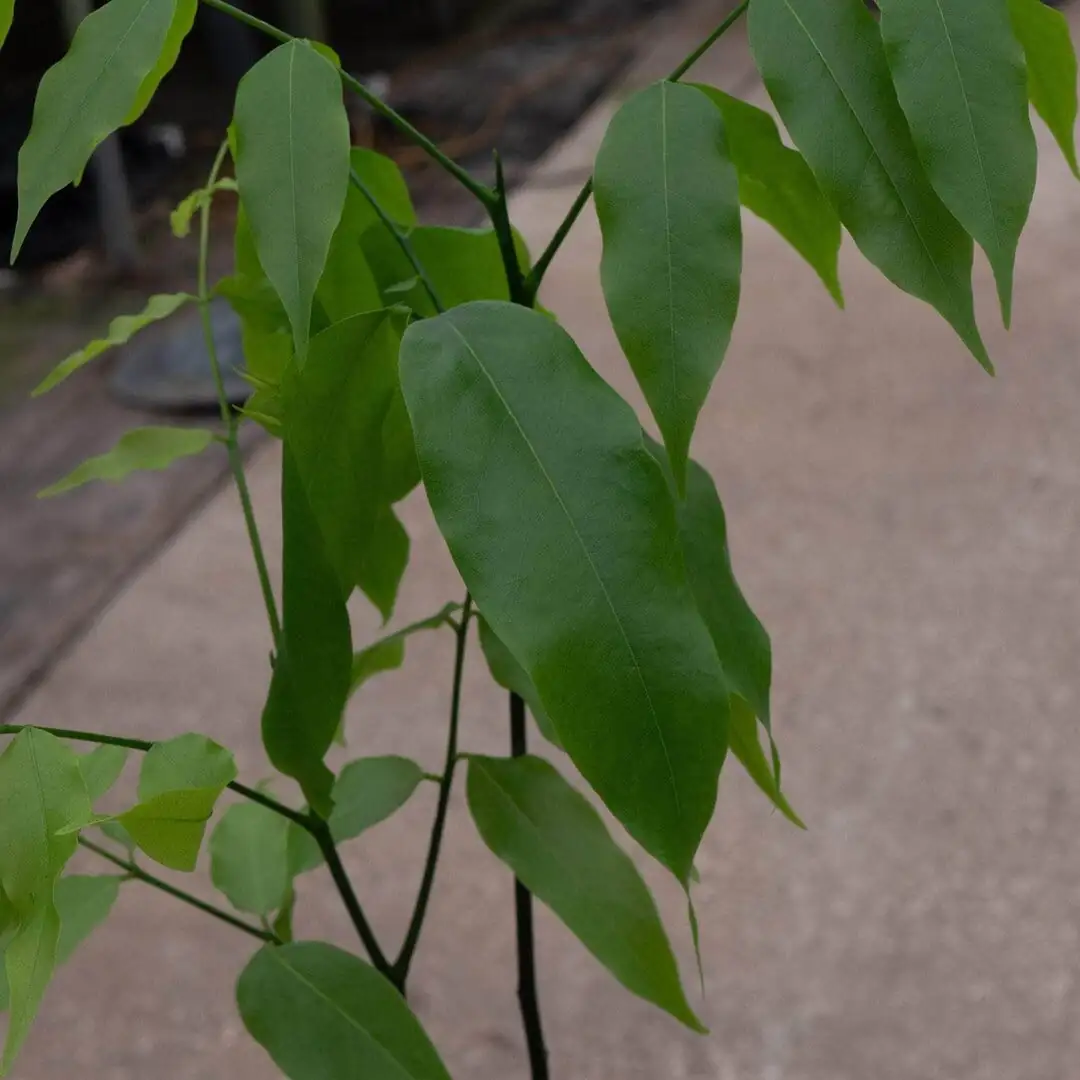
Imagine a tiny tree cupping two glossy green “ingots” in its hands—that’s Castanospermum australe, a desk-friendly seedling that can graduate, with grace, into a tall, elegant indoor tree. If you’re styling desks, shelves, or a bright entryway, this Australian evergreen is a versatile, long-game companion that looks refined at every stage.
Meet Castanospermum australe
Also called Moreton Bay Chestnut or Black Bean Tree (and often marketed as “Money Tree”), Castanospermum australe is native to northeastern Australia. Young plants sprout from round, chestnut-like seeds; their thick green cotyledons splay like a pair of little ingots—an instant conversation starter. As it matures, it develops glossy, pinnate leaves on an upright, evergreen framework.
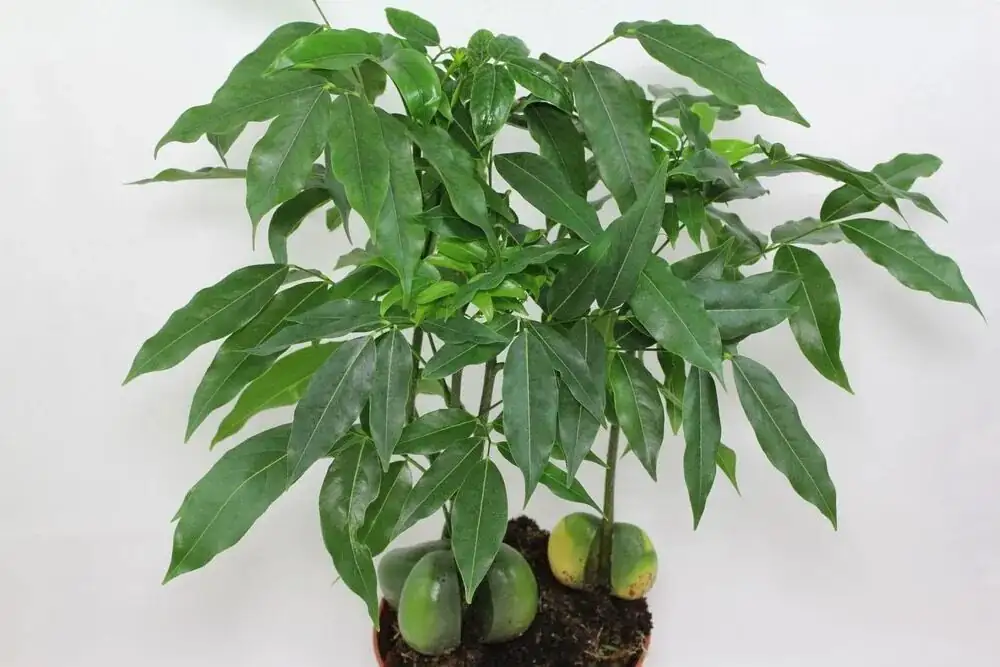
- Habit: Upright, evergreen tree; dense branching over time
- Light: Bright, indirect light to partial shade when young; larger plants can take brighter light (avoid harsh midday sun)
- Scale: Commonly sold in 9–12 cm pots for desks; can be trained into a 1–2 m indoor specimen with time and space
Styling for desks and shelves
Where to place it
- Light sweet spot: Near a bright east or softly filtered south window. Use a sheer curtain to dodge harsh midday sun, which can scorch leaves and cause drop.
- Height tricks: On a desk, raise it slightly on a tray or low stand so the cotyledons and new leaflets are right in your sightline.
Pot choices for the 9–12 cm stage
- Best look: A simple matte ceramic cup with drainage, a footed mini planter, or a sleek cachepot hiding a drainage-holed nursery pot.
- Color palette: Deep greens, charcoal, sand, or warm white echo the plant’s glossy foliage and “bean” tones without stealing the spotlight.
- Water display moment: Seedlings can also be shown in water for a while. Use a clear glass cylinder or lab-style beaker for a sculptural vibe. Rinse and refresh water weekly and keep in bright, indirect light.

Grouping for humidity (and style)
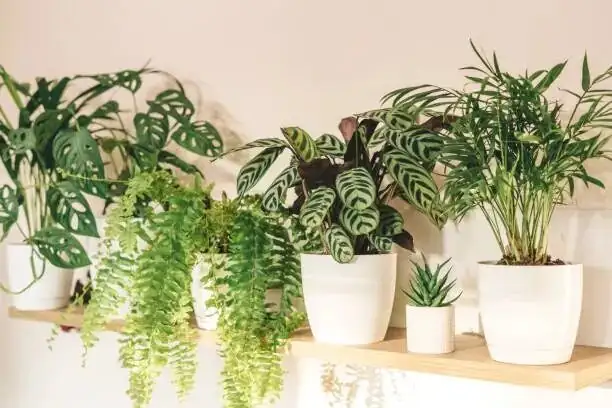
Castanospermum loves humidity. Cluster it with other foliage plants to create a microclimate and a richer composition:
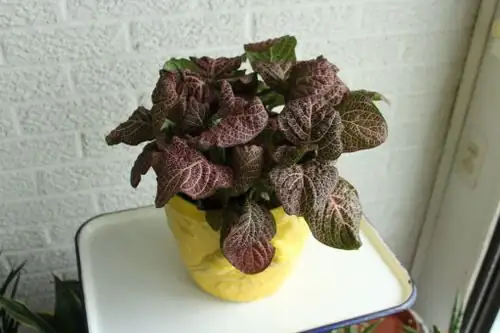
- Trios that make sense: Your Castanospermum + a ferny texture + a compact foliage plant with round leaves.
- Hidden helper: A pebble tray under the group. Fill a shallow tray with stones, add water just below the stone tops, and set pots on top—evaporation boosts humidity without waterlogging.
- Misting rhythm: In dry summer/autumn air, mist the foliage around twice weekly. Reduce in winter.
Keeping proportions elegant as it sizes up
Think in chapters—Small (10 cm pot), Medium (13–15 cm), and Statement (20–30 cm deep). At each step, respect the plant:pot:space balance.
Chapter 1: Small, 10 cm pots
- Proportion rule: Pot height about 1/3 the plant’s total height keeps it looking intentional rather than top-heavy.
- Avoid upsizing too soon: Slightly snug roots help the tree stay neat. Oversized pots can lead to soggy soil and lanky growth.
Chapter 2: Medium, 13–15 cm pots
- When to move: Repot roughly every 2 years, or when roots circle the base and watering frequency spikes.
- Pot shape: A slender cylinder or tall footed planter keeps the vertical lines clean without bulking up the base.
- Pinch to polish: If it starts reaching, pinch or cut back shoot tips in autumn to winter to control height and encourage branching.
Chapter 3: Entryway statement, 20–30 cm deep container
- The look: Train it into a 1–2 m specimen over a few years for a bright hallway or living room.
- Instant fullness: Plant several strong seedlings together in a deeper container (about 20–30 cm deep) to create a richer canopy as it matures.
- Proportions: For taller plants, let pot height sit around 1/4–1/3 of plant height. A weighted base (ceramic or stone) stabilizes the vertical silhouette.
- Placement: Bright entryway light with sheer-filtered sun. Give it room around the foliage—negative space makes it feel designed, not crammed.
Potting mix and watering that protect your design
- Soil: Rich, well-drained mix—blend fertile loam or quality potting soil with a peat-based component and some sand. Fold in a small amount of well-rotted organic fertilizer. Avoid waterlogged mixes.
- Watering cadence: During active growth, keep the mix evenly moist, never soggy. Let the top centimeter just begin to dry before watering again. Reduce in winter.
- Drainage matters: If you love a decorative cachepot, keep the plant in a plastic inner pot with drainage and lift it out to water. No standing water left in the sleeve.
Light, temperature, and humidity—your styling insurance
- Light: Bright indirect to partial shade when young; larger plants tolerate brighter sites. Protect from harsh summer midday sun.
- Temperature: Best at 20–28°C (68–82°F). Keep above 7°C (45°F) in winter; below ~5°C (41°F) it may drop leaves.
- Humidity: Prefers humid air. In dry seasons, mist about twice per week; use groupings and pebble trays as stylish tools.
Shaping, pruning, and repotting
- Pruning: To prevent a lanky look, pinch or cut back tips in autumn to winter for branching and a denser crown.
- Repotting: Typically in the 5–15 cm range early on; upsize about every 2 years. Trim old or rotten roots, refresh mix, and tuck it into partial shade for a short recovery period.
Hydro display option for seedlings
- Vessel: Clear glass to celebrate the seed and emerging roots.
- Care: Bright, indirect light; rinse roots and refresh water weekly. This is a display phase—transition to a potting mix for long-term growth to avoid rot.
Styling-smart care routine
- Feeding: Every 2–3 months in the growing season with a balanced fertilizer (e.g., 20-20-20) or a diluted organic feed. Don’t overdo it—excess fertilizer can cause overly lanky growth.
- Cleaning leaves: Wipe with a soft, damp cloth to keep that gloss—and your composition—spotless.
- Seasonal tweaks:
- Spring–summer: Even moisture; fertilize every 2–3 months; shield from harsh sun.
- Summer dry spells: Mist twice weekly or use a pebble tray.
- Autumn: Maintain humidity; prune tips if needed to refine shape.
- Winter: Water less; keep warm (above 7°C/45°F).
Troubleshooting aesthetics and health
- Sudden leaf drop: Often from cold drafts or temperatures near/below 5°C (41°F). Move to a warmer, stable spot.
- Scorch or pale patches: Too much direct midday sun—add a sheer curtain or shift back from the window.
- Lanky growth: Light too low or fertilizer too strong—move brighter (indirect) and cut back on feeding.
- Brown edges/tips: Air too dry—lean on grouping, pebble trays, and gentle misting.
- Pests: Watch for spider mites and scale. Rinse foliage, then use horticultural oil/soap or an appropriate miticide/insecticide if needed.
- Diseases: Can develop rust—improve airflow, avoid prolonged wet foliage, and treat early with a suitable fungicide where permitted.
Buying guide: pick a looker from the start
- Choose plants with fully green, intact cotyledons and fresh green new pinnate leaves.
- In 12–15 cm pots, clumps with about 7–9 strong sprouts deliver a lush, full look right away.
Safety and gifting symbolism
- Safety: Household safety for ingestion isn’t firmly established; as a precaution, keep seeds and plant parts away from pets and children.
- Symbolism: Its modern “money tree” reputation comes from those thick green cotyledons that open like tiny ingots—a symbol of prosperity and steady growth. It’s a contemporary good-luck gesture rather than a classical flower-language tradition.
Quick palette for each spot
- Desk or shelf: 9–12 cm matte ceramic cup; glass hydro cylinder for a limited-time sculptural display; trio grouping on a pebble tray.
- Console or sideboard: 13–15 cm tall cylinder planter; one or two companion plants for humidity and layered textures.
- Bright entryway: 20–30 cm deep, weighted planter; several strong seedlings grown on into a 1–2 m statement tree; generous negative space to show off the canopy.
Nurtured with warm temperatures, bright filtered light, and a little humidity magic, Castanospermum australe evolves from charming “little ingots” into a sleek, architectural indoor tree—always on theme, always in proportion, and always stylish.