

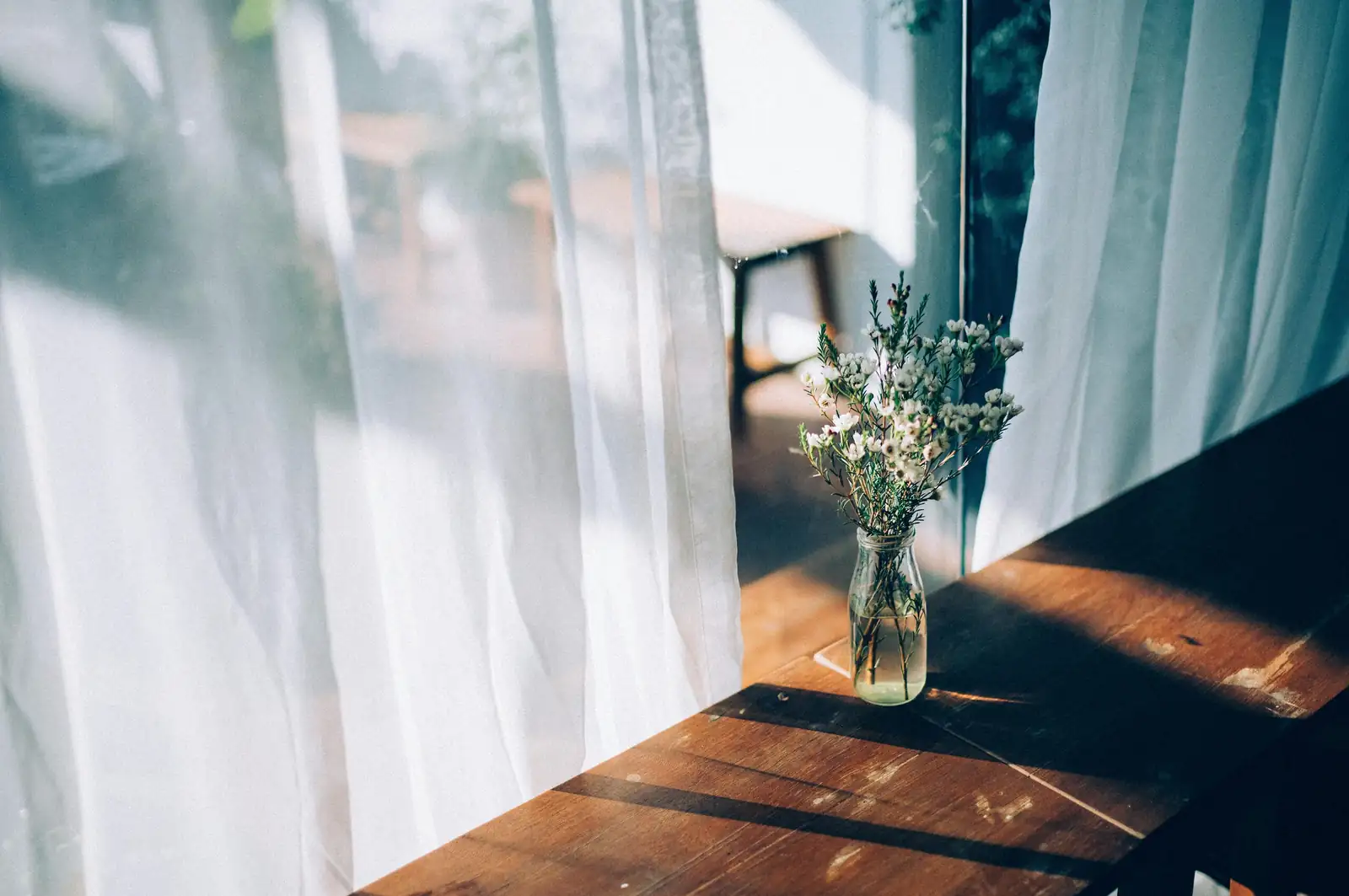
Imagine a cool, bright room in late winter, a vase singing with color and fragrance. Each day another blossom unfurls along a slender, arching spike, as if spring itself were arriving in graceful installments. That’s the quiet theater of Freesia × hybrida—a modern hybrid with deep roots in the wild landscapes of southern Africa.
From Cape dunes to windowsills: the wild beginnings
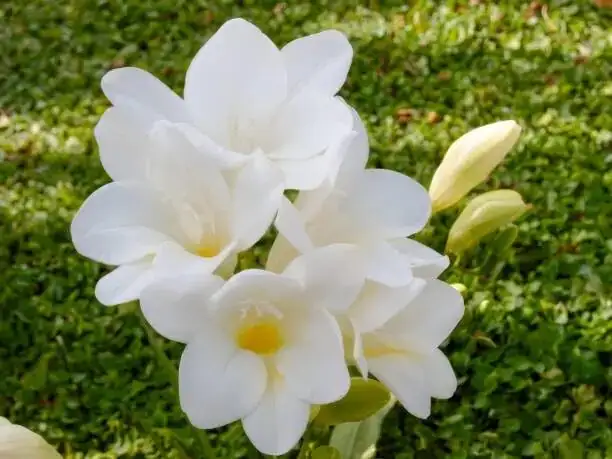
Long before freesias perfumed florists’ coolers and wedding aisles, they hid in sandy soils and stony slopes along South Africa’s coast and interior. There, in the winter-rainfall climate of the Cape, species such as Freesia refracta and the richly perfumed Freesia leichtlinii subsp. alba unfurled elegant, funnel-shaped flowers. Many wild freesias carry their blooms along one side of a gently arched spike—an arrangement that looks like a poised dancer’s arm and, practically speaking, allows the buds to open in a tidy sequence.

Beneath the surface, these plants don’t grow from true bulbs but from neat, conical corms. Each season, a corm breaks dormancy with cool weather, pushes up narrow, sword-like leaves, and then sets its signature blossoms. After flowering, it cleverly replaces itself and tucks away several baby offsets (cormlets), ready to multiply when the earth cools again.
A note on names and lineage
- Family: Iridaceae (the iris family)
- Genus: Freesia
- Modern cultivated plants: Freesia × hybrida (hybrids of several southern African species)
- Etymology: The genus honors Friedrich Freese, a 19th-century German physician and botanist.
- Historical twist: Garden writing once loosely labeled showy selections as “Freesia refracta.” Today, most pot and cut-flower freesias you meet are properly grouped as Freesia × hybrida.
How breeders remixed the Cape’s palette
When European growers first introduced freesias to cultivation, they were captivated by a clean, elegant profile and a fresh, sweet fragrance. Breeders set out to amplify three things:
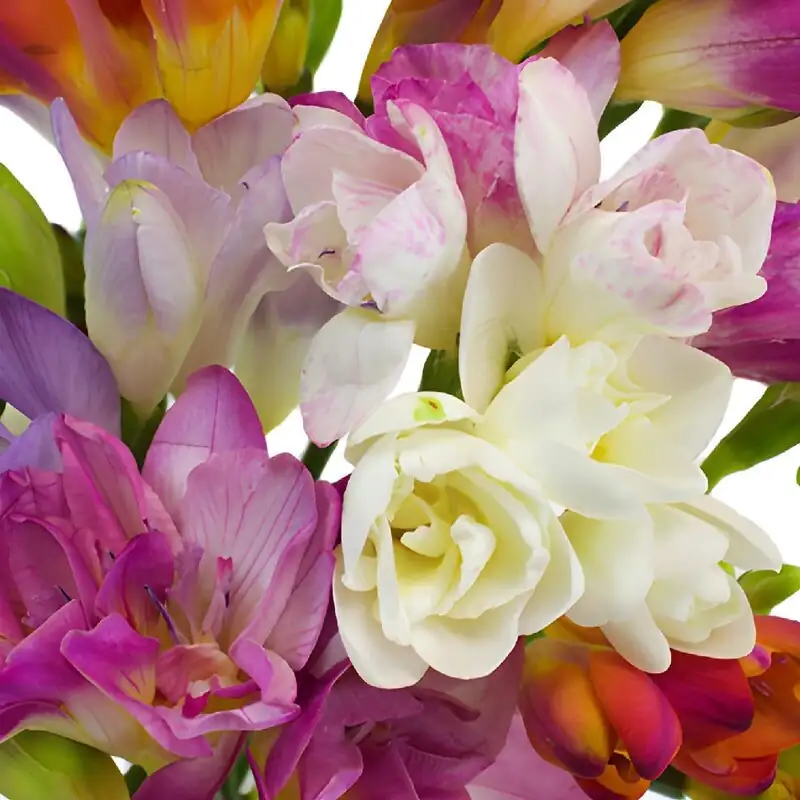
1) Color range
- From the original whites and creams with yellow markings, breeding opened the spectrum to sunshine yellows, soft pinks, coral and orange, cherry-reds, and lively bicolors—all while preserving that luminous, funnel-to-trumpet flower form.
2) Fragrance
- Scent was never negotiable. Selections drew on strongly perfumed wild parents—think of the intense sweetness of F. leichtlinii subsp. alba—refining aroma while pairing it with better garden and vase performance.
3) Cut-flower stamina
- Freesia stems carry 6–10 buds that open in sequence. Breeders leaned into this natural rhythm, aiming for sturdy, straight stems, generous bud counts, and flowers that hold their posture in cool rooms and in the vase. Handling knowledge evolved alongside: harvest when the first bloom opens and two or more buds show color; keep stems cool and away from ethylene (ripening fruit), and they’ll stage a remarkably long show.
The result? Freesia × hybrida—graceful, fragrant, and purpose-built for late-winter to spring joy, indoors and out in mild climates.
What makes Freesia × hybrida a cut-flower star
- Sequential bloom: Buds open one by one along a one-sided, arching spike—built-in longevity.
- Cool-loving: Kept around 15–20°C (59–68°F), blooms last; warmth speeds fade and can make stems floppy.
- Scent-forward: A fresh, spring-clean fragrance that reads as bright without being heavy.
- Buying sweet spot:
- Potted plants: Choose sturdy stems with healthy, narrow green leaves; half the buds just starting to open.
- Cut stems: Buy when the first flower is open and at least two more buds are showing color.
Vase-care tips
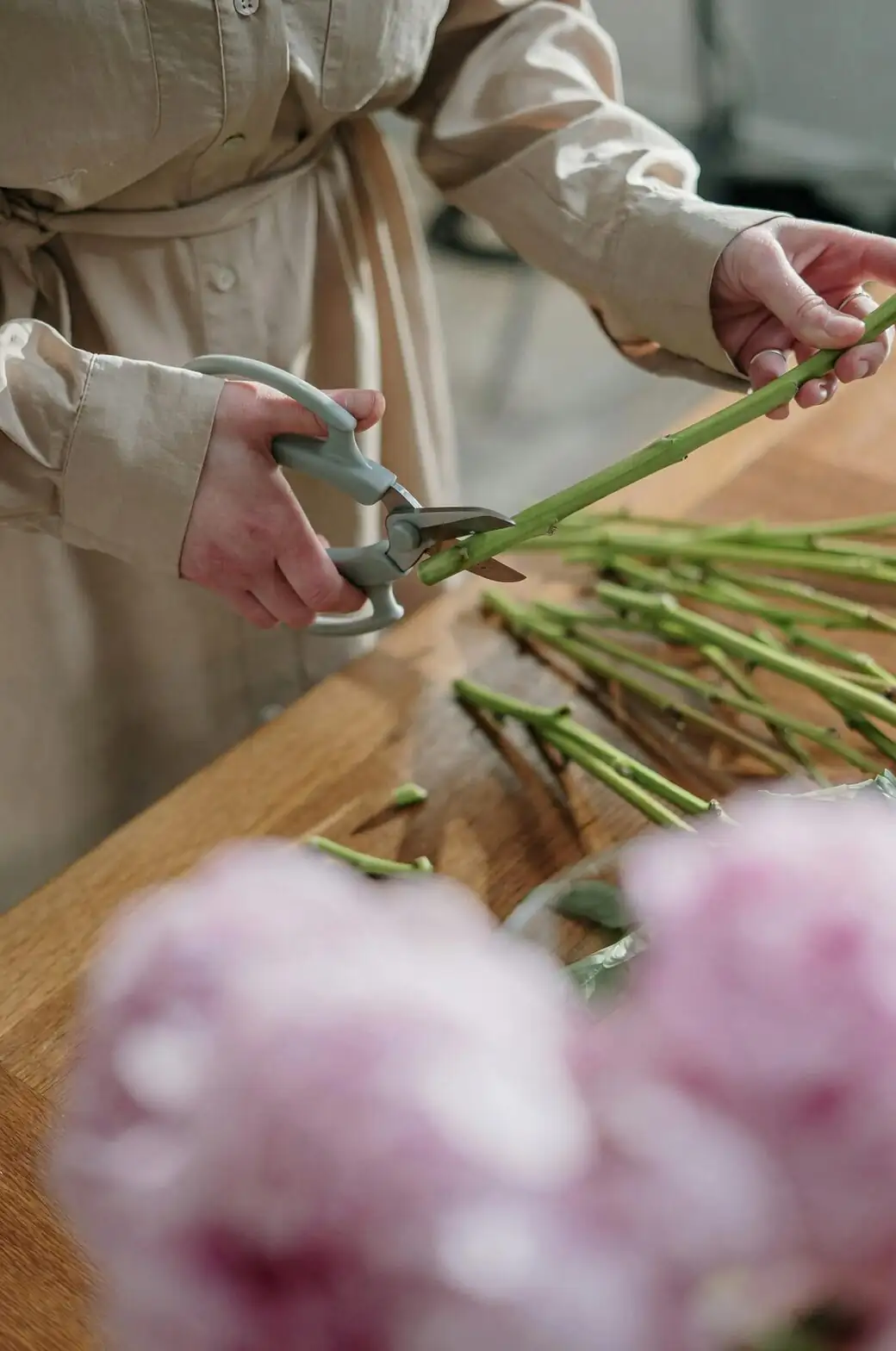
- Recut stems and place immediately into cool, clean water.
- Keep in bright, indirect light (not hot sun), ideally 15–18°C (59–64°F).
- Change water often; remove spent florets to tidy the spike.
- Keep away from ripening fruit and exhaust fumes—ethylene shortens bloom life.
Growing your own: recreate the Cape breeze indoors
Think “bright and cool with fresh air.” Freesia shines when you give it light, drainage, and a gentle hand with water.
Light and placement
- Full sun to very bright light; indoors, an east or south window is ideal.
- Avoid deep shade, hot glass, and stuffy rooms; protect from harsh midday heat.
- Keep away from heaters, AC blasts, and ethylene sources (ripening fruit).
Temperature and season
- Best growth and bloom: 15–20°C (59–68°F); nights around 14–16°C (57–61°F).
- Heat above ~20°C (68°F) can cause weak, floppy growth and shorter flowering.
- Frost-tender: in the ground only in mild climates (roughly USDA Zone 9–11). Otherwise, grow in pots and protect from freezing. For safety, keep above ~5°C (41°F); brief near-0°C (32°F) exposure only if well protected.
Soil and planting
- Mix: fertile but fast-draining (loam + leaf mold/compost + coarse sand or perlite).
- Depth: plant corms 2–3 cm (0.8–1.2 in) deep in pots; 3–4 cm (1.2–1.6 in) in the ground.
- Spacing: a 12–15 cm (4.7–5.9 in) pot fits 5–7 corms snugly for a full display.
Watering and feeding
- Water evenly during active growth and bud formation—never soggy.
- Typical indoor rhythm: 2–3 times weekly at peak bloom; taper to weekly as flowering wanes.
- After flowering, reduce over ~1 month; once leaves yellow, stop watering entirely for dormancy.
- Feeding: light and timely. Options:
- A diluted balanced feed about every 10 days during leafy growth, stopping once spikes are up; or
- A bloom-leaning feed every 2 weeks during growth, with a very dilute phosphorus/potassium boost as spikes emerge.
- Avoid heavy feeding during peak flowering.
Support and airflow
- Stake lightly if needed—freesias can flop in warm, low light.
- Maintain fresh air; still, humid rooms invite gray mold (Botrytis).
Dormancy and the next act
- After bloom, the plant forms a new replacement corm and several cormlets (often 3–5).
- Let foliage ripen and yellow naturally; then store corms dry and airy, commonly around 25°C (77°F).
- Replant in early autumn (often September). As shoots appear, water lightly (about weekly), increasing as growth quickens.
A seasonal calendar
- Winter to early spring: brightest, coolest spot you have; even moisture; enjoy the show.
- After flowering: tidy spent blooms, keep leaves until they yellow; reduce water.
- Late spring–summer: fully dry rest; lift and store if desired.
- Early autumn: replant, resume light watering as growth returns.
Size and looks, at a glance
- Habit: corm-forming perennial, grown as a cool-season bloomer with a dry summer rest.
- Height: typically 20–45 cm (8–18 in) in pots.
- Leaves: narrow, sword-shaped, fresh to mid-green.
- Flowers: strongly fragrant, funnel-to-trumpet-shaped, along one side of an arching spike; 6–10 blooms per stem.
- Colors: white, cream/yellow, orange, pink, red, and many bicolors.
- Bloom season: late winter to spring (timing varies with planting date and temperature).
Health, pests, and safety
- Watch for: corm/bulb rots and gray mold in soggy, still conditions; mosaic virus on suspect plants.
- Prevention is everything: start with firm, clean corms; use fast-draining mix; avoid overcrowding; water carefully; keep good airflow.
- Remove and discard badly rotted or virus-suspect plants promptly.
- Safety: not widely listed as highly toxic, but treat corms and foliage as potentially irritating if chewed. Keep away from children and pets; strong fragrance may bother scent-sensitive folks in enclosed spaces.
Flower language and what it says today
Freesia’s “flower language” traces to Victorian floriography and was later popularized by modern gifting culture. Traditionally, freesia signifies purity, trust, and thoughtful affection—the kind of sincerity that feels fresh and unforced, much like its fragrance.
- Red: admiration
- White: romantic love
- Pale yellow: warm fondness and friendship
While not a scientific code, these meanings resonate with the plant’s character: clean-lined blooms, a gentle arch of the spike, and a scent that arrives like honest conversation—bright, clear, and full of promise.
Why Freesia × hybrida keeps winning hearts
- It brings spring indoors exactly when we need it most.
- It’s exquisitely fragrant without grandstanding.
- It offers a painter’s palette of colors on a sculptor’s elegant form.
- It turns a vase into a weeklong narrative—bud by bud, bloom by bloom.
Whether as Cape-born heirlooms reborn through modern breeding or as potted companions on a cool windowsill, freesias prove that great plants are part botany, part craft, and part theater. Plant a small pot in autumn, and when winter draws in, your home will answer with light, scent, and the soft arc of a flower spike writing spring into the air.