

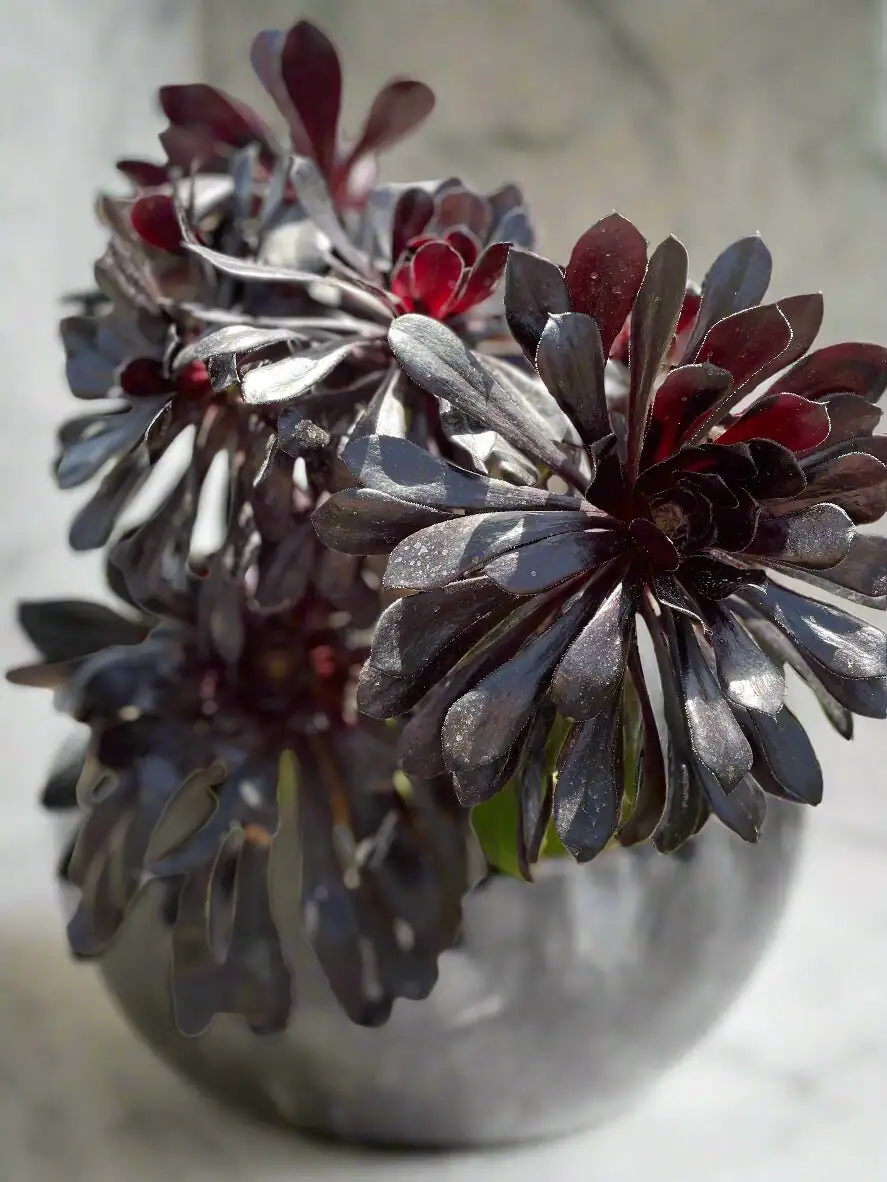
On sun-bathed Atlantic islands where volcanic rock meets salt wind, a tree-like succulent evolved into living architecture. From those Canary Island cliffs came Aeonium arboreum—branching, sculptural, resilient. And then, in the hands of horticulture, one inky, brooding beauty stole the show: Aeonium arboreum ‘Zwartkop’, the “Black Rose” that turned Mediterranean gardens and modern balconies into open-air galleries.
From Lava to Living Sculpture: Canary Island Roots
Aeonium arboreum is a Canary Islands native—part of the Macaronesian flora shaped by ocean light and porous volcanic soils. In those bright, breezy habitats, rosettes perch at stem tips like suns caught in slow motion. Gardeners fell for that rosette geometry, and soon a dark-leaved selection—‘Zwartkop’—emerged in cultivation, its glossy, near-black heads echoing obsidian.
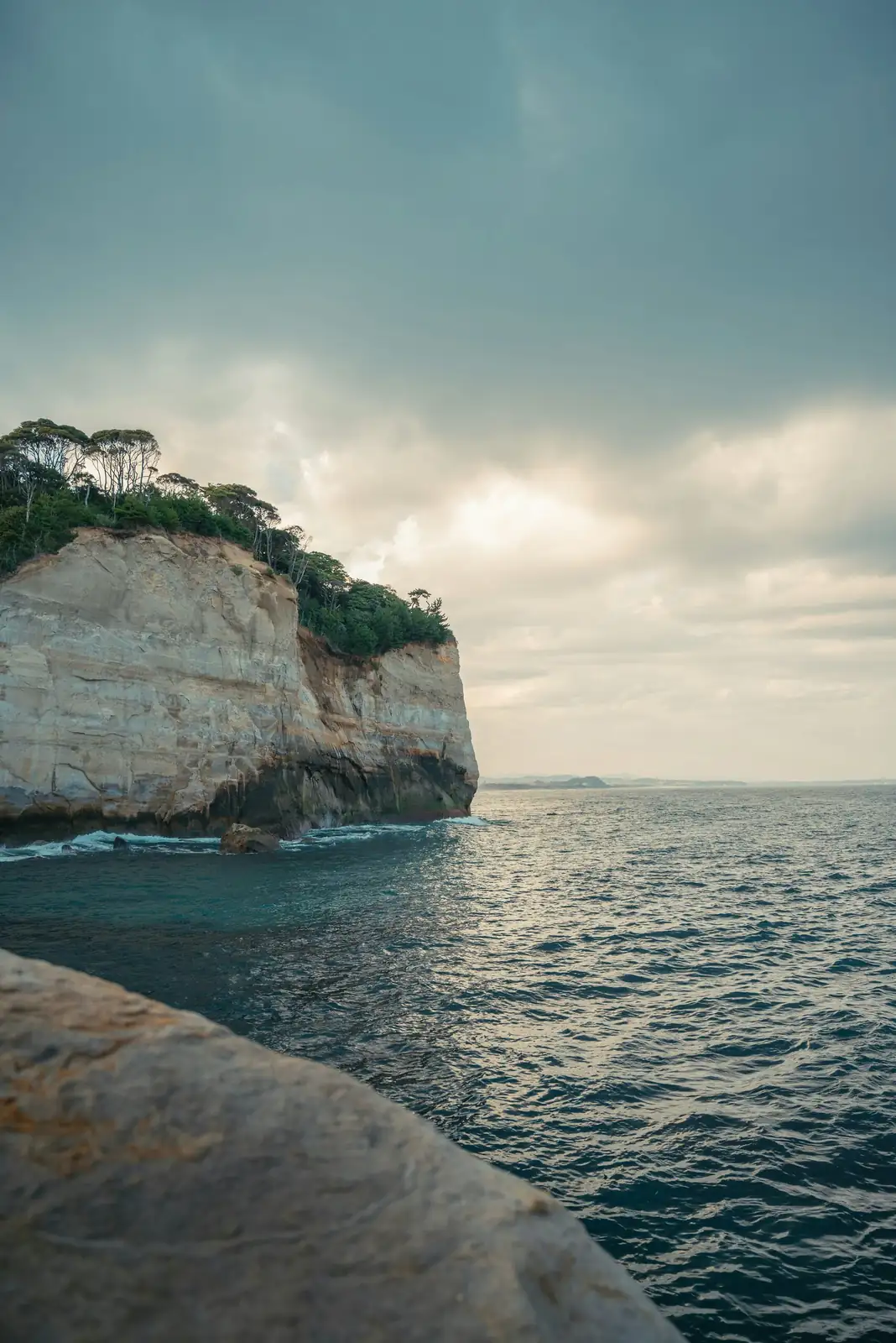
While you’ll see Morocco or the wider Macaronesian region mentioned in popular sources, botanical consensus keeps Aeonium arboreum rooted squarely in the Canary Islands. ‘Zwartkop’ is the cultivated, dramatic offspring of that island lineage—proof that nature writes the draft and gardeners edit for flair.
Enter ‘Zwartkop’: The Dark Star
- Color: Deep burgundy-purple to nearly black in strong light (often with a greener center during active growth)
- Form: Dense, spoon-shaped leaves in tight, symmetrical rosettes on upright, branching stems
- Habit: A compact, clumping, rosette-forming succulent that often grows strongest from autumn through spring, then eases into summer slow-down or semi-dormancy
- Flowers: Mature rosettes may launch upright clusters of small, starry yellow blooms in spring; that rosette then declines, while its neighbors carry on
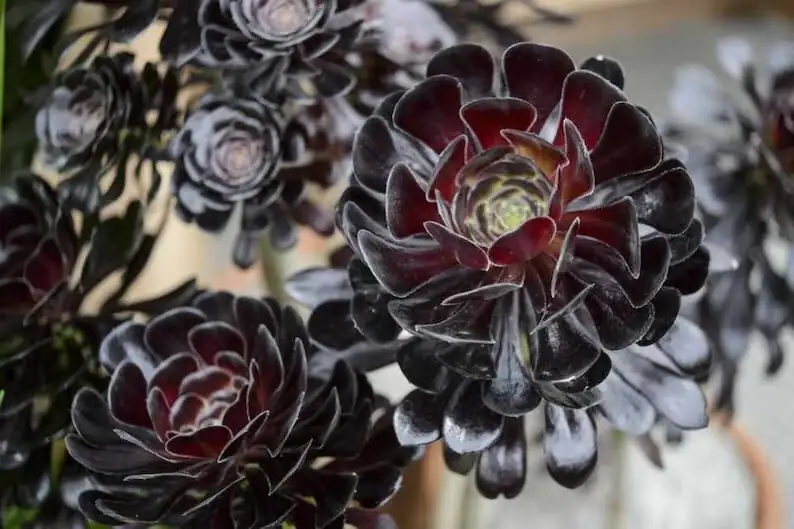
In containers, young plants stay trim (often around 10 cm/4 in), but given time and a bit of pruning savvy, ‘Zwartkop’ can become a charismatic specimen up to about 60 × 60 cm (24 × 24 in).
The Name Game: How to Say It, How You’ll See It Sold
- Standard name: Aeonium arboreum ‘Zwartkop’ (Dutch for “black head,” pronounced roughly “ZVART-kop”)
- Popular aliases: Black Rose Aeonium, Black Rose, Black Tree Aeonium, Aeonium ‘Black Rose’
- Nursery quirks: You may also see it labeled as Aeonium ‘Zwartkop’ or even as ‘Schwarzkopf’ in the trade. The look is unmistakable: dark, glossy, rose-like rosettes on woody stems.
Mediterranean Garden Chic
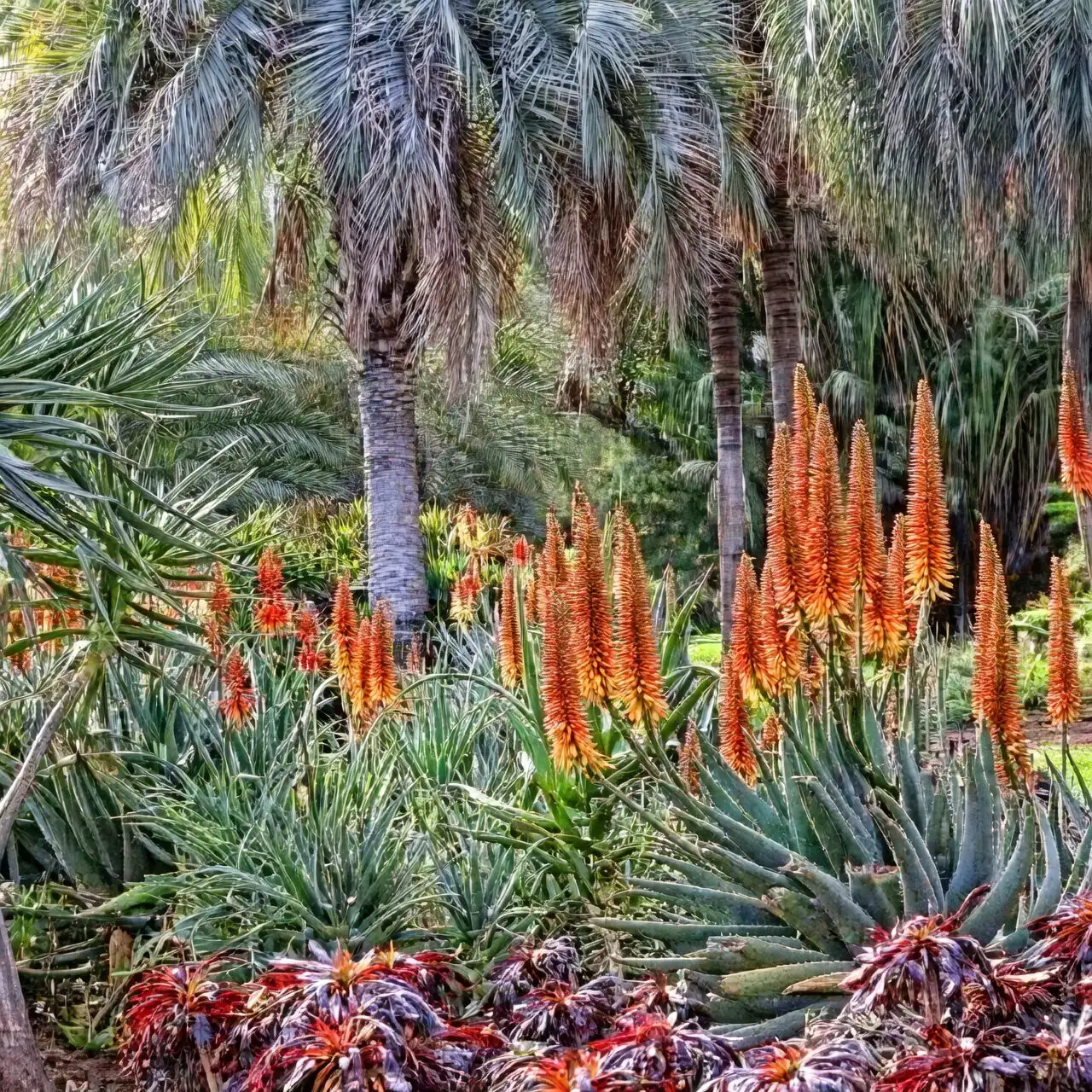
‘Zwartkop’ has a designer’s-eye quality—graphic rosettes, gleaming surfaces, and a moody palette that pops against pale stone, terra-cotta, and gravel. It’s drought-tolerant and loves bright conditions, which makes it a darling of Mediterranean-style plantings, coastal patios, and sunlit rooftops.
Design pairings that sing:
- Silvery foliage and stone: olive, Helichrysum, or a ribbon of pale gravel
- Powdery blues: Senecio serpens (blue chalksticks), Dudleya, or agaves
- Color contrast: lime sedums or variegated aeoniums for light/dark drama
- Architecture on architecture: a single ‘Zwartkop’ in a tall, narrow pot—pure sculpture
Container-Culture Stardom
Why it thrives in pots:
- Rosettes stay tidy and shapely with pruning
- Dark color intensifies in bright light, making balcony specimens look couture
- Short summer dormancy fits the urban rhythm: less fuss in heat, showtime in cool seasons
Container tips:
- Choose a fast-draining succulent mix with added pumice or coarse grit
- Use a pot with drainage holes; common pot sizes for small-to-medium plants are 12–15 cm (4.7–6 in)
- Place on a sun-washed windowsill or bright patio; pull back slightly from scorching glass at midday in heatwaves
Note on “terrariums”: Closed or bottle gardens are usually too humid and dim for Aeonium. ‘Zwartkop’ is happiest in open air and strong light.
Light, Temperature, and Water: The Rhythm That Keeps It Black
Light
- Full sun to very bright light is the secret to that near-black sheen
- Indoors: give it your brightest window; use sheer curtains during peak summer heat behind glass
Temperature
- Best for growth around 20–25°C (68–77°F); generally comfortable in 10–24°C (50–75°F)
- Keep frost-free; aim to stay above about 6°C (43°F), and protect carefully as temperatures approach 0°C (32°F)
- Outdoor year-round only in mild, frost-free climates (roughly USDA 10–11)
Watering
- During active growth (often autumn through spring): water deeply, then drain; water again when the top layer of mix dries
- Summer heat/semi-dormancy: keep the mix almost dry; give small “sips” only if rosettes begin to wrinkle
- Winter in cool rooms: stay on the dry side to prevent rot
Soil and Humidity
- Use a gritty, fast-draining cactus/succulent blend; never let it sit waterlogged
- Prefers low to average humidity with good airflow; stale, damp air encourages rot or leaf spotting
Feeding
- Feed lightly during the main growth window: monthly at half-strength with a balanced or low-nitrogen succulent fertilizer
- Skip feeding during summer dormancy
Seasonal Care Snapshot
- Autumn–spring: main growth—bright light, water when the surface dries, feed monthly at half strength
- Early spring: watch for yellow, star-shaped blooms on mature rosettes; remove the spent rosette after it dries
- Spring: repot if needed, refresh mix, prune to shape
- Summer: protect from harsh midday sun behind glass; reduce watering sharply
Pruning, Propagation, and Repotting
Pruning
- Remove shriveled lower leaves as needed
- After flowering, the bloom rosette will fade; snip it out once dry
- To renew a lanky plant, cut stems to encourage branching; many growers restart from cuttings every 2–3 years
Propagation
- Stem cuttings and offsets are easiest: take a rosette with a short stem, let the cut end callus for several days, then set into dry, gritty mix; begin light watering after roots form (often in 3–4 weeks)
- Seeds can be surface-sown in spring or autumn at 20–22°C (68–72°F); with steady moisture and ventilation, germination often takes 9–14 days
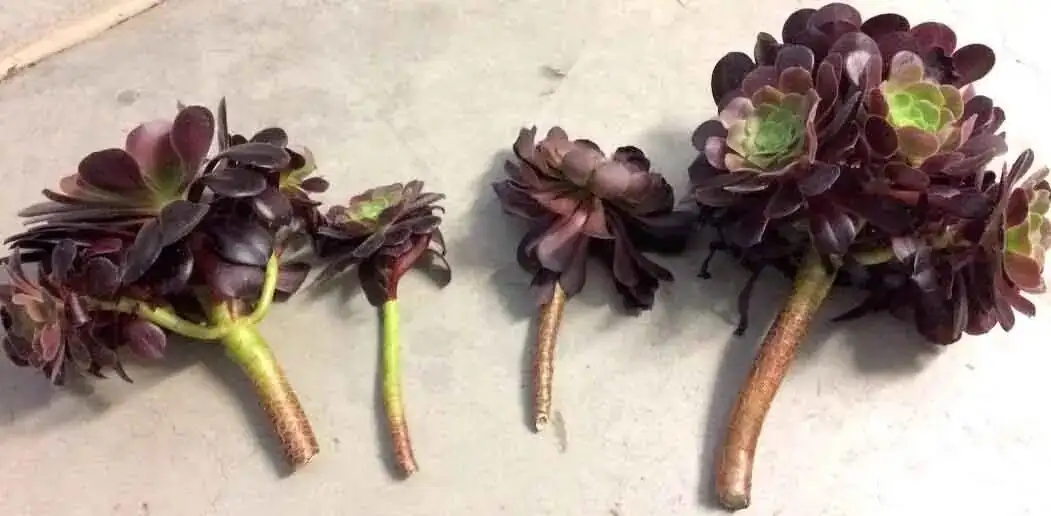
Repotting
- Best in spring, every 2–3 years or when top-heavy
- Move up just one pot size and refresh with fast-draining mix
Pests, Problems, and Prevention
- Usual suspects: mealybugs, scale, whiteflies, and aphids (especially on flower stalks); treat early with insecticidal soap or horticultural oil, repeating as needed
- Biggest risk: root and stem rot from soggy soil or cool, wet conditions; ensure fast drainage, strong light, and proper drying between waterings
- Leaf spot or rust can appear in damp, stagnant air; improve ventilation and avoid wetting foliage late in the day
Safety Notes
Generally not listed as highly toxic, but the sap may irritate sensitive skin. Keep out of reach of pets and children, and wash hands after pruning if you’re sensitive.
What Happens After It Flowers?
Aeoniums are typically monocarpic at the rosette level. That means:
- The rosette that blooms will decline afterward
- Side rosettes usually persist, keeping the plant going
- Smart pruning—removing the spent head—tidies the silhouette and funnels energy into the remaining rosettes
Symbolism and Cultural Cachet
With its near-black rosettes and glossy poise, ‘Zwartkop’ has come to symbolize resilience wrapped in modern elegance—an icon of bold minimalism that thrives on brightness and restraint. If you come across “flower language” references, they tend to be contemporary, not tied to historical traditions: the plant’s dark rosettes suggest strength under pressure, poise in drought, and the beauty of subtraction—less water, less fuss, more presence.
Quick Answers to Common Questions
- How do I keep it dark? Give it very bright light to sun; color deepens in strong light and often in cooler seasons.
- Why does it pause in summer? Many aeoniums semi-dorm in hot weather. Keep the mix almost dry; offer only small sips if rosettes wrinkle.
- Will flowering kill the whole plant? Usually only the blooming rosette declines; side rosettes carry on.
- Can I grow it indoors year-round? Yes—use the brightest window, protect from scorching midday sun behind glass, and ensure fast drainage.
- Hydroponics possible? It can be done but is fussier than soil. If you try, keep only part of the roots in water, feed lightly in spring/autumn, and use plain water in summer/winter.
Why ‘Zwartkop’ Went Global
It checks every box for 21st‑century gardening:
- Graphic silhouette and saturated color that read beautifully in photos and in person
- Compact habit suited to containers, balconies, and small-city spaces
- A Mediterranean-chic temperament—sunny days, lean soils, and a relaxed summer siesta
From Canary Island lava to your windowsill, the Black Rose Aeonium proves that the most compelling stories in gardening are simple: good light, good bones, and a touch of drama.