

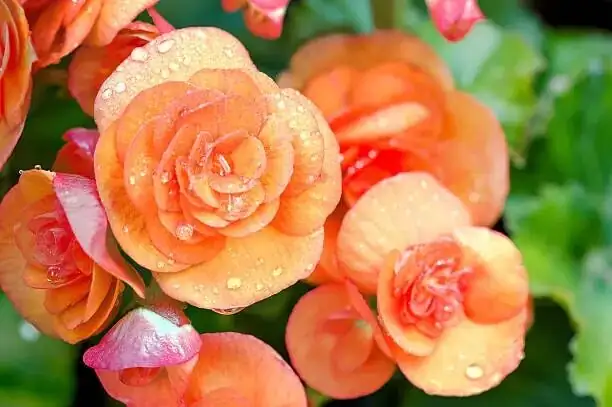
Step into a Victorian glasshouse on a cool morning: panes beaded with condensation, ferns unfurling, orchids preening—and on a shaded bench, a troupe of begonia divas, their blooms ruffled like camellias and glowing like old silk. They look aristocratic, but their story is decidedly adventurous. Begonia × tuberhybrida—the tuberous begonia—wasn’t found as-is on a misty mountainside. It was made, patiently and brilliantly, by human hands, from wild Andean species into the garden’s most glamorous shade performers.
From the Andes to the hothouse: the making of a diva

- High-altitude beginnings: In the mid-19th century, plant hunters combed the Andes of Bolivia and Peru, returning with tuber-forming begonias adapted to cool days, bright but gentle light, and seasonal dormancy. Species such as Begonia boliviensis (slender, flame-like blooms), B. davisii (compact and showy), and B. pearcei (noted for handsome foliage) became the foundational palette for breeding.
- Victorian fever: By the 1850s, hybridizers in Europe were entranced by these tuberous treasures. A landmark cross, B. × sedenii (circa 1870), demonstrated how dramatically form and bloom could be shaped through hybridization. In the following decades, specialist nurseries refined the look, texture, and performance of these plants for display under glass and, crucially, for summer gardens in bright shade.
- Breeder breakthroughs: The 20th century saw sustained, meticulous selection for ever-larger, more formal flowers—including fully double forms so smooth and symmetrical they drew comparison to camellias and roses. Storied houses such as Blackmore & Langdon in England (established 1901) helped define exhibition standards. Across the world, especially in England and New Zealand, growers still stage giant-flowered show plants that can stop you in your tracks.
What makes them “camellia-like”?
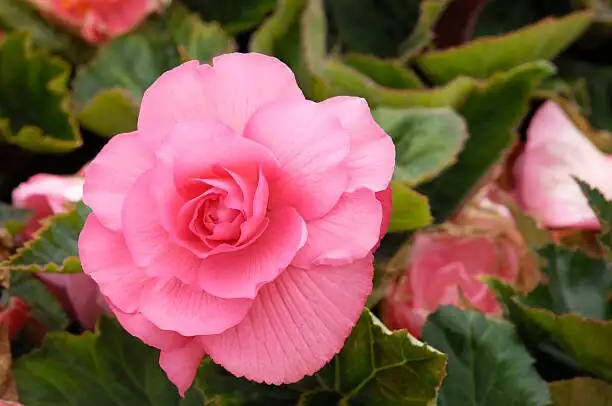
Breeders chased structure as much as color. Within Begonia × tuberhybrida you’ll find:
- Camellia form: full, even layers of tepals, unruffled and poised.
- Rosebud form: a bud-like, ruffled center nested in outer petals.
- Picotee and Marginata: delicate edging in a contrasting color on otherwise solid petals.
- Bicolor and marbled (marmorata) types: painterly swirls and two-toned blossoms.
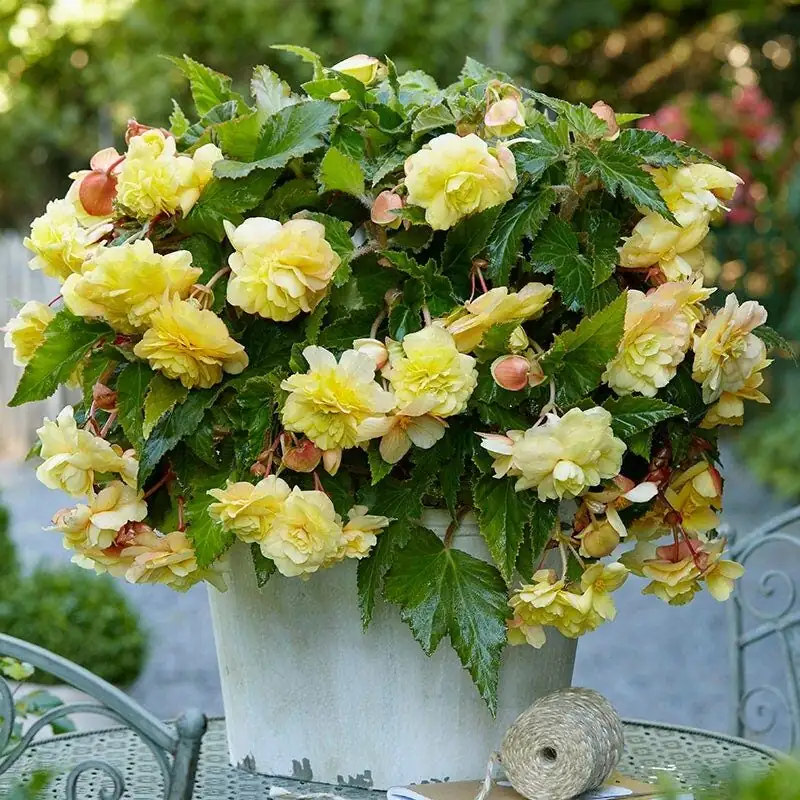
- Pendulous (trailing) forms: cascades of flowers for baskets and balcony boxes.
- Giant exhibition blooms: specialist strains with dinner-plate ambition under expert culture.
The revolution in shade: how garden-origin hybrids changed the palette
Before tuberhybridas, shade often meant quiet greens and small flowers. These hybrids rewrote the rulebook:
- Big color in gentle light: They prefer bright shade and soft morning sun, thriving where harsher, heat-loving annuals sulk.
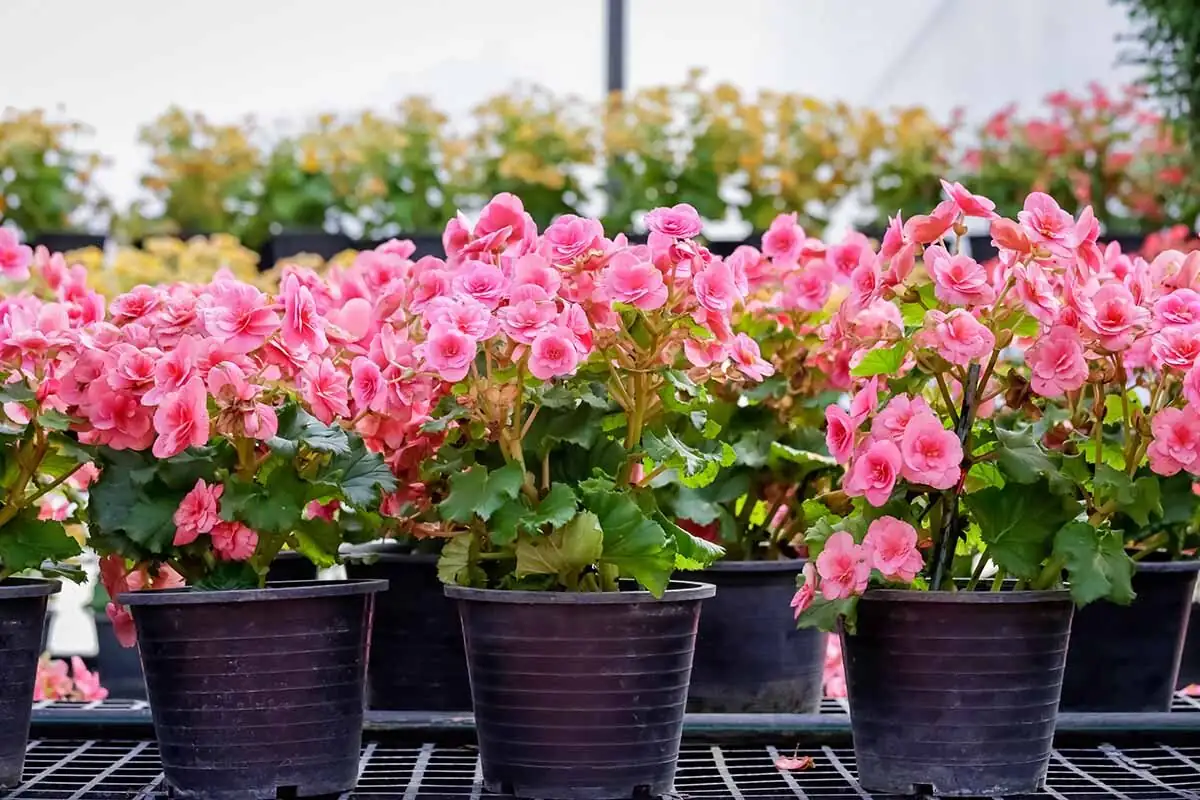
- Container culture: Perfect for patios, verandas, and bright indoor windowsills out of direct midday sun.
- Democratized glamour: Seed-raised series (like the robust, mass-market Nonstop types) put long-blooming, 2–3 inch flowers within reach of everyday gardeners, while tuber-propagated lines continued to deliver exquisite exhibition forms.
- Global appeal: Today they’re among the most beloved flowering pot plants, prized everywhere from cool-coastal porches to urban balconies—anywhere bright shade and steady moisture can be offered.
Meet the plant behind the performance
- Botanical name: Begonia × tuberhybrida (a cultivated, garden-origin hybrid complex)
- Common names: Tuberous begonia; Camellia-flowered begonia
- Habit: A seasonal, tuber-forming clumper. Upright, fleshy stems in growth; a plump, dormant tuber at rest.
- Foliage: Classic asymmetrical begonia leaves—broad, softly succulent, usually mid- to deep green, sometimes lightly hairy.
How to grow it (and keep it sensational)
Light and placement
- Best: Bright indirect light to partial shade. Morning sun is welcome; avoid strong midday/afternoon sun.
- Indoors: A bright window with filtered light; rotate for even growth.
- Outdoors: Shaded patio or balcony with good airflow, sheltered from pounding rain and wind.
Temperature and humidity
- Sweet spot: 16–21°C (61–70°F). Keep above 10°C (50°F) in winter.
- Heat caution: Extended heat above the mid-80s°F stresses plants; around 32°C (90°F) can trigger wilting, bud drop, or collapse.
- Humidity: Moderate to high (about 50–70%), always with ventilation—stagnant, damp air invites botrytis and mildew.
Soil and potting
- Mix: Rich yet free-draining (peat- or leaf-mold-based blend with fertile loam plus coarse sand or perlite). Avoid heavy, water-retentive soils.
- Pot size: For a flowering plant, 20–25 cm (8–10 in) diameter.
- Tuber choice: Pick firm, plump, clean tubers at least 2 cm (0.8 in) across. When planting, set the concave “crown” side just at or slightly below the surface, and water lightly until growth begins.
Water and feeding
- Watering rhythm: During active growth, keep soil evenly moist but never soggy. As a baseline, water about weekly and adjust for heat, pot size, and airflow. Never let pots stand in water.
- Rain control: Protect blossoms from heavy rain to prevent breakage and rot.
- Fertilizer: Feed every 10–14 days in growth with a balanced-to-bloom formula (for example, a diluted organic feed or a 15-15-30 bloom fertilizer per label). Reduce as flowering wanes.
Pruning and support
- Deadhead: Remove spent blooms and their stalks to tidy plants and help the tuber store energy.
- Sturdy stems: Upright, large-flowered forms may need discreet staking, especially under heavy blooms.
- Cut-backs: In long rainy spells or if legginess appears, cutting stems back by about half can encourage sturdier regrowth (as long as the tuber is sound).
Dormancy: honoring the rhythm
- After the show: As days shorten and blooms fade, gradually reduce watering.
- Dieback: Allow leaves and stems to yellow naturally, then stop regular watering.
- Lift and store: Gently unpot, let the tuber dry slightly, and store cool and dry (above 10°C/50°F). Replant to restart in spring.
Propagation (for the curious and the keen)
- From seed: Sow dust-fine seed indoors in January–February; do not cover. Keep at 18–21°C (64–70°F). Expect germination in about 10–15 days. Transplant at 2–3 true leaves into 6 cm (2.4 in) pots.
- From cuttings: In June–July, take 10 cm (4 in) tip cuttings from strong shoots, remove lower leaves, let the cut dry briefly, and root in a sandy medium. Callus/roots typically form in about 3 weeks.
A simple seasonal calendar
- Spring: Wake-up call—repot, increase light gradually, resume watering and feeding.
- Summer: Bright shade, steady moisture, airflow; protect from heat spikes and heavy rain.
- Late summer–autumn: Ease off fertilizer and water as bloom winds down.
- Autumn–winter: Let tops die back, lift and store tubers dry and cool; keep above 10°C (50°F).
Troubleshooting: common missteps, quick fixes
- Root/tuber rot: Usually overwatering plus poor drainage. Refresh mix, improve airflow, remove affected tissue promptly. Badly rotted tubers are rarely salvageable.
- Heat collapse or surprise dormancy: In sustained heat, tops may wilt or die back. If the tuber remains firm, store it and restart in cooler weather.
- Pests: Scale, aphids, thrips, and leaf-rolling caterpillars can appear. Isolate, wash foliage, and use insecticidal soap or horticultural oil as needed.
Safety note
Begonias are commonly considered toxic to pets, with the tubers most problematic. Keep out of reach of curious cats, dogs, and children; seek professional advice if ingestion occurs.
Flower language and the begonia mystique
Victorian floriography gave every blossom a whisper of meaning, and tuberous begonias—born of that very era—often carry associations of tender affection, even the ache of unrequited love. Perhaps it’s their paradox: lavish, romantic blooms that prefer the gentleness of shade, shining brightest out of direct glare. While modern gardeners don’t live by flower codes, gifting a tuberous begonia still reads as a quietly heartfelt gesture—dramatic on the outside, deeply considerate at its core.
Milestones in a (tuber) shell
- 1850s: Hybridization begins in earnest in Victorian Europe using Andean tuberous species.
- Circa 1870: Early landmark hybrids (e.g., B. × sedenii) showcase the power of crossing.
- Early 1900s: Specialist nurseries refine giant, formal, exhibition blooms.
- Late 20th century: Seed-raised garden strains explode in popularity, reshaping shade bedding and container design worldwide.
- Today: From prize benches in England and New Zealand to small balconies everywhere, Begonia × tuberhybrida reigns as the shade garden’s most theatrical star.
Quick-start buying guide
- Choose compact, sturdy plants with thick stems and plenty of healthy buds.
- For dormant tubers, select firm, plump, clean pieces at least 2 cm across—round to flattened-round shapes are typical.
- Plan a bright-shade setting with protection from high heat, strong sun, and drenching rain.
Two parting truths the Victorians would agree with
- That “bulb” is a tuber—a clever storage organ that lets the plant rest and dazzle again next season.
- Humidity helps, but airflow is everything. In still, damp air, even a diva can falter.
Nurture one well and you’ll understand why gardeners still whisper about them: cloud-forest elegance, hothouse drama, and a performance that turns every shaded corner into a little theater of light.