

The Timeless Tale of Boxwood: From Ancient Gardens to Modern Landscapes
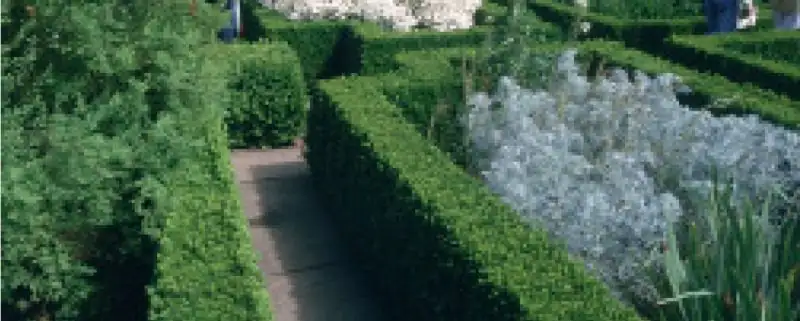
Imagine walking through the storied gardens of ancient Egypt, where the air is thick with history and the grounds are meticulously crafted. Amidst the grandeur, a humble yet elegant shrub lines the pathways, its evergreen leaves whispering tales of resilience and beauty. This plant is none other than the boxwood, scientifically known as Buxus spp.. Its journey from ancient civilizations to contemporary landscapes is a testament to its enduring appeal.
A Historical Odyssey
Boxwood’s story begins thousands of years ago, deeply rooted in the ancient cultures of the Mediterranean. As early as 4000 B.C., the Egyptians were known to cultivate boxwood, sculpting the dense, evergreen foliage into formal hedges that graced their gardens. These early gardeners appreciated the plant not just for its aesthetic appeal but also for its practical uses; its hard, fine-grained wood was prized for making precision instruments and decorative carvings.
Fast forward to 1000 B.C., and boxwood’s presence is noted in the writings of Homer, who mentions its use in constructing yokes for horses—an indication of its versatility and value. Meanwhile, in England, archaeological findings have unearthed boxwood charcoal dating back to 2000 B.C., underscoring its long-standing significance.
Crossing Oceans
Boxwood’s journey to North America is marked by its introduction in 1653, when it was planted by Nathaniel Sylvester on Shelter Island, New York. This introduction heralded a new chapter for the plant, as it began to weave itself into the fabric of American horticulture. The dense, evergreen structure of boxwood made it an ideal choice for colonial gardens, where it was used to create formal borders and hedges that mirrored those found in Europe.

A Versatile Companion
The reasons for boxwood’s enduring popularity are manifold. Its evergreen nature ensures that gardens maintain a vibrant green hue even during the bleakest winters. The leaves, small and leathery, are glossy on top and paler beneath, creating a lush visual texture. Boxwood’s natural growth habit is dense and compact, making it a perfect candidate for topiary art, formal gardens, or as a reliable hedge plant.
Beyond its ornamental uses, boxwood has historical significance in religious and cultural ceremonies. In Christian traditions, it has been associated with perseverance and longevity—fitting for a plant that retains its greenery year-round. During Palm Sunday, boxwood branches are often used as a substitute for palm fronds, symbolizing renewal and continuity.

Cultivation and Care
Despite its ancient roots, caring for boxwood in a modern garden requires attention to a few key details. It thrives in well-drained soil and prefers a site with some protection from harsh winter winds. While it’s adaptable to various light conditions, in warmer climates, afternoon shade is beneficial to prevent leaf scorch. Regular watering during its establishment phase and careful pruning to maintain airflow within the shrub are crucial for its health.
Boxwood is also known for its resistance to deer, making it a practical choice for gardens where these animals are frequent visitors. However, gardeners should be aware of potential pests such as the boxwood leafminer and diseases like boxwood blight. Selecting disease-resistant cultivars and ensuring good sanitation practices can mitigate these risks.
A Living Legacy
Boxwood’s legacy is not just confined to gardens. Its wood, dense enough to sink in water, has been historically valued for intricate carvings and musical instruments. Such versatility only adds to its charm, making it a plant that has not just survived but thrived across millennia.
In your own garden, whether you’re shaping a boxwood into a whimsical topiary or allowing it to grow naturally into a lush hedge, you’re partaking in a tradition that spans continents and centuries. So next time you pass by a boxwood, take a moment to appreciate its rich history and the quiet elegance it brings to our world.


