
Hydrangea macrophylla doesn’t just bloom; it tells a story. Follow its trail and you’ll pass misty temple paths in Japan, a whispered imperial apology, 18th‑century ships docking in Europe with living treasure, and, finally, modern porches and patios where mopheads and lacecaps reign as summertime royalty.
Rain country beginnings: ajisai in Japan (and beyond)
Walk through Japan in the rainy season and you meet ajisai—Bigleaf Hydrangea—glowing blue, pink, and purple along stone steps and shrine gates. The species is native to East Asia—primarily Japan, but also China and nearby regions—and it thrives where summers are humid, soils are rich, and mornings begin soft and cool. In Chinese it’s called 八仙花 (Eight Immortals Flower), a name that hints at clustered blooms and the idea of many strengths gathered in one.
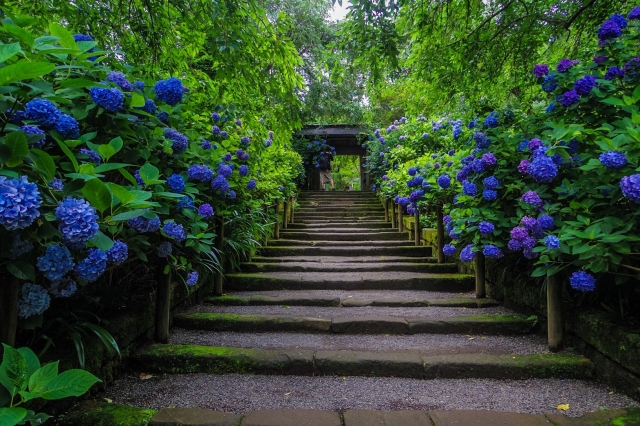
Botanically speaking, Bigleaf Hydrangea is a deciduous shrub with glossy, serrated leaves and two signature flower styles:
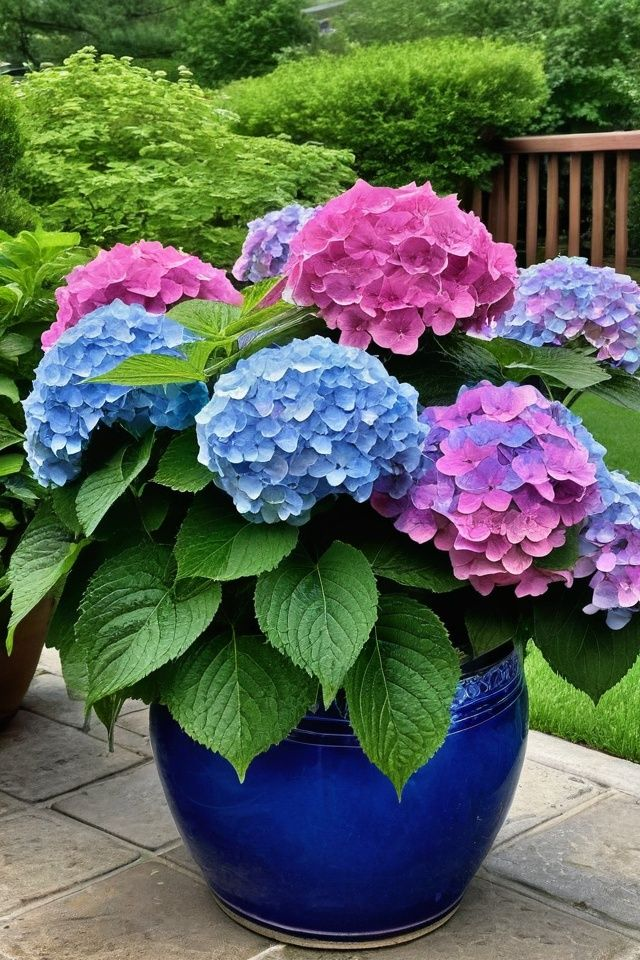
- Mopheads: rounded, “pom‑pom” heads made of showy sterile florets surrounding tiny fertile flowers.
- Lacecaps: a flat to domed disk of fertile florets ringed by a lace of large, colorful sepals.
Both forms feel quintessentially East Asian—and both would soon charm the rest of the world.
The emperor’s apology: how a legend shaped meaning
One of hydrangea’s most-cited tales tells of a Japanese emperor who, realizing he had neglected the woman he loved, brought blue hydrangeas to her family as an apology and sign of gratitude. Whether or not the figure was truly imperial, the legend’s moral stuck: in Japan, blue hydrangeas came to embody remorse, understanding, and heartfelt feeling.
This is a good example of “flower language” evolving in place. Rather than a universal code, 花语 is a cultural conversation: stories, festivals, and seasonal rhythms attach emotions to specific plants. Hydrangea’s rainy‑season bloom and quiet, contemplative beauty made it an ideal emblem of sincerity—and of mending what matters.
Europe discovers a star: the 1700s arrival
By the 18th century, hydrangeas traveled west. In Europe they quickly became fashionable garden shrubs, admired for their generous heads and almost painterly color changes. Nurseries took to calling Bigleaf Hydrangea “French hydrangea” or simply “hortensia,” and a breeding boom followed. Victorian floriography added its own twist—sometimes labeling hydrangea as boastful for its extravagant blooms (and the low seed set in many ornamental forms)—yet the plant only grew more popular.
From temple courtyards to townhouses, hydrangea had crossed oceans and cultures. The next step was inevitable: mopheads and lacecaps would become global icons.
Mopheads vs. lacecaps: two faces of a global icon
- Mopheads: the classic “wow” factor—6–8 inch spheres in white, pink, red‑rose, blue, or purple. Perfect for borders and bouquets.
- Lacecaps: a little airier and closer to the wild look, beloved by pollinator‑watchers and gardeners who prefer a more natural style.
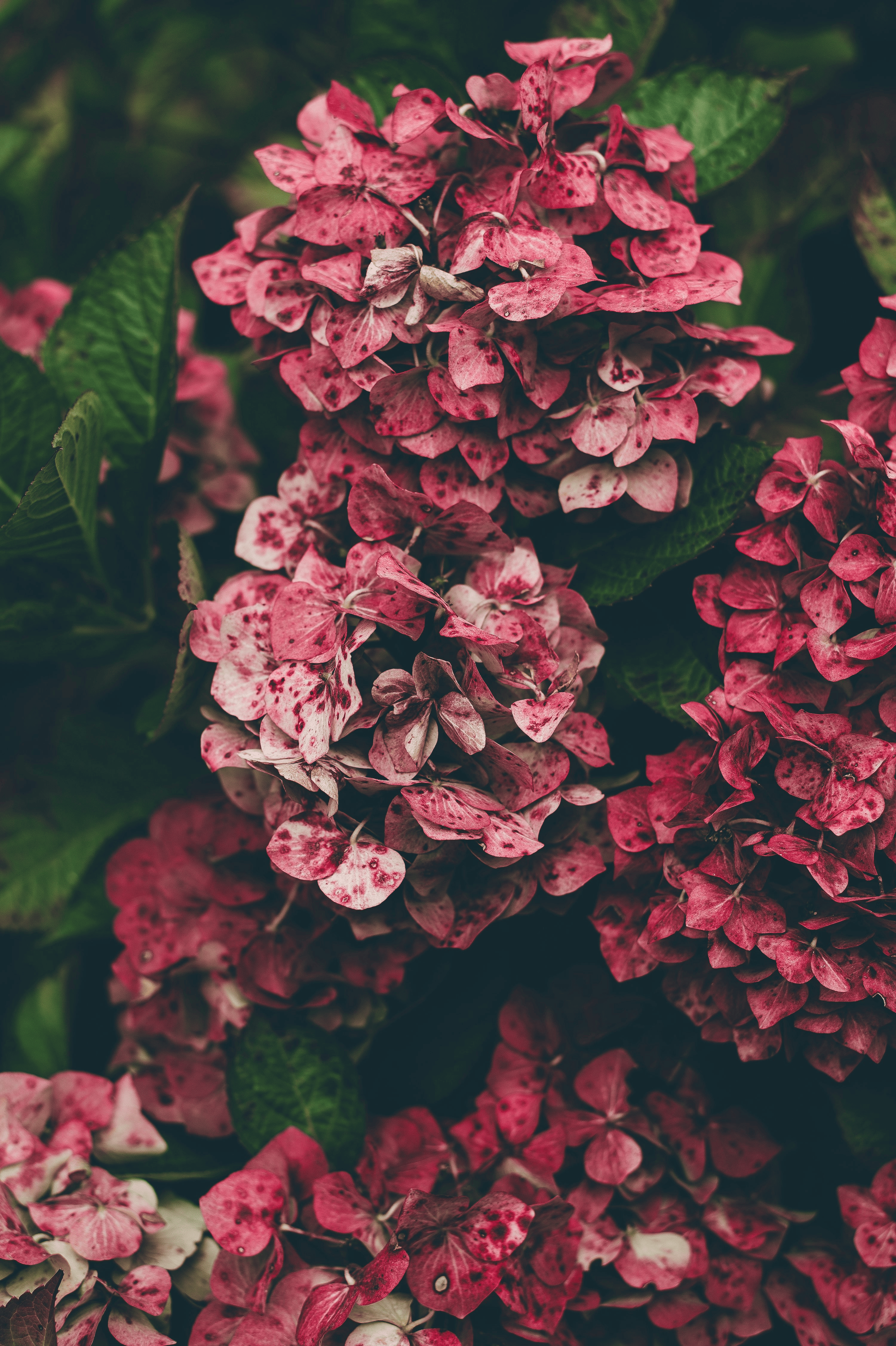
Breeders in Japan and Europe refined both, selecting for richer colors, sturdier stems, and, in recent decades, reblooming habits that carry flowers from early summer toward fall.
The color alchemy (and how it really works)
Hydrangea macrophylla is famous for its color‑play:
- More acidic soils (often below about pH 6) with available aluminum tend to produce bluer tones.
- More alkaline soils (often above about pH 7) push blooms toward pink to rosy‑red.
- White forms usually stay white regardless of soil.
- Changes are gradual—think months, not days.
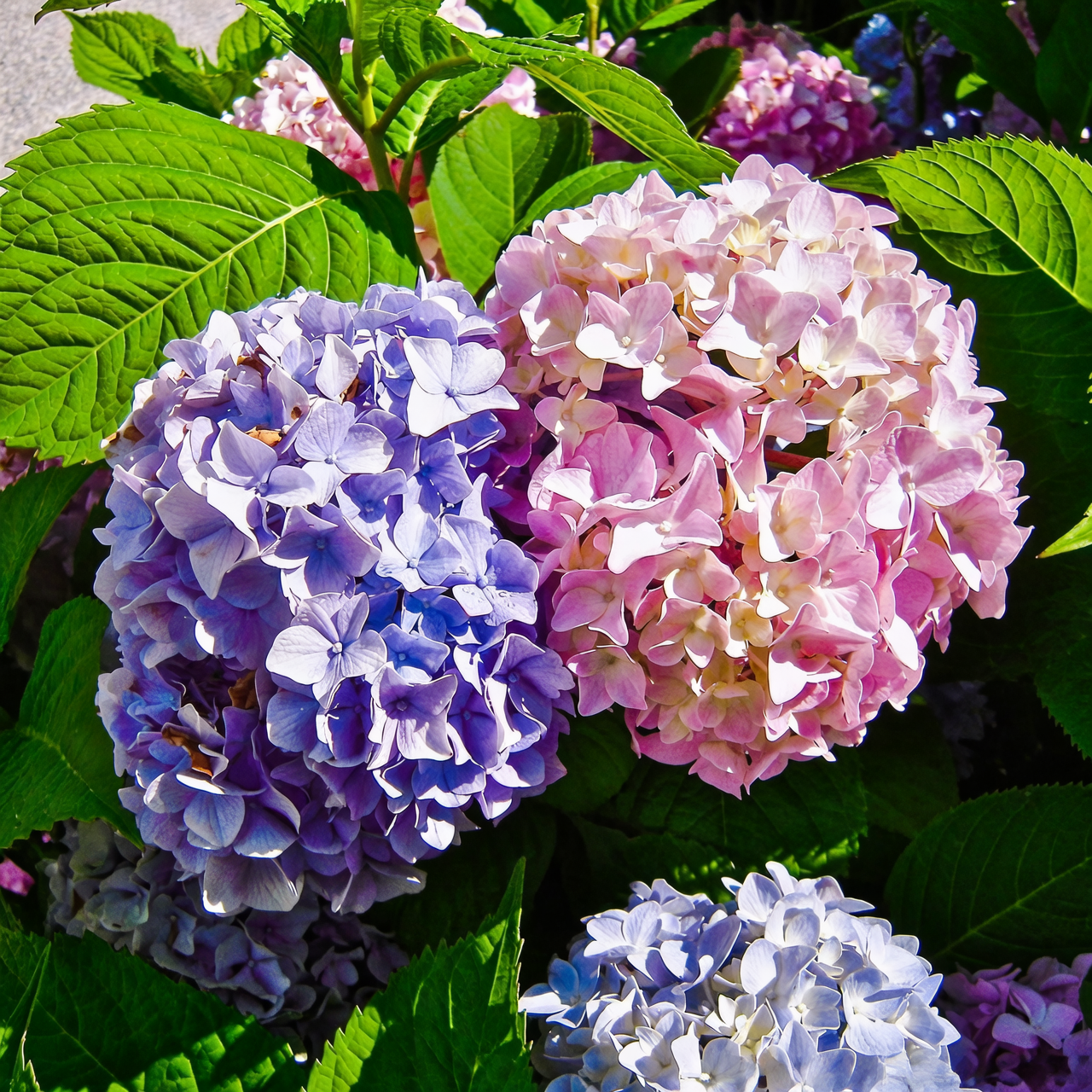
Gardeners often use aluminum sulfate to encourage blue or add garden lime to nudge pink, always with a light touch and an eye on overall soil health.
Growing Bigleaf Hydrangea like a pro
Think of Bigleaf Hydrangea as a shade‑leaning sunbather: it loves light but not harsh exposure.
- Light
- Sweet spot: morning sun with afternoon shade, or bright dappled light.
- Cool summer regions: more sun is fine if soil stays evenly moist.
- Temperature and humidity
- Best performance around 18–28°C (64–82°F).
- Buds are more cold‑sensitive than stems; protect from hard freezes, especially in containers.
- Enjoys moderate to high humidity plus good airflow.
- Soil and water
- Moist, well‑drained, organic‑rich soil. Never bone-dry, never swampy.
- Water deeply 1–2 times per week in summer; more often in heat waves or small pots.
- Water early in the day so leaves dry by evening.
- Hardiness
- Commonly reliable bloom in USDA Zones 6–9, varying by cultivar and bud protection.
- Feeding
- During active growth, use a balanced or acid‑forming fertilizer; feed containers more regularly than in‑ground shrubs.
- Ease off after mid‑summer so stems can mature before winter.
Pruning without tears
Many bigleaf hydrangeas bloom mainly on old wood. That means:
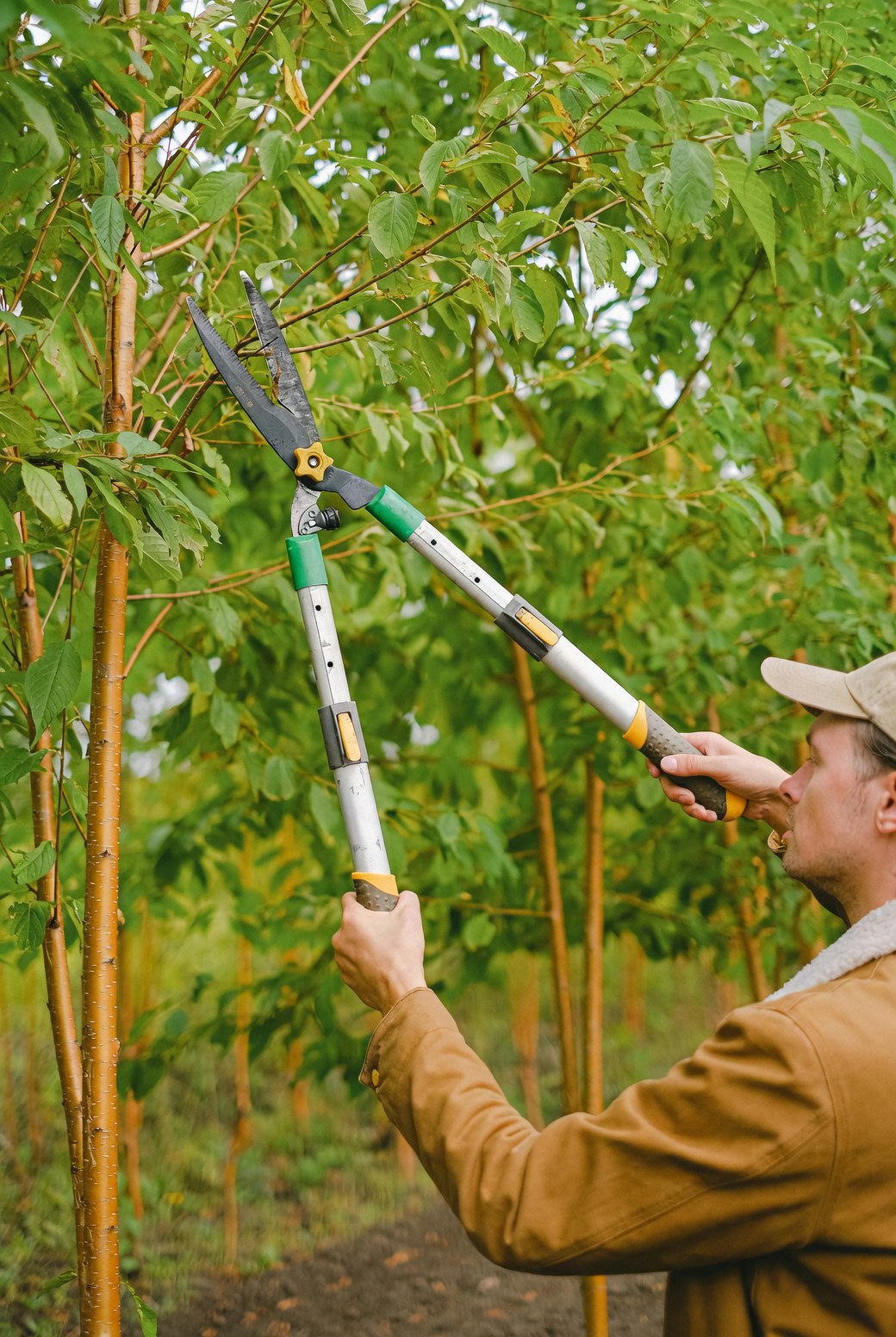
- Best time to shape: right after flowering.
- Safe tactics:
- Deadhead and lightly trim spent stems post‑bloom.
- Remove up to one‑third of the oldest stems at the base to refresh the shrub.
- Confirm if your cultivar reblooms on new wood before any hard winter cuts.
Pots, patios, and small spaces
Bigleaf Hydrangea is remarkably container‑friendly:
- Choose a pot one size up from the existing root ball and refresh with an organic‑rich, well‑draining mix (loam + peat/coco + perlite/sand).
- Repot annually in spring if rootbound.
- Containers dry faster—consistent watering is the secret to sustained bloom.
Pests, diseases, and safety
- Pests: aphids, thrips, spider mites, Japanese beetles. Start with a strong water spray or insecticidal soap.
- Diseases: powdery mildew, leaf spots, anthracnose, and root rot in soggy soil. Prioritize airflow, soil‑level watering, and sharp drainage.
- Toxicity: mildly toxic if ingested (people and pets). Keep leaves and flowers from curious mouths.
Flower language, decoded
Hydrangea’s “meanings” aren’t one monolith. They’re layered:
- Japan: apology, understanding, gratitude—colored by the rainy season and the emperor’s apology legend.
- Europe (Victorian era): mixed messages; exuberant bloom + few seeds in showy forms led to associations with boastfulness or vanity.
- Modern nuance:
- Blue: apology and empathy.
- Pink: sincere feeling and affection.
- White: purity and grace.
- Purple: a wish for deeper understanding.
In Chinese culture, 八仙花 symbolically gathers many strengths into one, echoing those abundant heads of many florets working together.
Quick origin timeline
- East Asia, long ago: Hydrangea macrophylla takes shape across Japan and parts of China and nearby regions.
- Rainy-season Japan: ajisai becomes a seasonal icon; the emperor’s apology legend cements its role in the language of feelings.
- 18th century Europe: hydrangeas arrive and gain fashion status; “hortensia” and “French hydrangea” enter common speech.
- Today: mopheads and lacecaps are garden mainstays from woodland edges to city balconies, and staples of fresh and dried arrangements.
Why Hydrangea macrophylla still captivates
Because it changes—light by light, soil by soil, season by season—yet remains unmistakably itself. The heads are generous, the palette is playful, and the plant fits the places we live: borders, foundations, patios, containers. With steady moisture, partial shade, and a little pruning savvy, Bigleaf Hydrangea rewards us for years—sometimes decades.
Fun to know
- “Hydrangea” comes from Greek for “water vessel,” a nod to both its thirst and its little cup‑like seed capsules.
- Those petal‑like parts? They’re colorful sepals. The tiny true flowers are nestled within.
- With good care, a single plant can become a legacy shrub, more impressive each summer.
Plant one, and you’re not just growing a shrub—you’re adding your garden to a story that began under East Asia’s rainy skies and now circles the globe in blue, pink, and everything in between.