The Journey of Thunbergia alata: From Tropical Africa to Gardens Worldwide
Imagine a vibrant splash of colors adorning your garden fence or cascading gracefully from a hanging basket. This is none other than Thunbergia alata, affectionately known as the Black-eyed Susan Vine. With its cheerful blooms and whirlwind journey from the heart of tropical Africa to garden centers across the globe, this plant has woven itself into the tapestry of beloved ornamental vines.
A Storied Past
Thunbergia alata’s roots run deep into the lush landscapes of tropical East Africa. Here, it grew wild, climbing and weaving through the verdant forests, a testament to nature’s artistry. The plant was later named after Carl Peter Thunberg, a Swedish botanist whose explorations in the 18th century led to numerous botanical discoveries. The species name, “alata,” meaning “winged,” refers to the distinctive winged leaf stalks that set this vine apart.
The Voyage to Global Adoration
The journey of Thunbergia alata from Africa to global gardens is as colorful as its petals. Introduced to Europe in the early 19th century, it quickly captured the hearts of gardeners with its lively blooms and robust growth habit. Today, it’s a staple in gardens from the Americas to Asia, celebrated for its ability to provide instant vertical color and charm.
Characteristics That Captivate
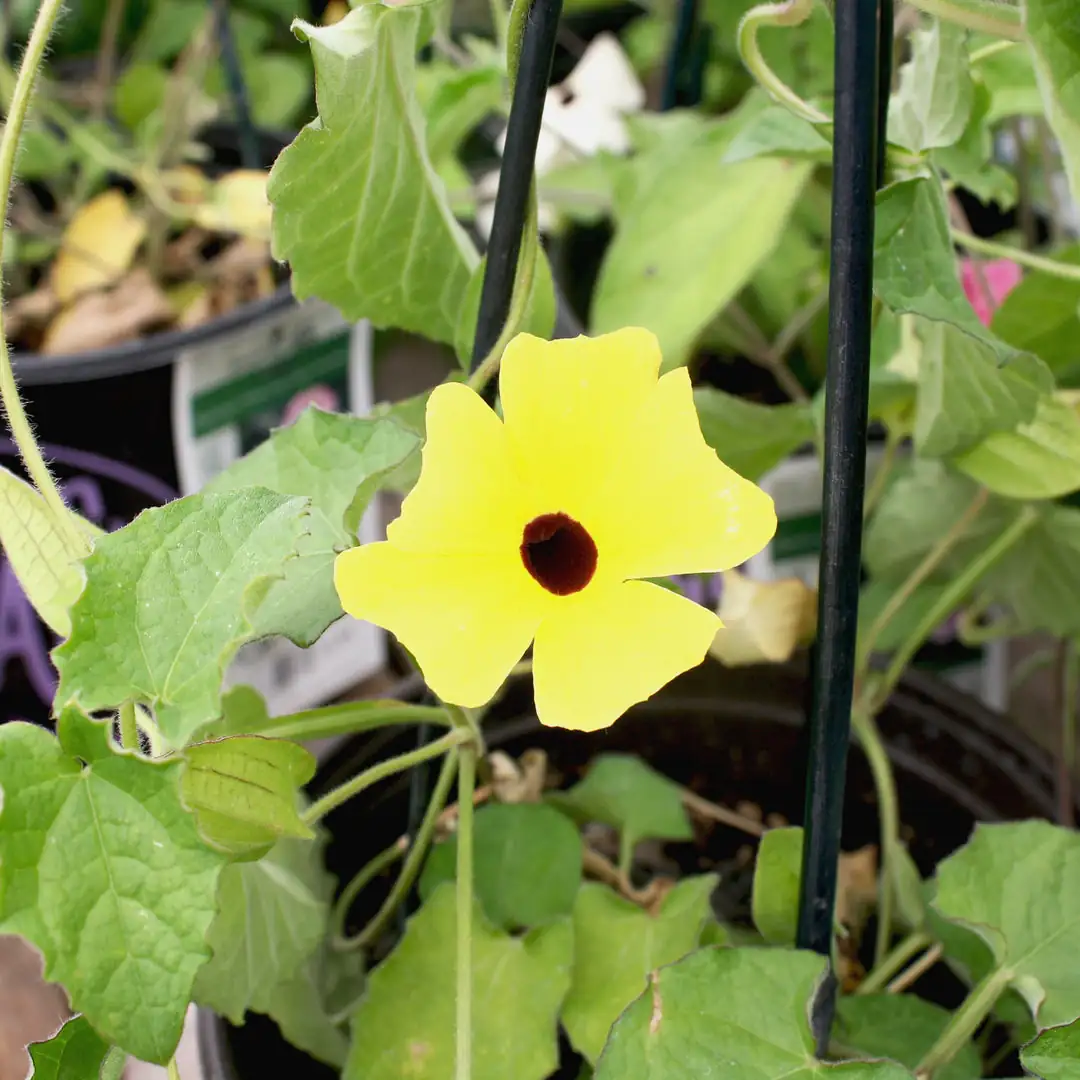
- Bright Blooms: The Black-eyed Susan Vine is renowned for its vivid, trumpet-shaped flowers that come in shades ranging from sunny yellow to fiery orange, and even soft whites and pinks. The dark “eye” at the center of each bloom adds a dramatic flair, akin to a cheerful face looking up at the sun.
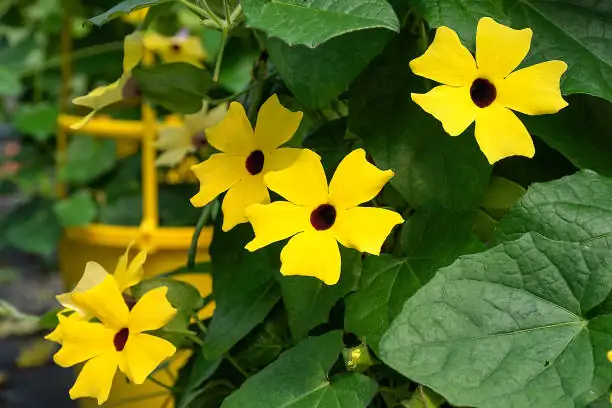
- Growth Habits: This vine is a master of adaptation. As a twining climber, it wraps its stems around supports, reaching heights of 3-8 feet in one season when grown as an annual. In frost-free climates, it can soar to an impressive 20 feet, making it perfect for trellises, arbors, and fences.
- Foliage: The heart-shaped leaves are soft and hairy, providing a lush backdrop to the vivid blooms. Their winged stalks are not just ornamental but also a clever adaptation for clinging to supports.
Cultivation Tips for Garden Enthusiasts
Growing Thunbergia alata is a gardener’s delight. Here’s how to ensure it thrives:
- Sunlight and Soil: For the best blooms, plant it in full sun with well-draining soil. While it loves warmth, a bit of afternoon shade can be beneficial in scorching climates.
- Watering and Feeding: Keep the soil evenly moist, but avoid waterlogging. A balanced fertilizer every few weeks during the growing season keeps the flowers coming.
- Pruning and Propagation: Pinching back young tips encourages a bushier plant. It can be propagated easily by seeds or cuttings, making it accessible for gardeners of all levels.

Beyond Beauty: Symbolism and Uses
The Black-eyed Susan Vine isn’t just a feast for the eyes; it holds symbolic meanings of cheerfulness and resilience. Its bright blooms symbolize encouragement—like a friend who always has a smile ready for you. In some cultures, it has been used in folk remedies, although its primary charm lies in its ornamental beauty.
Moreover, it’s a magnet for pollinators, attracting bees, butterflies, and hummingbirds to your garden, creating a lively ecosystem right outside your door.
A Global Garden Favorite
Whether spilling from a window box or climbing elegantly up a trellis, Thunbergia alata brings an irresistible charm to any setting. Its ability to adapt and thrive in diverse climates while maintaining its striking appearance is a testament to its enduring appeal. As gardeners around the world continue to embrace this vibrant vine, it remains a living link between the wild beauty of its African origins and the cultivated elegance of modern gardens.

So, the next time you see those bright blooms peeking out from a garden corner, remember the journey they’ve taken—from the heart of Africa to a cherished spot in your garden.