

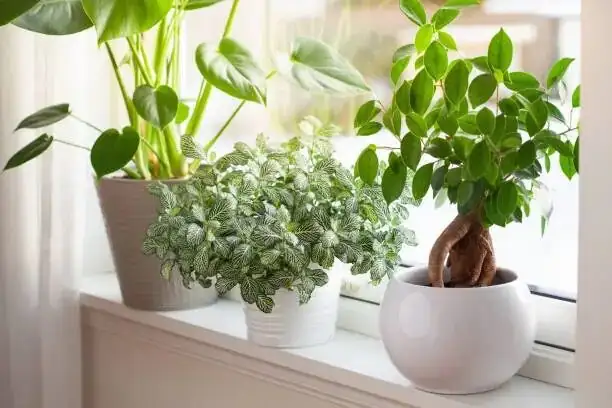
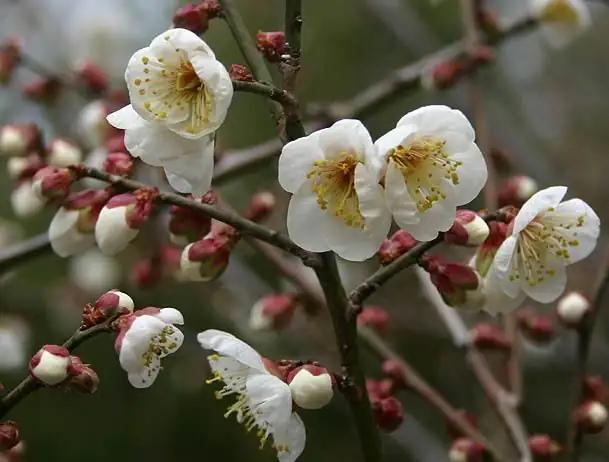
The perfume arrives before the petals: sweet, almondy, and a little spicy. Then, almost magically, white-to-rose blossoms unfurl along bare, calligraphic twigs. Prunus mume—Japanese apricot, mume, or ume—is winter’s most elegant party trick. Whether you’re buying cut stems, harvesting from your own tree, or styling a potted plant, here’s how to coax peak drama and scent with cool, bright forcing, clean vase care, and ikebana-inspired arrangements.
Meet Prunus mume, the late-winter muse
- Blooms: Late winter to early spring, often on bare wood
- Fragrance: Intensely sweet and complex—small flowers, big perfume
- Habit: A woody shrub to small tree with naturally elegant branching
- Origins: China and the Korean Peninsula; long revered across East Asia
- Loves: Strong sun, cool air during flowering, and excellent drainage
- Hates: Soggy soil and prolonged indoor heat
Cut branches are superb indoors, and potted specimens can be brought in for a short, cool display, then returned outside afterward.
Selecting stems (or plants) with design in mind
For cut branches (from a florist or your own tree)
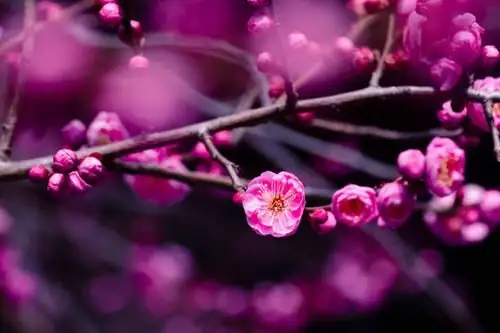
- Look for plump, closely spaced flower buds
- Best stage: buds are colored and rounded, with just a few flowers starting to open.
- Tip: Flower buds are rounder and fuller; leaf buds are narrower and pointed.
- Choose charismatic architecture
- Favor sinuous lines, angular spurs, and varied twig diameters; lichen-dusted bark adds texture.
- Select a mix of lengths: one long statement line and a supporting, shorter line or two.
- Inspect the cut
- A fresh, angled cut at the base is ideal. Avoid crushed ends or branches with split, dried heels.
- Sniff test
- The fragrance should be clean and strong even before full bloom.
For potted plants (seasonal showpiece)
- Pick a compact, sturdy plant with evenly spaced branches and lots of plump buds; a few open flowers are okay.
- Keep it very bright after purchase and cool—around 8–10°C (46–50°F) extends bloom dramatically.
Cool, bright forcing: from bud to bloom
Forcing is simply persuading buds to open early indoors. Mume obliges beautifully when handled cool and clean.
Harvest timing (if cutting your own)
- Late winter is perfect once the plant has had a good cold spell.
- Choose 1–2-year-old shoots with dense flower spurs and naturally graceful angles.
Condition like a pro
- Tools and prep
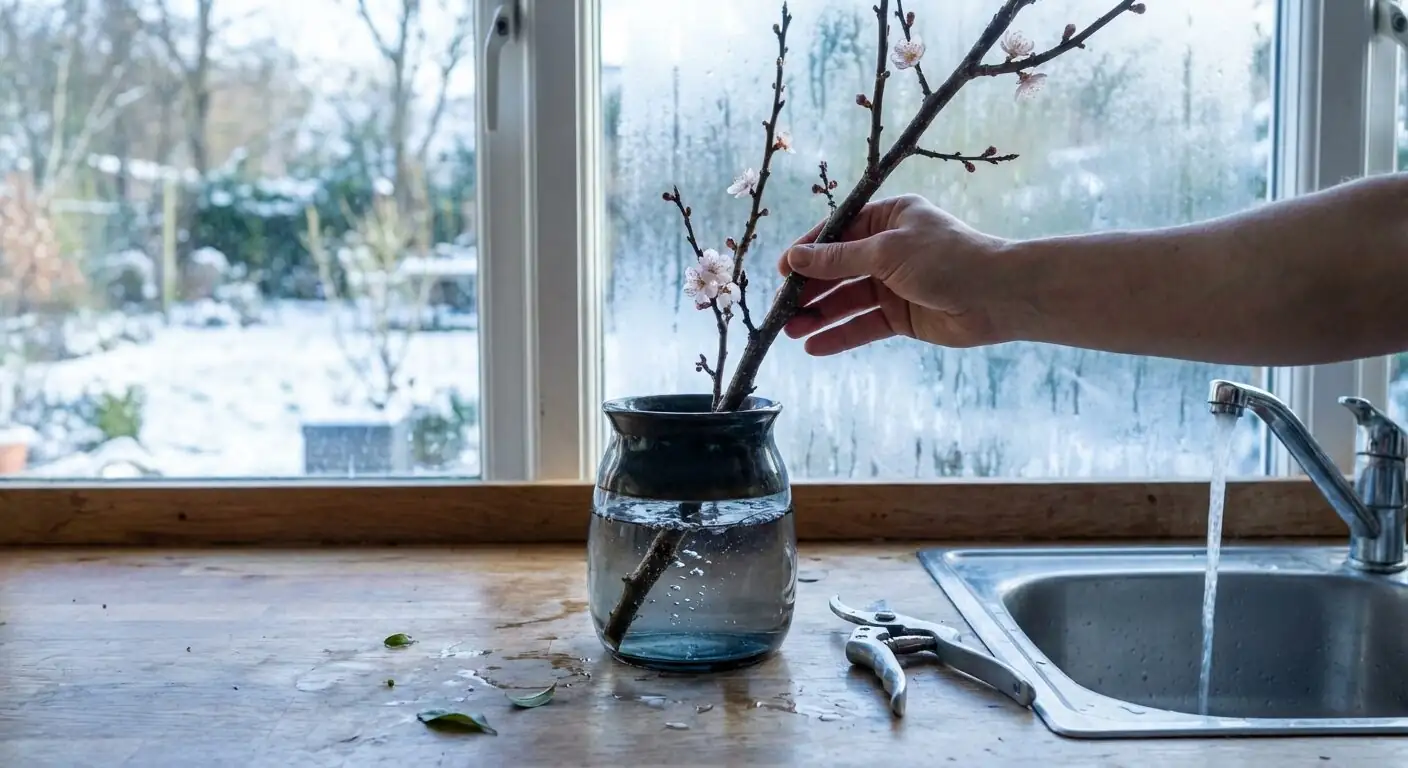
- Clean pruners, a spotless vase or deep bucket, and cool, fresh water.
- Hydrate immediately
- Place branches into water as soon as you cut them.
- Recut the base under running water at a long angle (about 45°) to prevent air embolisms.
- Optionally split the base 1–2 cm with a clean knife or lightly scrape a narrow strip of bark to increase uptake.
- Strip to the waterline
- Remove any side twigs or buds that would sit under water—this prevents rot and keeps water fresh.
- Temperature and light
- For the longest show, keep branches in bright light but cool air: ideally 8–10°C (46–50°F).
- Avoid hot rooms, fireplaces, and heating vents—excess warmth shortens bloom and can trigger leaf drop on potted plants.
- Water routine
- Change water daily or every other day; recut stems slightly each time for best hydration.
- Use a floral preservative if you have it; otherwise, pristine water and cleanliness do the heavy lifting.
- Timeline
- In bright, cool conditions, buds typically open over 1–3 weeks, then keep going in waves.
Troubleshooting buds that won’t open
- Too warm and too dim: Move to a brighter, cooler spot.
- Dirty water or clogged stems: Refresh the water and recut underwater.
- Cut too early (immature buds): Give it time or try again in a week.
Vase care that maximizes scent and longevity
- Vessel choice
- Tall cylinders emphasize a single, sweeping line; low bowls with a kenzan (pin frog) give sculptural control.
- Water depth
- Keep 5–10 cm (2–4 in) of water; woody stems drink steadily—top up daily.
- Hygiene
- Rinse vases with hot soapy water between uses; remove any slimy residue immediately.
- Placement
- Bright but cool, with gentle airflow. Avoid direct blasts from heaters or hot sun behind glass.
- Night strategy
- If possible, move arrangements to a cooler spot at night (even an unheated room) to extend bloom.
Ikebana-inspired styling: drama on bare wood
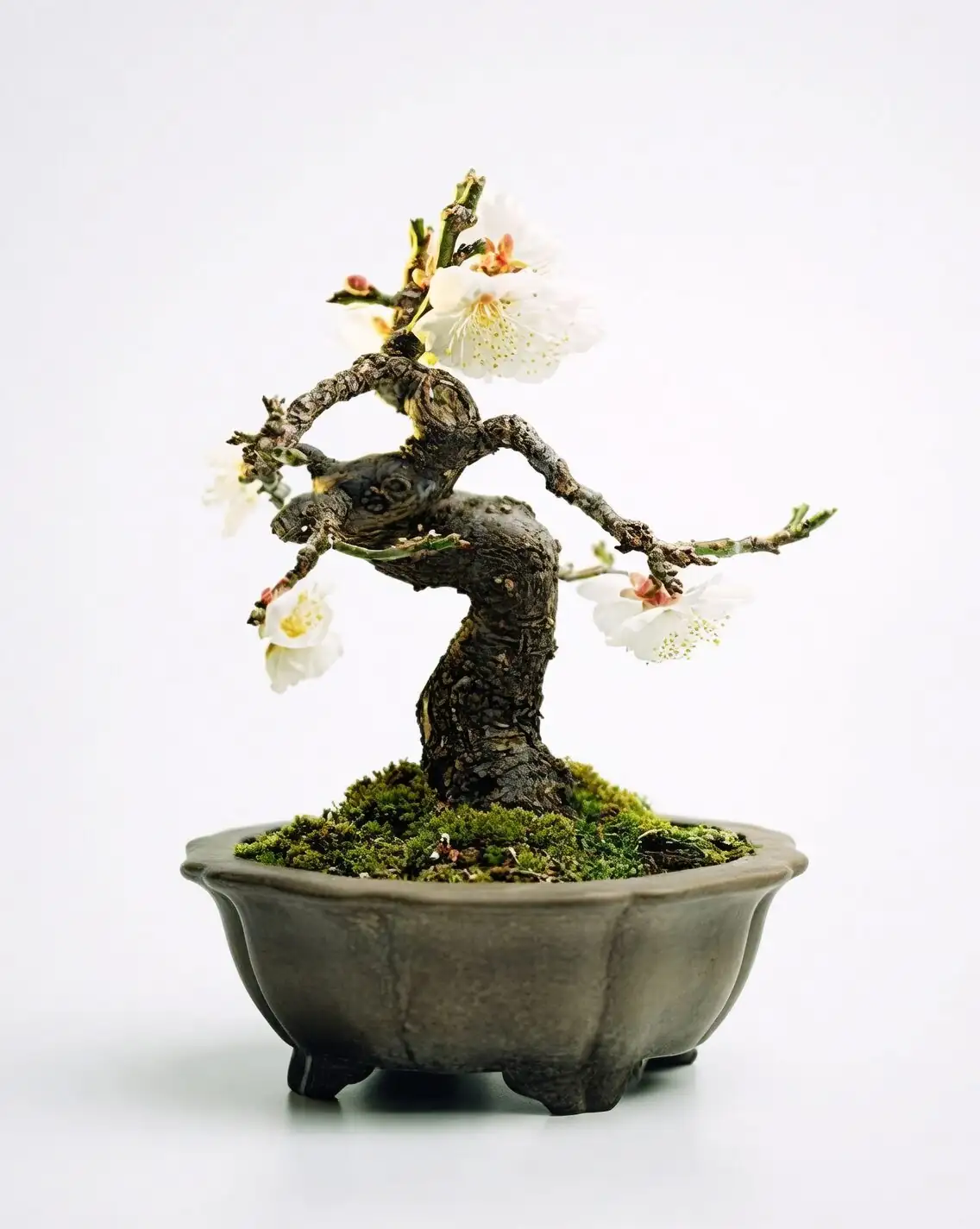
Think of mume branches as ink strokes in space—line, mass, and generous negative space tell the story. Keep it minimal to let fragrance breathe.
Principles to borrow (simply)
- One to three lines are enough
- Aim for a tall primary line (shin), a medium supportive line (soe), and a shorter accent (hikae).
- Asymmetry is your friend
- Let branches lean and reach; avoid mirror-image symmetry.
- Edit ruthlessly
- Remove fussy side-twigs that clutter the silhouette; keep flower-laden spurs.
Three easy compositions
1) Solo calligraphy (tall vase)
- One long, S-curved branch in a clear or ceramic cylinder.
- Rotate so buds face outward and upward, leaving empty space as “breath.”
- Let a few side-twigs create a gentle counter-curve near the base.
2) Quiet trio (low bowl with kenzan)
- Three stems: tall, medium, short placed at crisp angles on a pin frog.
- Open the canopy by pruning inward-facing twiglets; show the negative space between lines.
- Option: add a single leaf of camellia or a small stone for grounding, then stop.
3) Table cloud (rectangular vase)
- Several short, bud-heavy spurs clustered low, forming a horizontal “cloud” that hovers above the rim.
- Keep the top airy; let blossoms punctuate the outline rather than fill it solid.
Pro tip: A touch of floral wire can gently open an angle or lift a twig—hide the wire within branching crotches.
Styling a potted Prunus mume indoors (short-term)
- Display window: Very bright, cool entryway or north-facing window around 8–10°C (46–50°F) is ideal.
- Water: Keep evenly moist but never soggy; excellent drainage is essential.
- After bloom: Return outdoors to full sun and cool air; prune immediately after flowering—shorten last year’s flowered shoots hard (leave about 2–3 buds), which is key for next year’s display.
- Repot (optional): After flowering and before vigorous spring growth, refresh into a free-draining loam-based mix with coarse grit.
Symbolism: resilience in full perfume
Mume is a centuries-old emblem of resilience and hope: it blossoms through cold, promising spring while winter still lingers. Its “language of flowers” isn’t a Victorian invention but an East Asian cultural current—poems, paintings, and garden traditions celebrate its steadfast spirit and quiet bravery. Fragrance carries that meaning indoors: a small branch can transform a room’s mood long before spring arrives.
Safety and sourcing
- Ethical cutting: Harvest only from your own plants or reputable growers—never from public spaces.
- Pets and kids: Like many Prunus species, seeds/pits can contain cyanogenic compounds. Keep any fallen fruit or pits away from children and pets. (Cut branches for winter forcing rarely carry ripe fruit, but it’s good practice to be aware.)
Quick reference: your mume cheat sheet
- Buy/harvest: Plump, colored buds; a few flowers open; strong fragrance; beautiful branching.
- Condition: Recut underwater at an angle; strip to waterline; keep water fresh and cool.
- Force: Bright light + cool air (8–10°C / 46–50°F) for a slower, longer show.
- Maintain: Change water frequently; recut every 1–2 days; avoid heaters and hot sun.
- Style: Minimal stems, maximal space; let the bare wood draw the line and the perfume do the rest.
Handled with cool, bright restraint, Prunus mume turns late winter into a quiet festival—one branch, a clean vase, and a room newly perfumed with promise.