

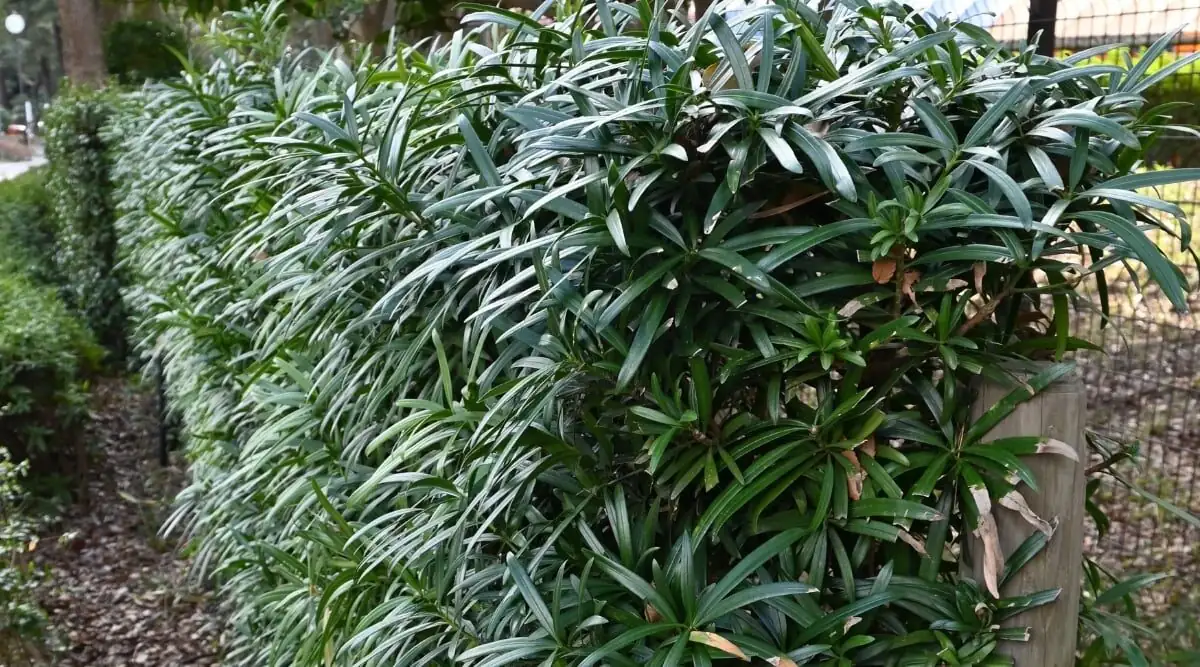
If a plant could embody quiet resolve, it would be Podocarpus macrophyllus—the Buddhist pine. Think of it as a green sentry: always tidy, always evergreen, and long associated with guardianship and good fortune. That’s why its “flower language” (huayu) reaches far beyond blossoms and into centuries of temple courtyards, shrine hedges, and—today—stylish living rooms where it’s sold as a “lucky” plant.
Meet Podocarpus macrophyllus (Buddhist pine)
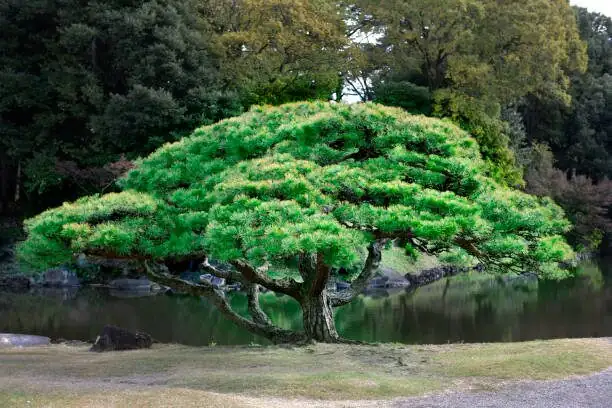
- Botanical profile: An evergreen woody shrub to small tree in the Podocarpaceae, native to China and Japan.
- Looks: Dense, lush, deep-green, glossy foliage; naturally neat year-round.
- Flowers and fruit: The “flowers” are inconspicuous. Male plants produce small pollen cones; female plants can form fleshy, berry-like arils after pollination. It’s grown primarily for its foliage.
- Everyday names: Buddhist pine, Japanese yew, Yew plum pine, Podocarpus.
- Modern life: Widely sold as an easy indoor foliage plant—including in minimalist water-culture displays—and often marketed under auspicious “lucky” trade names.
Flower language—beyond the flower
Flower language usually springs from petals and perfume. But for conifers like Podocarpus, symbolism is written in form, endurance, and the places people chose to plant them.
Longevity: evergreen timekeeper
- Why it fits: Evergreen leaves hold their color through the seasons, echoing continuity and resilient life force. In gardens and temple grounds, a well-tended Podocarpus can remain handsome for decades.
- Cultural thread: Planted at Buddhist temples and, in Japan, at Shinto sites, this evergreen presence became a living reminder of constancy and long life. Even the occasional appearance of those fleshy, berry-like arils on female plants hints at ongoing vitality and “fruitfulness.”
Steadfast protection: the quiet guardian
- Why it fits: Podocarpus holds an upright, composed silhouette. Dense, glossy leaves form screens and hedges that read as protective yet calm—more guardian than gatekeeper.
- Cultural thread: Around sacred spaces, evergreen hedging functions both practically (screening and shelter) and symbolically (a green boundary of care). Over time, the plant’s posture—straight, steady, enduring—came to signify watchful protection.
Prosperity: orderly growth, auspicious presence
- Why it fits: In feng shui traditions, stable, healthy evergreens are believed to cultivate steady qi—conducive to wealth that accumulates rather than scatters.
- Modern echo: In today’s houseplant trade, “lucky” branding sticks because it resonates with this legacy. A Podocarpus by the entryway or at a desk reads as elegant and composed; its reputation does the rest.
Feng shui placement for wealth and warding energy
Feng shui is a cultural art of flow and intention. Think of Podocarpus as a design tool that suggests stability and gathers attention—then place it to support the feeling you want.
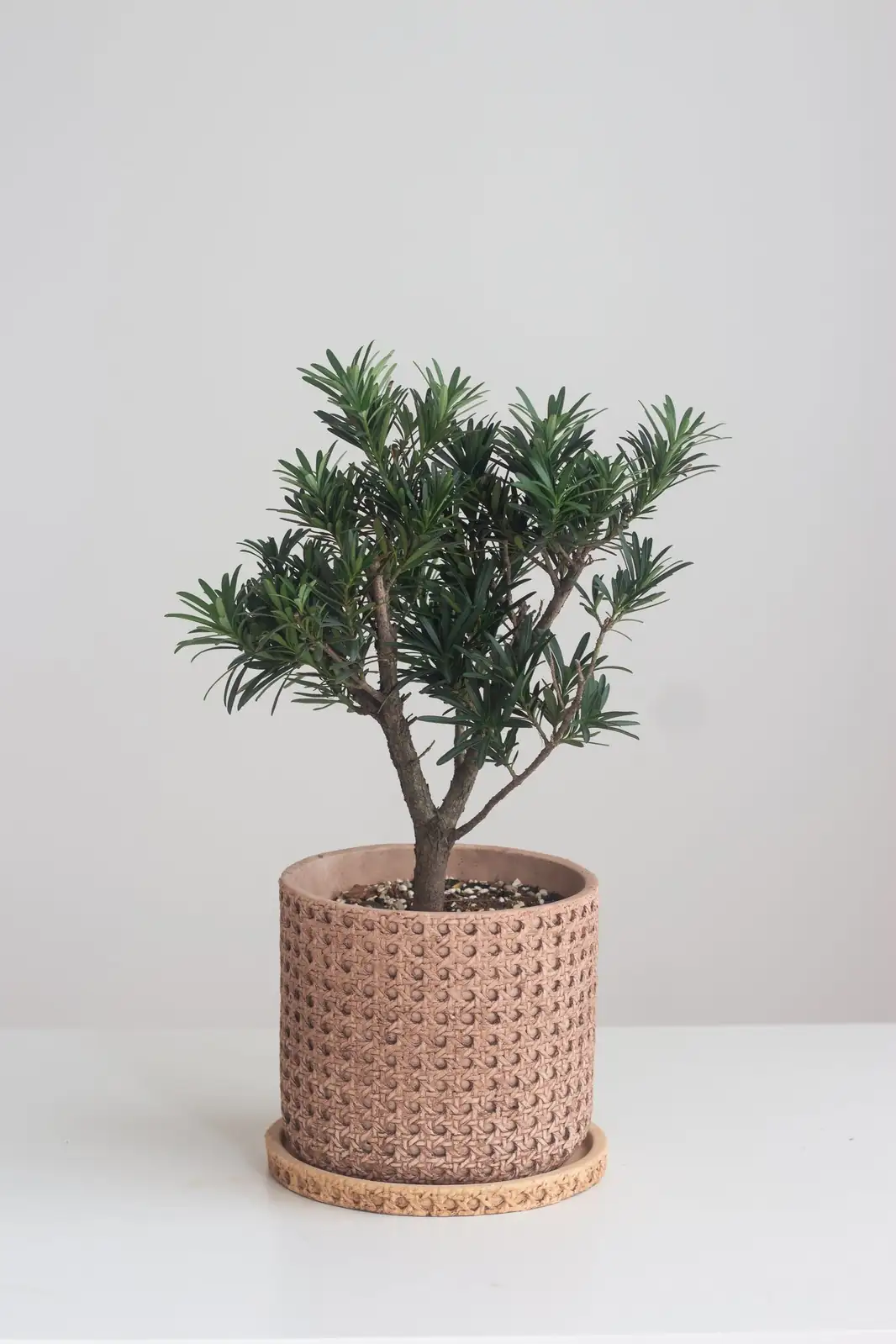
To cultivate wealth (and keep it)
- Flank the entry: Place a matched pair just inside a bright, indirect-light entry to “receive” incoming qi—like polite doorkeepers in green suits.
- Wealth corner: Situate a healthy, tidy specimen in the living room or office’s traditional wealth area (often the southeast in classical practice). Choose a pot with clean lines to emphasize order.
- Business settings: By a counter or near a reception desk, the plant’s evergreen calm can symbolize reliability—an excellent quality to signal to clients.

To stop “leaking” fortune
- Door-to-window alignment fix: If your entry door faces a window or balcony straight through, wealth energy is said to rush out. Place a tall, leafy Podocarpus between them to slow, disperse, and circulate the flow. A screen works too, but the living green adds auspicious life qi.
- Hallway softener: At the end of a long corridor, a Podocarpus can gently “catch” fast-moving energy and turn a hard line into a soft landing.
As a warding, calming presence
- Thresholds and corners: Position one at a frequently used threshold or to soften a sharp corner’s visual “jab.” Its composed form suggests steadying, protective intent without feeling heavy.
- Paired guardians: Two symmetrical plants—sleek pots, consistent height—telegraph order and harmony, classic cues for peace and prosperity.
Care that supports the intention
A plant looks most auspicious when it’s healthy and well-groomed. Luckily, Buddhist pine is adaptable.
- Light: Bright, indirect light to partial shade. An east-facing window is ideal; south-facing works if filtered through a sheer curtain. Avoid harsh, direct sun that can scorch leaves.
- Temperature: Thrives at 13–25°C (55–77°F). For the best winter foliage, keep above 10°C (50°F). Young plants may be damaged below about 5°C (41°F); mature specimens can briefly handle about -5°C (23°F) with protection.
- Watering: Keep the potting mix evenly moist—never soggy, never bone-dry. In active growth, about weekly is typical; adjust to your space, pot, and light. Empty saucers.
- Humidity: Moderate is best (around 50–60% indoors). Light misting helps in dry air.
- Soil and potting: Use a free-draining mix (leaf mold/compost + loam + coarse sand). Add a gritty drainage layer. Repot every 2–3 years in late spring.
- Pruning: Trim to shape for compact, even growth. Cutting a leggy stem encourages fuller side branching—great for symmetry by a doorway.
- Water culture (for young plants): Rinse the roots clean, anchor with large LECA/clay pebbles or stones in a glass or ceramic vessel, set in bright, indirect light at 18–26°C (64–79°F). Change the water every 3–5 days and add hydroponic nutrients monthly.
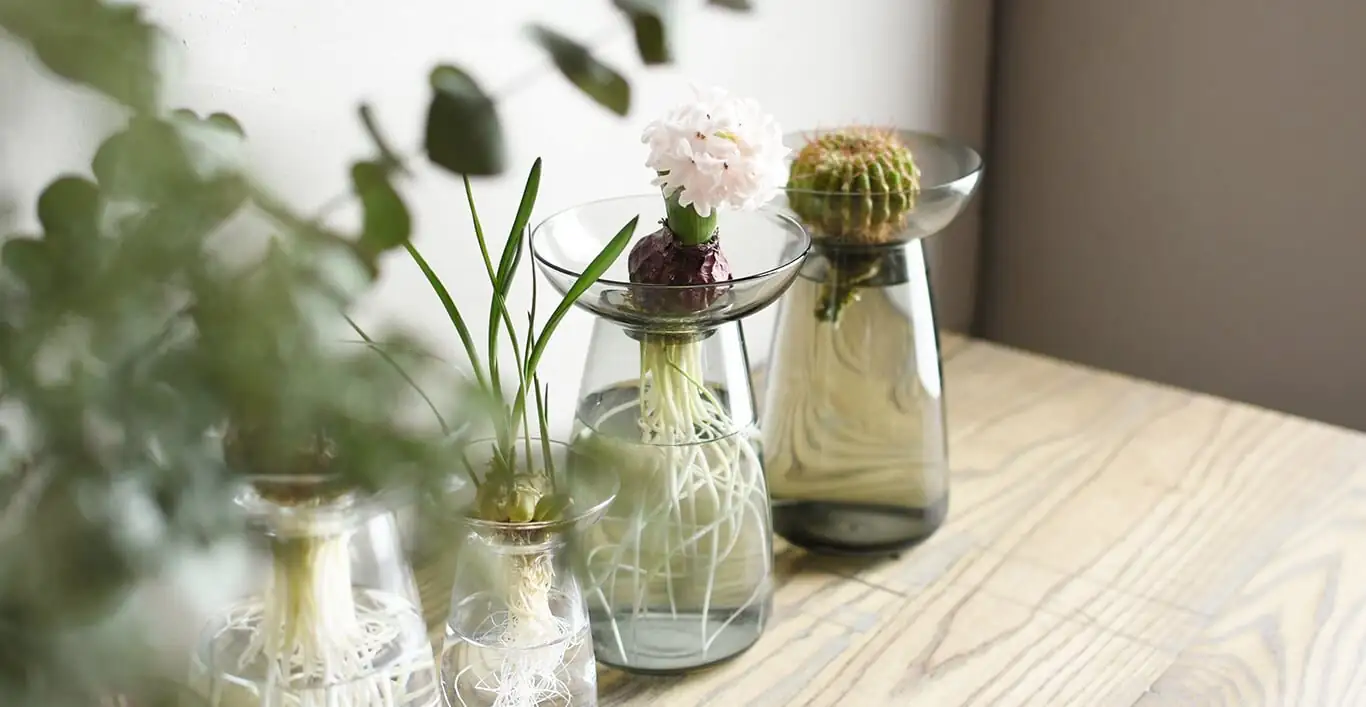
Tip: In feng shui, symmetry and tidiness matter. Dust the leaves, maintain a clean pot, and prune evenly—“orderly growth” is part of the wealth message.
The cultural throughline: why the “lucky” label stuck
- Temple to townhouse: From sacred courtyards and shrine hedges to modern foyers, Podocarpus wears its evergreen endurance like a badge of honor. The leap from “guardian of calm” to “symbol of steady fortune” felt natural.
- Shop-floor storytelling: Plant markets amplified this heritage through auspicious names. Many people now recognize the plant by its “lucky” branding even if they don’t know its botanical identity.
- Design-friendly virtues: Tidy, glossy foliage; tolerance for bright, filtered indoor light; and the option to style it in soil or chic water culture make it an effortless emblem of prosperity in contemporary spaces.
Quick botanical nuggets for enthusiasts
- Not a true pine or yew: Despite the common names, Buddhist pine belongs to the Podocarpaceae, not Pinaceae or Taxaceae.
- Grown for foliage: Flowers are inconspicuous, appearing in spring; male plants bear small pollen cones and females may form fleshy arils afterward.
- Indoor scale: Often sold as compact potted plants up to about 60 cm (24 in) tall—perfect for desks, entries, and shelves.
- Cold notes: Young plants dislike chills; mature outdoor specimens can handle brief, sheltered dips to around -5°C (23°F).
- Safety: Use caution around pets and children. Podocarpus species are widely reported as toxic if ingested—keep out of reach and seek veterinary/medical advice if eaten.
Bringing one home: choosing and styling for auspicious impact
What to look for
- Dense branching and a well-balanced silhouette.
- Deep-green, glossy leaves with no tears, spots, or scale insects.
- Upright, evenly spaced growth for a composed, “guardian” look.
First-week care
- Place in bright, filtered light (no harsh sun).
- Keep the potting mix evenly moist but never waterlogged.
- Mist lightly if indoor air is very dry. Once you see new growth, continue regular care.
Styling ideas
- Guardian pair: Two identical plants flanking a doorway or console—instant harmony.
- Single statement: One sculptural specimen in a tall, minimalist pot at a threshold or hallway end.
- Water-culture calm: A young plant anchored with smooth stones in a glass cylinder—perfect beside a computer for a clean, modern “wealth corner.”
—
Flower language might start with petals, but with Buddhist pine it’s the poetry of presence: longevity in evergreen continuity, protection in poised form, and prosperity in the calm order it brings to our thresholds. Place it well, care for it simply, and let this enduring green companion do what it has done for generations—stand steady, look serene, and invite good fortune to linger.