

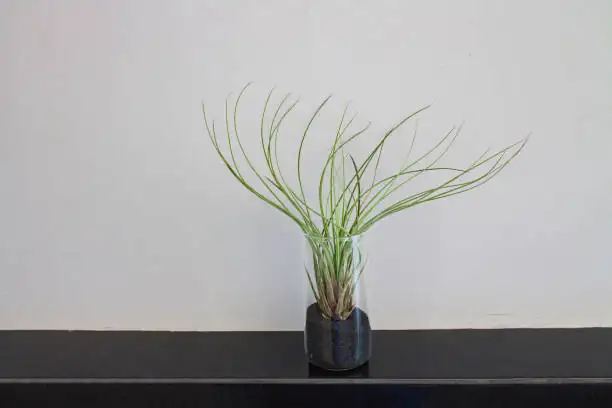
If you’ve ever wanted a plant that looks like a fountain of green needles and styles like a piece of sculpture, say hello to Tillandsia juncea. This easygoing air plant thrives on bright light, moving air, and your creativity. Below, we’ll design with airflow first—comparing driftwood mounts, cork plaques, wire-free suspensions, and airy frames—so your juncea’s base stays dry, its leaves stay pristine, and its pink-and-purple bloom show (when it comes) steals the room.
Meet Tillandsia juncea: the breeze-loving fountain
- Look: Long, slender, pointed leaves form a tidy, fountain-shaped tuft. Over time, pups (offsets) build a fuller clump.
- Size: Typically 15–30 cm (6–12 in) tall; clumps can spread 15–30 cm (6–12 in) wide.
- Personality: Cheerful and forgiving; if you miss a watering, it often rebounds quickly—if it can dry fast afterward.
- Bloom: A vivid pink, comet-like spike with small purple tubular flowers, usually late spring to summer (timing varies with conditions).
- Origins and habit: An epiphyte from Mexico and Central America (Bromeliaceae, genus Tillandsia). Roots anchor; leaves do the drinking.
The airflow-first styling code (read this before you mount anything)
Keeping the base dry and leaves immaculate starts with setup. Use these non-negotiables:
- Light: Bright, indirect light to gentle morning sun. Shield from harsh midday rays unless humidity is higher and airflow excellent.
- Airflow: Strong, steady movement. After soaking, juncea should dry within 2–4 hours (never more than 4).
- Watering rhythm: Soak 15–30 minutes about 1–2×/week in warm/dry conditions; in cool/dim seasons, about every 10–14 days. Shake out excess water; never leave water sitting in the base.
- Temperature and humidity: 18–30°C (64–86°F). Keep above 10°C (50°F). Humidity 40–70% is great—always paired with airflow.
- No soil; no sealing: Style on wood/cork, in mesh or open frames, or set on airy surfaces. Avoid closed terrariums or damp wraps that hug the base.
- Orientation: Display slightly angled or base-down so water can’t pool. Give space around the leaves—no tight collars.
- Materials: Avoid copper (wire or fertilizers high in copper). Use stainless, aluminum, nylon fishing line, cotton twine, or gentle silicone ties. If you use adhesives, choose a neutral-cure, non-toxic option and keep glue away from the base.
- Cleaning leaves: A light rinse keeps trichomes (the natural silvery “dust”) clear; never oil or polish. Handle by the base, not the leaf tips.
Driftwood mounts: wild, organic, and gallery-ready
Driftwood plays beautifully with juncea’s vertical lines, creating wind-swept, beachy silhouettes.
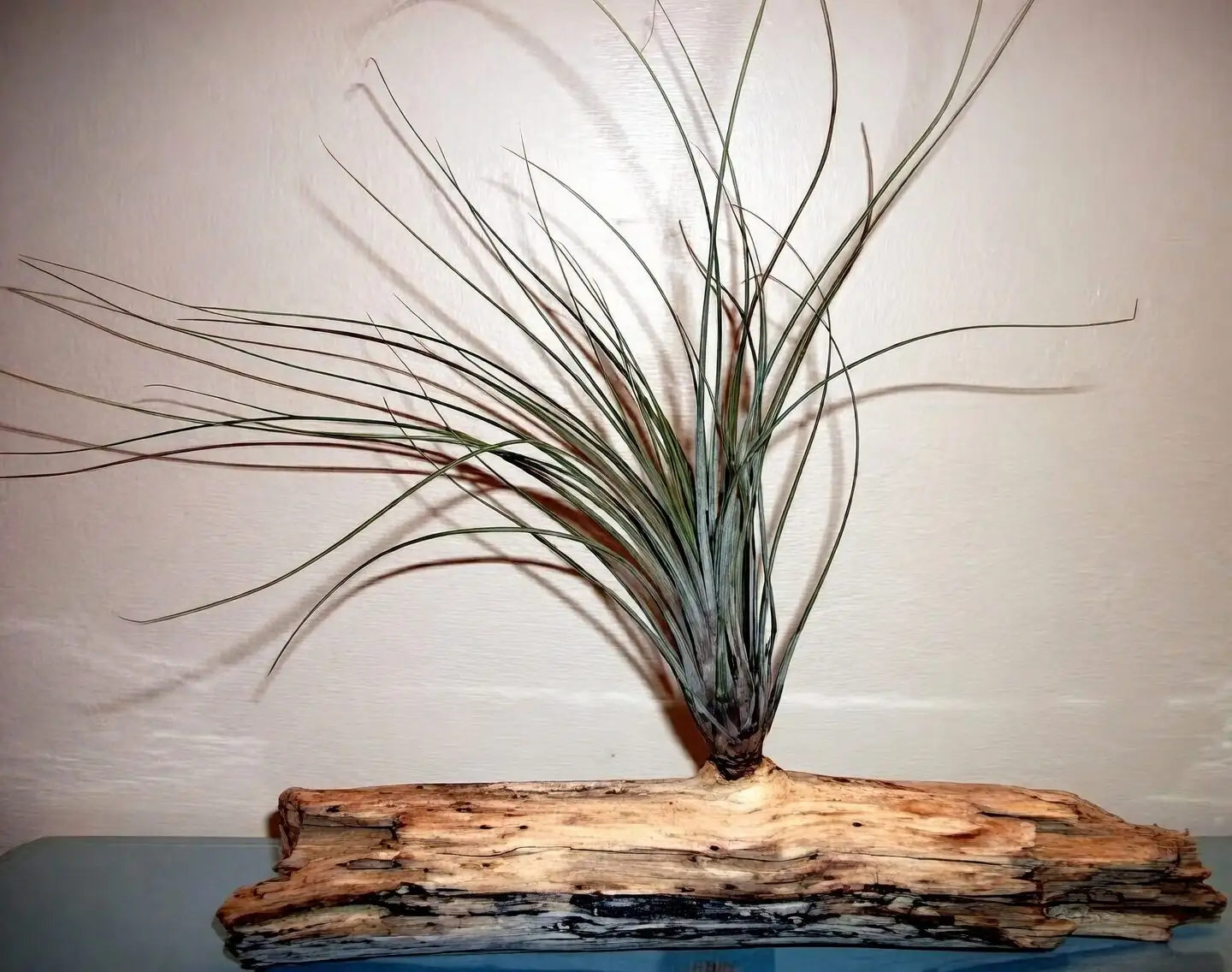
Why it works
- Irregular curves cradle the plant without smothering it.
- Elevated nooks boost airflow, helping the base dry quickly.
Step-by-step
- Choose wood that’s fully dried, inert, and salt-free. If collected, soak and rinse thoroughly, then dry for several days.
- Test-fit the plant where the base can sit slightly below horizontal (for drainage).
- Attach:
- Best: nylon fishing line or soft aluminum/stainless wire threaded gently through the lower leaves—never through the core.
- Wire-free option: a cotton macramé micro-sling that hugs below the base without covering it, or let roots naturally grab over time.
- Adhesive (optional): a tiny dot of neutral-cure silicone on a non-living sheath, never on the living core.
- Hang or stand the piece where air moves and light is bright but indirect.
Pros
- Natural, sculptural, and unique.
- Great airflow around leaves and base.
- Easy to lift off for soaking if tied rather than glued.
Cons
- Real driftwood can hide salts; prep thoroughly.
- Odd shapes sometimes collect water; mount at an angle to drain.
Airflow upgrades
- Add a discreet spacer (rubber bumper) behind the contact point.
- Hang vertically so the base faces slightly down after watering.
Cork plaques: bark with benefits
Cork bark is the classic mount—lightweight, porous, and handsome.
Why it works
- Cork is breathable and resists staying wet.
- Flat-but-textured surface makes clean, wall-ready pieces.
Step-by-step
- Select a cork slab with natural ridges for cradling the base.
- Secure with fishing line or stainless staples that catch the line—not the plant. Keep the base uncovered.
- Label discreetly on back for species and watering date tracking if you keep a collection.
Pros
- Easy to hang in clusters to build a living “wind wall.”
- Fast drying, even in moderate humidity.
- Lightweight and renter-friendly.
Cons
- Flat surfaces can tempt overdecorating; avoid moss cuffs or damp décor that stays wet.
- Needs periodic retying as clumps expand.
Airflow upgrades
- Use two or three tiny tie points rather than a single tight band.
- Space plaques at least a hand’s width apart for cross-breezes.
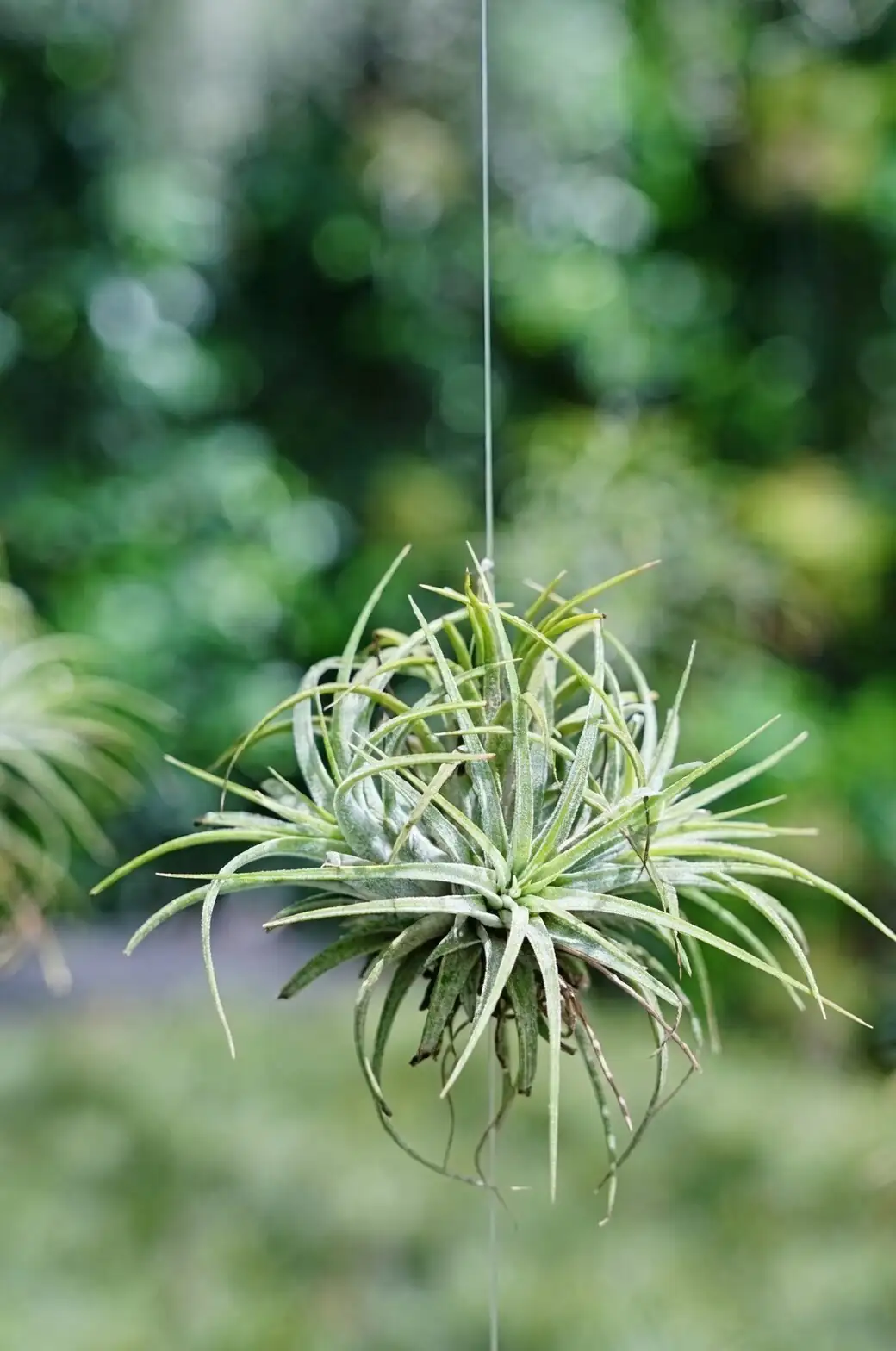
Wire-free suspensions: the levitating look
Create that floating, cloudlike effect without visible hardware.
Methods
- Invisible nylon: A single strand looped under the lowest leaves and hung from a ceiling hook. Keep the loop loose enough for airflow.
- Minimal macramé: A soft cotton cradle that holds just below the base with three slender cords—no wrap touching the core.
- Open “jellyfish” shells: If you use sea urchin shells, choose ones with wide openings and hang the plant below the shell rim so the base is exposed and dries quickly.
Pros
- Maximal airflow and drama; great for high light near windows.
- Easy to dunk-soak; just unhook, soak, shake, rehang.
Cons
- Overly tight loops can bruise leaves.
- Closed or narrow shells trap humidity; avoid obstructing the base.
Airflow upgrades
- Rotate plants 90° each week to even out light and drying.
- Hang where you can feel a gentle draft with your hand.
Airy frames and grids: living linework
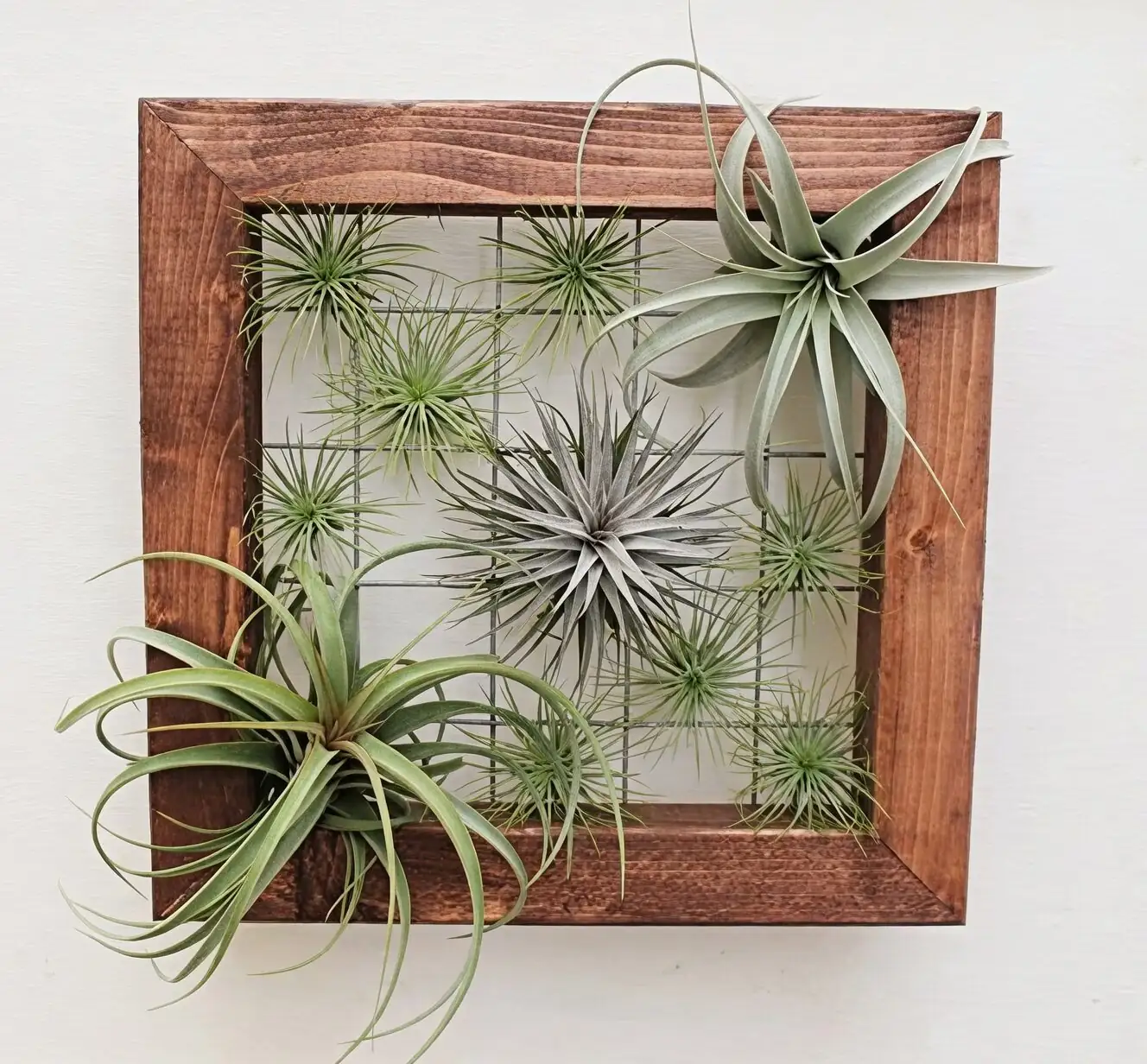
Frames with stainless mesh or chicken wire make vertical galleries of green.
Setup
- Build a wooden frame with stainless or galvanized grid (avoid copper).
- Slip leaf bases gently through large apertures or tie using fishing line; never pinch the core.
- Keep plants spaced so none touch at the base.
Pros
- Modular, modern, and perfect for clumps.
- Excellent airflow front and back.
Cons
- Too-fine mesh can scrape leaves during watering.
- Heavy clumps may need retying as they grow.
Airflow upgrades
- Stand frames off the wall by 1–2 cm using felt bumpers.
- Tilt the top forward slightly to discourage water pooling in cores.
Watering and feeding when styled for display
- Soak schedule: 15–30 minutes, 1–2× weekly in warm/dry conditions; every 10–14 days in cooler/darker seasons.
- Drying: Shake gently, then place in brisk airflow to dry within 2–4 hours. Aim the base slightly downward.
- Fertilizer: Monthly in spring–summer with bromeliad/air-plant fertilizer at 1/4 strength (or a low-copper orchid fertilizer). Rinse with plain water occasionally to clear minerals.
- Water quality: Rain, distilled, or filtered water keeps trichomes bright and leaf tips clean.
Buying, grooming, and the joy of clumping
- Choose plants with firm, springy leaves and a clean, solid base. Avoid blackened or mushy centers.
- Grooming: Trim only fully brown, dead leaves. After flowering, clip the fading spike; the parent will pup.
- Propagation: Separate pups when they reach 1/3–1/2 the size of the parent—or keep them attached for a fuller fountain.
Troubleshooting the pristine look
- Browning at the base: Almost always rot from staying wet too long or poor airflow. Rethink orientation, spacing, and drying time.
- Pests: Mealybugs/scale appear occasionally. Dab with 70% isopropyl alcohol, isolate, improve airflow and drying speed.
- Tip burn or bleaching: Too much sun or heat. Move to bright, indirect light and boost humidity with airflow.
- Spotty leaves: Mineral buildup from hard water. Switch to rain/RO and add a plain-water rinse.
Safety, placement, and seasons
- Non-toxic to people and pets, but not a snack. Keep out of reach of curious chewers.
- Placement: Bright window with moving air. Bathrooms work if light is strong. Outdoors in warm seasons: bright shade with airflow.
- Hardiness: USDA 10–11; protect from cold. Keep above 10°C (50°F) year-round.
- Seasonal rhythm:
- Spring–summer: increase light (no scorching), soak a bit more often, feed lightly, maximize airflow.
- Fall–winter: water less, chase light, and double down on fast drying.
Symbolism and story: independence with a pink comet
Tillandsia juncea often symbolizes independence and resilience—fitting for a plant that anchors to trees or rocks and drinks through its leaves, not roots. In the old “flower language” traditions, tillandsias weren’t classic protagonists, but modern floristry embraced their epiphytic magic. Juncea’s meaning flows from its biology: it thrives with minimal resources, then surprises with a bright pink spike and purple flowers—little galaxies of color that reward patience and good airflow.
Quick style recipes to try this weekend
- The Driftwood Cascade: One medium juncea mounted 20° off-vertical on a weathered branch; a single fishing-line tie and a felt bumper behind the contact point. Hang near an east window.
- The Cork Crescent: Three junceas staggered along a curved cork slab, each tied with two loose points. Space 8–10 cm apart for generous breezes.
- The Floating Comet: A single specimen hung on a near-invisible nylon line from a ceiling hook, base slightly down. Rotate weekly; spotlight the pink spike when it appears.
- The Grid Gallery: A thin oak frame with stainless grid, holding five junceas in a quincunx pattern. Frame stands 1.5 cm off the wall for backdraft drying.
Fast FAQ
- Can I grow it in a closed glass terrarium? No. Choose open designs with free airflow; closed vessels trap moisture and invite rot.
- Does it die after flowering? The blooming rosette slows, but it produces pups that carry the clump forward—your fountain gets fuller.
- How do I know it’s healthy? Leaves feel firm and springy; the base is clean and solid; silvering from trichomes is normal and healthy.
With airflow as your design partner, Tillandsia juncea becomes pure botanical linework—sleek, sculptural, and satisfyingly low-maintenance. Keep the base dry, give the leaves space, and let your styling do what good styling does best: make health look like art.