
Guzmania insignis greets you with a tidy rosette of glossy green leaves and a bold, upright display of vivid red bracts. It’s a tropical bromeliad that loves bright, filtered light, warm rooms, and a little humidity. The secret sauce? Mastering the tank (leaf cup) watering routine so the plant drinks from its own vase—without letting that water go stale.
Here’s your crisp, step-by-step care guide.
Guzmania insignis at a glance
- Family: Bromeliaceae (bromeliads)
- Origin: The Andes region of South America
- Habit: Rosette-forming, often produces offsets (pups) after flowering
- Star feature: A central “tank” (leaf cup) that holds water and absorbs dilute nutrients
- Display: Upright spike topped with long-lasting red bracts
- Best for: Bright filtered/indirect light, warm homes, and comfortable humidity
The sweet spot: light, warmth, humidity
Bright, filtered light (no scorch)
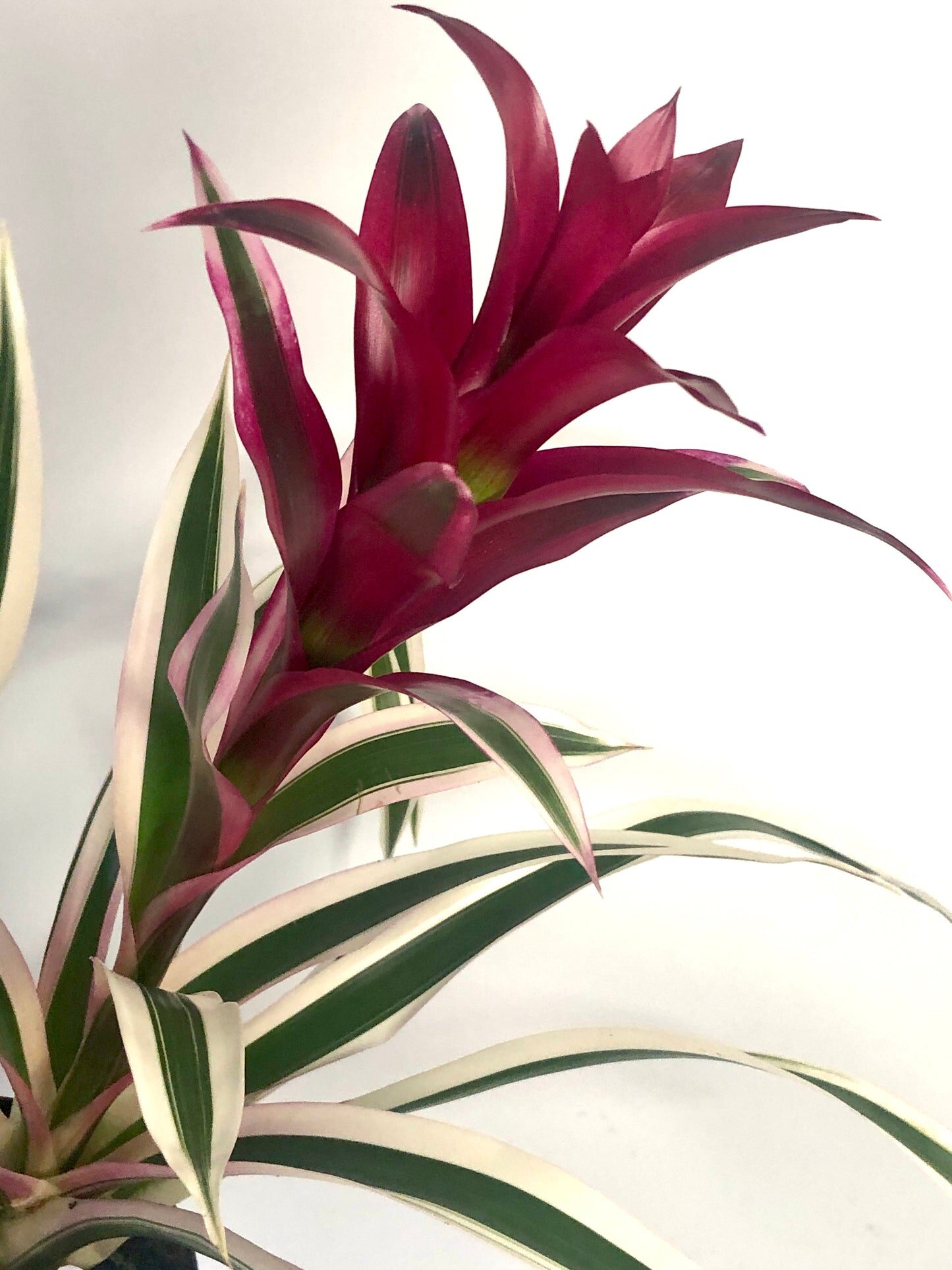
- Aim for bright, indirect light; an east-facing window is often ideal.
- Spring: Bright, filtered light.
- Summer: Avoid strong midday/afternoon sun—about 50% shade plus good airflow prevents leaf scorch.
- Winter: Use the brightest spot you have, but keep leaves off cold glass and out of nighttime drafts.
- Signals:
- Too much sun: Brown, crisp patches or washed-out foliage.
- Too little light: Dull color, slow pup formation, and tired-looking leaves.
Warm temperatures (16–28°C)
- Ideal range: 16–28°C (61–82°F).
- Keep above 10°C (50°F) in winter; below 5°C (41°F) risks chilling injury.
- Drafts are the enemy—shield from cold entries and air-conditioning blasts.
Humidity and airflow
- Prefers moderate to high humidity.
- In hot or dry spells, lightly mist the air around the plant (not soaking), and keep gentle ventilation to discourage leaf spot.
- Newly potted pups root more readily with extra humidity (a clear cover with vents works well).
Watering, the tank-first way
Think of your Guzmania as a tiny rainforest reservoir: the rosette forms a cup that stores water. Keep the potting mix barely moist and focus most of your care on the cup.
What water to use
- Use room‑temperature water. Rain, distilled, or tap water that’s been left to stand can help minimize mineral buildup.
The cup routine (refresh to avoid stagnation)
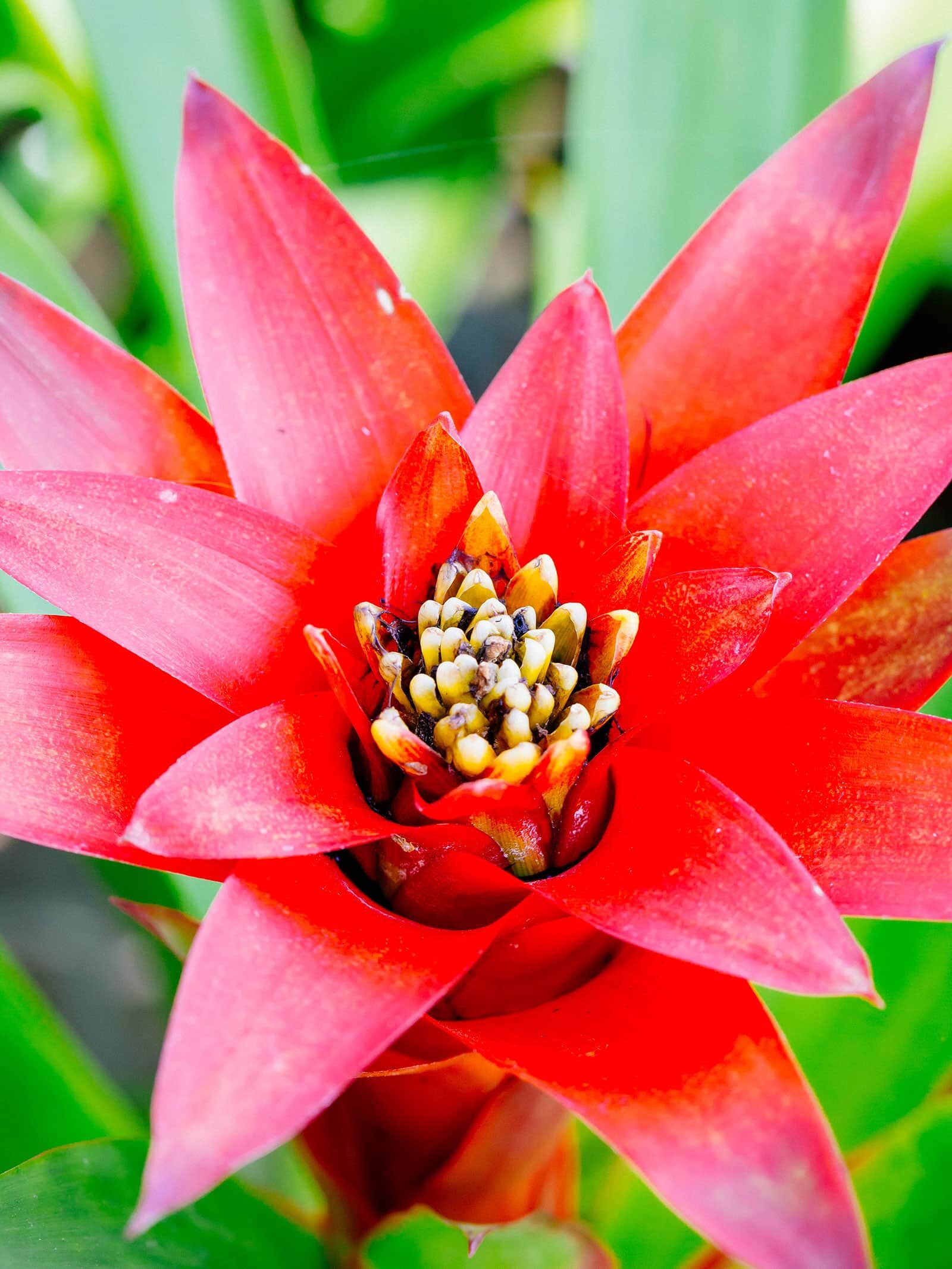
- Keep a small amount of water in the central cup—enough to wet the inner leaves but not brimming (no need to exceed about a quarter full).
- Refresh regularly so it never turns stale. A simple weekly routine works well in warm, bright conditions:
- Tilt the plant gently and pour the cup water out.
- Rinse the cup by pouring in a little fresh water and draining again.
- Refill lightly with clean water.
- In cooler or lower-light periods, keep less water in the cup and allow a brief pause (up to a day) before refilling. Don’t let it sit dry for long stretches; if the cup dries out repeatedly, leaves can dull and yellow.
- If you notice odor, cloudiness, algae, or mosquito interest, empty and rinse immediately, then refill with fresh water.
Potting mix moisture
- Keep the mix lightly moist in spring and summer—never soggy. The roots are for anchoring and don’t like to sit wet.
- In winter, water sparingly and let the mix dry slightly between waterings, while maintaining a small amount of fresh water in the cup.
Seasonal tweaks
- Summer: Shade from harsh sun, maintain airflow, and lightly mist the air on extra-dry days.
- Winter: Brightest light by day; keep warm and avoid cold, wet roots.
Feeding: light and dilute
- During active growth, feed every 2 weeks with a very dilute balanced fertilizer.
- Apply to the potting mix and/or add a very weak solution to the cup—always err on the weak side to avoid tissue burn.
- A modest bump in phosphorus and potassium can support blooming.
- Rinse and refresh the cup regularly so fertilizer doesn’t accumulate.
Soil, potting, and repotting
- Medium: Loose, airy, fast-draining—think peat/leaf-mold base blended with coarse sand, or an orchid/bromeliad-style mix.
- Pot size: Commonly grown in a 12–15 cm (4.7–5.9 in) pot.
- Repotting cadence: About every 2 years in spring, or when pups are ready for their own pots.
Flowering cycle and pups (your next generation)

- The mother rosette blooms, then slowly declines; meanwhile, pups appear at the base.
- When pups reach ~10–12 cm (3.9–4.7 in) tall:
- Separate with a clean blade.
- Let the cut dry briefly.
- Insert into a sandy, airy medium.
- Keep warm (20–25°C / 68–77°F) with extra humidity and light, filtered brightness.
- Rooting usually takes around a month before potting up properly.
Placement and a simple year-round rhythm
- Spring: Bright, filtered light; keep the mix lightly moist; prime time for sowing or dividing pups.
- Summer: ~50% shade during strong sun; good ventilation; occasional light misting; refresh the tank diligently.
- Autumn: If the air turns dry, boost humidity; bring indoors before cool nights arrive.
- Winter: Keep above 10°C (50°F); brightest possible light; avoid cold glass; water mix sparingly; maintain a small amount of fresh water in the cup.
Grooming, health, and safety
- Wipe leaves with a slightly damp, soft cloth to keep them glossy and dust-free.
- Remove yellowing or dead outer leaves promptly.
- Leaf spot can occur: improve airflow, avoid leaving foliage wet late in the day, and remove affected tissue. If needed, consider an appropriate ornamental fungicide (often copper-based) and follow the label.
- No confirmed toxicity details—keep out of reach of pets and children and avoid ingestion.
Buying smart
- Choose a symmetrical rosette with firm, clean, glossy leaves—no tears, spots, or pests.
- The spike should be upright and sturdy with bright red bracts, not wilting or chilled.
Troubleshooting fast fixes
- Yellowing leaves?
- Cup dried out too often—maintain a little fresh water in the tank.
- Too much direct summer sun—move to bright, filtered light.
- Normal post-bloom aging—mother rosette declines as pups develop.
- Low light—gradually increase brightness.
- Brown tips or rot in the center?
- Cup water was stagnant or overfilled in cool, low light—empty, rinse, and refill lightly; improve airflow and warmth.
- Washed-out color or no pups?
- Light is too weak—brighten the spot (without harsh sun).
The flower language and why it’s gifted
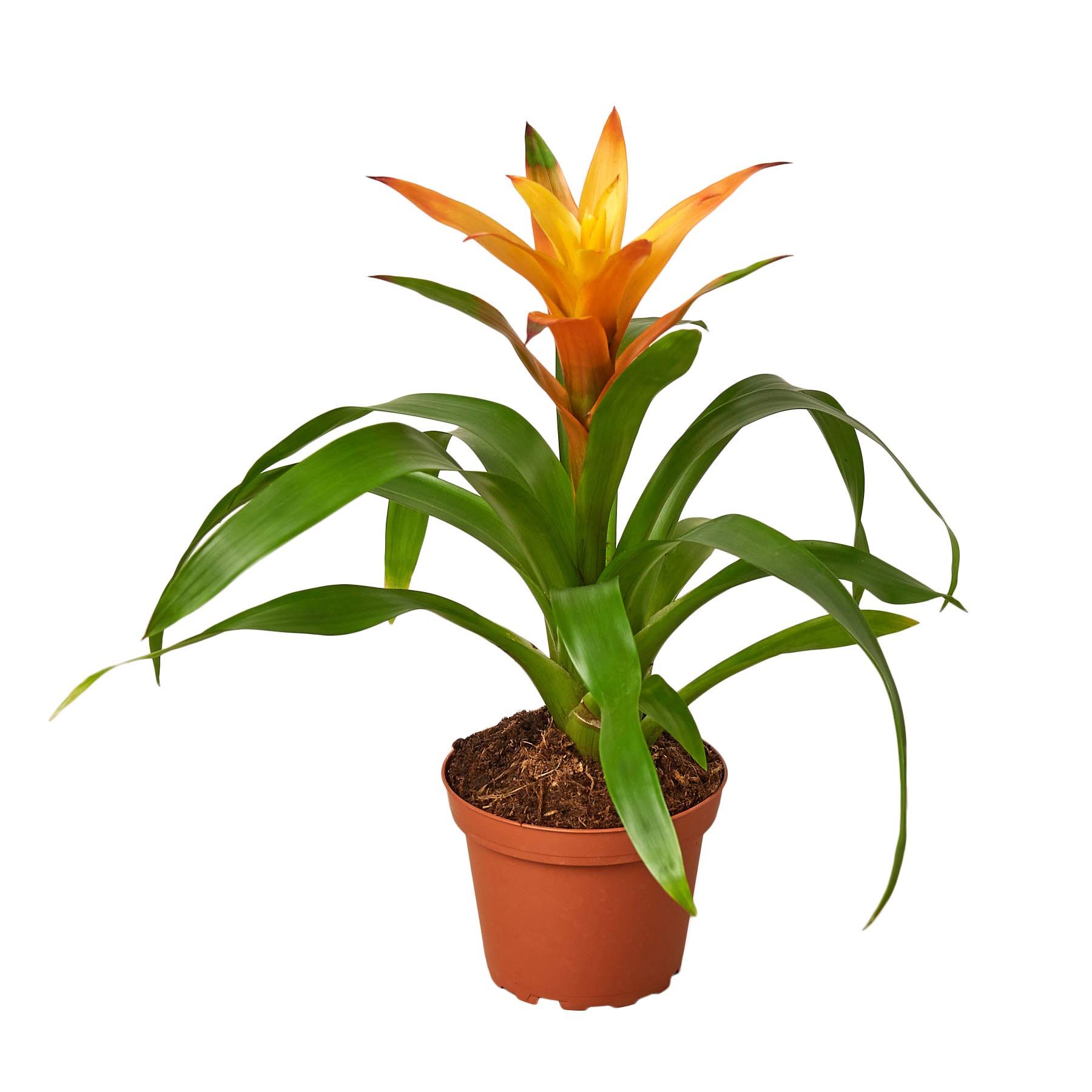
In Chinese, this plant is fondly called “鸿运当头,” which evokes “good fortune arriving” right at the top—perfectly captured by its upright red bracts. Its modern gifting symbolism centers on prosperity, thriving business, and auspicious new beginnings. While not rooted in a historical Victorian “flower language,” its meaning grew from cultural association and visual cues: a flame-red crown that looks like success standing tall. It’s a natural choice for housewarmings, shop openings, and milestones where you wish someone a boldly thriving future.
Your cup-refresh checklist (pin this)
- Keep a small amount of water in the central cup—never stagnant or brim-full.
- Empty and rinse weekly in warm, bright seasons; refresh promptly if water looks or smells “off.”
- In cool/low-light periods, keep less water in the cup and allow a brief dry pause before refilling—don’t let it stay empty long.
- Pair with a lightly moist, well-drained mix; never waterlog the pot.
- Keep it warm (16–28°C), bright, and lightly humid with airflow—and enjoy weeks of vivid color from those red bracts.
Fun fact to finish: Guzmania is a classic tank bromeliad—nature’s little rain barrel. Master the cup, and you’ve mastered the plant.