

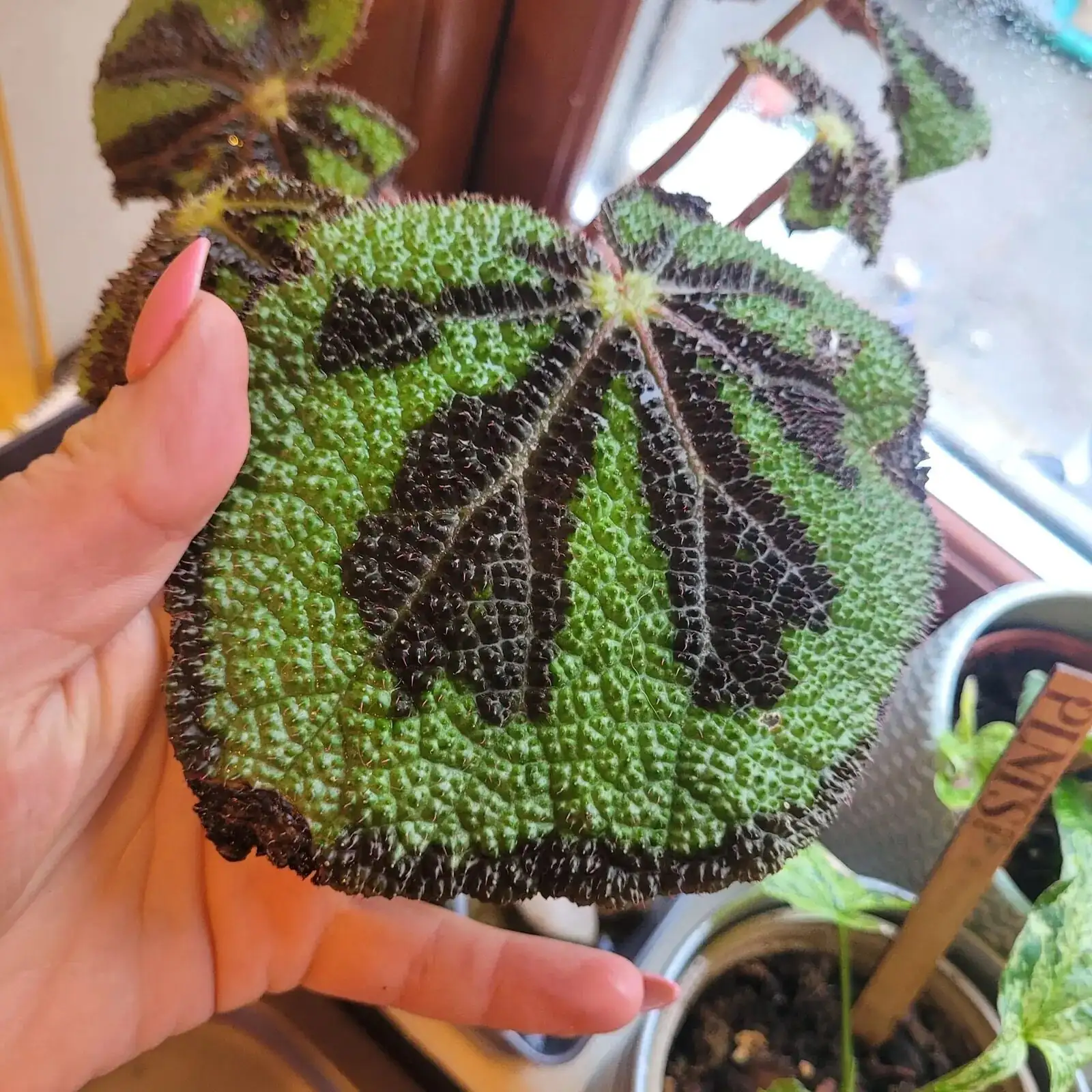
Imagine a leaf you can read with your fingertips. Begonia masoniana—better known as the Iron Cross Begonia—invites exactly that. Its heart-shaped blades are vivid green, stamped with a dark cross and covered in tiny bumps that feel like fine grit. It’s a plant that begs you to look closer, then closer still—because the showy pattern and sandpapery texture aren’t just for drama; they’re clever biology at work.
Meet the Iron Cross Begonia
- Scientific name: Begonia masoniana (family Begoniaceae)
- Origins: Southern China to Vietnam; now a global darling of indoor foliage collections
- Common names: Iron Cross Begonia; also traded as Brazilian Begonia and Mason’s Begonia
- Look: Bright green, heart-shaped leaves with a bold, wine-red to brownish cross; famously rough, “sandpaper” surface
- Habit: Compact, clump-forming rhizomatous perennial; typically 30–45 cm tall and wide in a pot
- Flowers: Small, pale pink to whitish—charming but usually upstaged by the leaves
Note on names: Despite the “Brazilian Begonia” nickname sometimes used in trade, this species is native to Asia, not Brazil. The “Iron Cross” moniker comes from that unmistakable dark cross emblazoned on each leaf.
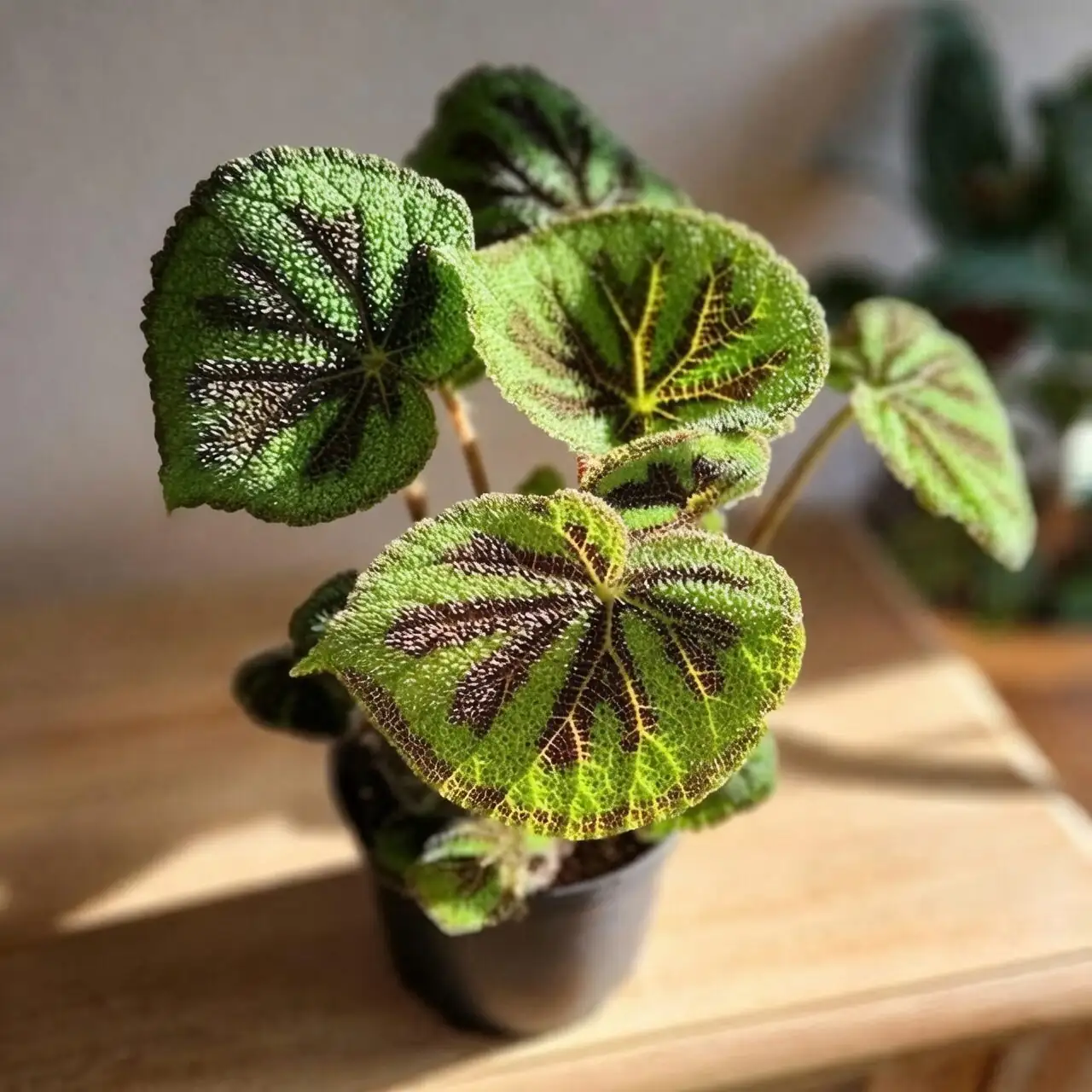
Feel this leaf: the bumpy surface explained
Run a fingertip across a healthy Iron Cross leaf and you’ll feel two things at once: tiny, stiff hairs and a softly rolling topography. Botanically, that microterrain is called bullation—little blister-like rises formed as leaf tissues expand at different rates between a network of veins. Add in fine, sandpapery trichomes (leaf hairs), and you’ve got texture you can actually feel.

Why go bumpy?
- Air management: Microscopic hills and hairs trap a thin boundary layer of still air at the leaf surface. In fluctuating indoor or understory breezes, this can help smooth out moisture loss and temperature swings.
- Light handling: A curved, quilted surface scatters light from many angles. In dappled forest light, this diffusion may make photosynthesis more steady by softening harsh sun flecks.
- Water savvy: Rough microtexture can encourage water to bead and roll or to pause briefly in micro-pockets—either outcome can reduce the time thin films of water sit on leaf surfaces, which in turn may lower disease risk. (For your plant, that translates to: avoid routinely wetting the leaves late in the day.)
- Deterring diners: The sandpapery feel is no accident—tiny hairs and a tougher, textured surface can be less appealing to nibblers like snails or insects. And, like many begonias, tissues contain insoluble calcium oxalates, which are irritants if chewed.
Think of the leaf as a multi-tool: its bumps, hairs, and curves are a way to manage air, water, light, and hungry mouths—all without moving an inch.
Why the “iron cross” marking?
That dark cross is made by pigments called anthocyanins laid down along the main veins—imagine the plant tracing its own roadmap. While knockout style is the obvious benefit, anthocyanins often do practical jobs for shade-loving plants:
- Photoprotection: These pigments can act like sunglasses, absorbing high-energy light during sudden sunflecks and helping prevent cellular “sunburn.”
- Light tuning: By re-routing and filtering certain wavelengths, anthocyanins may reduce glare and improve the balance of light that reaches photosynthetic cells below the cross.
- Camouflage and confusion: In mottled forest light, bold patterns can break up a leaf’s outline, making it trickier for herbivores to target. Whether this deters pests in all situations is debated, but the disruptive pattern certainly doesn’t hurt.
In short, the cross is style with substance—both a brand and a buffer.
Texture, light, and moisture: how the leaf’s design pays off
- In dappled shade: Curved, bullate leaves scatter light to reduce hot spots, while the darker cross filters sunflecks over the main veins—prime real estate for moving water and sugars.
- In humid understories: Bumps and hairs tweak how moisture clings or sheds, helping the leaf dry efficiently after dew or a passing shower.
- Against grazers: A gritty surface plus unpalatable crystals equals a good reason to move on to a softer salad.
This isn’t armor plate—it’s smart topography.
Grow your own tactile leaf laboratory
The Iron Cross Begonia is straightforward when its core preferences are met: steady warmth, bright but indirect light, a loose mix, and moderate to high humidity with fresh air flow.
- Light: Bright, indirect is ideal; medium light is tolerated. Keep it out of harsh direct sun to prevent scorch and color fade.
- Temperature: 18–27°C (64–81°F). Protect from cold drafts; avoid below 13°C (55°F).
- Humidity: Aim for 50–70%. Pair humidity with decent airflow to prevent mildew on those textured leaves.
- Soil: Loose, airy, fast-draining mix—think peat or coco base with perlite and a bit of fine bark. The rhizomes resent soggy conditions.
- Water: Let the top 2–3 cm (about 1 inch) dry, then water thoroughly and drain fully. Never let the pot sit in water. Ease up a touch in winter while keeping it warm.
- Feeding: Spring through early autumn, apply a balanced fertilizer at 1/4–1/2 strength every 2–4 weeks. Pause or greatly reduce in winter.
- Potting: A shallow, wider pot suits the spreading rhizomes. Repot every 1–2 years in spring or when the rhizome crowds the rim.
- Placement: Near an east or north window, or set back from a bright south/west exposure. A warm bathroom with good light and airflow can be perfect.
Pro tip: Some growers love compact forms like Begonia masoniana ‘Rock’ for shelves or terrariums. The same rules apply: gentle light, stable humidity, and a breezy—not stagnant—microclimate.
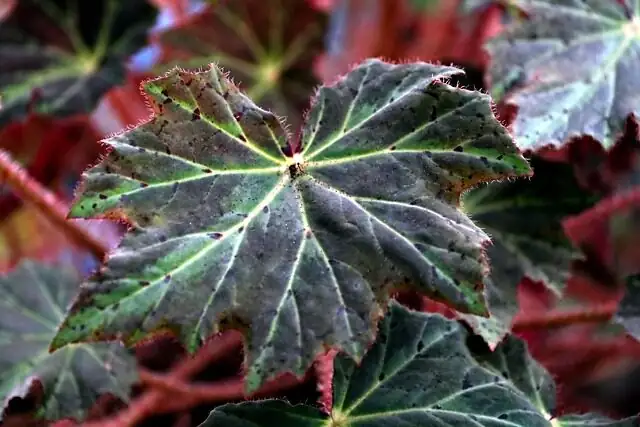
Hands-on plant science at home
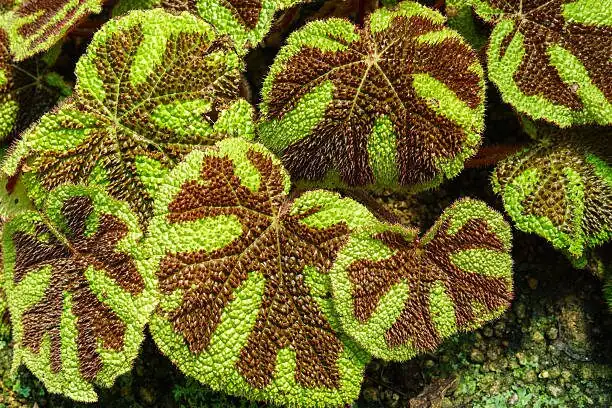
- Feel test: Lightly brush a clean fingertip over the leaf. Notice the grit? Those are tiny hairs and micro-ridges. Don’t rub hard; think “hello,” not “handshake contest.”
- Flashlight trick: In a dim room, shine a light at a shallow angle across the leaf. The bumpy topography pops into view, and you’ll see the cross absorb more light than the green tissue.
- Dew drop watch: After a morning watering (avoid soaking the leaf), observe how droplets bead and move. You’ll see why this surface benefits from good airflow.
Bloom notes (and why leaves steal the show)
Begonia masoniana can send up slender stems topped with small, pale pink to whitish flowers from late winter into spring indoors. They’re delicate and pretty, but most fans grow this species for the foliage fireworks.
Troubleshooting the texture
- Brown, crispy edges: Usually low humidity, underwatering, or hot direct sun. Move to bright indirect light, water when the top 2–3 cm dries, and aim for 50–70% humidity.
- Mushy bases or leaf drop: Often overwatering and/or cold stress. Warm it up, improve drainage, and allow a bit more drying between waterings.
- Leaf spotting or powdery mildew: Typically from persistently wet leaves and stagnant air. Water the soil, not the foliage, especially late in the day; increase ventilation.
- Pests to watch: Spider mites, mealybugs, thrips, and fungus gnats. Treat early with insecticidal soap or horticultural oil and adjust care to remove their “welcome mat” (overly dry air, soggy soil, or dusty leaves).
Safety first
Begonias are toxic to pets if chewed due to insoluble calcium oxalates. Keep the plant out of reach of curious cats, dogs, and small children. If ingestion occurs, expect mouth irritation and drooling—consult a vet.
Symbolism: a cross that celebrates individuality
While traditional “flower language” (floriography) blossomed in Victorian Europe, foliage plants like the Iron Cross Begonia rarely had canonical meanings. Modern houseplant culture has adopted Begonia masoniana as a symbol of individuality and the celebration of unique beauty—fitting for a leaf that refuses to look or feel ordinary. Think of it as a quiet emblem for standing out, texturally and otherwise.
Buying and shaping your clump of character
- Choose plants with firm rhizomes and crisp, well-colored leaves. Avoid mushy stems or blackened leaf bases.
- Pinch or trim leggy growth to keep a bushy, sculptural habit.
- Propagate by rhizome division or leaf cuttings. Leaf pieces root well in a warm (21–24°C / 70–75°F), humid environment.
The takeaway
Begonia masoniana is a living lesson in tactile design. Its bullate, sandpapery leaves scatter light, finesse moisture, and gently tell herbivores “not today”—all while carrying a bold, dark cross like a badge. Give it soft light, steady warmth, an airy mix, and a hint of humidity, and you’ll have a plant that’s as fascinating under a fingertip as it is across the room.